
Tags
autumn, cemetery, fungi, fungus, parrot toadstool, parrot waxcap, waxcap
When it’s a waxcap, of course. Still none the wiser? Well, meet Gliophorus psittacinus (the fungus formerly known as Hygrocybe psittacina), the gorgeous little Parrot waxcap or toadstool.
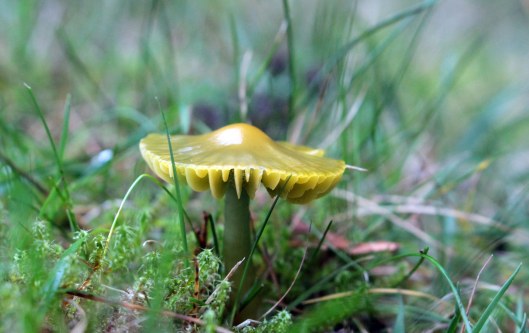
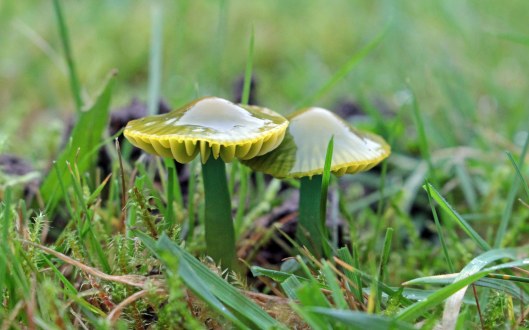
Latin names are a bit of a mouthful but both gliophorus and hygrocybe (tissue carrying / watery head) refer to the tendency for all waxcaps to look and feel quite slimy. Psittacinus is Latin for parrot, and it’s easy to see where this little fungus gets that name – it’s just as colourful as any parrot you’ll ever see, ranging in colour from green, yellow and orange through to pink, purple and brown. Bright green seems to be its predominant hue when young, then the other colours are more easily seen as the green slime washes off its cap.
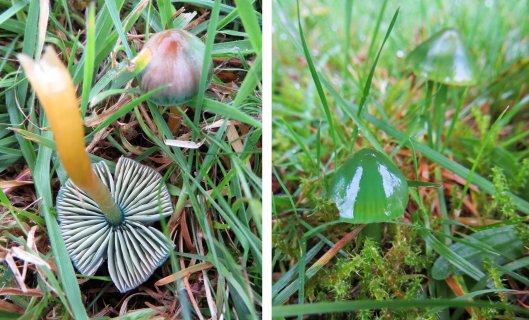
Like all waxcaps it can be found in summer and autumn in grassy areas that have received no artificial fertilisers for 30 years or more, so look for it on roadside verges, in cropped paddocks and in older cemeteries, often in mossy areas. In Britain, it’s more likely to be found in the western counties and in Wales, and it also grows in the cooler parts of mainland Europe and in parts of North America.
 earthstar
Hi Anne looks like you had a good outing in the pretty rough weather on Saturday. Just found your blog and I’ll keep on coming back.
LikeLike
Hi Paul. Yes, a great day, thanks. Good to have more eyes for searching and better knowledge than mine for identifying. The Glamorgan fungi folks are such a nice bunch of people. And thanks re the blog – only recently started this one, a place for all my nature photos.
LikeLike