
Around the British Isles, near rivers and lakes, ponds and meres, reservoirs, flashes and gravel pits, the Eurasian coot (scientific name Fulica atra, and commonly just called coot) can currently be found nesting. In shallow water, sometimes using the support of an underwater obstacle (two pairs in Cardiff are using the lights that illuminate the council building!), they build nests of sticks and grasses, and bits of human detritus like plastic, paper and other assorted rubbish.


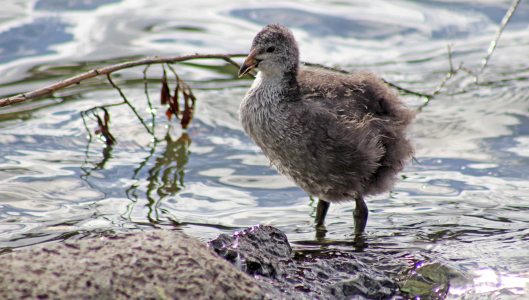
Mrs Coot lays between 5 and 10 eggs then incubates these for around three weeks, while hubby brings her food and continues to beautify the nesting platform. Though exceptionally cute, the chicks are bizarre-looking wee things, little bundles of black fluff with reddish-orange heads and a ruff of yellow feathers around their necks. The vibrant colour fades during their two-month fledgling period and juveniles look more greyish-brown, with a lighter throat and face.


Though both parents feed the chicks, they rarely all survive. This can be due to predation by Lesser black-backed gulls, mink and pike, though sometimes, if there is a lack of food, coot parents will occasionally kill their own chicks, sacrificing one for the good of the others.


 earthstar
Not the prettiest of young ducks, but I’m sure their mother loves them regardless!
LikeLiked by 1 person
I always think of them as the real ugly ducklings … but now I’ve seen moorhen chicks and they’re very similar.
LikeLiked by 1 person
Those coot chicks are the funniest looking things! 🙂
LikeLiked by 1 person
I agree, Val. They’re like little clowns with their red and yellow neck ruffs!
LikeLiked by 1 person