
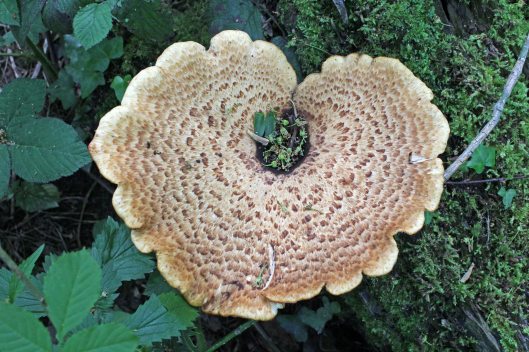
I used to think fungi only appeared in the autumn but I was wrong. I’ve found these three examples of Dryad’s Saddle (Polyporus squamosus) in the past two weeks at three different locations. It’s an edible fungus so I won’t disclose the locations, as the modern trend of foraging all edible fungi can also put some fungi in danger of being over-collected. I prefer just to take photos and leave the fungi to the critters that undoubtedly enjoy it.
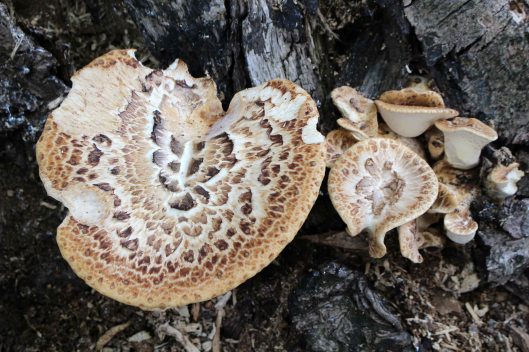
Another common name for this fungus is Pheasant’s back mushroom – as the name implies, the pretty brown colour patterns on the fungus are similar to those seen on the back of a pheasant. The scientific name also refers partly to this patterning (squamosus means scaly), and polyporus means ‘having many pores’ – this is not a gilled mushroom like those you buy at the supermarket; instead, it has a myriad of tiny tubes from which the spores are dispersed.
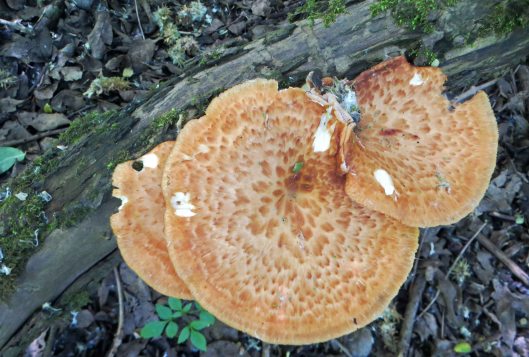
The name Dryad’s saddle must have come from someone with a good imagination. In Greek mythology, dryads were tree spirits or nymphs, and the shape of some these fungi does indeed resemble a saddle so, perhaps, when we’re not looking, the dryads emerge from their trees for a gallop around the woodland!
 earthstar
Very attractive fungus and a new one to me. I prefer the old name of Dryad’s saddle, more evocative I think.
LikeLiked by 1 person
I definitely agreed about the name. 🙂
LikeLiked by 1 person
The patterns do resemble the feathers on the back of a pheasant.
LikeLiked by 1 person
Perhaps a better name then than Dryad’s saddle?
LikeLike
Not as romantic though 🙂
LikeLiked by 1 person
Beautiful! 🙂
LikeLiked by 1 person
Thanks, Tom. Nature’s a great designer. 🙂
LikeLike
great post
LikeLiked by 1 person
Thank you.
LikeLiked by 1 person
welcome
LikeLike