
Tags
birding, birdwatching, Collared dove, genetic mutation, Mutation affected sense of direction, Streptopelia decaocto
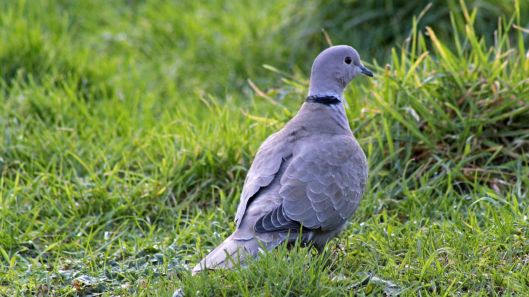
I came across the delightful bird in the series of three images below during a recent walk around Cardiff Bay. Sitting quietly in a tree by the footpath, it was indulging in a good preening, running its beak repeatedly down through its fluffed-up chest feathers. It’s a Collared dove (Streptopelia decaocto), a bird you’re often more likely to hear than to see, its continuous cooing floating down from the leafy trees where it’s sitting.


Amazingly, these birds only immigrated to Britain in the 1950s – they’re native to the Middle East but gradually spread across Europe before crossing the Channel, and they’re now very common garden visitors in villages and towns across the country. In Fauna Britannica, Richard Mabey notes that this incredible spread, more than any other European bird in the past 50 years, has been attributed to ‘a genetic mutation that affected the birds’ sense of direction and encouraged them to move north and west’, though the British Trust for Ornithology believes natural selection has probably now reduced this tendency. If it hadn’t, the birds would all be flying off over the Atlantic, a trip they probably wouldn’t survive.
 earthstar
They appear around my house periodically but I can’t say I have seen one for months now. I ought to pay more attention as to when I see them, perhaps there is a pattern. In observing their behaviour, they do seem to be a bit dull compared to the intelligent behaviour displayed by the corvids. Despite that, I think they are quite a smart looking bird.
LikeLiked by 1 person
Interesting to read your comments, Joyce, because, although I read they are common, this was the first one I’d seen for perhaps a year. But then, like the proverbial buses, I saw a pair near my local railway station the very next day.
LikeLiked by 1 person