
Tags
#FungiFriday, British fungi, dangers of ergot, ergot, ergotism, fungal pathogens, fungi on cereals
I’m sure most of you will have heard of ergot poisoning or, at the very least, some of the notable times in history when humans have felt its effects. The Salem witch trials, which took place in Massachusetts in 1692-93 and where over 200 people were accused of witchcraft and 20 were executed, are probably the most well known; the unfortunate ‘witches’ are now thought to have been suffering from a form of ergotism. Through researching this post, I’ve also learned that ‘severe ergot epidemics in France between 900 AD and 1300 AD killed between 20,000 to 50,000 people’, and that ‘Julius Caesar lost legions of soldiers to ergot poisoning during his campaigns in Gaul’. And these are just a few of the more well-known examples; ergotism has been affecting humans since our ancestors first began eating grains and cereals.

Ergot (Claviceps purpurea) is a fungal pathogen that grows on many cereal species, including wheat, rye and barley. When ingested by humans and animals, the toxins contained in the fungus cause ergotism, the effects of which can include convulsions, hallucinations, gangrenous limbs, and, in severe cases, even death. These days, cereal producers and government regulatory bodies are very much aware of the dangers of ergot, and have precautionary measures in place to reduce its presence in food and feed to an absolute minimum. This is excellent news, as 2025 seems to be a good year, in terms of climate and environmental conditions, for the growth of the ergot fungus, if my finds in local fields are anything to go by. The small dark horn-shaped masses you can see in my photos indicate that these plants are infected with ergot; the masses, which replace the grains in cereals and grasses, are called sclerotia. So, with the subject of today’s post, it’s a case of look and be fascinated but definitely don’t be tempted to consume.
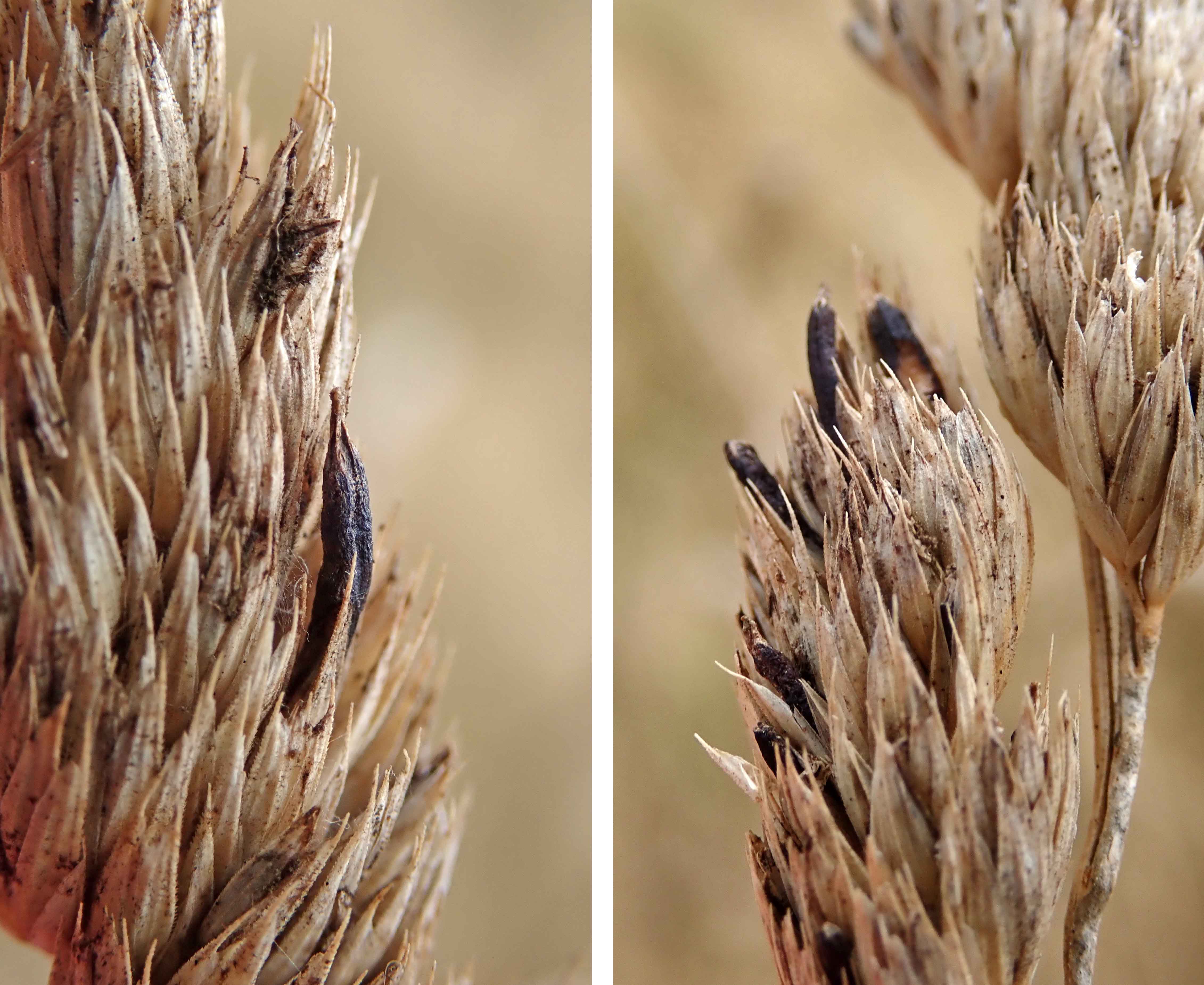
Amongst many other places, you can read more about ergot on the UK website of the Agriculture and Horticulture Development Board and, in the US, on the United States Forest Service agency website.
 earthstar
You must be logged in to post a comment.