
Tags
Alopochen aegypticus, birding, birdwatching, British birds, Cardiff birding, Egyptian Goose, Lamby Lake, non-native birds
The BTO (British Trust for Ornithology) website reckons that the Egyptian goose (Alopochen aegyptiaca) was introduced to England in the 17th century, presumably to enhance the parks and gardens of the rich with an exotic species – not quite a Peacock, but you get the idea.

Like many other introduced species, these geese have since spread their wings and flown to pastures new or, in this case, more likely lakes, though that colonisation has been quite gradual. The BTO site states:
In 1991 the population was estimated at c.900 individuals, 91% of which were in Norfolk. Since then, the species has colonised the rest of East Anglia, much of London and parts of the Home Counties.
And, from further down the page, by 2013-2017 the UK breeding population size had grown to 1850 pairs.
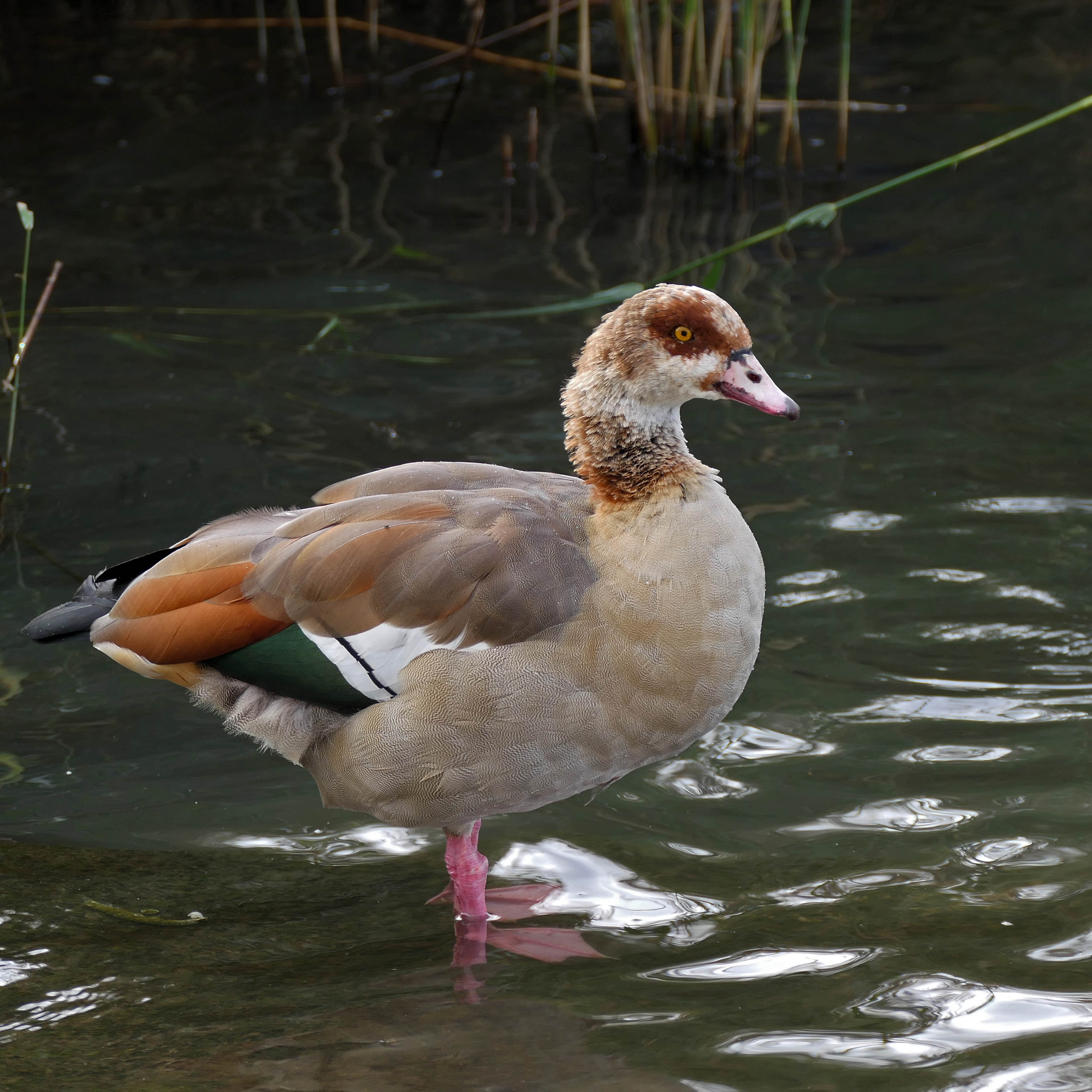
Sightings of these birds in south Wales have been relatively rare but do seem to have been increasing over the past couple of years. An Egyptian goose – possibly this same bird but there’s no way to be sure – spent several months on a local lake earlier in the year; it was first reported in the WhatsApp group on 23 March (though, of course, it may have been there before that, just not reported by any local birders) and then intermittently through April, May and June. Reports then stopped until ten days ago, when a birder posted that an ‘Egyptian goose set up residency a couple of weeks ago’, which would have been in early October.

As I’d not seen one of these geese since I was last in London six years ago, I decided to go take a look at this local bird. The lake it’s calling home is on the other side of Cardiff and I didn’t fancy the six mile walk through a very industrial area on busy roads so it was a bit of a trek by train and bus to get there … but definitely worth it.

With feathers in multiple shades of brown, with rich rust and bottle green highlights, Egyptian geese are very handsome birds, and this one’s no exception. It looked very settled amongst the other waterfowl, though the Coots were keeping a close eye on it. It was certainly not bothered by the presence of people and, though it turned its nose (beak?) up at my offering of suet pellets, which the other birds were happy to scoff, it happily grabbed the white bread thrown in the water by other visitors, so has presumably lived in a public park setting previously. I was very pleased I’d made the effort to go and see this exotic visitor.

 earthstar
Numbers here in Hampshire are increasing year on year 1 or 2 sightings before lockdown now several places where I see 5 or 6 at a time and on a regular visits. Black Swans are now very regular sightings on some of our rivers especially on the tidal part of the Itchen.
LikeLiked by 1 person
The geese seem able to adapt to new locations very easily. I wonder if they’ll eventually become as common as Canada geese.
I’m rather envious of you being able to see Black swans regularly. They’re beautiful creatures. 🙂
LikeLiked by 1 person
Nice shots. I hung out with and watched a trio along the Thames near The Tate when in London earlier this month. Didn’t realise what a common fixture they’ve become.
LikeLiked by 1 person
Thanks, Bob. I saw my first in the UK in London’s St James’s Park. I think they’re quite common in the south east now. 🙂
LikeLiked by 1 person
So pretty!
LikeLiked by 1 person
Thanks! I definitely agree with you on that. 🙂
LikeLike