
Tags
Aequipecten opercularis, beachcombing, Chlamys varia, Great scallop, King scallop, Pecten maximus, Queen scallop, scallop shells, Scallops, Variegated scallop, Weymouth beachcombing
In the absence of any new wildflower finds from my break in Dorset, I thought I’d feature seashells this week, in particular the various beautiful Scallop shells I found during a wander along the high tide line. In my ignorance I thought a Scallop was a Scallop, i.e. just one species, but I soon discovered I was very wrong and that I may have seen the shells of at least three different species on Weymouth beach, and that they can be tricky to tell apart.
[** Thanks to a comment from one of my much more knowledgeable followers, I now know that only 3 of the shells shown here (photos 3, 5 and 6) are Scallop species. Obviously, I have a very steep learning curve to climb when it comes to identifying finds at the seaside!**]
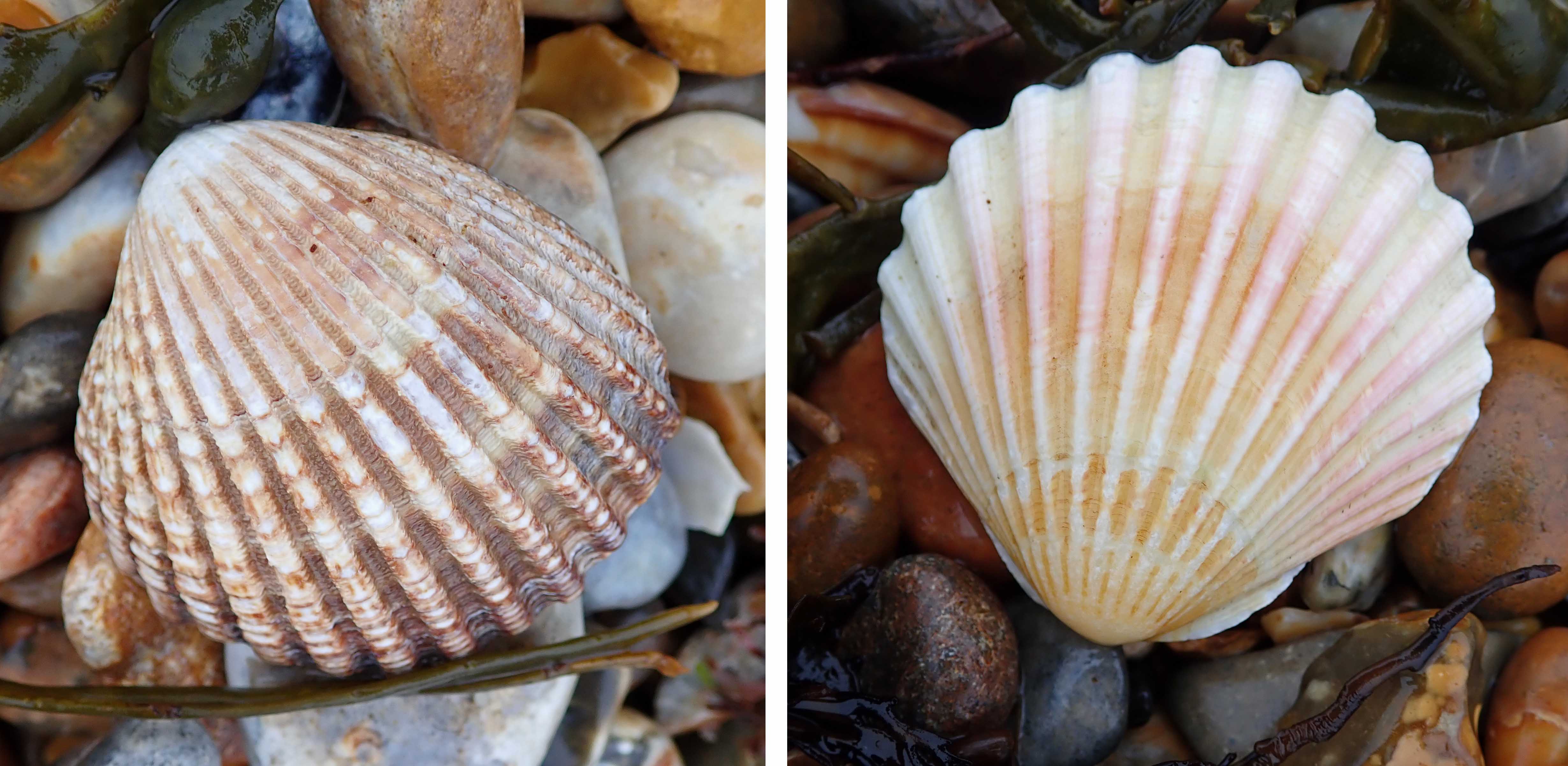
I had just thought I would take and share some pretty photos, so I didn’t measure the lengths of the shells, or count their radiating ridges, or examine the size and symmetry of the ‘wings’ on the bottom edge, or even check whether the bowl-shaped shells were attached to other bowl-shaped shells or to flat shells, all features which might have helped with their identification.
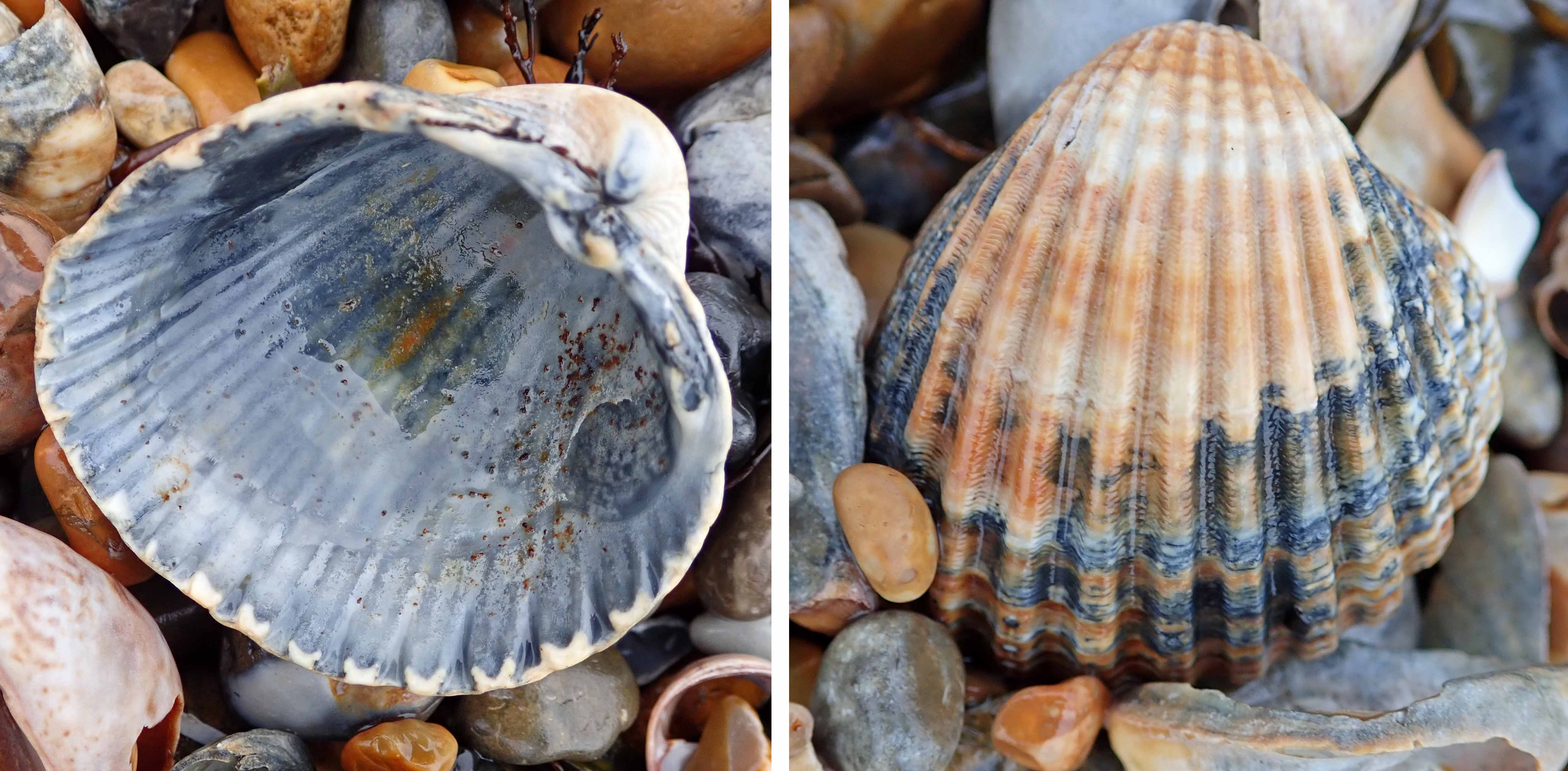
From what I’ve read online, the three most likely species of Scallop in this location are Variegated scallop (Chlamys varia), Queen scallop (Aequipecten opercularis), and Great (or King) scallop (Pecten maximus). I’m fairly sure at least two of the shells are the latter species, Great scallop, as they seem to be the only local species that has a bowl-shaped shell attached to a flat shell, and I found a couple of flat shells.
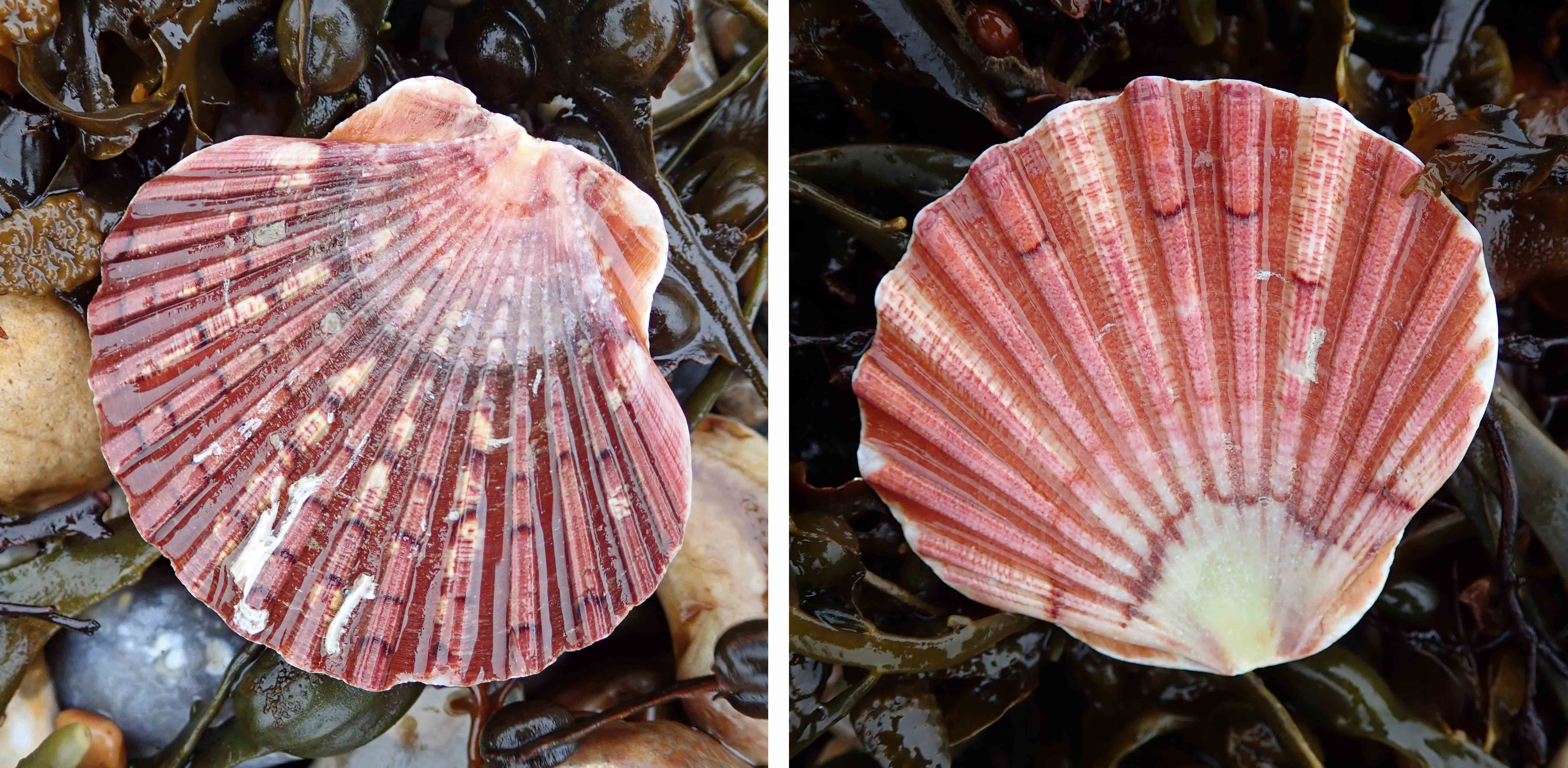
On the Dorset Wildlife Trust website I read one particularly interesting fact about the Variegated scallop that I did not previously know: ‘In common with many other shellfish, the variegated scallop starts life off as a male and changes sex several times during its lifetime.’ Reading about these and the other mollusc shells I noticed but didn’t photograph has definitely piqued my interest in learning more so I’ve just been looking at potential guide books to help with future identification. If you have any personal recommendations, please do share their details in the comments.
 earthstar
Lovely to see some shells featuring today. There’s always something to see on a beach.
You might be delighted to know that you have found more than just scallops!
The top left photo, together with the middle two, appear to be Prickly Cockles (Acanthocardia echinata).
Top right is probably a worn Queen Scallop, and the bottom shell is certainly a Great Scallop.
Good luck in your future beach combing exploits !
LikeLiked by 2 people
Clearly I have a lot to learn about seashells! Thank you for sharing your knowledge and providing more information. One question – do the prickles/spines get worn off the Prickly cockle shells as these didn’t have any?
I urgently need to buy myself a guide book!
LikeLiked by 1 person
Yes the spines are frequently worn away. I’d attach a photo but I can’t see how!! You best look on line.
LikeLiked by 1 person
I’ll get googling. And thanks again for your help. 🙂
LikeLiked by 1 person