• ABOUT
  • BIRDING 2018
  • Birding 2019
  • BLOG POSTS
  • Butterflies 2018
  • Resources

earthstar

~ a celebration of nature

earthstar

Category Archives: animals

The cats of Morocco

27 Wednesday Apr 2016

Posted by sconzani in animals, nature

≈ 4 Comments

Tags

cats, Moroccan cats, Morocco

One of the reasons I love Morocco is because it’s a country crawling with cats. Moggies can be found everywhere, sleeping in mosques and medinas, lurking in the corners of market squares, and soaking up the sun near fishing boats.

160427 cats Morocco (9)

Due in part to their cleanliness, cats are revered in the Islamic religion. According to tradition, Muhammad prohibited the persecution and killing of cats, and Islam teaches that cats should not be sold for money or other goods, and must be treated well.

These are some of the furry felines I found in Morocco.

160427 cats Morocco (10)
160427 cats Morocco (11)
160427 cats Morocco (1)
160427 cats Morocco (2)
160427 cats Morocco (3)
160427 cats Morocco (4)
160427 cats Morocco (5)
160427 cats Morocco (6)
160427 cats Morocco (12)
160427 cats Morocco (8)
160427 cats Morocco (7)
Like Loading...

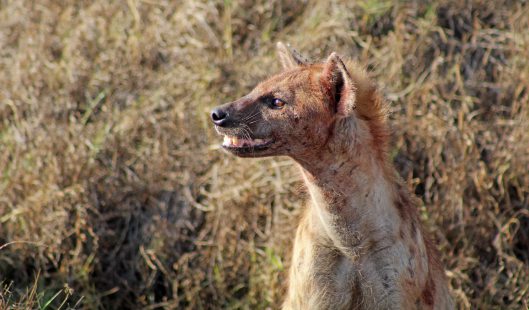
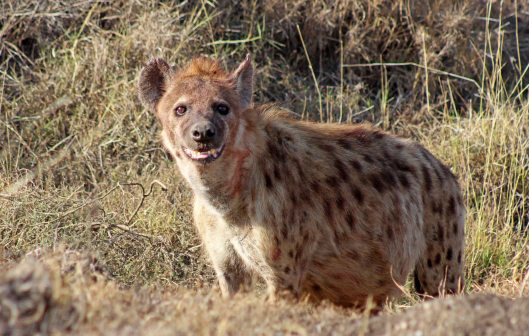
The laughing hyena

20 Wednesday Apr 2016

Posted by sconzani in animals, nature, nature photography

≈ 2 Comments

Tags

Hyena, Serengeti National Park, Serengeti Plains, Spotted hyena, Tanzania

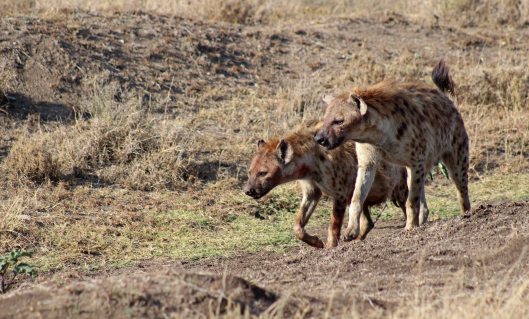
‘A sense of humor is good for you. Have you ever heard of a laughing hyena with heart burn?’ ~ Bob Hope

160420 hyena (4)

‘HYENA, n. A beast held in reverence by some oriental nations from its habit of frequenting at night the burial-places of the dead. But the medical student does that.’ ~ Ambrose Bierce

160420 hyena (3)

‘There’s always the hyena of morality at the garden gate, and the real wolf at the end of the street.’ ~ D. H. Lawrence

160420 hyena (1)

‘Do let’s pretend that I’m a hungry hyena, and you’re a bone!’ ~ Lewis Carroll

160420 hyena (2a)

‘We slander the hyena; man is the fiercest and cruellest animal.’ ~ Henry David Thoreau

160420 hyena (5)

Like Loading...

‘Dedicated Naturalist’: Brown rats

14 Thursday Apr 2016

Posted by sconzani in 'Dedicated Naturalist' Project, animals, nature

≈ 4 Comments

Tags

brown rat, Cardiff, Dr Mary Gillham, Rattus norvegicus, volunteering

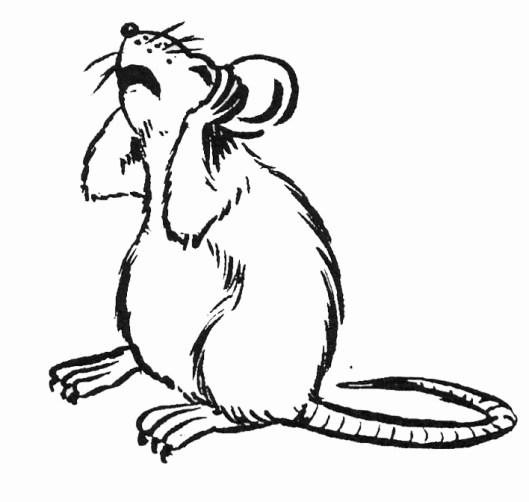
A snippet from my volunteer work on the ‘Dedicated Naturalist’ Project, helping to decipher and digitise, record and publicise the life’s work of naturalist extraordinaire, Dr Mary Gillham. 

Love them or hate them, you have to admire Mary’s poetic description of the brown rats (Rattus norvegicus) she saw during a walk along the banks of the River Taff, between the Queen and Wood Street bridges in Cardiff city centre, on 27 October 1979.

Sleek brown rats obviously well fed can be viewed from a little riverside grandstand where the human scent above the expected level instigates only momentary peering of beady eyes and twitching of whiskers. Rats have acquired their inauspicious aura only by being carriers of human diseases and frequenters of human sewers. Whose fault? Ours or theirs? Viewed dispassionately here their weavings between the straight sturdy canes of Japanese knotweed resembles that of a jaguar in a primeval forest, their more intricate passage through tall cocksfoot like lions in elephant grass. There are pickings in plenty, both local and river-borne.

I have retraced Mary’s path along this river bank many times in 2016 and not seen any rats. Good thing or bad thing?

160414 brown rat

Mary Gillham was also a talented artist – this is one of her drawings

Like Loading...

Bottoms up!
11 Monday Apr 2016

Posted by sconzani in animals, nature, nature photography

≈ 13 Comments

Tags

animal bottoms, elephant, giraffe, hippopotamus, lion, quotes about bottoms, sheep, Vervet monkey, zebra

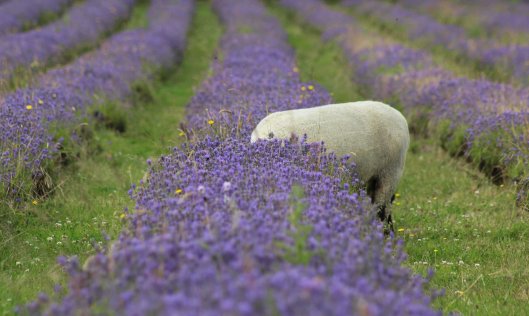
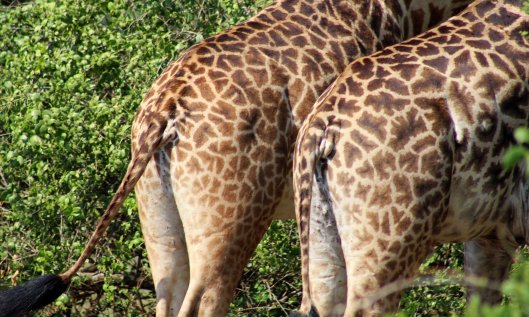
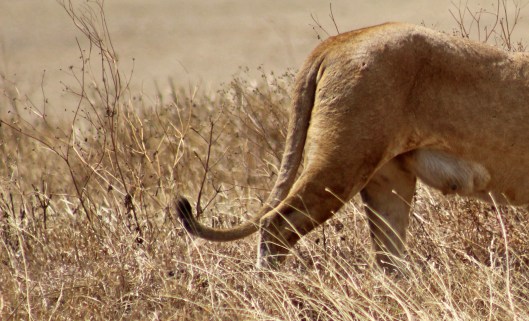
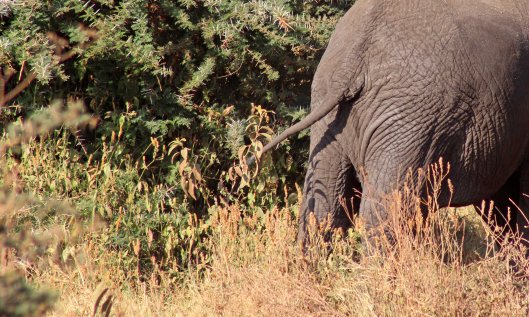
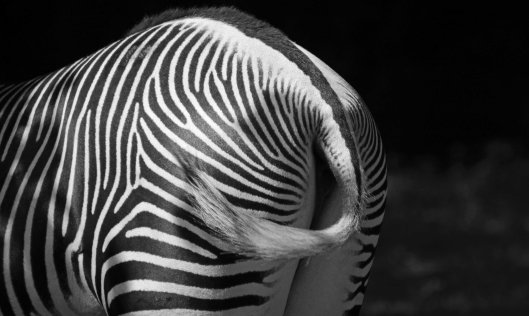
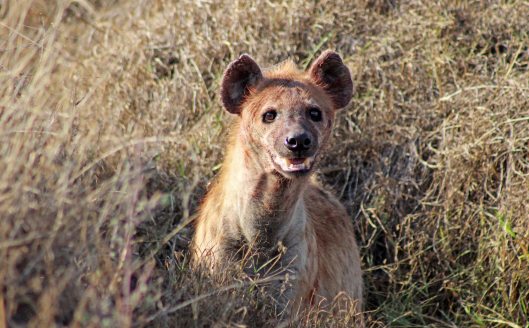
One thing about animal photography: your models don’t always co-operate, and you often end up with photos of the less flattering parts of their anatomy. I thought a selection of my photos of these might at least bring a smile (and, actually, the zebra photo is one of my all-time favourites).

160411 bottoms (1)

‘Froth at the top, dregs at the bottom, but the middle excellent.’ ~ Voltaire

160411 bottoms (2)

‘I know up on the top you are seeing great sights, but down at the bottom we, too, should have rights.’ ~ Dr Seuss, Yertle the Turtle and Other Stories

160411 bottoms (3)

‘Bottoms up or bottoms down, / Either way no one will frown.’ ~ Mike Anderson

160411 bottoms (4)

‘My mind is trouble, like a fountain stirred; / And I myself see not the bottom of it.’ ~ William Shakespeare

160411 bottoms (5)

‘My bottom is so big it’s got its own gravitational field.’ ~ Carol Vorderman

160411 bottoms (6)

‘One mustn’t look at the abyss, because there is at the bottom an inexpressible charm which attracts us.’ ~ Gustave Flaubert

160411 bottoms (7)

‘When you’re average, you’re just as close to the bottom as you are the top.’ ~ Alfred North Whitehead

160411 bottoms (8)

‘The artist needs to understand the truth that lies at the bottom of an enigma.’ ~ John Maeda

Like Loading...

The rock hyrax

06 Wednesday Apr 2016

Posted by sconzani in animals, nature, nature photography

≈ 6 Comments

Tags

Procavia capensis, rock hyrax, Serengeti National Park, Serengeti Plains, Tanzania

On safari in the Serengeti even the places where we stopped for lunch had amazing wildlife, some of them lazing around in the sun as if just waiting for the animal paparazzi to show up. These critters are Rock hyraxes (Procavia capensis), also known as Cape hyraxes and rock badgers. Incredibly, though they look a bit like huge hamsters, their closest living relatives – cousins many times removed – are elephants and sea cows. Just like their cousins, they have prominent (though obviously much smaller) tusk-like upper incisors, and the males’ testes are permanently enclosed inside their abdomens.

160406 hyrax (4)

Their bodies do not regulate heat very efficiently so, though they look rather fat and lazy, they are more active in the early morning and in the evening but need simply to bask during the hottest hours of the day. Hyraxes live in large social groups, using sentries to warn of danger when foraging for their favourite food plants, and communicating through a series of at least 21 different vocalisations which can, apparently, inform other hyraxes of their age, size, body weight, social status and hormonal condition. They can be found in most of the sub-Saharan countries in Africa, and are just plain cute!

160406 hyrax (1)
160406 hyrax (2)
160406 hyrax (3)
Like Loading...

Not just a load of bullocks!

05 Tuesday Apr 2016

Posted by sconzani in animals, nature

≈ 2 Comments

Tags

bullocks, cattle, land management, Merthyr Mawr National Nature Reserve, sand dunes, Yellow dung fly

I was a little surprised last Saturday to see bullocks grazing in the Merthyr Mawr National Nature Reserve but it’s all part of the Countryside Council for Wales’s management plan. Research and monitoring have shown that the sand dune ecosystem needs to be dynamic – the dunes need to be exposed, the sands able to move with wind, tide and storm, in order to function as effective flood defences and to maintain the right environment for the rare plants and invertebrates that live there.

160405 bullocks (5)

So, some of the grasses and shrubs that had previously stabilised the dunes have been removed by earthmoving equipment and, to prevent the dune system developing into woodland, cattle are being allowed to graze parts of the reserve at certain times of the year. The plan is to maintain sparsely vegetated dunes and open grassland so that the rare species that were being choked towards extinction will be rejuvenated.

160405 bullocks (1)
160405 bullocks (2)
160405 bullocks (3)
160405 bullocks (4)

One additional benefit for the photographer – the bullocks are very photogenic, and I’m sure the Yellow dung flies I saw on Saturday are pretty happy with the plan as well.

160405 Yellow dung fly

Like Loading...

‘The king of the jungle’

30 Wednesday Mar 2016

Posted by sconzani in animals, nature, nature photography

≈ 2 Comments

Tags

king of the jungle, lion, Ngorongoro Crater, Serengeti National Park, Serengeti Plains, Tanzania

Did you know …

160330 lions (1)

The ‘king of the jungle’ is just an expression as lions actually live in grasslands and plains.

160330 lions (2)

The roar of a lion can be heard up to 8kms (5 miles) away.

160330 lions (3)

A lion can run at 50 mph but only for short distances and can leap as far as 36 feet.

160330 lions (4)

When it walks, a lion’s heels don’t touch the ground.

160330 lions (5)

Lions are the only big cats to live in family groups, known as prides.

160330 lions (6)

The reason lions spend up to 20 hours a day resting and sleeping is because their bodies have very few sweat glands so it is easier for them to be active in the cool of the night.

160330 lions (7)

Lions’ eyes are six times more sensitive to light than human eyes, which means they have excellent night vision.

160330 lions (8)

The darker the mane, the older the lion, and lionesses seem to prefer males with darker manes.

My photographs of lions were taken on the Serengeti Plains and in the Ngorongoro Crater in Tanzania in 2014, at the end of a week-long trip with The Giving Lens, an organisation that combines photography workshops with mentoring, media and financial support for local NGOs.

Like Loading...

Easter bunnies

27 Sunday Mar 2016

Posted by sconzani in animals, nature

≈ Leave a comment

Tags

bunny, Easter, Easter bunny, rabbit

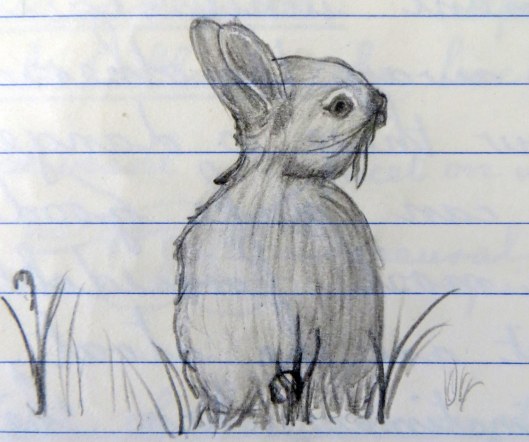
Although Easter is a time when Christians celebrate the resurrection of Jesus Christ, its origins can be traced back to much earlier, pagan times. Some sources say the name Easter comes from Ishtar (pronounced ‘Easter’), the Babylonian and Assyrian goddess of sex and fertility. Given the similarity of the names, as well as the bunny’s propensity for frequent reproduction, the association of bunnies with Ishtar-Easter would seem to make perfect sense.

160327 rabbit (1)

However, other sources say there is no actual evidence that Ishtar is associated with the present-day Easter celebrations and cite the Venerable Bede as their source when explaining that the name comes from Eostre, an Anglo-Saxon goddess of Spring. Springtime festivities traditionally celebrate rebirth and fertility, so the Easter bunnies fit right in with that explanation.

160327 rabbit (2)

It seems the modern day Easter bunny started life amongst German Lutherans (the earliest known written record is dated 1682), where his role was a little like that of Santa Claus – if a child had been good, they would receive gifts from an Easter bunny carrying a basketful of coloured eggs, and sometimes sweets and toys. If you’ve been good boys and girls, perhaps the bunny will bring you a gift as well.

160327 rabbit (3)

Like Loading...

Hello, Paddington Bear!

23 Wednesday Mar 2016

Posted by sconzani in animals, nature, nature photography

≈ 12 Comments

Tags

Chaparri Nature Reserve, Paddington Bear, Peru, Spectacled bear, Tremarctos ornatus

I must’ve had a deprived childhood – I never read the Paddington Bear books and I didn’t even know Paddington came from ‘deepest, darkest Peru’ until a few years ago. However, when I finally met Paddington in real life, at the Chaparri Nature Reserve in northern Peru, he wasn’t wearing a red hat or a blue duffel coat or spectacles. He was, though, the cutest creature, perhaps even more cute than Paddington.

160323 spectacled beer (1)

These particular Spectacled Bears (Tremarctos ornatus) are wildlife rescues. Twenty-five-year-old Papa Bear came from a circus where he had been so badly mistreated that he cannot be rehabilitated into the wilds of the reserve. He lives with Mama Bear and Baby Bear, who will be released into the reserve to fend for himself as soon as he’s able. Wild bears live in the hills behind the area where the tourist trails and accommodation are located, so visitors rarely see them, except in September, when one particular tree flowers and fruits, drawing the bears down from the hills to enjoy these treats.

160323 spectacled beer (4)

Spectacled Bears are so-named because many have lighter-coloured circular markings around their eyes, and every face marking is different so individuals are easily identifiable. The bears live to about 30 years or age and are mostly vegetarian – they really liked the sweet potatoes our guide was feeding them.

160323 spectacled beer (2)160323 spectacled beer (3)

Like Loading...

Cat climbs a tree

19 Saturday Mar 2016

Posted by sconzani in animals, nature, nature photography

≈ Leave a comment

Tags

Earth Hour, leopard, leopard climbs a tree, Serengeti National Park, Serengeti Plains, Tanzania

Today, at varying times around the globe, we celebrate Earth Hour, a movement in which 7000 cities and towns around the world unite in turning off their power, as a way of showing their support for environmental issues, as a way of uniting in their desire to protect planet earth.

160319 leopard (1)

In honour of this special day I thought I would share one of the most special times I have experienced on this amazing planet we call home. If we don’t unite to protect our earth, sights like this will disappear forever. It is a simple act – a cat climbs a tree – but this is not just any cat, this is a pregnant female leopard, climbing the tree where she has previously stashed a kill, in the Serengeti, in Tanzania.

I hope we can all work together to protect our planet so that everyone has the opportunity to see this. I hope one day you get to see this. I hope one day your grandchildren get to see this.

160319 leopard (2)160319 leopard (3)160319 leopard (4)160319 leopard (5)160319 leopard (6)160319 leopard (7)160319 leopard (8)160319 leopard (9)160319 leopard (10)160319 leopard (11)

Like Loading...
← Older posts
Newer posts →

About me

sconzani

sconzani

I'm a writer and photographer; researcher and blogger; birder and nature lover; countryside rambler and city strider; volunteer and biodiversity recorder.

View Full Profile →

Follow earthstar on WordPress.com

Enter your email address to follow this blog and receive notifications of new posts by email.

Recent blog posts

  • City Hall Peregrine January 12, 2026
  • Blackthorn in bloom January 11, 2026
  • Weevil: Mecinus pyraster January 10, 2026
  • Red in beak and claw January 9, 2026
  • Who’s watching who? January 8, 2026

From the archives

COPYRIGHT

Unless otherwise acknowledged, the text and photographs on this blog are my own and are subject to international copyright. Nothing may be downloaded or copied without my permission.

Fellow Earth Stars!

  • Unknown's avatar
  • Unknown's avatar
  • Unknown's avatar
  • Unknown's avatar
  • Unknown's avatar
  • Unknown's avatar
  • Unknown's avatar
  • Unknown's avatar
  • Unknown's avatar
  • Unknown's avatar
  • Unknown's avatar
  • Unknown's avatar
  • Unknown's avatar
  • Unknown's avatar
  • Unknown's avatar
  • Unknown's avatar
  • Unknown's avatar
  • Unknown's avatar
  • Unknown's avatar
  • Unknown's avatar
  • Unknown's avatar
  • Unknown's avatar
  • Unknown's avatar
  • Unknown's avatar
  • Unknown's avatar
  • Unknown's avatar
  • Unknown's avatar
  • Unknown's avatar
  • Unknown's avatar
  • Unknown's avatar
  • Unknown's avatar
  • Unknown's avatar
  • Unknown's avatar
  • Unknown's avatar
  • Unknown's avatar
  • Unknown's avatar
  • Unknown's avatar
  • Unknown's avatar
  • Unknown's avatar
  • Unknown's avatar
  • Unknown's avatar
  • Unknown's avatar
  • Unknown's avatar
  • Unknown's avatar
  • Unknown's avatar
  • Unknown's avatar
  • Unknown's avatar
  • Unknown's avatar
  • Unknown's avatar
  • Unknown's avatar

Blog at WordPress.com.

Privacy & Cookies: This site uses cookies. By continuing to use this website, you agree to their use.
To find out more, including how to control cookies, see here: Cookie Policy
  • Subscribe Subscribed
    • earthstar
    • Join 669 other subscribers
    • Already have a WordPress.com account? Log in now.
    • earthstar
    • Subscribe Subscribed
    • Sign up
    • Log in
    • Report this content
    • View site in Reader
    • Manage subscriptions
    • Collapse this bar
 

Loading Comments...
 

You must be logged in to post a comment.

    %d