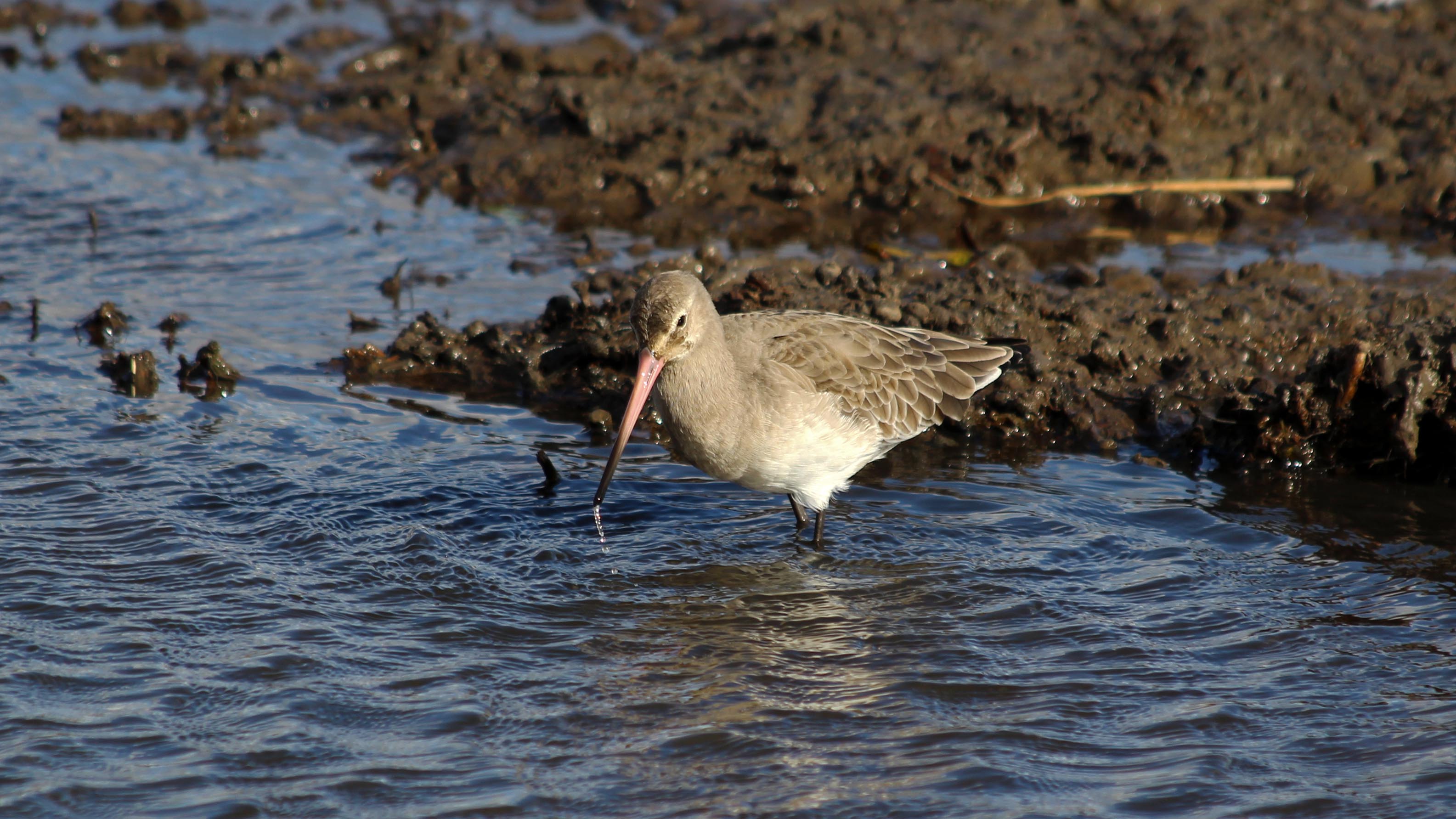
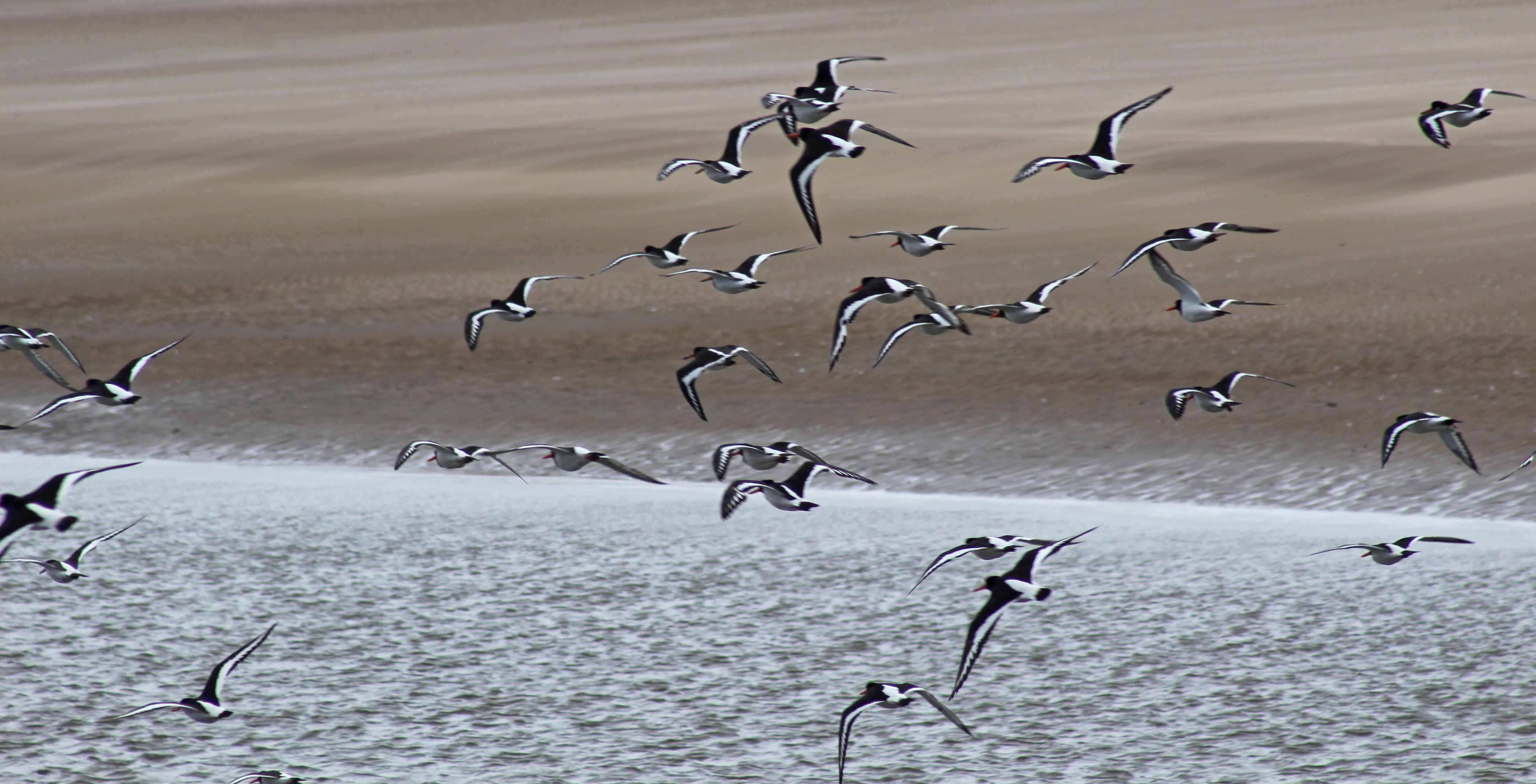
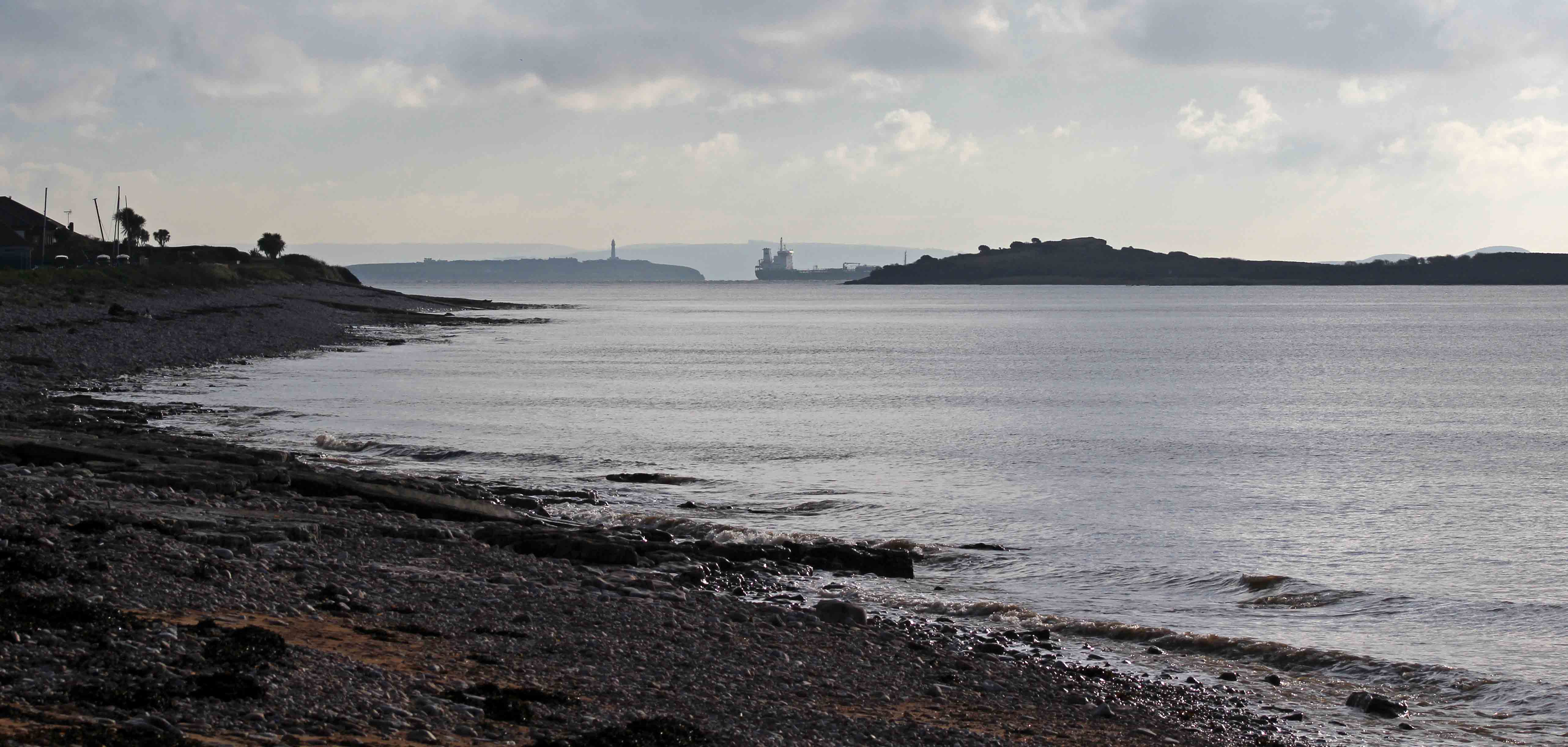
• ABOUT
  • BIRDING 2018
  • Birding 2019
  • BLOG POSTS
  • Butterflies 2018
  • Resources

earthstar

~ a celebration of nature

earthstar

Category Archives: coastal fauna

Common periwinkles

17 Thursday Apr 2025

Posted by sconzani in coastal fauna, molluscs

≈ Leave a comment

Tags

British molluscs, Common periwinkle, Littorina littorea, periwinkles, shellfish

One benefit of this moving malarkey, which is limiting my time to get out for long walks, is that my shorter walks have taken me down to the local beach a few times and reminded me how much I enjoy fossicking along the tide line and how little I know about the flora and fauna of the seashore.

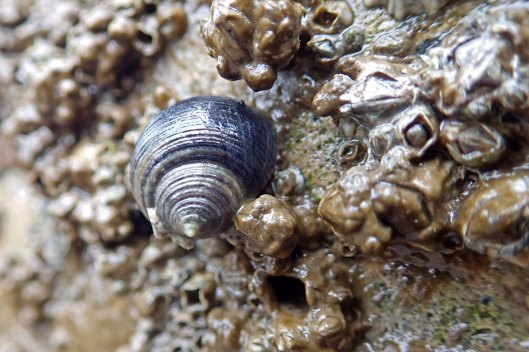
This week’s finds included these shellfish which, I think, are Common periwinkles (Littorina littorea). They are found all around the rocky coasts of Britain, though, locally, these periwinkles are growing on the concrete and steel supports of the pier.

The Marine Life Information Network website says these are

the largest British periwinkle, with the shell reaching a maximum height of 52 mm. The shell is sharply conical with a pointed apex and surface sculpturing. The spiral ridges which are marked in young animals tend to become obscured in older individuals, giving the shell a smooth appearance.

Like Loading...

The crab catcher

22 Tuesday Aug 2023

Posted by sconzani in birds, coastal fauna

≈ Leave a comment

Tags

birding, birdwatching, British birds, British crustaceans, crab, gull catches a crab, Herring gull

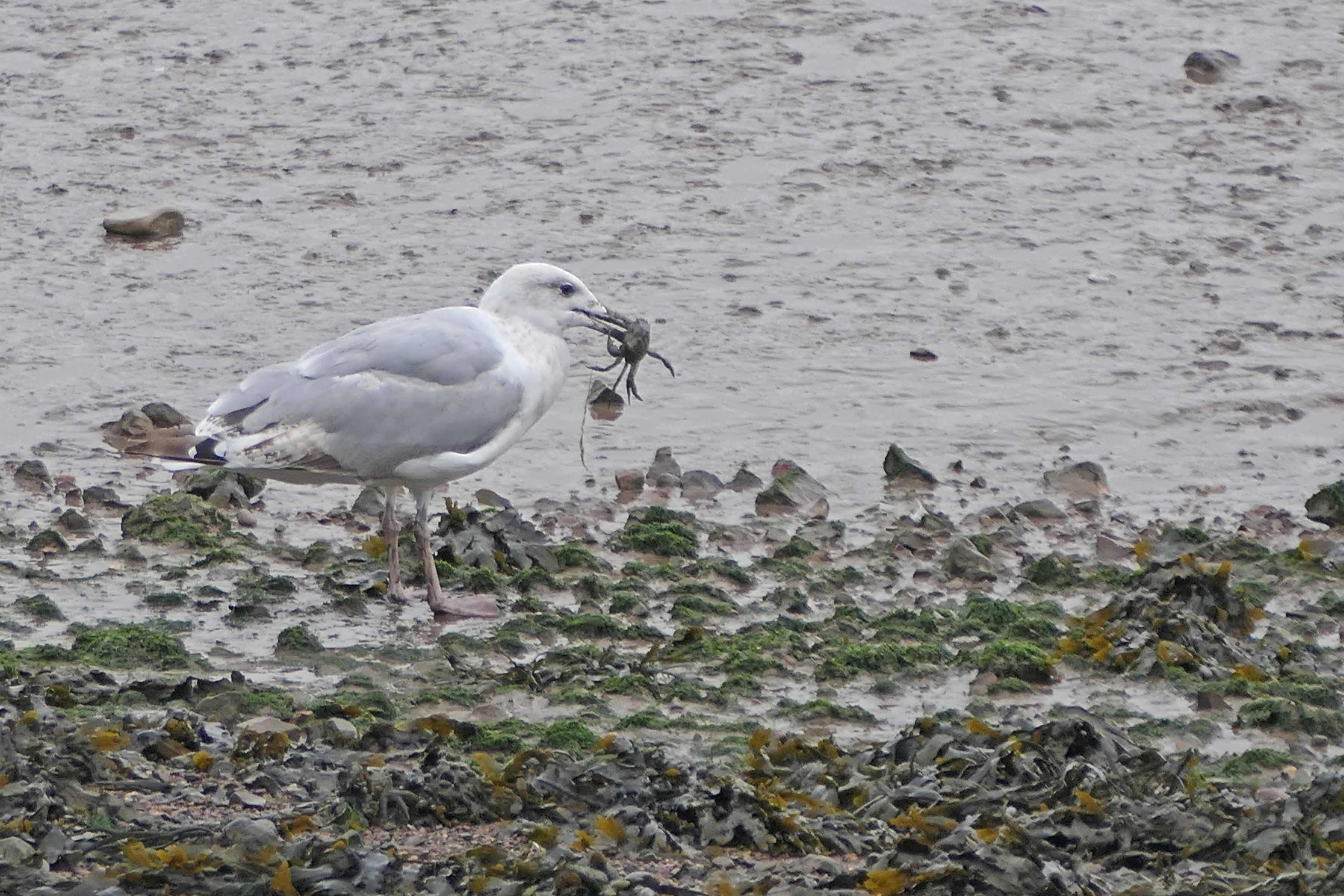
I was searching through the gull flock that was poking around on the mud flats, looking for any unusual birds, when this third-summer Herring gull suddenly lurched forward, splashing through the mud and almost falling into a watery hole. When it stood erect I saw why – it had caught itself a crab.

230823 herring gull and crab (1)

Of course, all the other gulls then wanted a piece, and the crab catcher was forced to fly around the small bay a few times to get them off its tail. Luckily, most of the other gulls were younger and less experienced than it was, so it was able to settle and pull its catch in to bite-sized chunks – though not without very close scrutiny from the hopeful and hungry!

230823 herring gull and crab (2)

Like Loading...

Making a splash

28 Wednesday Apr 2021

Posted by sconzani in coastal fauna, fish

≈ 2 Comments

Tags

British fish, Cardiff Bay, Chelon labrosus, Grey mullet, Thick-lipped grey mullet, Thick-lipped mullet, Thicklip mullet

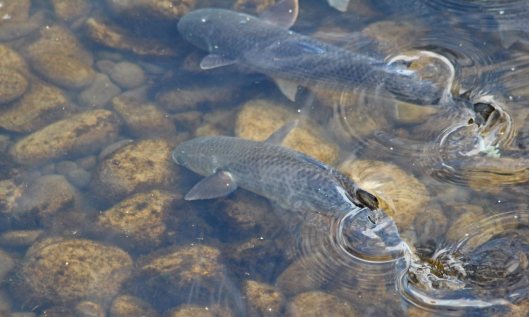
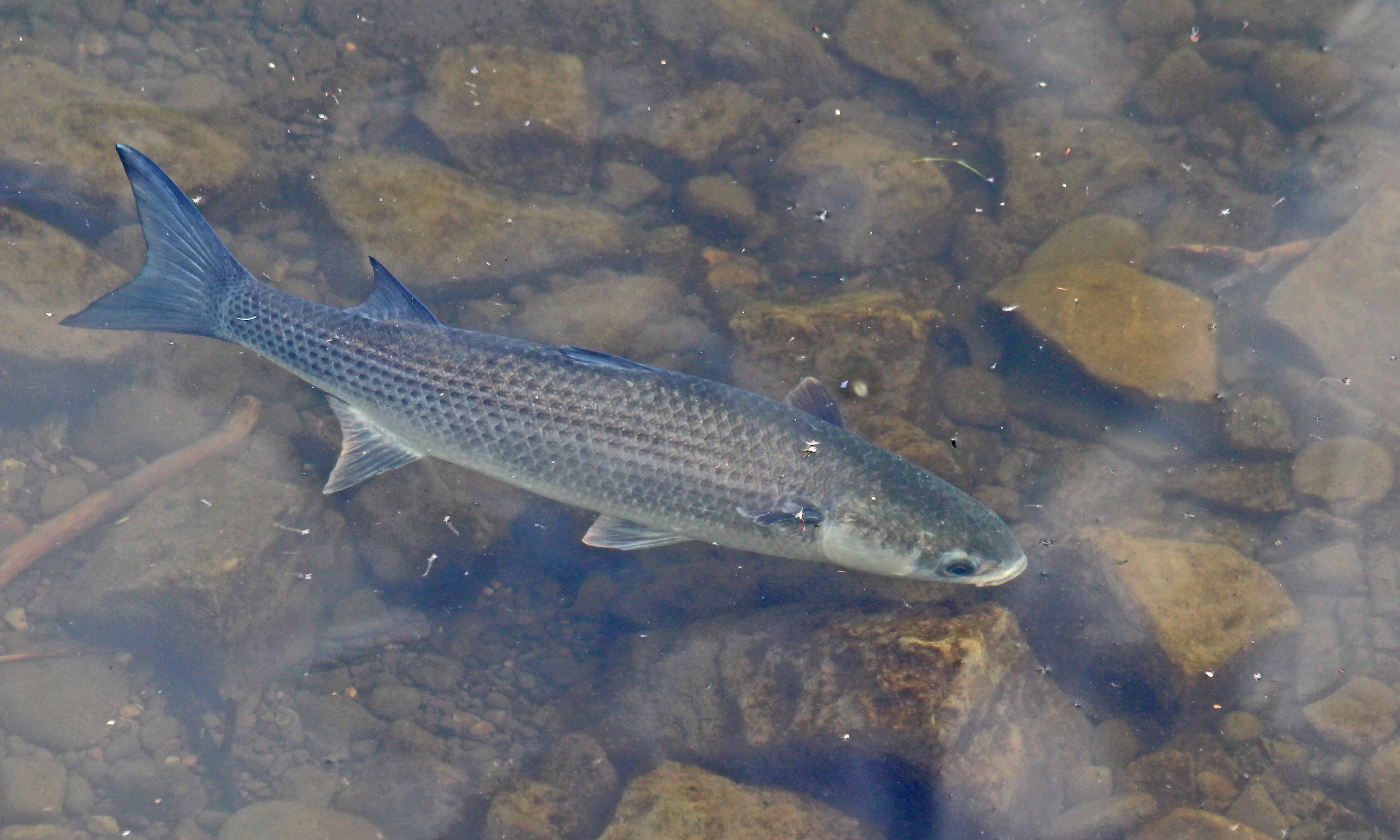
I was taking a break from not seeing the birds I was looking for on the edge of Cardiff Bay yesterday, when a loud splash drew my eye down to the water. These fish, a shoal of at least ten, perhaps more, were swirling and weaving around each other, presumably feeding.

Officially known as Thick-lipped mullet (Chelon labrosus), they are also frequently called Thick-lipped grey mullet, Thicklip mullet, Grey mullet and various other combinations of those words.

I wasn’t able to judge their size accurately, but it seems they can grow up to 75cm in length, though they mature when around 30cm at between four and six years of age. They thrive in ‘low salinity environments’ like Cardiff Bay and are often ‘found in closely shoaling schools near the surface’, just like those I saw.

They feed ‘on organic and algal material found on the upper surface sediments and mud, with the indigestible material being filtered out by the gill rakers’. I’m not sure I’d want to put any sediments or mud from Cardiff Bay in my mouth, so their filtration system must be first rate to survive the pollution.

I have to admit that they were very calming to watch, and I gained some appreciation for why people have aquariums, though I do prefer creatures to be wild and free.
Credit: Today’s fishy facts came from the UK Fish info website.

Like Loading...

346/365 Sea shells

12 Thursday Dec 2019

Posted by sconzani in coastal fauna, molluscs, nature, seaside

≈ 1 Comment

Tags

at the seaside, seashell, shells, shells on beach

When the rain finally abated mid afternoon, I went to vote and then headed down to the seaside, to clear my head with some fresh air. The tide was out so I couldn’t resist having a brief fossick along the beach. It’s a stony shore and there are never many shells to be found but I did find a few nestled amongst the stones.

191212 sea shells (9)
191212 sea shells (3)
191212 sea shells (1)
191212 sea shells (6)
191212 sea shells (7)
191212 sea shells (5)
191212 sea shells (4)
191212 sea shells (8)

Like Loading...

311/365 Mermaid’s purse

07 Thursday Nov 2019

Posted by sconzani in coastal fauna, fish, nature, seaside

≈ 4 Comments

Tags

Cuckmere Haven, Mermaid's purse, ray eggcase

I found this egg case on the beach at Cuckmere Haven a week or so ago. With such a leathery, tough outer skin, it’s easy to see how well this could protect the embryo that must once have been inside.

191107 mermaids purse (1)

I checked the Shark Trust website’s identification page and, given the south coast location, I think this eggcase might belong to a ray, perhaps a Spotted ray (Raja montagui) or an Undulate ray (Raja undulata).

191107 mermaids purse (2)
191107 mermaids purse (3)

I’m not sure where the name Mermaid’s purse came from – perhaps it’s simply because the eggcases come from the sea, are vaguely purse-shaped and hold something valuable inside them.

Like Loading...

59/365 The stone-turners

28 Thursday Feb 2019

Posted by sconzani in 365DaysWildin2019, birds, coastal fauna, nature

≈ 2 Comments

Tags

birding, birdwatching, British birds, Cardiff Bay, Ely embankment, stanepecker, Turnstone

190228 turnstone

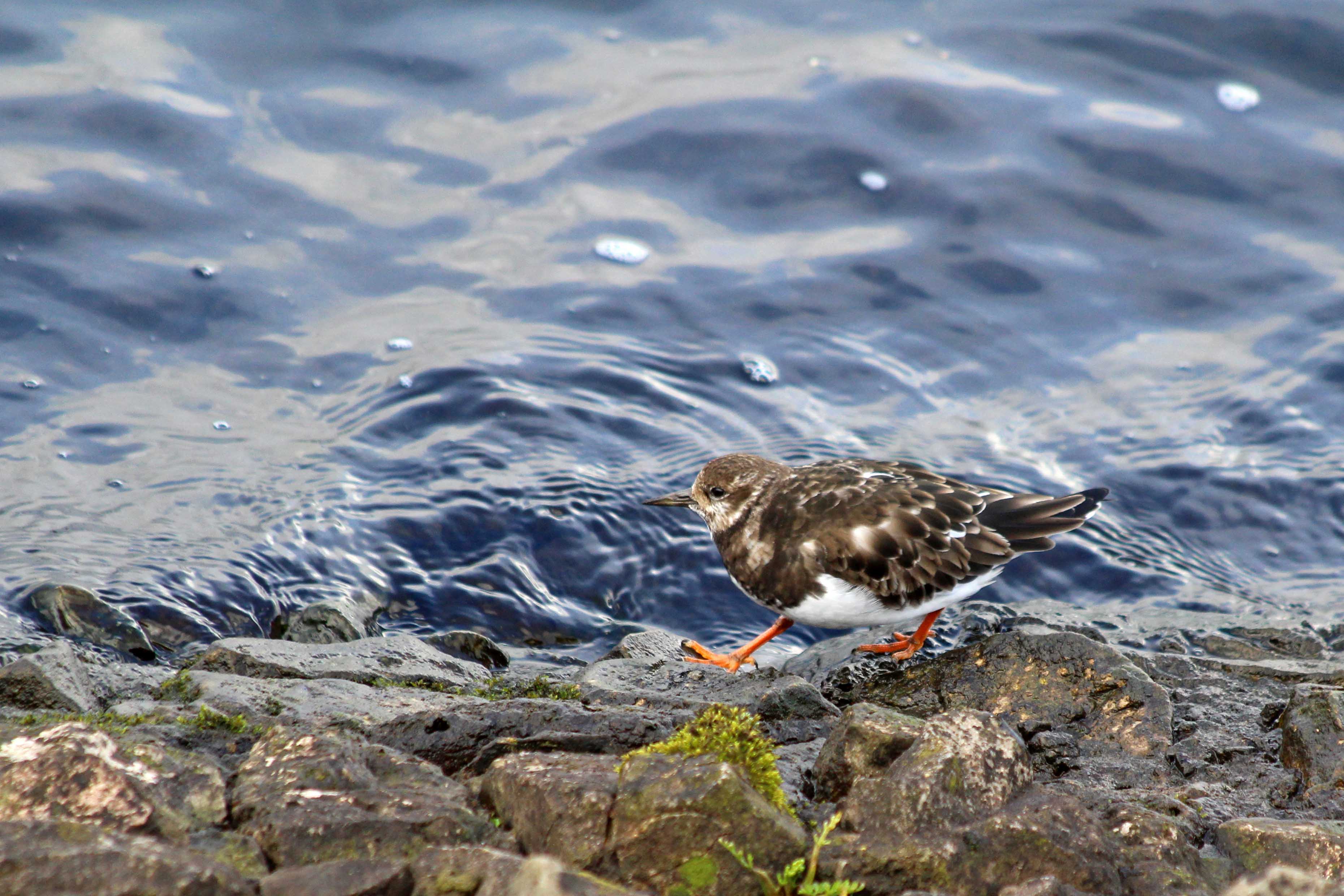
As their name suggests, the Turnstones that frequent the stony embankments around Cardiff Bay spend their time turning over loose stones, looking for the tiny insects, molluscs and crustaceans they like to eat. And it’s that stone-turning that has led to some of their regional vernacular names: stanepecker, in Shetland, and stone raw, in Armagh. I also rather like ebb pecker, another from Shetland, and tangle picker, from Norfolk. I haven’t been able to find a Welsh name for this bird so if there is one and you know it, please do let me know.

p.s. Thanks to my friend Ceri, I can now tell you the Welsh name for Turnstone is Cwtiad y Traeth, which translates as Beach plover (Traeth means beach and Cwtiad is plover).

Like Loading...

The doubly muddy godwits

06 Tuesday Nov 2018

Posted by sconzani in birds, coastal fauna, nature

≈ Leave a comment

Tags

birding, birdwatching, Black-tailed godwit, British birds, godwit, Limosa limosa, RSPB Lodmoor

This is the Black-tailed godwit in its winter plumage, a delicate combination of white below and pale beige and grey above, with just a hint of pink from the soft autumn light.

181106 black-tailed godwit (1)

The Black-tailed godwit used to be much more numerous in Britain, with a strong breeding population. But not any more. Now, although as many as 40,000 birds come from Iceland to over-winter on these isles, just 60 pairs breed here.

181106 black-tailed godwit (2)

The Back from the Brink project is trying to change that terrifying statistic. By monitoring the nests of existing birds, by protecting them from predators through the installation of electric fences, by providing more areas where the birds can breed, by collecting eggs from at-risk nests and hand-rearing them, the project hopes to ensure Black-tailed godwits have a future in Britain.

181106 black-tailed godwit (6)

The birds I saw recently at RSPB Lodmoor are almost certainly birds that have bred in Iceland but they all look the same. They are large wading birds, with long beaks they use to probe the mud for snails, worms and insects – the birds I was watching must’ve been hungry as I managed to take a lot of photos with their heads under water! Their scientific name, Limosa limosa, reflects their love of mud – limosa comes from the Latin limus, meaning mud, so these godwits are doubly muddy.

181106 black-tailed godwit (4)
181106 black-tailed godwit (5)

Interestingly, when researching this post I found out that the female Black-tailed godwits have longer beaks than the males, which means they don’t compete for food – a fascinating evolutionary adaption.

181106 black-tailed godwit (3)

Like Loading...

Birding along Rumney Great Wharf

07 Tuesday Aug 2018

Posted by sconzani in birds, coastal fauna, nature, seaside, walks

≈ Leave a comment

Tags

birding, birdwatching, British birds, Glamorgan Bird Club, Rumney Great Wharf

It was hot! In fact, it was not just hot, it was scorching but, along with 15 other brave souls, I joined the Glamorgan Bird Club’s outing last Sunday to walk part of the coastal path along Rumney Great Wharf. We started at Parc Trederlerch, where fishermen were trundling their mountains of gear to favourite sites for a day’s fishing, and Swans, Coots, Tufted ducks and Moorhens flocked to be fed by strolling families.
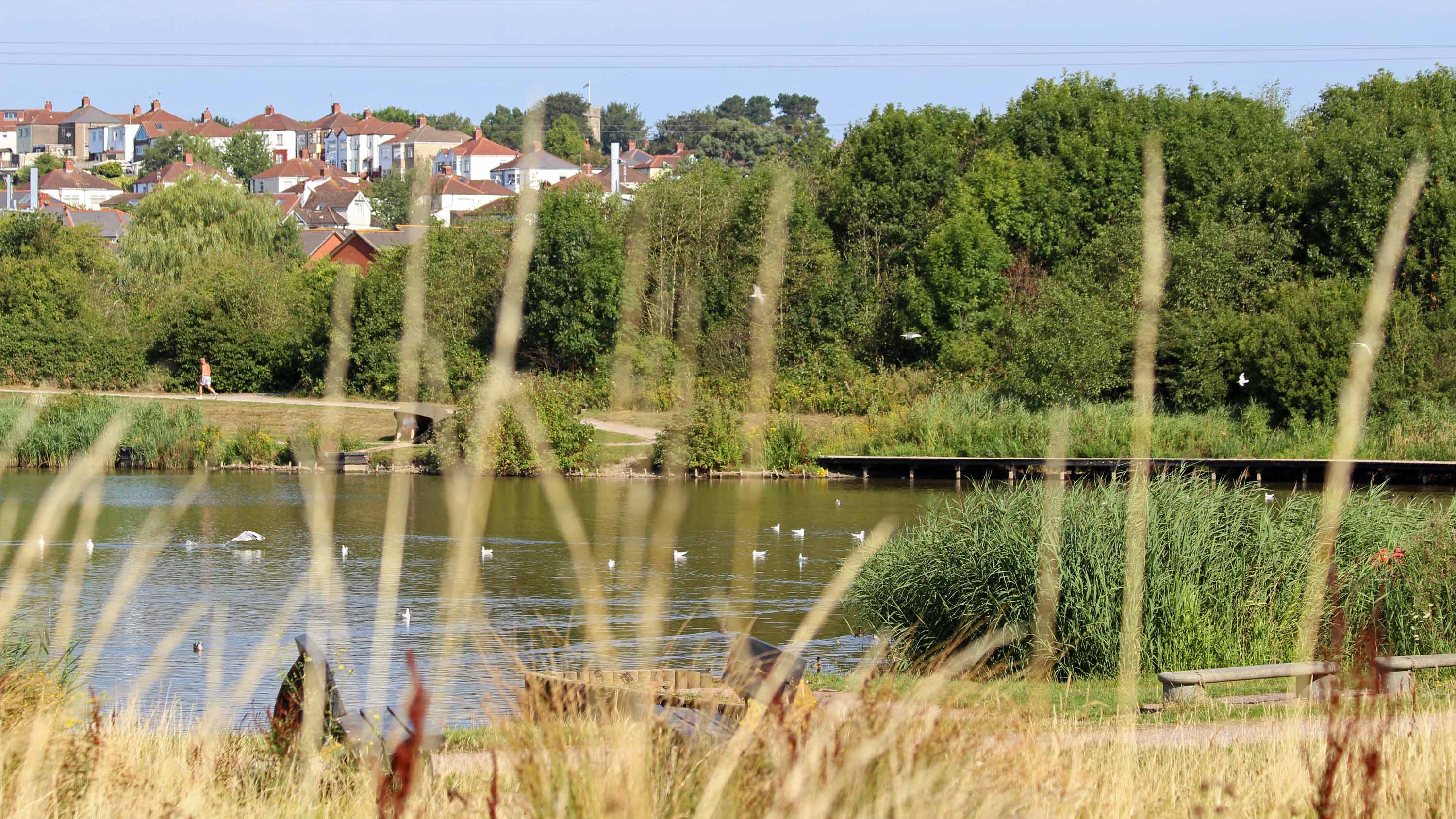
180807a Parc Tredelerch

From there we walked down towards the sea alongside Cors Crychydd Reen. Despite being choked with weed, the reen was home to Little grebes, Coots and Moorhens, all with young, as well as countless, though elusive Reed warblers.
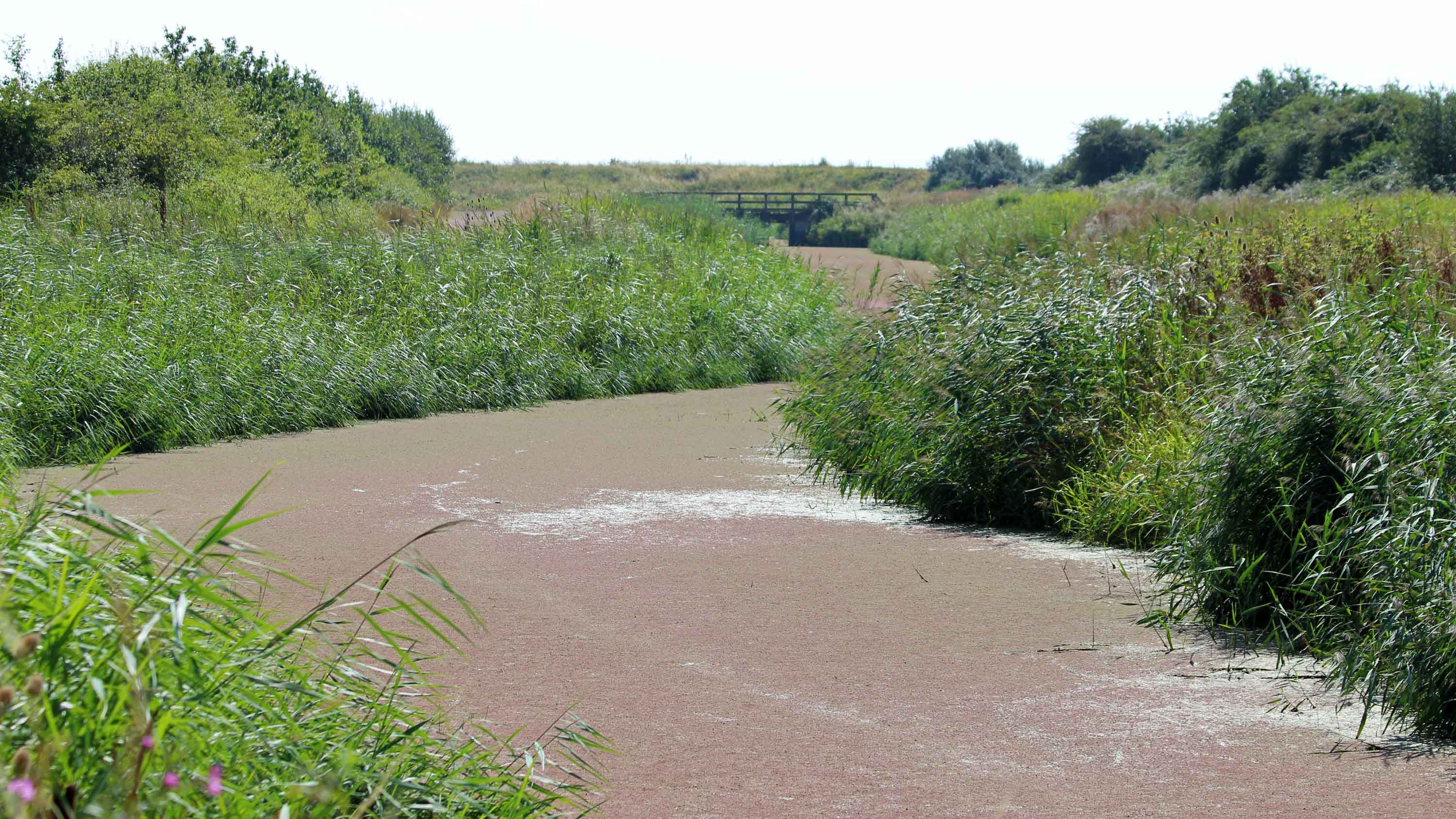
180807b Cors Crychydd Reen

A Buzzard was hunting from a post overlooking the adjacent landfill site, where gulls, Swifts and assorted hirundines were diving and swooping for food.
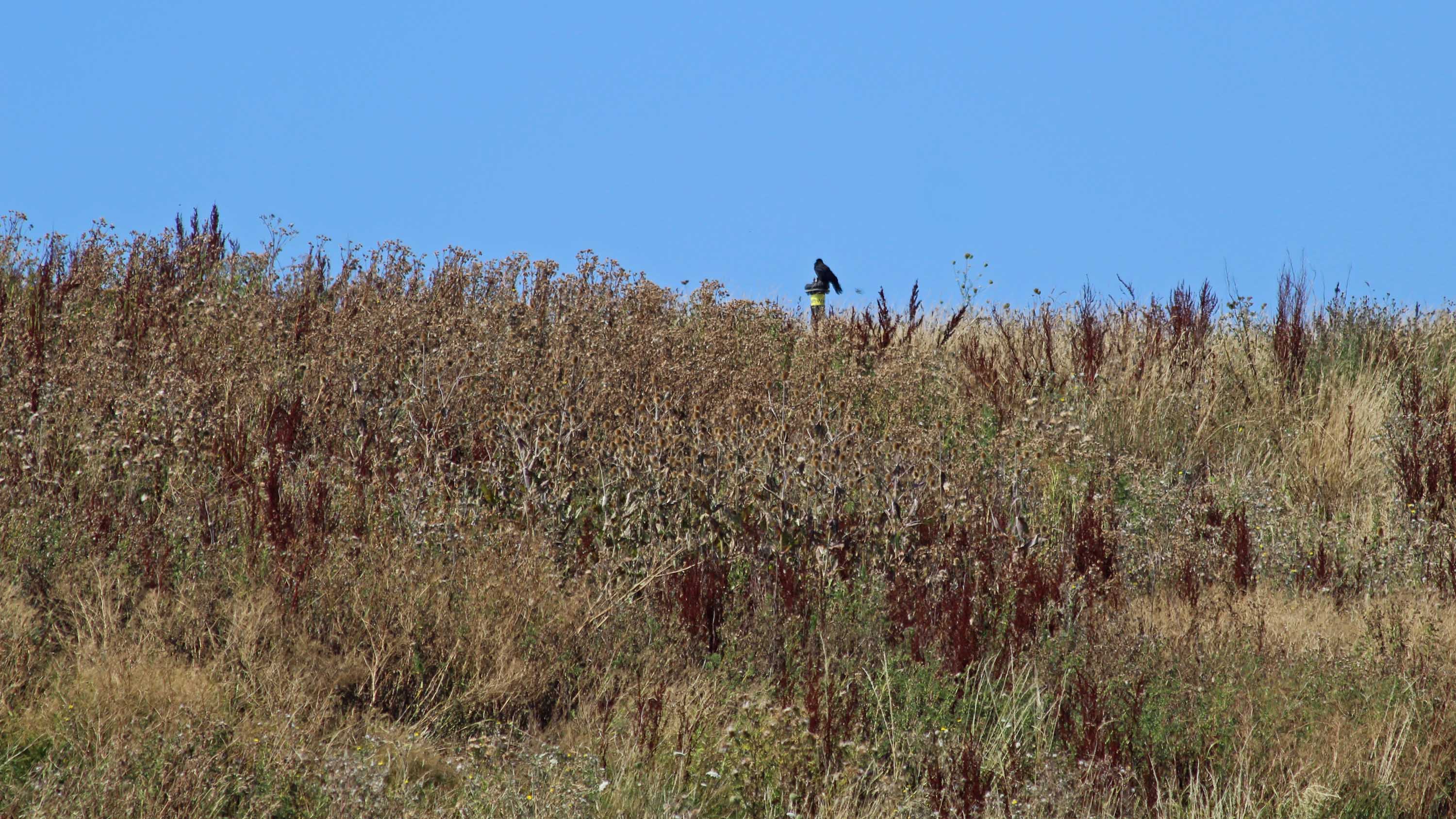
180807c buzzard

Tucking in to the blackberries as we walked, we were charmed by the sounds of Willow warblers and House sparrows, Goldfinches and Greenfinches, like this one perched high in a tree.
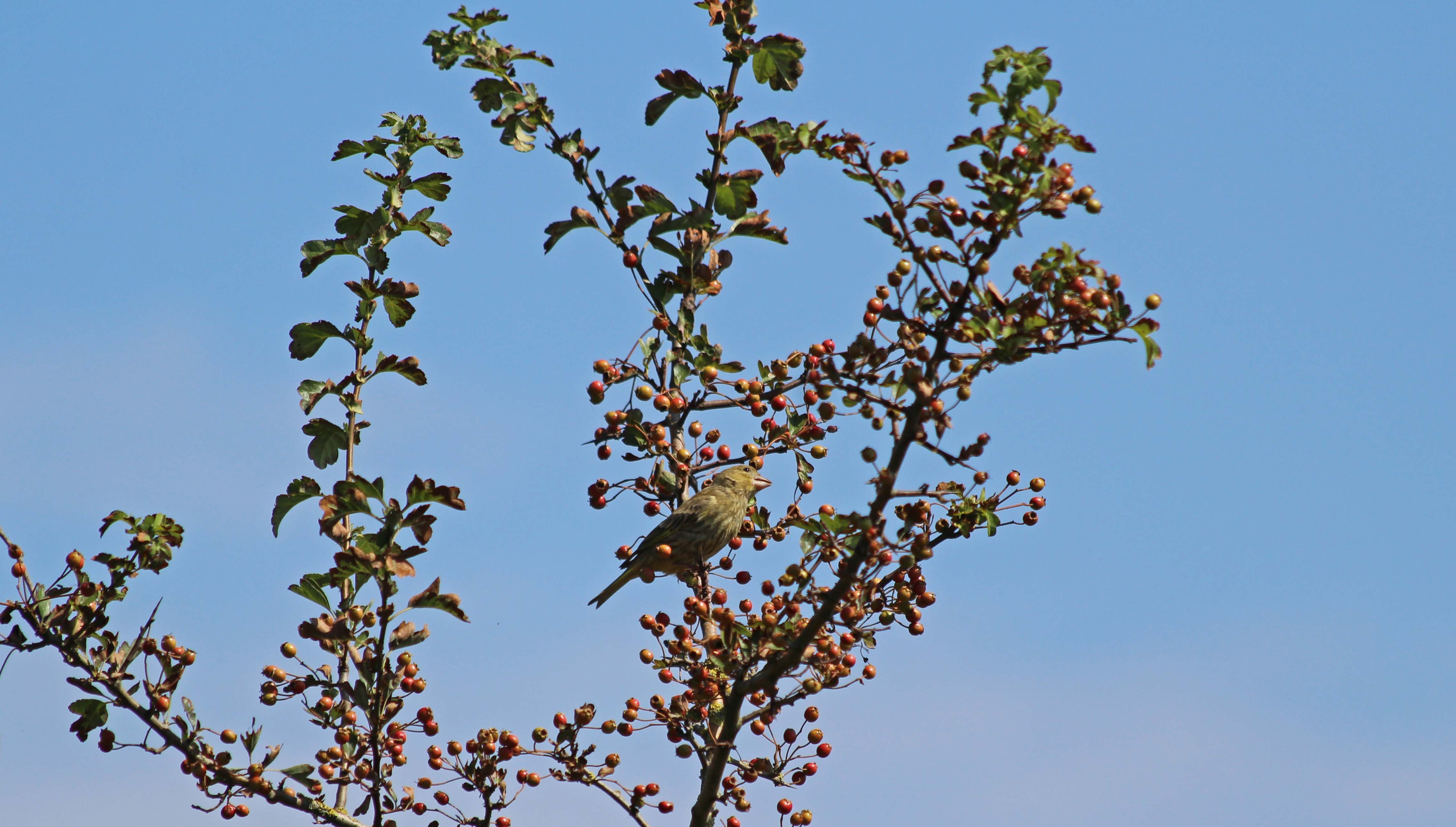
180807d greenfinch.jpg

When we reached the sea wall, we turned left towards Newport. Here’s the view in both directions, firstly looking west over Cardiff Bay towards Penarth Head and then west across the very dry foreshore. The heat shimmer didn’t make bird-spotting easy.
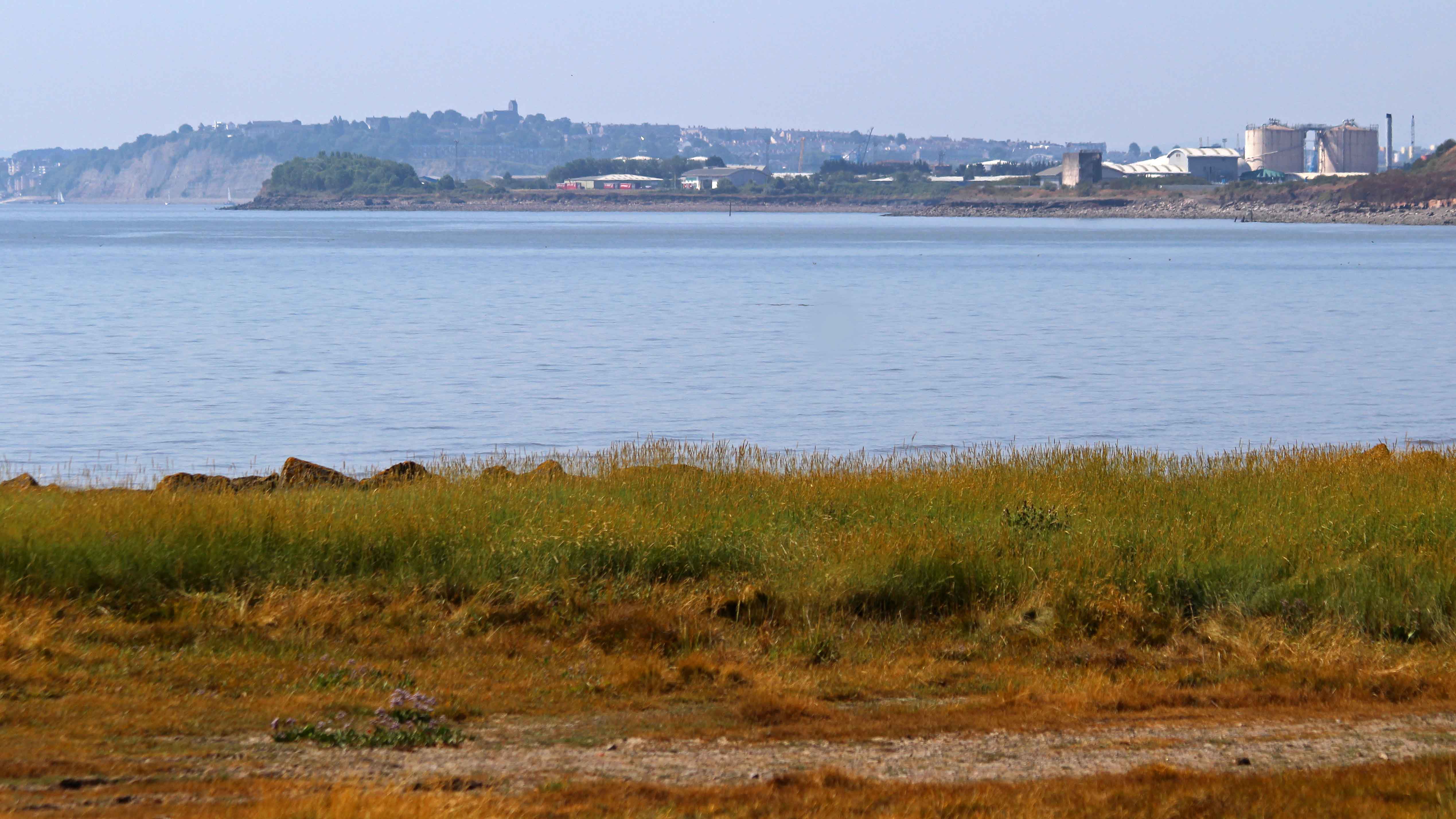
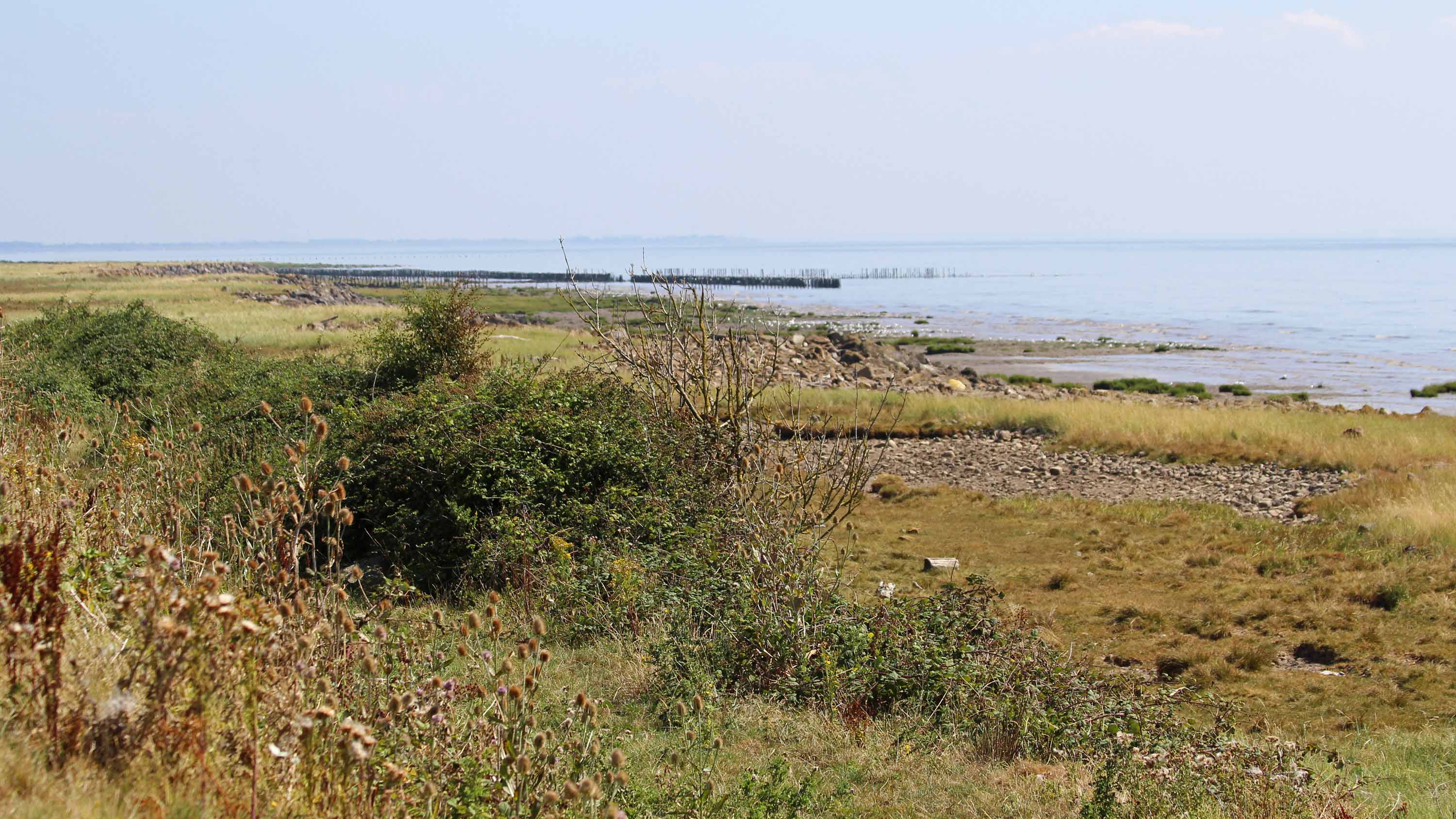
180807e view west twds Penarth180807f view east

Linnets entertained us as they bounced around the bushes and reeds.

180807g linnet

We didn’t see a huge number of waders – maybe it was too hot even for them. A large mixed flock of Redshanks and Dunlins flew east, we had good ’scope views of Ringed plovers and Dunlins at the water’s edge, and gulls abounded. There was one Common gull amongst this lot perched on the posts and a Little egret further along doing the same.
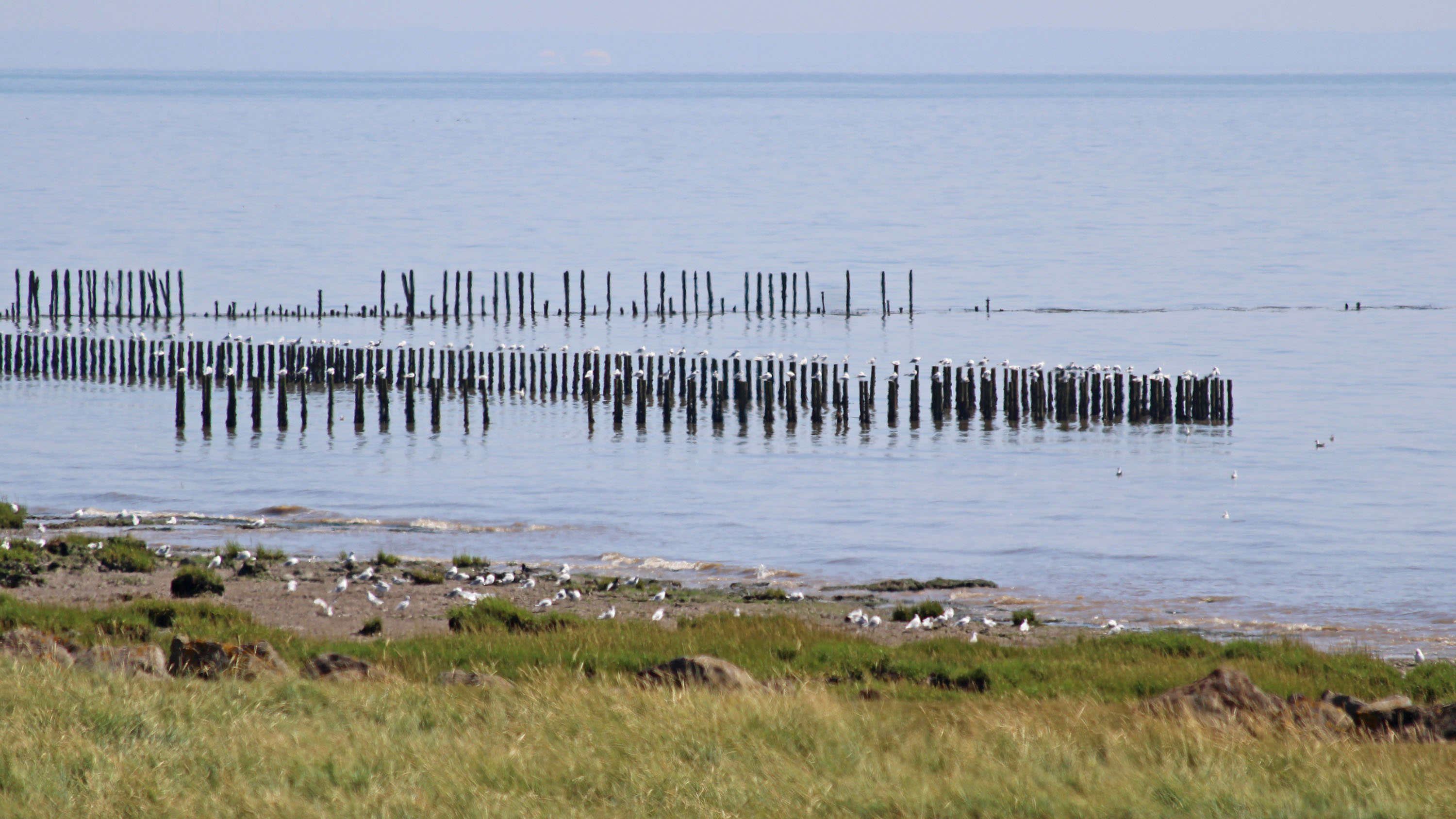
180807h gulls

There were also a ton of dragonflies and hoverflies, bees and butterflies – I’ll post more on two of those lovelies in tomorrow’s blog.

And for those who like the nitty-gritty details – I saw 42 bird species: Black-headed Gull, Carrion Crow, Buzzard, Chiffchaff, Common Gull, Redshank, Swift, Common Whitethroat, Coot, Dunlin, Goldfinch, Great Black-backed Gull, Green Woodpecker, Greenfinch, Grey Heron, Herring Gull, House Martin, House Sparrow, Jackdaw, Kestrel, Lesser Black-backed Gull, Linnet, Little Egret, Little Grebe, Magpie, Mallard, Moorhen, Mute Swan, Lapwing, Oystercatcher, Reed Bunting, Reed Warbler, Ringed Plover, Feral Pigeon, Rock Pipit, Shelduck, Starling, Swallow, Tufted Duck, Willow Warbler, Woodpigeon, and Wren. Also seen by trip participants were Blackbird, Blackcap, Blue tit, Canada goose, Collared dove, Cormorant, Curlew, Great crested grebe, Pied wagtail, Skylark, Robin, Stonechat and Whimbrel, bringing the total club list to a very respectable 55 species.

Like Loading...

Gone birding

03 Thursday May 2018

Posted by sconzani in birds, coastal fauna, nature

≈ 2 Comments

Tags

#GoneBirding

Thanks for dropping in to my little corner of the internet. I’m off on a birding trip for the next few days, hoping to see lots of beautiful birds to add to my #200BirdYear list, exploring parts of England I’ve not visited before and sharing good times with some fellow birding friends. My daily posts will continue – appropriately enough with a birding theme this week – so check below for the latest, and I’ll respond to any comments as soon as I get back.

105003 Gone birding

Like Loading...

A stroll at Sully

06 Tuesday Feb 2018

Posted by sconzani in birds, coastal fauna, nature, seaside, walks

≈ Leave a comment

Tags

birding, birdwatching, British birds, Curlew, Grey plover, Little ringed plover, Oystercatchers, Rock pipit, Sully, Turnstone, Wales Coastal Path

At 9:20am yesterday I was on the bus to Sully, looking forward to seeing what seabirds might be scavenging along the shore at the 10:16 high tide. A bonus was seeing my first pheasant of the year in a passing field.

180206 Sully stroll (1)

Walking down the long narrow path to the beach, I was immediately rewarded with the sight of Black-headed gulls and Oystercatchers looking for worms in the neighbouring field, and a Rock pipit flew up from the shore to join them in their foraging.

180206 Sully stroll (2)
180206 Sully stroll (3)

The beach looked empty as I strolled along the ‘coastal path’ – really just a line of rocks and mud here – but a flurry of loud peeping made me turn my head and bring the camera up in time to catch this flock of Turnstones flying in.

180206 Sully stroll (4)180206 Sully stroll (5)

Further east, scanning the water’s edge with my binoculars, I finally spotted an interesting little group of 3 Turnstones, a Little ringed plover and a Grey plover, the latter two year ticks for me, and I’d not seen a Grey plover so close before (I’m still talking a couple of hundred metres away but see-able with bins and long lens). I watched them for perhaps 10 minutes before two loud women and their dog scared the birds off.

180206 Sully stroll (6)

180206 Sully stroll (7)
180206 Sully stroll (8)

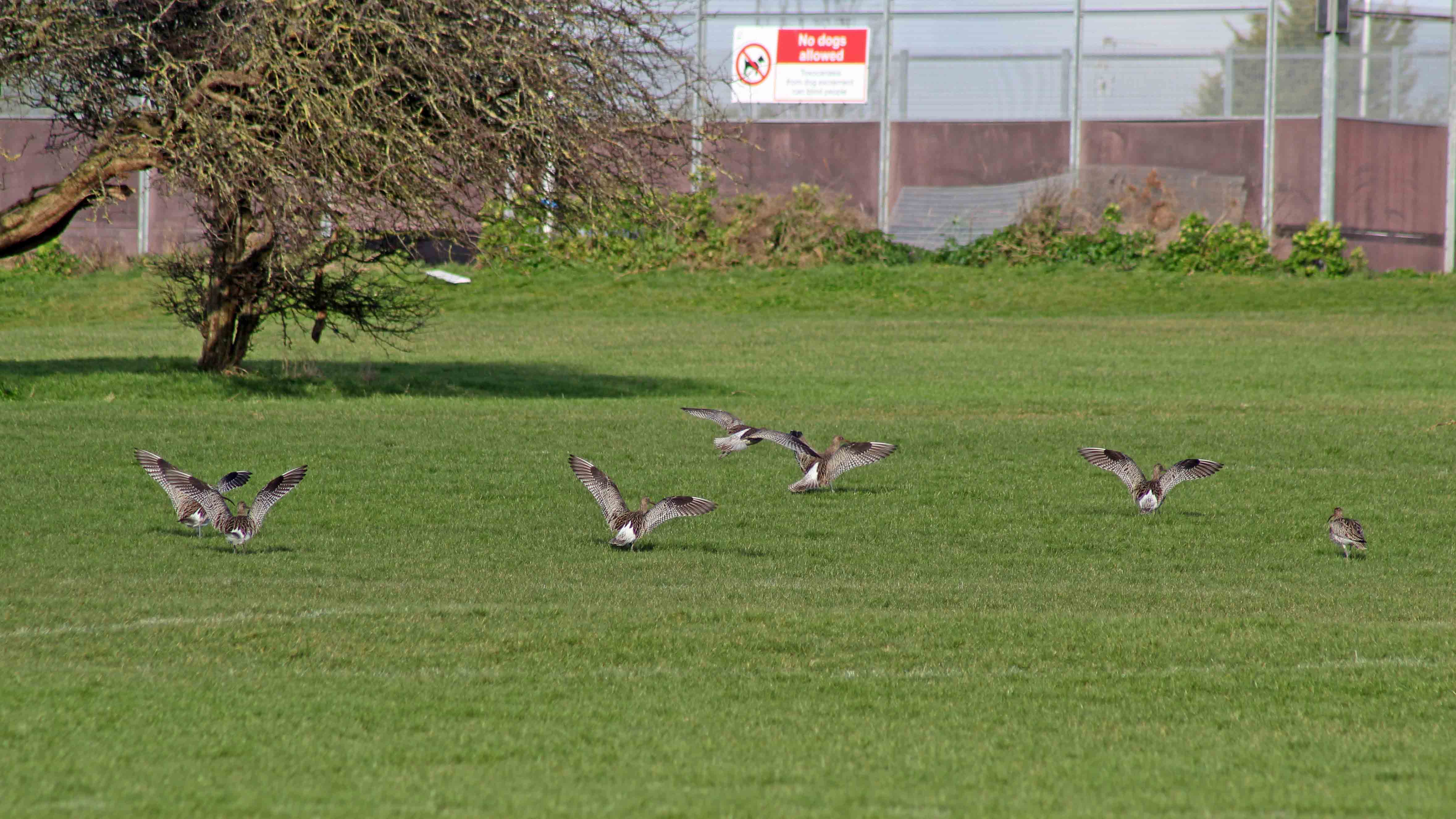
Last, but mostly certainly not least, as these beautiful birds are endangered in Britain, 28 handsome Curlews were using their long curving beaks to probe the playing fields that abut the coastal path in search of worms. After 15 minutes’ watching I left them to their feast, with a silent ‘thanks for being the icing on the cake of my lovely morning at Sully’, and strolled on …

180206 Sully stroll (9)180206 Sully stroll (10)

Like Loading...
← Older posts

About me

sconzani

sconzani

I'm a writer and photographer; researcher and blogger; birder and nature lover; countryside rambler and city strider; volunteer and biodiversity recorder.

View Full Profile →

Follow earthstar on WordPress.com

Enter your email address to follow this blog and receive notifications of new posts by email.

Recent blog posts

  • M is for mite December 18, 2025
  • L is for lepidopteran lifers December 17, 2025
  • K is for Keeled skimmers December 16, 2025
  • J is for Jersey tiger December 15, 2025
  • I is for Ichneumon December 14, 2025

From the archives

COPYRIGHT

Unless otherwise acknowledged, the text and photographs on this blog are my own and are subject to international copyright. Nothing may be downloaded or copied without my permission.

Fellow Earth Stars!

  • Unknown's avatar
  • Unknown's avatar
  • Unknown's avatar
  • Unknown's avatar
  • Unknown's avatar
  • Unknown's avatar
  • Unknown's avatar
  • Unknown's avatar
  • Unknown's avatar
  • Unknown's avatar
  • Unknown's avatar
  • Unknown's avatar
  • Unknown's avatar
  • Unknown's avatar
  • Unknown's avatar
  • Unknown's avatar
  • Unknown's avatar
  • Unknown's avatar
  • Unknown's avatar
  • Unknown's avatar
  • Unknown's avatar
  • Unknown's avatar
  • Unknown's avatar
  • Unknown's avatar
  • Unknown's avatar
  • Unknown's avatar
  • Unknown's avatar
  • Unknown's avatar
  • Unknown's avatar
  • Unknown's avatar
  • Unknown's avatar
  • Unknown's avatar
  • Unknown's avatar
  • Unknown's avatar
  • Unknown's avatar
  • Unknown's avatar
  • Unknown's avatar
  • Unknown's avatar
  • Unknown's avatar
  • Unknown's avatar
  • Unknown's avatar
  • Unknown's avatar
  • Unknown's avatar
  • Unknown's avatar
  • Unknown's avatar
  • Unknown's avatar
  • Unknown's avatar
  • Unknown's avatar
  • Unknown's avatar
  • Unknown's avatar

Blog at WordPress.com.

Privacy & Cookies: This site uses cookies. By continuing to use this website, you agree to their use.
To find out more, including how to control cookies, see here: Cookie Policy
  • Subscribe Subscribed
    • earthstar
    • Join 667 other subscribers
    • Already have a WordPress.com account? Log in now.
    • earthstar
    • Subscribe Subscribed
    • Sign up
    • Log in
    • Report this content
    • View site in Reader
    • Manage subscriptions
    • Collapse this bar
 

Loading Comments...
 

You must be logged in to post a comment.

    %d