• ABOUT
  • BIRDING 2018
  • Birding 2019
  • BLOG POSTS
  • Butterflies 2018
  • Resources

earthstar

~ a celebration of nature

earthstar

Category Archives: mammal

Arne deer

03 Saturday Nov 2018

Posted by sconzani in animals, mammal, nature

≈ Leave a comment

Tags

British deer, deer, Roe deer, RSPB Arne, Sika, Sika deer, wild deer

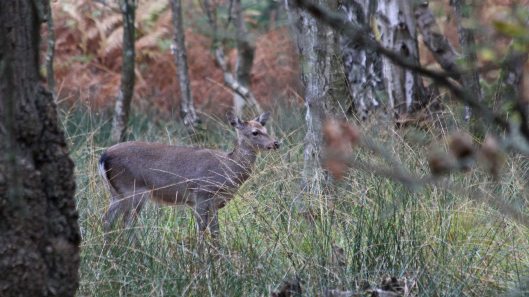
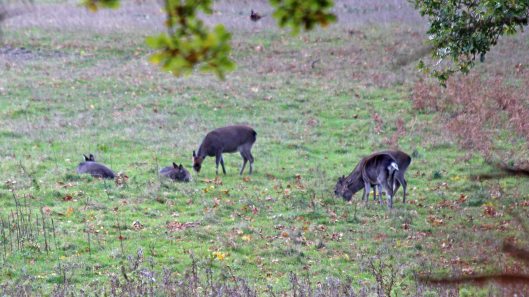
As well as the birds at RSPB Arne, we were treated to very close views of Sika deer and more distant views of a herd of Roe deer.

181103 sika deer (1)

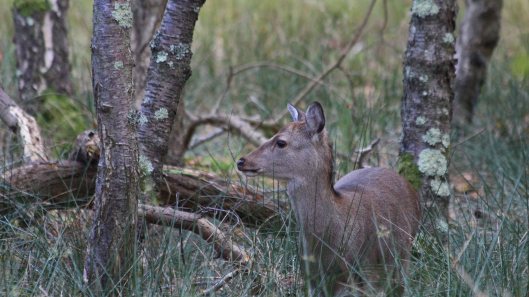
The Sika were sporting their winter coats of dark grey so the spots you would be able to see in summer were not visible. These are not native deer – they were introduced from Asia in 1860 but some have since escaped and there is now a sizable wild population.

181103 sika deer (2)

Arne must be like heaven to the Sika, as they love coniferous forests and heathlands, where they graze on heather, grasses and small shrubs.

181103 sika deer (3)

Although October and November are the traditional months for the rut, we didn’t hear any of the usual male groans, whistles or yak-yak barks, though we did hear an alarming whining noise at one stage when a female was calling to her calf.

181103 sika deer (4)

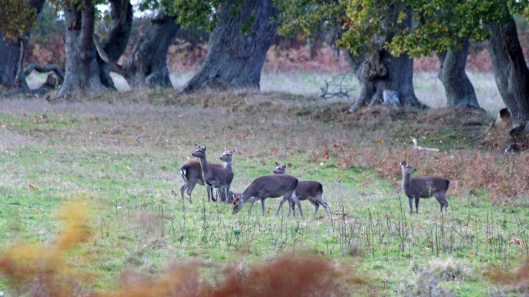
A small herd of six Roe deer were in a neighbouring field as we walked along one of Arne’s many trails. None of these deer had antlers, so I assume they were all females and juveniles.

181103 roe deer (1)

Roe deer are native to Britain and, though they were once hunted to extinction in England, they survived in Scotland and have since been re-introduced across the border so are now abundant in much of England and Scotland, with a small population in Wales.

181103 roe deer (2)

Like Loading...

Steart Marshes Longhorns

15 Monday Oct 2018

Posted by sconzani in animals, mammal, nature

≈ 2 Comments

Tags

cattle with horns, English cattle breeds, English Longhorn, Longhorn cattle, Steart Point, WWT Steart Marshes

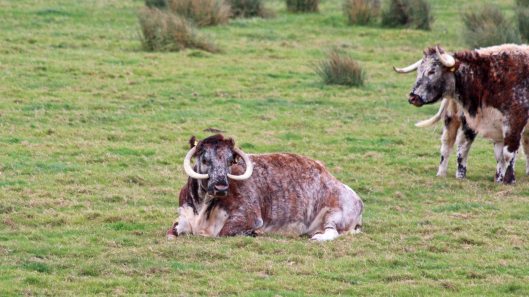
As well as the stunning birdlife at WWT Steart Marshes on Saturday, I was particularly intrigued by these cattle, which one of my birding friends identified as English Longhorns.

181015 longhorn (1)

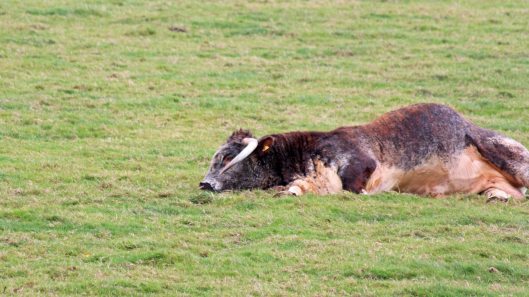
One of the advantages for local farmers of the wetland development on the Steart peninsula is that they can now graze their cattle on saltmarsh. This gives the meat of these cattle a unique flavour that is apparently highly prized by some human carnivores, so it attracts a better price for the farmers. I thought the beast shown below was already destined for the abattoir as it looked to be dead already.

181015 longhorn (2)

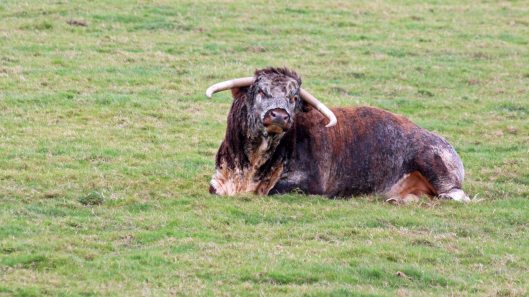
But no – turns out it was merely sleeping heavily and, after five minutes or so, raised its enormous head to blink sleepily at the passing humans. What an impressive beast it was!

181015 longhorn (5)

The horns of these cattle were fascinating: they seemed to grow in all different directions. One animal had one horn growing upwards, the other down, and the creature shown below must surely have had its horns cut, otherwise it would have been in danger of them piercing its face.

181015 longhorn (3)

For all their huge size, these seemed to be gentle giants. The younger animal in this photo came over and began to rub against and lick the head of the older beast – its mother?

181015 longhorn (4)

Still, I don’t think I’d want to venture into a field with any of them any time soon.

Like Loading...

Ratty’s back

15 Sunday Jul 2018

Posted by sconzani in animals, mammal, nature

≈ Leave a comment

Tags

British mammals, Cosmeston, Cosmeston Lakes Country Park, Water vole

180715 water vole (1)

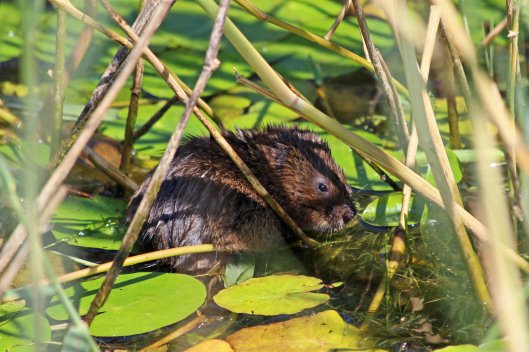
Well, the truth is Ratty probably never went away. Water voles might disappear from sight during the cold months of winter but they don’t actually hibernate – they simply burrow deeper underground to keep warm, and they spend a lot of time sleeping, which means they don’t need to snack too often from the larder they stock in autumn, full of bulbs, roots and tubers. They also bung up the entrance to their burrows with a mix of vegetation and mud, which helps keep the heat inside.

180715 water vole (2)

Come the Spring, they emerge and spend more time out and about, though it’s only in the past month or so that I’ve seen them again at Cosmeston. That may just be the timing of my visits, though the few I’ve seen have also seemed a bit less confident about being out and about than last year’s Water voles, possibly because some idiot people have let their dogs jump into the dipping pond, an area where they are obviously forbidden.

180715 water vole (3)

It’s probably impossible to tell how many of last year’s release of 100 Water voles have survived the winter but another 40-odd were released a few weeks back to supplement the local population.

180715 water vole (4)

People love to watch them, young and old alike, so let’s hope we can all enjoy them chewing away at the vegetation for the days, weeks, months to come.

180715 water vole (5)

Like Loading...

Heatwave

26 Tuesday Jun 2018

Posted by sconzani in animals, mammal, nature, seasons, weather

≈ 2 Comments

Tags

#30DaysWild, 30 Days Wild, heatwave, Penarth, shrew, summer heat

And I thought yesterday was hot!

180626 Penarth

On day 26 of #30DaysWild the temperature hit 29°C here in Penarth, even hotter than yesterday. And while people may be enjoying this weather (I am not!), it’s really tough for wildlife. I’m not sure what caused this little shrew to die but it’s easy to believe it was the heat, or perhaps thirst. We’ve had a couple of dry months now, and ponds and streams are running low and / or drying up. So, if you’re in a position to put water out for the birds and the beasties, please do – they really need all the help they can get right now.

180626 shrew

Like Loading...

Birding at Bargoed & Cefn Gelligaer

17 Sunday Jun 2018

Posted by sconzani in animals, birds, mammal, nature, walks

≈ 2 Comments

Tags

birding, birdwatching, Glamorgan Bird Club, Stonechat, Swallow, Welsh mountain pony

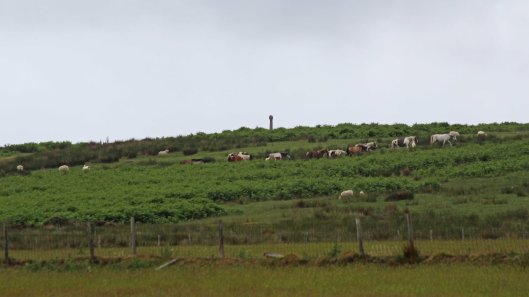
I was out birding again on day 17 of #30DaysWild, once again with Glamorgan Bird Club, this time to Cefn Gelligaer and the Bargoed uplands. And what a wonderful day it was, in spite of the light rain that set in after lunch (though that does mean I don’t have a lot of photos). One of our club members, Lee, guided us around his local patch and it was a real bonus tapping in to his local knowledge.
180617 Birding Bargoed uplands (6)180617 Birding Bargoed uplands (2)180617 Birding Bargoed uplands (5)

This is ‘big sky’ country, with a long history of human settlement, from the era of Megalithic chambered tombs through the years of Roman road-building to the coal mining of 19th and early 20th centuries. There are ancient trees, superbly crafted dry-stone walls, old droving roads and narrow green lanes.

180617 Birding Bargoed uplands (7)
180617 Birding Bargoed uplands (3)
180617 Birding Bargoed uplands (12)

As well as the 42 bird species we saw – a very respectable list, given the conditions – we also had a weasel checking us out, before streaking across the lane behind us, and I saw my first Welsh mountain ponies, very handsome little beasts with quite oddly shaped heads.

180617 Birding Bargoed uplands (11)180617 Birding Bargoed uplands (10)

Lee kindly gave us each a brochure for a walking trail that includes many of the local historical features so I will definitely be heading back for another look.

180617 Birding Bargoed uplands (9)

Spot the Stonechat

Here’s our bird list: Carrion crow, Mistle thrush, Lesser black-backed gull, Pheasant, Robin, Skylark, Wren, Starling, Woodpigeon, Jackdaw, Chaffinch, Goldfinch, Meadow pipit, Swallow, Willow warbler, Great tit, Great spotted woodpecker, Swift, Blackbird, Herring gull, Dunnock, Pied wagtail, Buzzard, Curlew, Red kite, Green woodpecker, Song thrush, Stonechat, Stock dove, Tree pipit, Redstart, Coal tit, Blackcap, Nuthatch, Long-tailed tit, Cuckoo, Blue tit, Linnet, Reed bunting, Whinchat, Magpie, and House sparrow.

180617 Birding Bargoed uplands (1)

Swallows swooping over the fields
Like Loading...

First, soak your pellet

29 Tuesday May 2018

Posted by sconzani in birds, mammal, nature

≈ Leave a comment

Tags

Barn owl pellets, bird pellets, birding, British birds, dissecting pellets, Field voles, mammal bones, voles bones

If you’d told me 5 years ago that I would one day google ‘How to dissect owl pellet’, I would’ve laughed in your face, but guess what I did today? Three pellets were very kindly sent to me, at my request, by an understanding friend. What can I say? I was curious! I was curious to see what the owl had been eating. (And I must ask my friend what his reply was when the Post Office staff asked what was in his parcel.)

180529 owl pellets (2)180529 owl pellets (3)

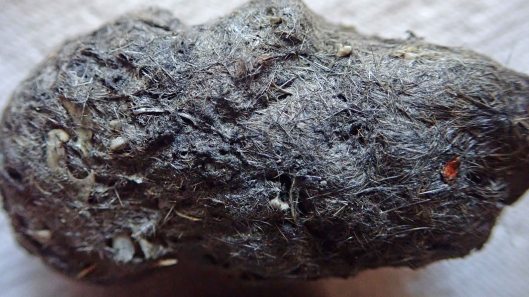
Here is what I received, and a look at the external features. Are they tiny teeth? What is that bone? The pellets have been dried and are very light and look to be full of fur.

180529 owl pellets (5)
180529 owl pellets (7)

Just to be clear, an owl pellet is not pooh. Owls usually swallow their prey whole or, if it’s too large, then in big chunks. The food gets broken down in the gizzard, then digested in the stomach but the more solid, indigestible bits like fur and bone get compacted into pellets in the gizzard and are then ejected. So, a pellet will usually contain whole bones, sometimes whole skulls, which can be used to find out what the bird has been eating.

180529 owl pellets (4)

According to the instructions I found on Discover Wildlife.com:

  • To see what is in an owl pellet, soak it in water. When soft, gently tease it apart with forceps.
  • Slowly pick out all of the bones and bits of insect and put to one side for identification.
  • Count everything – you may only have one skull but three lower jaws, so check carefully to see how many animals are represented in the pellet.

180529 owl pellets (8)

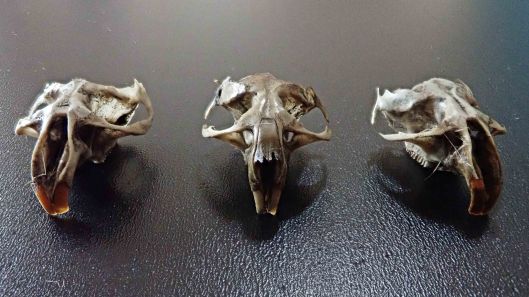
I have now dissected all three pellets, leaving me with a pile of fur and a ton of tiny bones. It was fascinating stuff and I felt a bit like an archaeologist, teasing away the unwanted material from around the fragile bones. Everything has now gone in to soak in biological washing power (as per another website I found) (the enzymes in biological powder should help remove the small bits of fur and ‘other matter’) to clean the bones (bone collectors would probably use hydrogen peroxide at this point but I don’t plan on making a hobby of this so haven’t bought any chemicals). At a glance, I think the bones are mostly of Field voles but there is also one Common shrew. I’ll report back on the findings, with photos of the bones, in a few weeks.

Field vole skulls

Like Loading...

Hallo, Rabbit

19 Monday Feb 2018

Posted by sconzani in animals, mammal, nature

≈ 2 Comments

Tags

British fauna, British mammals, Cosmeston, Oryctolagus cuniculus, rabbit

180219 rabbit

“Hallo, Rabbit,” he said, “is that you?”
“Let’s pretend it isn’t,” said Rabbit, “and see what happens.”
~ A.A. Milne, Winnie the Pooh

Like Loading...

December at Cosmeston

28 Thursday Dec 2017

Posted by sconzani in birds, mammal, nature, parks, winter

≈ 2 Comments

Tags

birding, birdwatching, British birds, brown rat, bullfinch, Cosmeston, Cosmeston Lakes Country Park, Fieldfare, Great spotted woodpecker, long-tailed tit, Marsh tit, nuthatch, Stonechat, Tufted duck

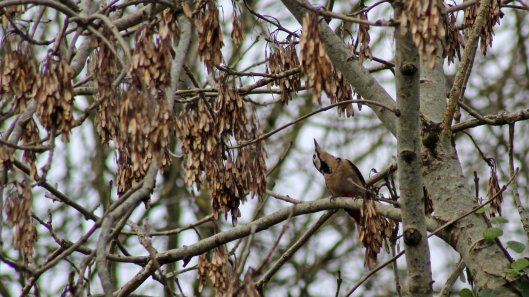
It was fairly quiet bird-wise on my first monthly visit to Cosmeston Lakes Country Park on 2 December, though there were still good numbers of the various thrushes (Mistle, Song, Redwing and Blackbird) around. A Great spotted woodpecker in the west paddock was a nice surprise – I initially thought it a Jay when I saw that peachy belly. The Tufted ducks amused, as always, and, while I sat watching them, the Brown rat I’d seen before at that particular spot came snuffling around for food. There were two more rats foraging by the boardwalk near the café.

171228 Cosmeston (1)

171228 Cosmeston (2)
171228 Cosmeston (3)

It’s a thrush takeover! On 6 December, I’d scarcely left the house to walk to Cosmeston than I was spotting Redwings, Song thrushes, and a Mistle thrush, plus Goldfinches and Chaffinches, in the trees just across the road. And when I got to Cosmeston it was more – much more – of the same, plus the first Fieldfares I’ve seen there. In Cogan Wood, the little birds were hungry so I shared my flapjack with them – there were even two Nuthatches and a half dozen Long-tailed tits picking up the crumbs on the ground. And the prize for the most colourful birds goes to the pair of Bullfinch that were munching on hogweed seeds.

171228 Cosmeston (5)
171228 Cosmeston (6)
171228 Cosmeston (7)
171228 Cosmeston (4)

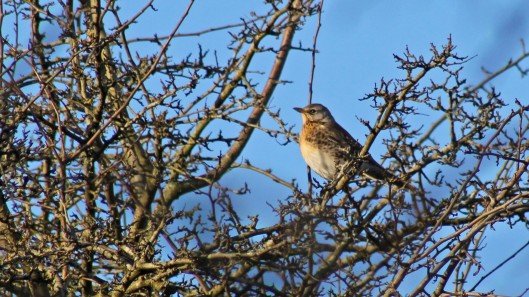
On 15 December, I finally got a reasonable, though not brilliant photo of a Fieldfare – they are very skittish so it’s hard to get close to them. I finally found a spot behind the berry trees they were feasting in, then just had to be patient and wait for one to pop up to the top of a tree.

171228 Cosmeston (8)

In Cogan Wood, one of the resident Marsh tits popped out to say hello – first sighting I’ve had since earlier in the year as they seem to disappear during the breeding season. And there was a Stonechat at the top end of the west paddock. There had been a pair of Stonechats in that area in the autumn but they seemed to have disappeared when the park staff mowed that field, so it was good to see one there again.

171228 Cosmeston (9)
171228 Cosmeston (10)

Something else happened at Cossie during this visit, something that’s never happened to me before. A squirrel climbed up my leg, not once but four times – the first time it grabbed my finger, the second time it touched my camera. I didn’t have food but it obviously thought I did. It certainly made me laugh.

Like Loading...

The nose knows

19 Tuesday Dec 2017

Posted by sconzani in animals, mammal, nature

≈ Leave a comment

Tags

animal body parts, nose, nostrils

171219 nose (1)
171219 nose (2)
171219 nose (3)
171219 nose (4)

‘Don’t stick your nose where someone can pull it off and eat it.’ ~ Terry Pratchett, Men at Arms

171219 nose (5)
171219 nose (6)
171219 nose (7)
171219 nose (8)
171219 nose (9)
171219 nose (10)
Like Loading...

Eco mowers

20 Monday Nov 2017

Posted by sconzani in animals, mammal, nature

≈ 3 Comments

Tags

British fauna, Dartmoor ponies as eco-mowers, Dartmoor pony, Dawlish Warren, national nature reserve

On our Glamorgan Bird Club trip to Dawlish Warren National Nature Reserve, we came across this small group of ponies. The Teignmouth District Council website reports: ‘Helping to keep the grasslands in shape, Dartmoor ponies are used in the winter months to help produce ideal conditions for rare flowers and invertebrates. These are “working”, wild animals, so DO NOT feed them or try to stroke them.’

171120 Dawlish warren ponies (5)

Not having read this before we saw them, we did stroke them and, luckily, they were friendly enough, but they were much more concerned with doing their job as ‘eco mowers’ than basking in human attention.

171120 Dawlish warren ponies (2)
171120 Dawlish warren ponies (4)
171120 Dawlish warren ponies (3)
171120 Dawlish warren ponies (1)
Like Loading...
← Older posts
Newer posts →

About me

sconzani

sconzani

I'm a writer and photographer; researcher and blogger; birder and nature lover; countryside rambler and city strider; volunteer and biodiversity recorder.

View Full Profile →

Follow earthstar on WordPress.com

Enter your email address to follow this blog and receive notifications of new posts by email.

Recent blog posts

  • Recording Grey squirrels January 28, 2026
  • Jimmy Wren January 27, 2026
  • Millipede: Nanogona polydesmoides January 26, 2026
  • Mid-winter 10 January 25, 2026
  • Female Scaup January 24, 2026

From the archives

COPYRIGHT

Unless otherwise acknowledged, the text and photographs on this blog are my own and are subject to international copyright. Nothing may be downloaded or copied without my permission.

Fellow Earth Stars!

  • Unknown's avatar
  • Unknown's avatar
  • Unknown's avatar
  • Unknown's avatar
  • Unknown's avatar
  • Unknown's avatar
  • Unknown's avatar
  • Unknown's avatar
  • Unknown's avatar
  • Unknown's avatar
  • Unknown's avatar
  • Unknown's avatar
  • Unknown's avatar
  • Unknown's avatar
  • Unknown's avatar
  • Unknown's avatar
  • Unknown's avatar
  • Unknown's avatar
  • Unknown's avatar
  • Unknown's avatar
  • Unknown's avatar
  • Unknown's avatar
  • Unknown's avatar
  • Unknown's avatar
  • Unknown's avatar
  • Unknown's avatar
  • Unknown's avatar
  • Unknown's avatar
  • Unknown's avatar
  • Unknown's avatar
  • Unknown's avatar
  • Unknown's avatar
  • Unknown's avatar
  • Unknown's avatar
  • Unknown's avatar
  • Unknown's avatar
  • Unknown's avatar
  • Unknown's avatar
  • Unknown's avatar
  • Unknown's avatar
  • Unknown's avatar
  • Unknown's avatar
  • Unknown's avatar
  • Unknown's avatar
  • Unknown's avatar
  • Unknown's avatar
  • Unknown's avatar
  • Unknown's avatar
  • Unknown's avatar
  • Unknown's avatar

Blog at WordPress.com.

Privacy & Cookies: This site uses cookies. By continuing to use this website, you agree to their use.
To find out more, including how to control cookies, see here: Cookie Policy
  • Subscribe Subscribed
    • earthstar
    • Join 670 other subscribers
    • Already have a WordPress.com account? Log in now.
    • earthstar
    • Subscribe Subscribed
    • Sign up
    • Log in
    • Report this content
    • View site in Reader
    • Manage subscriptions
    • Collapse this bar
 

Loading Comments...
 

You must be logged in to post a comment.

    %d