• ABOUT
  • BIRDING 2018
  • Birding 2019
  • BLOG POSTS
  • Butterflies 2018
  • Resources

earthstar

~ a celebration of nature

earthstar

Tag Archives: autumn fungi

Fungi: Black bulgar

24 Friday Oct 2025

Posted by sconzani in autumn, fungi, winter

≈ 7 Comments

Tags

autumn fungi, Black bulgar, British fungi, Bulgaria inquinans, winter fungi

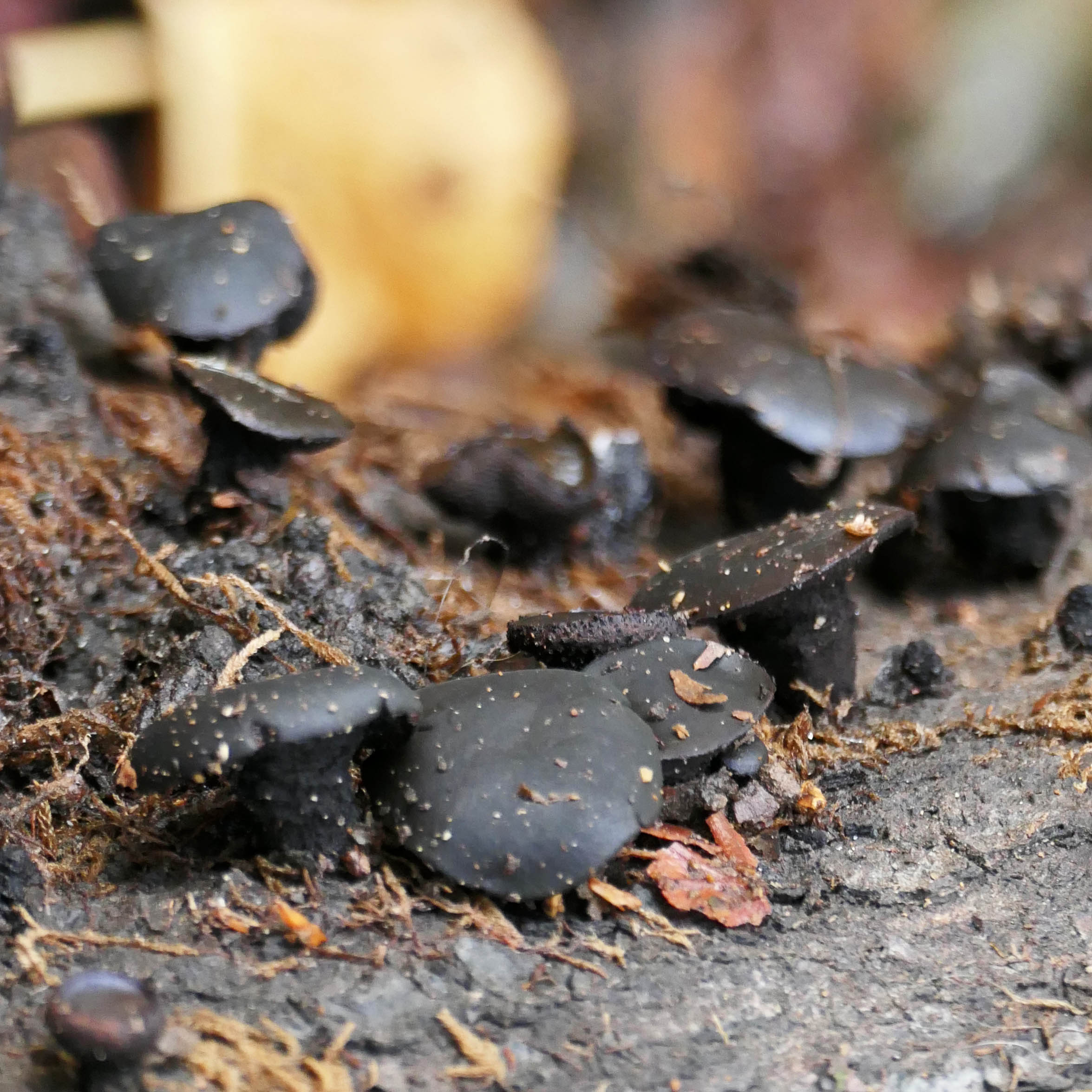
I went looking for Fly agaric, the mushroom everyone recognises but which is surprisingly uncommon where I live; I found none but, almost immediately on arrival at north Cardiff’s Cefn Onn Park, I did spot this large log covered in small black button-like fungi.
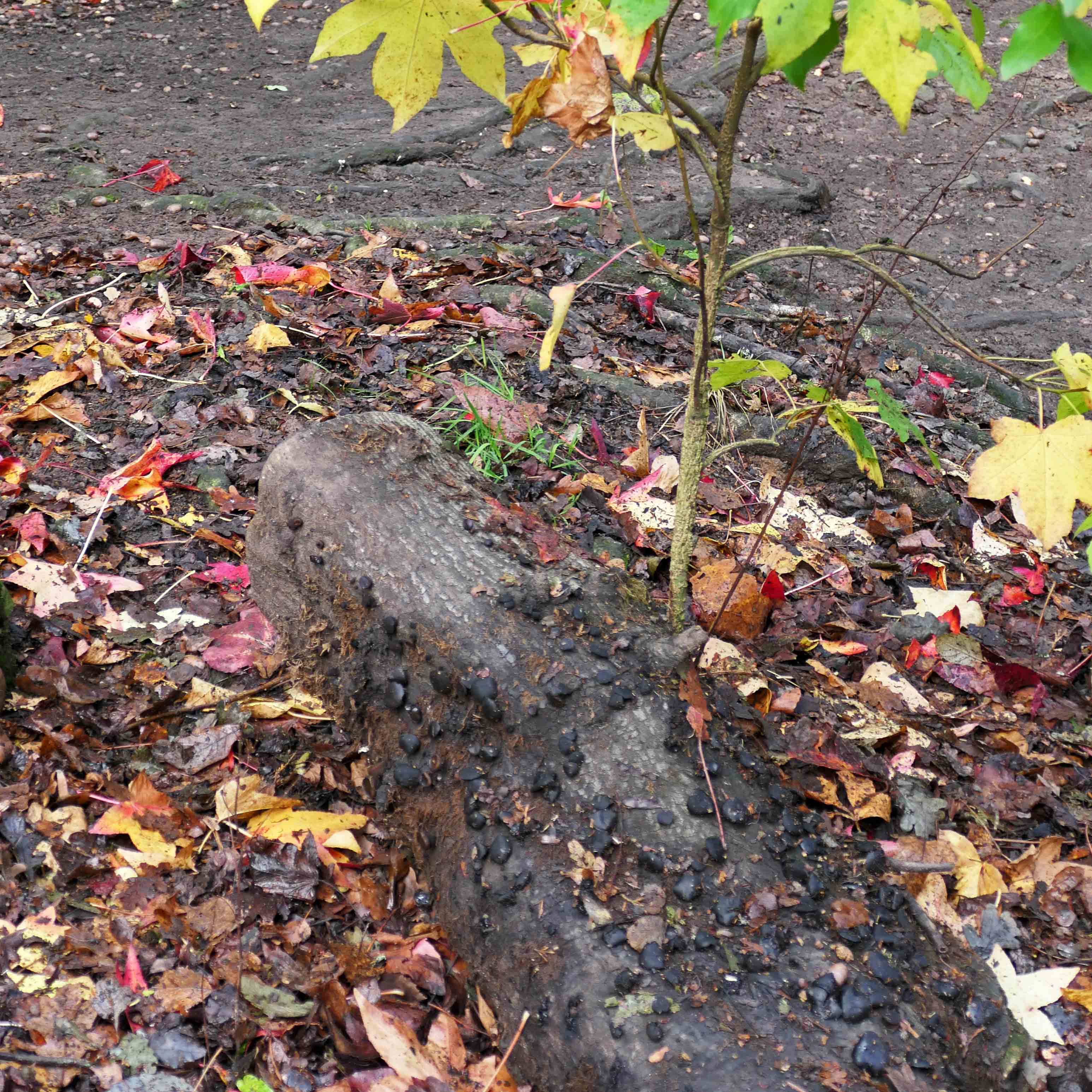
These are the fruit of the fungus Black bulgar (Bulgaria inquinans), also known as Rubber buttons and Bachelor’s buttons. According to the First Nature website, they are known as Black Jelly Drops or Poor Man’s Licorice in the United States, though the site also cautions readers not to be fooled by those names – these fungi are not edible and may, indeed, be toxic.
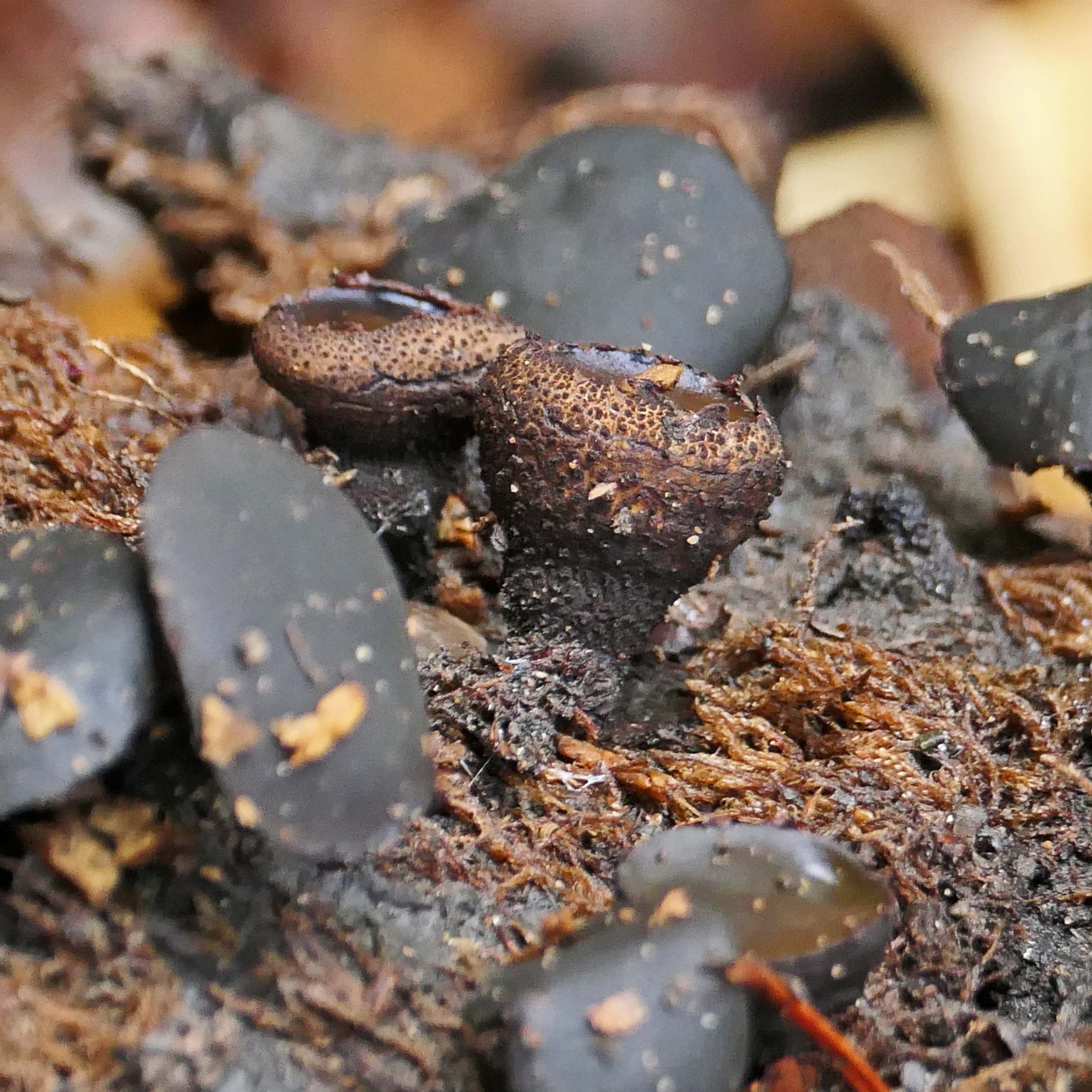
As you can see in the photo above, the fruit bodies look a bit like short tacks; they start out flat on top but come to resemble little cups. The outer surface is, initially, brown and scaly looking but, as they age, they become black, blobby when wet, but tougher and rubbery when dry. Black bulgar is described as common, and can be seen, mostly on fallen Oaks but also on a few other tree species, from autumn through to spring.
Like Loading...

An inedible dessert

17 Friday Oct 2025

Posted by sconzani in autumn, fungi

≈ Leave a comment

Tags

autumn colour, autumn fungi, British fungi, fungi on wood, Plums and custard, Tricholomopsis rutilans

When you read the name Plums and Custard, you might well think, as I always do, that it sound like a delicious dessert. If only!

In this instance, Plums and Custard is not your Friday night after-dinner delight but a fungus, also known as Tricholomopsis rutilans. The two parts of the name come from the cap, which starts off a rich plum colour but fades over time, and the custard yellow colour of the gills. And, no, you shouldn’t eat it, no matter how edible it looks.

Though you can’t always see this – and you certainly can’t in my photos, these fungi grow on wood, specifically decayed conifers, usually pine. They’re often found in large groups, and are common throughout the UK.

Like Loading...

Date waxcaps

15 Wednesday Oct 2025

Posted by sconzani in autumn, fungi

≈ 3 Comments

Tags

autumn fungi, British fungi, British waxcaps, Date waxcap, Date-coloured waxcap, Hygrocybe spadicea, rare waxcaps, waxcaps

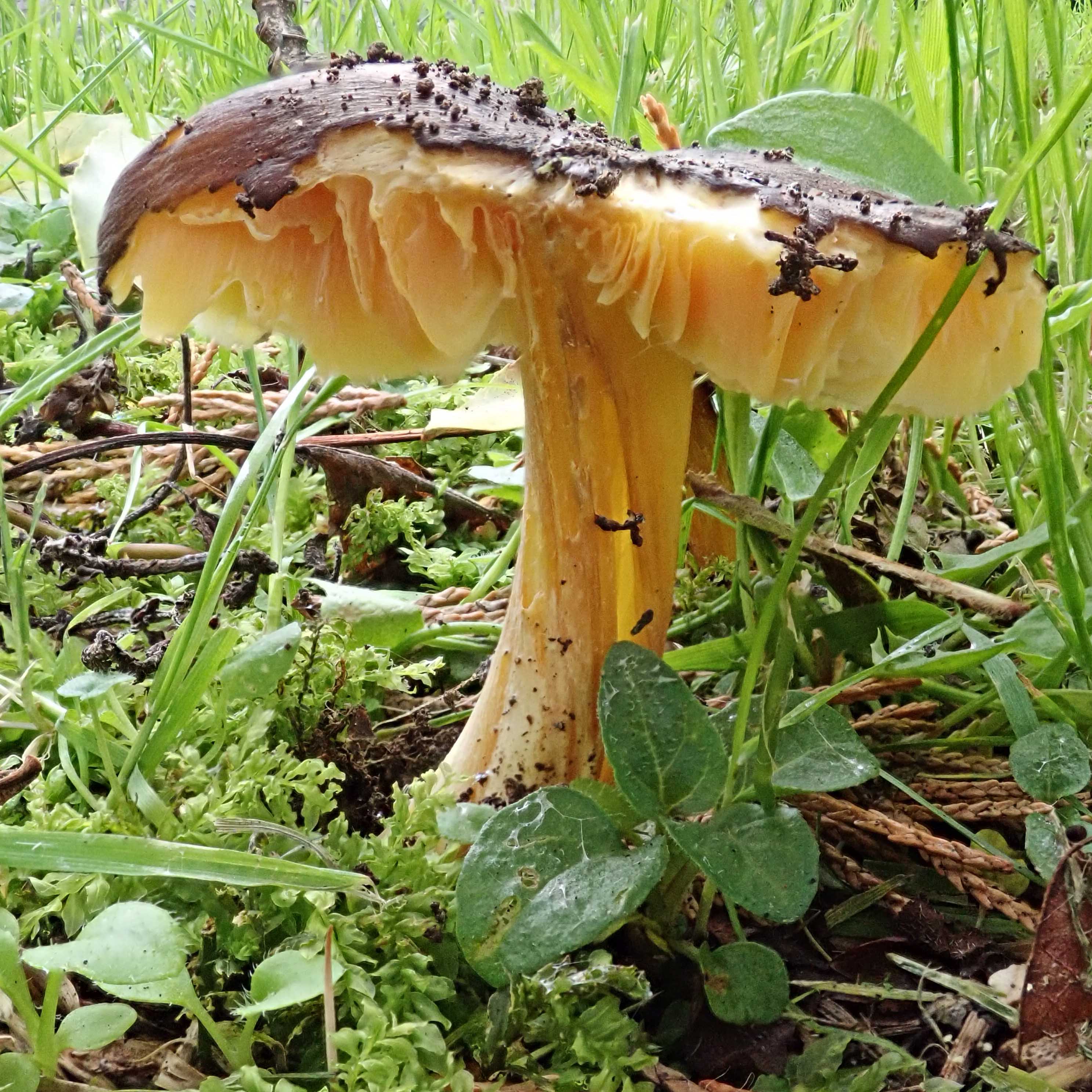
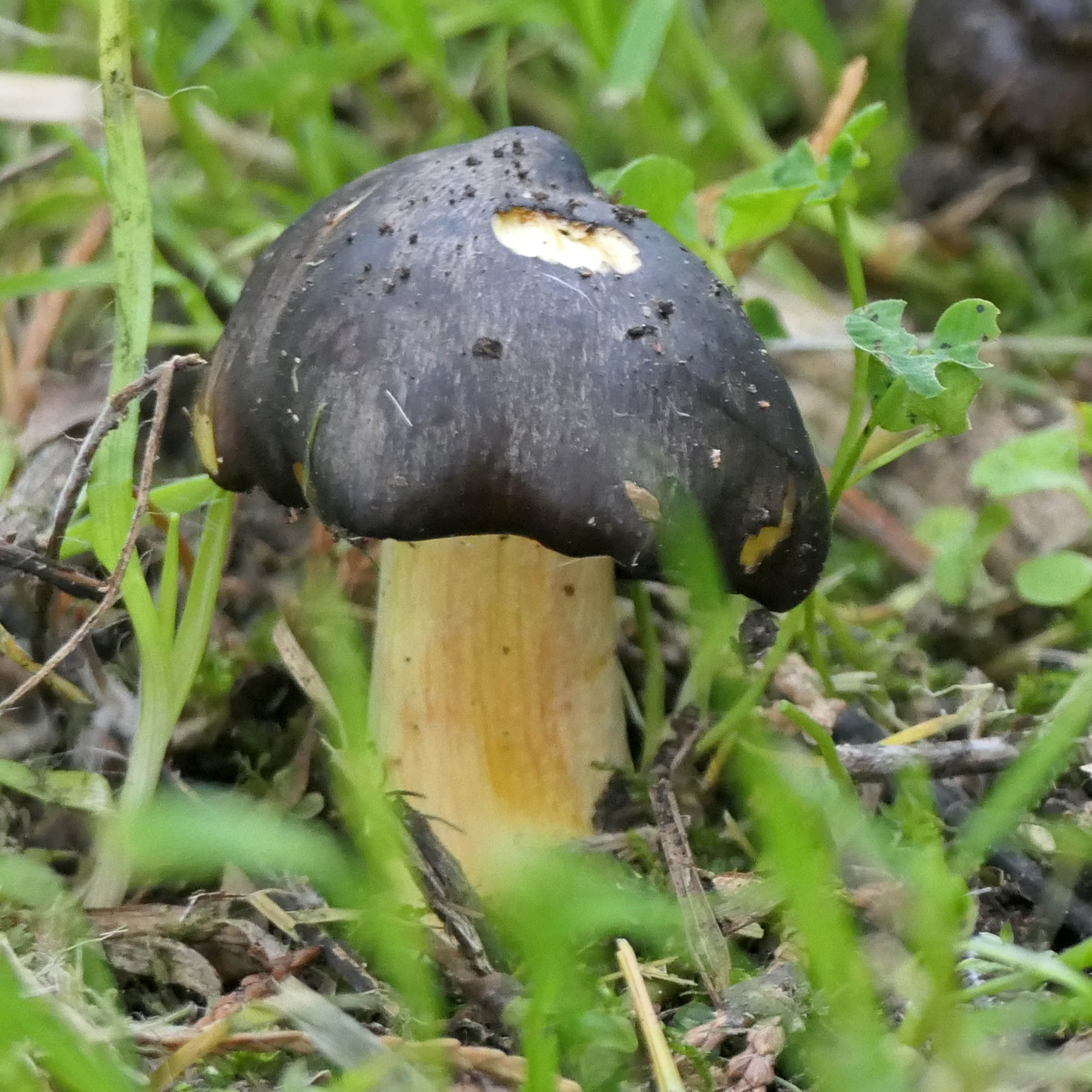
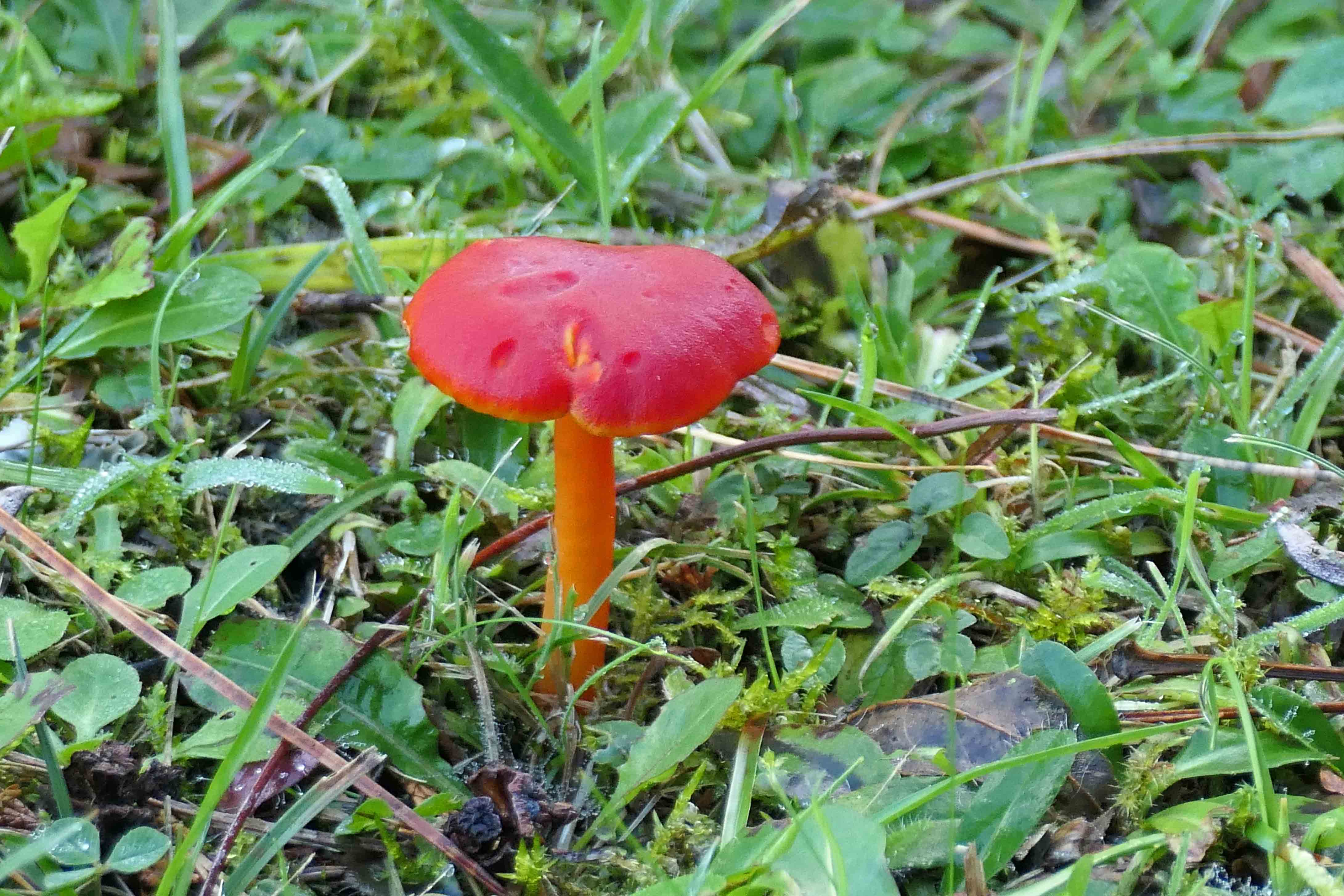
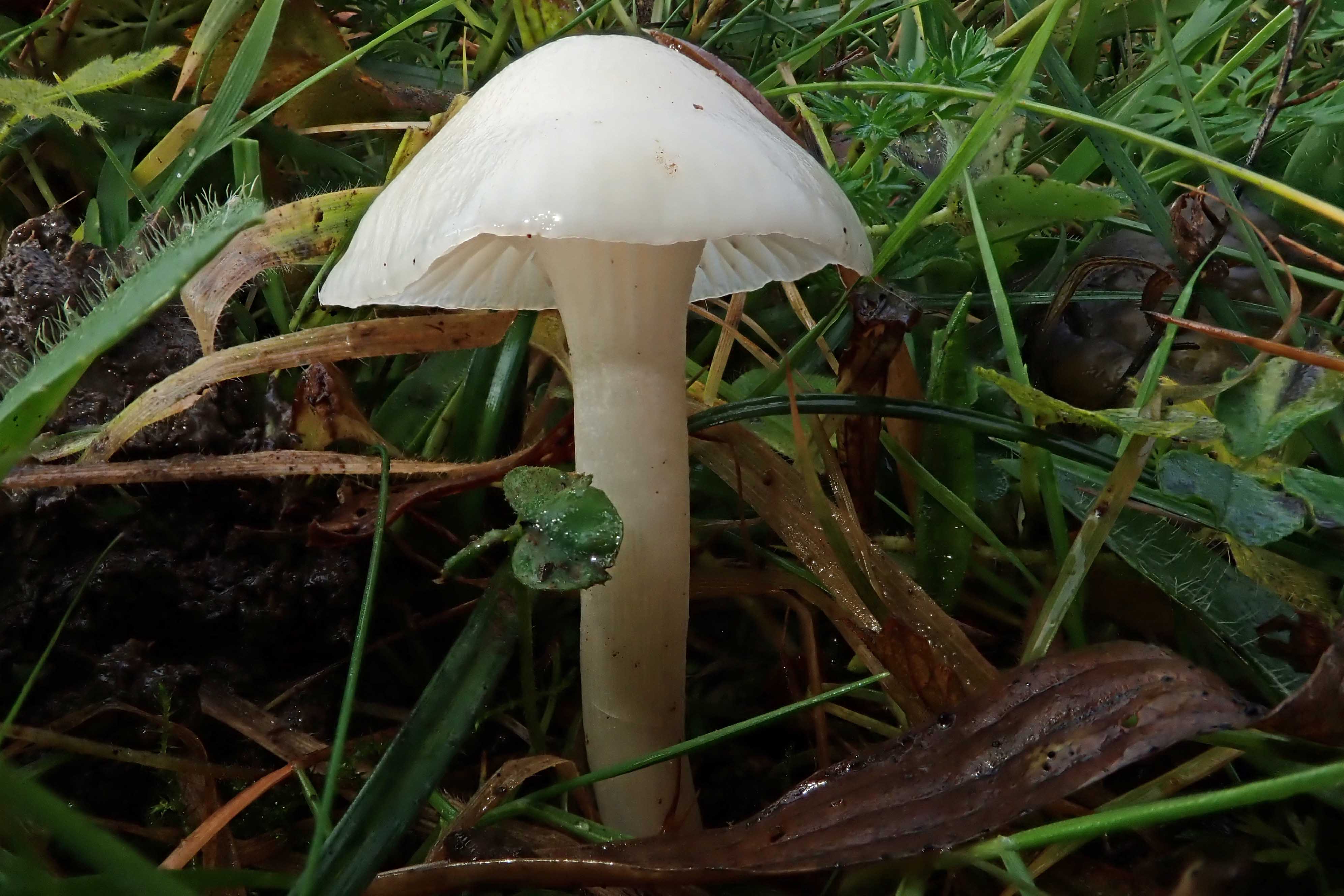
During last Sunday’s local meander, I couldn’t help but notice how the recent rains have triggered autumnal fungi to begin fruiting and so, as I often find fungi very photogenic, I took rather a lot of photos. Of course, when I got home and thought I’d try to put names to those I’d photographed, I was reminded, as happens every year, of how tricky they can be to identify and of how many require microscopic analysis to determine their exact species. I, almost literally, threw my hands in the air, filed the photos in a temp folder, and didn’t look at them again until yesterday.

And then, when I went through the images more carefully and looked more closely, I realised that I might just have found something rather good, something I’d never seen before, something quite rare. I sought opinions from a couple of fungi experts and both agreed with me – you could’ve knocked me over with a feather … or a fungus!

These are Date waxcaps, also known as Date-coloured waxcaps, Hygrocybe spadicea. There are fewer than 100 British records of these beauties showing on iRecord but, luckily for those of us who live here, Wales has enjoyed the majority of those sightings. I understand they are found most years at Kenfig National Nature Reserve and, in the past, there have been one-off sightings in a couple of places around Cardiff but none since 2018.

Like most waxcap species, Hygrocybe spadicea grows mostly on unimproved calcareous grasslands but fungi don’t always follow what we humans think we know about them. Mine were growing on a road verge, under an Ash tree. Perhaps they have survived from the time when the area was unimproved grassland, before roads and houses were built all around them.

I revisited the site today, for a better look and to take more images. Amazingly, the waxcaps were more abundant than I had initially thought, with many still just emerging brown bumps barely visible amongst the grass. I’m still buzzing from the find.

Like Loading...

Inkcaps and bonnets

25 Friday Oct 2024

Posted by sconzani in autumn, fungi

≈ 2 Comments

Tags

autumn fungi, British fungi, Clustered bonnet, Common inkcap, Coprinopsis atramentaria, inkcap fungi, Mycena inclinata, Oak bonnet

For Fungi Friday, here are just a couple of the little flocks of fungi I’ve found during recent walks hither and yon.

241025 inkcaps

These, I think, are Common inkcaps (Coprinopsis atramentaria) that had sprung up beneath the trees near the Norwegian Church in Cardiff Bay. There one day, gone the next, as is usual with these transient fungi.

241025 clustered bonnet

And, as they were growing from an old fallen Oak tree in Cosmeston’s Cogan Wood, I think these are the appropriately name Clustered bonnet, also known as Oak bonnet, (Mycena inclinata).

Like Loading...

Waxcap Friday

24 Friday Nov 2023

Posted by sconzani in autumn, fungi

≈ 2 Comments

Tags

autumn colour, autumn fungi, Ballerina waxcap, Cuphophyllus virgineus, Gliophorus psittacinus, Hygrocybe coccinea, parrot waxcap, Pink waxcap, Porpolomopsis calyptriformis, Scarlet waxcap, Snowy waxcap, waxcaps

Green, pink, red and white are just some of the colours you can see in the diverse range of fungi known as waxcaps. These are some I’ve found during recent fungi-seeking forays.

231124 waxcap parrot

Parrot waxcap (Gliophorus psittacinus)

231124 waxcap pink

Pink waxcap (Porpolomopsis calyptriformis), also known as the ballerina, for the tutu-like appearance of its spread cap as it dances in the grass

231124 waxcap scarlet

Scarlet waxcap (Hygrocybe coccinea)

231124 waxcap snowy

Snowy waxcap (Cuphophyllus virgineus)

Like Loading...

288/366 Little Japanese umbrella

14 Wednesday Oct 2020

Posted by sconzani in autumn, fungi

≈ Leave a comment

Tags

autumn fungi, British fungi, inkcap, Parasola plicatilis, Pleated inkcap

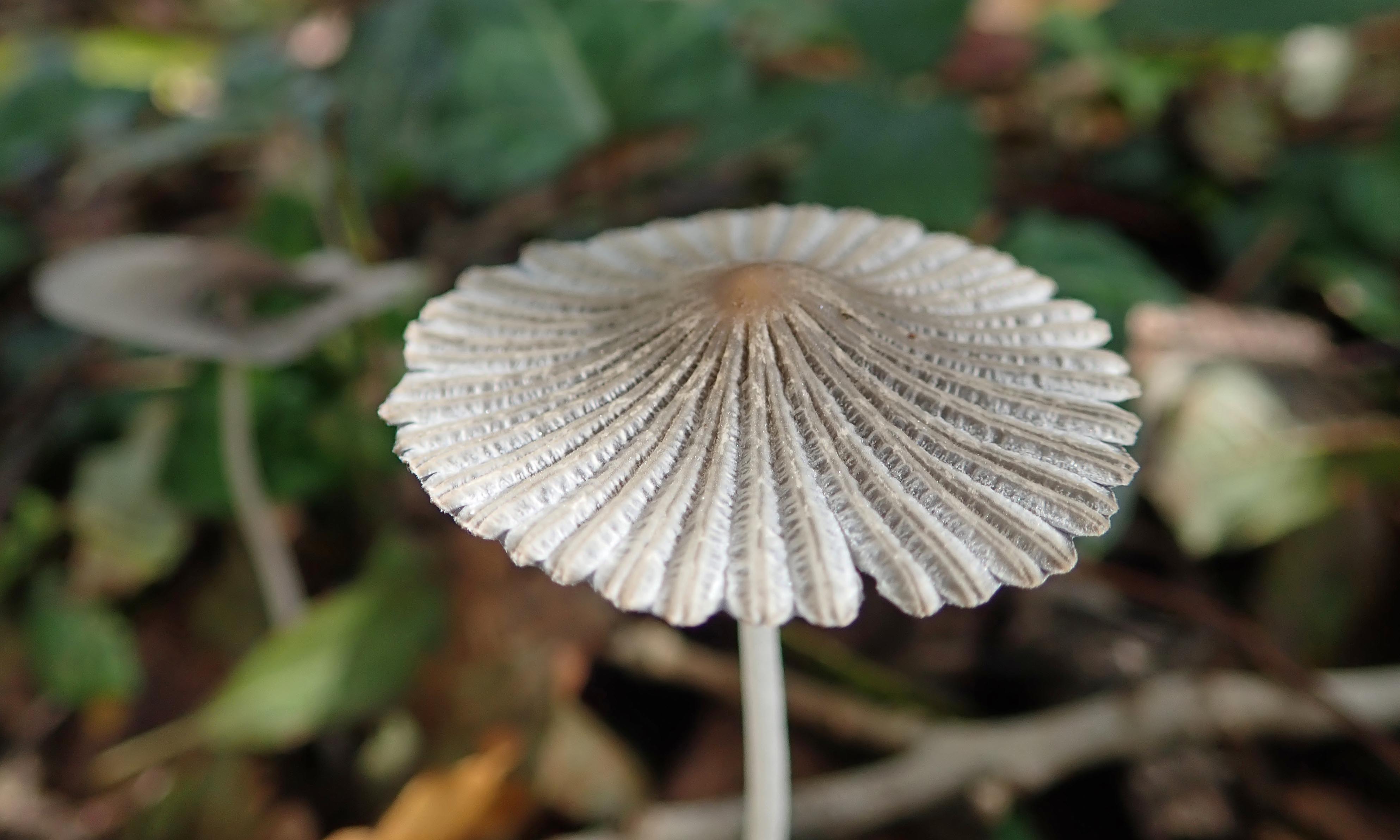
I didn’t know until I read the entry for the Pleated inkcap (Parasola plicatilis) on the First Nature website that this fungus is also known as the Little Japanese umbrella but it’s easy to see how its delicate pleated structure would suggest the comparison. These little beauties are a one-day wonder and you have to be up early to appreciate them at their best. Here, we have photos looking directly down at the cap, a side shot, and then looking up from ground level at the underside of the cap. A perfect tiny parasol!

201014 pleated inkcap (1)201014 pleated inkcap (2)201014 pleated inkcap (3)

Like Loading...

331/365 Groovy bonnets

27 Wednesday Nov 2019

Posted by sconzani in autumn, fungi, nature

≈ 3 Comments

Tags

autumn fungi, Bonnet fungi, British fungi, Grooved bonnet, Mycena fungi, Mycena polygramma

Finally some fungi I can identify with confidence because, as Pat O’Reilly explains on the First Nature website,

Cap colour is rarely of much help when you are struggling to identify a Mycena, as they vary so much with age, location, humidity and growing substrate. If you look closely at the stem of a Grooved Bonnet you will see that it has longitudinal striations, whereas other common bonnet mushrooms have smooth stems.

So, the striated stems you can, hopefully, see in my second photo below prove that these lovely little bonnets I found growing in a tree in the grounds of a local church are … taaa daaa! … Grooved bonnets (Mycena polygramma).

191127 grooved bonnets (4)
191127 grooved bonnets (2)

191127 grooved bonnets (1)
191127 grooved bonnets (3)

Like Loading...

287/365 Hygrocybe, but which

14 Monday Oct 2019

Posted by sconzani in autumn, fungi, nature

≈ 6 Comments

Tags

autumn colour, autumn fungi, British fungi, fungus, Hygrocybe, waxcap fungi, waxcaps

191014 hygrocybe (1)

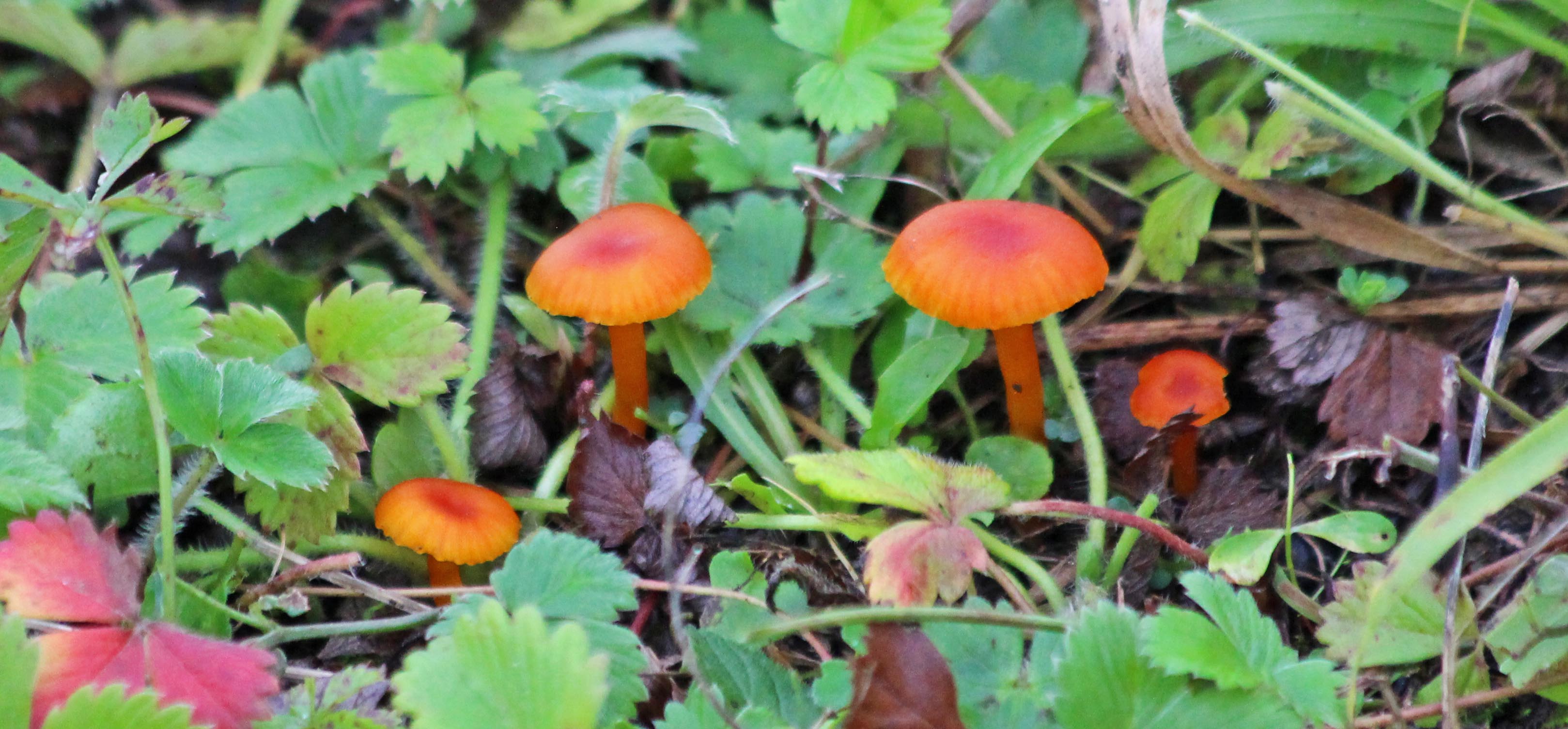
Waxcaps are my favourite fungi but they can be difficult to identify. Sometimes the colour helps, but there are several species of a reddish-orange hue. As these have quite a coarse upper surface on the caps, I thought at first that they might be Fibrous waxcaps (Hygrocybe intermedia) but, as these were at Cosmeston Lakes Country Park, I’m wondering if they might be Hygrocybe calciphilia, which are smaller and grow on calcareous grassland. I really need to check their features more thoroughly in future. What I do know for sure is how lovely they are!

191014 hygrocybe (3)
191014 hygrocybe (4)

191014 hygrocybe (2)

Like Loading...

285/365 Mousepee pinkgill

12 Saturday Oct 2019

Posted by sconzani in autumn, fungi, nature

≈ Leave a comment

Tags

autumn fungi, British fungi, Cosmeston Lakes Country Park, Entoloma incanum, fungus, Mousepee pinkgill

What’s in a name? That which we call a Mousepee pinkgill
By any other name would still smell like mouse pee!
(with apologies to William Shakespeare)

191012 mousepee pinkgill (2)

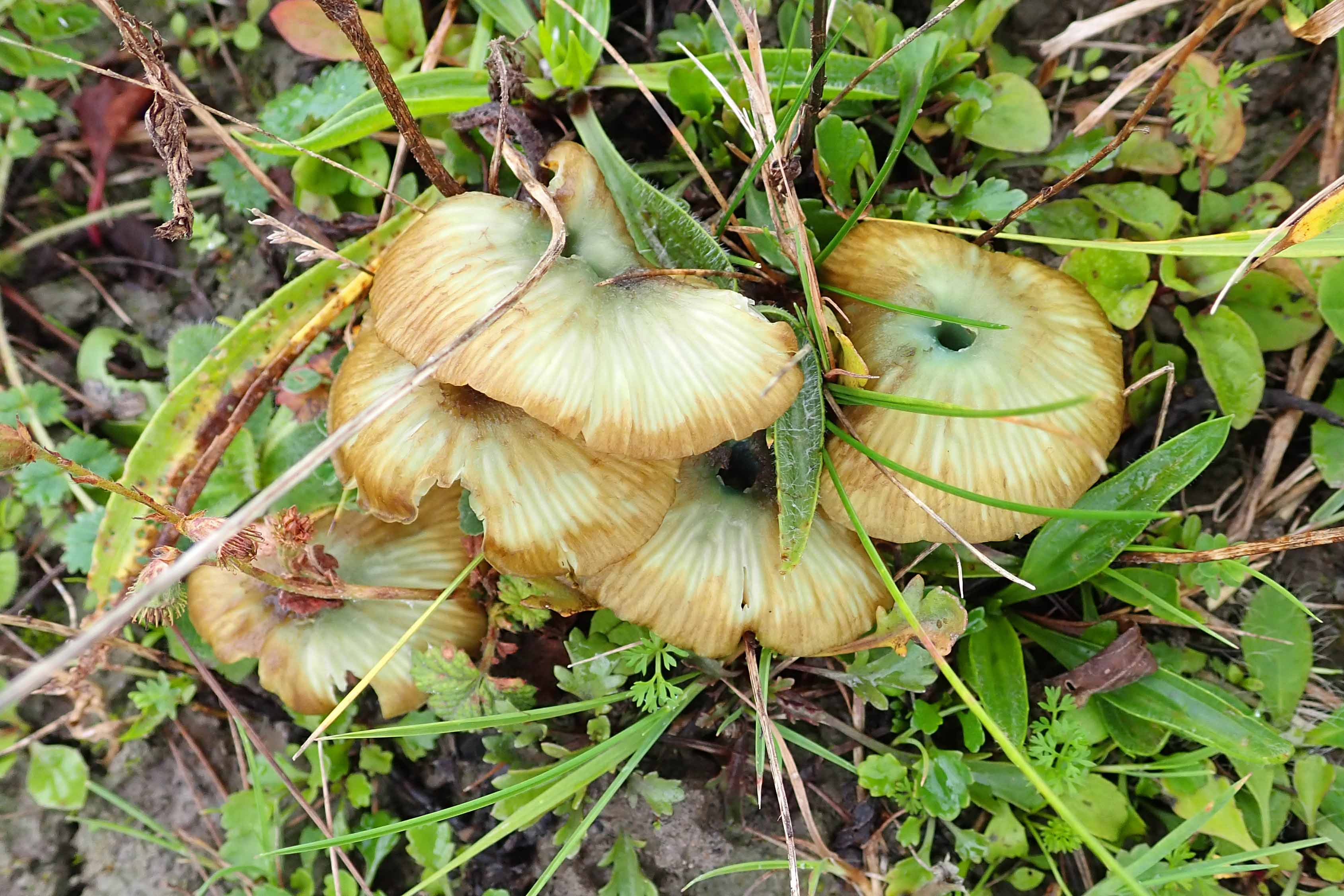
Truth be known, I have no idea what mouse pee smells like (and these fungi had been rained on for several days so the smell may well have dissipated) but I’m fairly sure that is what these fungi are. The greenish stem is a bit of a giveaway, and these are definitely not Parrot waxcaps, which are the only other green-stemmed fungi I know (though that, in itself, doesn’t mean there aren’t others).

191012 mousepee pinkgill (3)
191012 mousepee pinkgill (4)

191012 mousepee pinkgill (1)

You can read up on the Mousepee pinkgill (Entoloma incanum) on the most excellent First Nature website here.

191012 mousepee pinkgill (5)

Like Loading...

Butter cap anyone?

28 Sunday Oct 2018

Posted by sconzani in autumn, fungi, nature

≈ Leave a comment

Tags

autumn fungi, British fungi, Butter cap, Butter cap mushroom, fungus, Rhodocollybia butyracea

Here’s a fungus I can actually identify! This is the Butter cap, a name that’s so much easier to say than its scientific name Rhodocollybia butyracea.

181028 Butter cap fungus (2)

Thanks to the most excellent First Nature website, I can tell you that Rhodocollybia is from rhodo, meaning ‘pink’ (a reference to the pinkish tinge of the mushroom’s gills), and collybia means ‘small coin’, while the epithet butyracea means ‘buttery’ (but not in taste – it’s a reference to the greasiness of the cap).

181028 Butter cap fungus (1)

Like Loading...
← Older posts

About me

sconzani

sconzani

I'm a writer and photographer; researcher and blogger; birder and nature lover; countryside rambler and city strider; volunteer and biodiversity recorder.

View Full Profile →

Follow earthstar on WordPress.com

Enter your email address to follow this blog and receive notifications of new posts by email.

Recent blog posts

  • M is for mite December 18, 2025
  • L is for lepidopteran lifers December 17, 2025
  • K is for Keeled skimmers December 16, 2025
  • J is for Jersey tiger December 15, 2025
  • I is for Ichneumon December 14, 2025

From the archives

COPYRIGHT

Unless otherwise acknowledged, the text and photographs on this blog are my own and are subject to international copyright. Nothing may be downloaded or copied without my permission.

Fellow Earth Stars!

  • Unknown's avatar
  • Unknown's avatar
  • Unknown's avatar
  • Unknown's avatar
  • Unknown's avatar
  • Unknown's avatar
  • Unknown's avatar
  • Unknown's avatar
  • Unknown's avatar
  • Unknown's avatar
  • Unknown's avatar
  • Unknown's avatar
  • Unknown's avatar
  • Unknown's avatar
  • Unknown's avatar
  • Unknown's avatar
  • Unknown's avatar
  • Unknown's avatar
  • Unknown's avatar
  • Unknown's avatar
  • Unknown's avatar
  • Unknown's avatar
  • Unknown's avatar
  • Unknown's avatar
  • Unknown's avatar
  • Unknown's avatar
  • Unknown's avatar
  • Unknown's avatar
  • Unknown's avatar
  • Unknown's avatar
  • Unknown's avatar
  • Unknown's avatar
  • Unknown's avatar
  • Unknown's avatar
  • Unknown's avatar
  • Unknown's avatar
  • Unknown's avatar
  • Unknown's avatar
  • Unknown's avatar
  • Unknown's avatar
  • Unknown's avatar
  • Unknown's avatar
  • Unknown's avatar
  • Unknown's avatar
  • Unknown's avatar
  • Unknown's avatar
  • Unknown's avatar
  • Unknown's avatar
  • Unknown's avatar
  • Unknown's avatar

Blog at WordPress.com.

Privacy & Cookies: This site uses cookies. By continuing to use this website, you agree to their use.
To find out more, including how to control cookies, see here: Cookie Policy
  • Subscribe Subscribed
    • earthstar
    • Join 667 other subscribers
    • Already have a WordPress.com account? Log in now.
    • earthstar
    • Subscribe Subscribed
    • Sign up
    • Log in
    • Report this content
    • View site in Reader
    • Manage subscriptions
    • Collapse this bar
 

Loading Comments...
 

You must be logged in to post a comment.

    %d