• ABOUT
  • BIRDING 2018
  • Birding 2019
  • BLOG POSTS
  • Butterflies 2018
  • Resources

earthstar

~ a celebration of nature

earthstar

Tag Archives: birding

Twitching in the rain

03 Monday Dec 2018

Posted by sconzani in birds, nature

≈ 2 Comments

Tags

birding, birdwatching, British birds, diving birds, Great northern diver, twitching

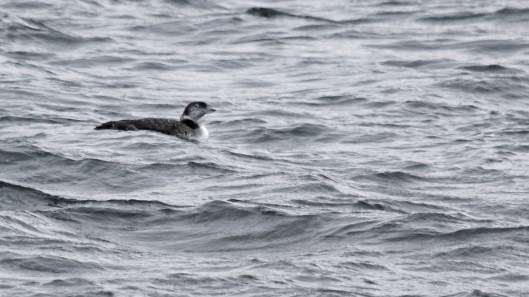
It’s Saturday morning, the Met Office’s forecast of no rain was a lie so I’m doing house chores. At 11:30 I re-check the weather – supposedly clearing, but that’s not what the pitter-patter on my window panes is telling me – and I have a quick look at the birding hashtag used by local birders on Twitter to see if anything’s happening. It is! At 11:41, local birder Mat had posted that another local Ian had spotted a Great northern diver at Barry Docks.

Action stations. My backpack is packed, rain jacket, hat, scarf and gloves are on, and I’m out the door in record time. I stride the 20-minute walk to Cogan Station in record time and wait impatiently for the next train, due in 7 minutes. Why am I in such a rush to twitch this bird? Because, although there was a Great northern diver – the same bird? – at Barry Docks for several weeks earlier this year, I didn’t manage to spot it on the two occasions I went looking. So, I’m determined not to dip this time.

The slowest train ride ever, another rapid stride from the station to the edge of the dock and, as soon as I get there, my heart sinks – as well as the drizzly rain, it’s windy and the water in the dock is incredibly choppy, making it difficult to see anything. I put my backpack on a bench, get out my bins and turn to start scanning the water. And there is the bird, no more than 20 metres in front of me!

181203 great northern diver (1)

181203 great northern diver (2)

I can hardly believe my luck and get my camera out as quickly as I can to record the moment. I fire off half a dozen shots, then the bird dives. Knowing it could go quite a distance underwater, I put my backpack on, move to the edge of the dock and wait, scanning constantly from left to right as if I’m watching a tennis match.

181203 great northern diver (3)

It’s up again, not too far away and I move closer, grabbing more photos. For some reason, it’s got its eye on the sky so I look to see what it might be looking at – only gulls wheeling on the wind – but when I look back, the diver has disappeared again.
181203 great northern diver (6)

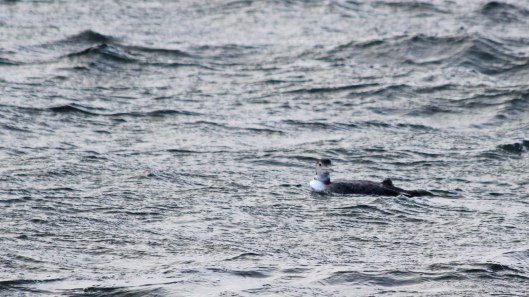
I move over to where a lone fisherman is packing up his gear and he asks me if I’ve come  specially to see this bird. He says he’s been watching it for about 15 minutes, working its way along the dock and then returning. As the fisherman heads off, I look again for the bird and realise I’ve lost it. I walk further west along the dock edge, stopping to scan the water every couple of minutes, but the rain is heavier now and it’s become very dull and gloomy. I thank my lucky stars that I’ve managed to see the bird at all and decide to head back to the station. And when I turn, there’s the diver again – it has doubled back and is quite close in, so I grab a few more photos.
181203 great northern diver (5)

The diver looks sleepy now, is closing its eyes as it rocks up and down on the waves, and is drifting further and further away from me. I call it a day and head home, smiling all the way.

181203 great northern diver (7)

Like Loading...

A’dipping and a’bobbing

01 Saturday Dec 2018

Posted by sconzani in birds, nature

≈ 4 Comments

Tags

birding, birdwatching, bobbing in birds, British birds, Cinclidae, Cinclus cinclus, Dipper

You might think it’s just the little Robin that goes bob-bob-bobbing along but no!

After two days of weather warnings, gale-force winds and heavy rain showers, I was itching for a walk, partly because I tend to go a little stir crazy if I can’t get out every day but also because I’ve been learning this year how much weather affects the movements of birds. On Thursday, though more rain was forecast, I decided I’d head down to Penarth Marina for a walk along the Ely embankment path to see if anything unusual was sheltering from the tumultuous weather in its relatively calm waters.

181202 redshank (1)
181202 redshank (2)
181202 redshank (3)

The three Redshanks were a nice surprise, the most I’ve seen there this autumn, but the highlight came right at the end. As I approached the last bend in the path, I spotted a dark bird at the water’s edge. I hadn’t brought my bins with me so used my camera to take a photo and zoom in. A Dipper! What a treat!

181292 dipper (1)

The Dipper (Cinclus cinclus) is a rotund little bird, more often seen prospecting for food in stony streams and low-flowing rivers. It’s the only British passerine (birds that perch) that feeds underwater and the only British member of the five species of Cinclidae found around the world. Their name cinclus comes from the Ancient Greek word kinklos, meaning a small tail-wagging bird that lives near water.

181292 dipper (2)

In deeper water, the Dipper swims down to the river bed, ‘flying underwater’ – an action probably more akin to rowing with wings, and its sturdy claws can grip even the smoothest of stones. This lovely bird, though, was working the shallow water where the stony embankment of the River Ely meets the brackish water of Cardiff Bay, poking about and flipping stones in its quest for aquatic insects.

181292 dipper (4)
181292 dipper (5)

It paused when it noticed me watching it from the top of the bank above so I stayed completely still, hoping it would then ignore me and return to its grazing. It blinked at me several times, exposing its pale upper eyelid, an action I have since read is either a courtship or threat display – I don’t think it fancied me!

181292 dipper (6)

Luckily, after a couple of minutes, it obviously decided I posed no immediate threat, bobbed a couple of times and carried on. Bobbing is an odd motion that several different birds make – it has been interpreted as a means of visual communication but that seems unlikely in this case as the bird was on its own. I also read on the Birdnote website:

One possibility is that the dipper’s repetitive bobbing, against a background of turbulent water, helps conceal the bird’s image from predators. A second theory asserts that dipping helps the bird spot prey beneath the surface of the water.

181292 dipper (3)

Perhaps we’ll never know the real reason for its bobbing but it was certainly a joy to watch this particular bird a’dipping and a’bobbing on my local patch.

Like Loading...

My bogey bird

24 Saturday Nov 2018

Posted by sconzani in birds, nature

≈ Leave a comment

Tags

birding, birdwatching, British birds, Cardiff Bay wetlands, Rallus aquaticus, Water rail

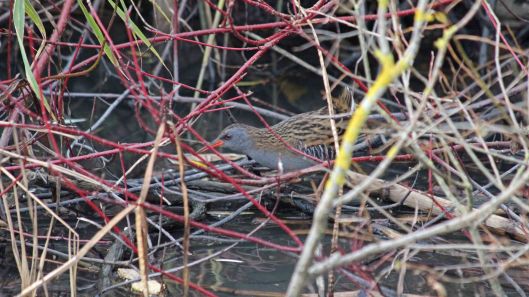
On Thursday, at long last, I saw and got photos of my bogey bird – not great photos, because it didn’t stop still for a single moment and was mostly obscured as it poked and prodded its way along the shrubby water’s edge at Cardiff Bay Wetlands Reserve – but I’m still absolutely delighted to have seen the bird.

181124 water rail (3)

Though I’ve heard these birds in various locations, I’ve only ever seen a Water rail (Rallus aquaticus) once previously, at Forest Farm Nature Reserve, back in February 2016. At the time, I didn’t realise how lucky I was to have good views of it as it did a circuit of the pond in front of one of the hides. Now I know better.

181124 water rail (4)

My failure to see a Water rail during the intervening 2 years 9 months was not simply down to bad luck or bad field craft. These are notoriously secretive birds, seemingly relishing concealment and a quiet life in the very thickest of wetland vegetation, though quiet they are not.

181124 water rail (5)

Various adjectives have been used to describe their call: squealing, grunting, snorting, piglet-like. (You can listen for yourself here.) Though it was constantly chattering away to itself, this particular Water rail made none of those more raucous sounds: its one-sided conversation was more of a sharp-voiced running commentary on the chilliness of the weather, the lack of insects, the number of pesky mallards.

181124 water rail (7)

This Water rail was smaller than I remembered, about half the size of the more numerous and extrovert Moorhen, and, to my eye, it was much more handsome. Its head, chest and underbelly have the rich blues of the Moorhen but its brown-and-black back is mallard-like, and it has a lovely blue-and-white stripey area on each flank. The cheeky white bobbing under-tail  is the same as its bigger cousin though.

181124 water rail (1)
181124 water rail (2)
Like Loading...

A goose roost

21 Wednesday Nov 2018

Posted by sconzani in birds, nature

≈ 4 Comments

Tags

birding, birdwatching, British birds, Canada goose, goose roost, honking geese

181121 canada geese (1)

Have I gone from the sublime (yesterday’s Hen harrier) to the ridiculous (today’s Canada geese)? Maybe. But to me all birds are interesting so geese today it is!

181121 canada geese (2)

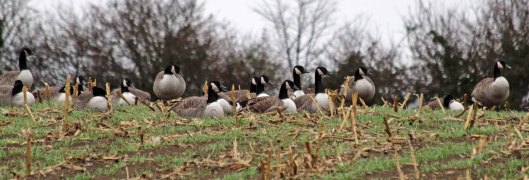
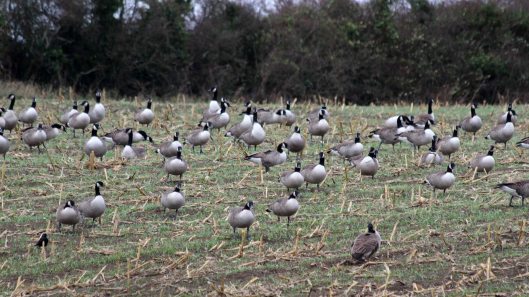
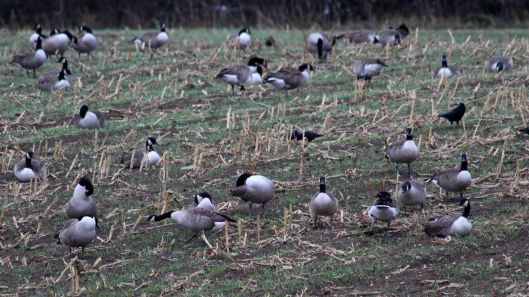
With their constant honking conversation, I could hear these birds before I saw them, sitting, standing, arguing with their neighbours, walking about, feeding on excess seeds from the farmer’s recent planting.

181121 canada geese (3)

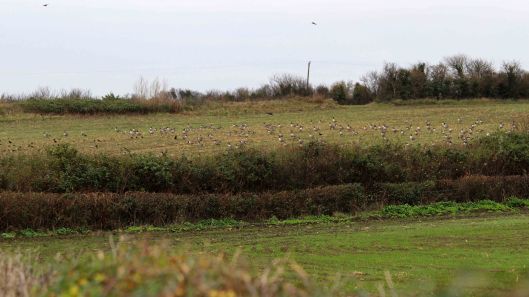
A local birder recently reported 280 Canada geese on the lakes at Cosmeston, which is just a short distance as the goose flies from where these birds were resting at Lavernock, and by my reckoning there were over 200 in this field yesterday.
181121 canada geese (4)

I have walked this way on two consecutive mornings this week and have seen the geese both times but, even as I watched them, I doubted that the farmer would let them stay much longer.

181121 canada geese (5)

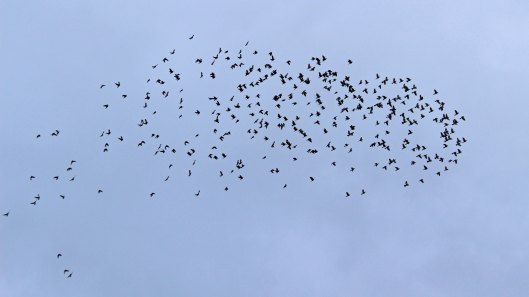
As I was leaving the area yesterday, I heard shooting, saw geese flying off in small groups and also saw large flocks of Woodpigeons and Jackdaws take to the air, so I assume the farmer is now actively chasing all potential seed-eaters off his fields.

181121 canada geese (6)

181121 canada geese (7)

Just a few Woodpigeons!

Like Loading...

Hen harrier!

20 Tuesday Nov 2018

Posted by sconzani in birds, nature

≈ 5 Comments

Tags

birding, birds of prey, birdwatching, British birds, Circus cyaneus, Cosmeston, Cosmeston Lakes Country Park, Hen harrier, raptors

‘It flies so low that sometimes it seems to be stirring the grass, its long legs trailing through the heather like a keel. A slow tacking flight: float then flap.’ This description of a Hen harrier’s flight pattern is from the library book I’m currently reading, Raptor: A journey through birds by James Macdonald Lockhart (4th Estate, London, 2016) and, by sheer coincidence, I watched a Hen harrier fly just like this yesterday.
181120 hen harrier (1)

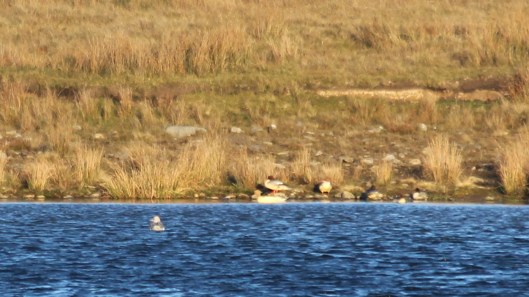
I was at Cosmeston Lakes Country Park, walking along the central hedgerow in the west paddock, on the lookout for winter thrushes, and had just walked down into a dip in the field when, with a loud whooshing sound, a large bird flew almost over my head.
181120 hen harrier (2)

I immediately turned and looked up, swung up the camera and clicked as many times as I could before the hedgerow blocked my view. Walking quickly up out of the dip, I watched the bird, pursued by a couple of Carrion crows, dodge eastwards, then veer back west and head down over the west lake reed beds and on towards the coast.

181120 hen harrier (3)

But what was it? It seemed quite large but I didn’t think it was a Buzzard. There had been a Sparrowhawk harassing the smaller birds a couple of days previously, but the flight didn’t seem right for that – not the flap, flap, glide that Sprawks are known for. This bird had been flying very low and relatively slowly.

181120 hen harrier (4)

I had been out walking for about 5 hours by this time and was getting cold, so decided to head home. Hot cuppa in hand, I grabbed by trusty RSPB Handbook of British Birds, transferred my photos on to my laptop and opened up Photoshop. As the day had been gloomy, the shots all needed lightening and heavy cropping to get a better look at the bird. When I consulted my handbook, I found a bird that matched but couldn’t believe it was right. Luckily, my birding friend John was online so I flicked him a message with four photos … and waited.

181120 hen harrier (5)
181120 hen harrier (6)

Yay! He confirmed the match, a Hen harrier (Circus cyaneus), from its colouring either a female or a juvenile – it certainly looks exactly like the juvenile image in my book. This is quite a rare bird locally so I was absolutely over the moon to have seen this beauty.

Like Loading...

Birding at Garwnant and Rhaslas

19 Monday Nov 2018

Posted by sconzani in autumn, birds, nature, walks

≈ 2 Comments

Tags

birding, birdwatching, British birds, Common crossbill, Cormorant, Garwnant Forest, Glamorgan Bird Club, Goosander, Llwyn-onn Reservoir, Red kite, Rhaslas Pond, Water pipit, Willow tit

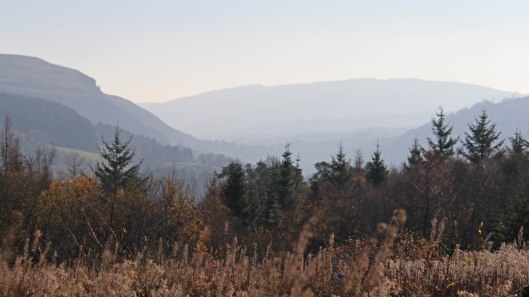
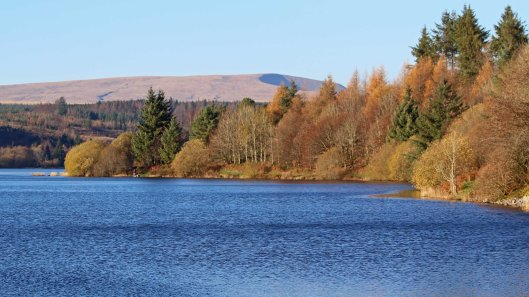
Clear blue skies, stiff  breeze and freezing cold, star birds and great company, long walk, Welsh upland scenery … it doesn’t get much better than yesterday’s Glamorgan Bird Club’s field trip to the forestry at Garwnant and Rhaslas pond, with a quick stop at the Llwyn-onn reservoir in between.

181119 birding at garwnant and rhaslas (1)

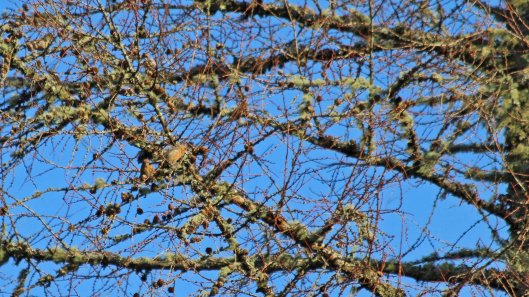
It took us a while to leave the car park at the Forestry Centre as the birding got off to a cracking start with lots of Common crossbills coming in to feed on the cones of the tall conifers all around us.

181119 birding at garwnant and rhaslas (2)181119 birding at garwnant and rhaslas (3)

We headed out along one of the many walking trails, hoping for views of Willow tits. One person heard one but the bird didn’t reappear so we carried on a bit further to a high vantage point. From there we were rewarded with views of Kestrel, Buzzard and this magnificent Red kite.

181119 birding at garwnant and rhaslas (4)

Retracing our steps, a couple of us who’d lingered behind heard the Willow tit calling, waved frantically to the birders ahead, and managed some good views of this increasingly uncommon little bird.

181119 birding at garwnant and rhaslas (5)

We then walked a rectangular path, taking us out around more of the forest trails, seeing even more Crossbills and another couple of Willow tits, as well as many other species. After lunch back at the car park, we drove down to nearby Llwyn-onn dam for a quick scan for any interesting birds. The reservoir was looking gorgeous, with much more water than on our last visit.

181119 birding at garwnant and rhaslas (6)

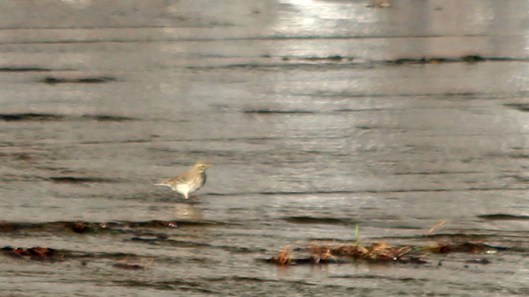
We’d hoped for a Water pipit … and there it was, though a very flighty bird that scarcely stayed still and kept flying off in various directions. I was pretty happy though as this was a lifer for me, and it was a year tick for several other birders.

181119 birding at garwnant and rhaslas (7)

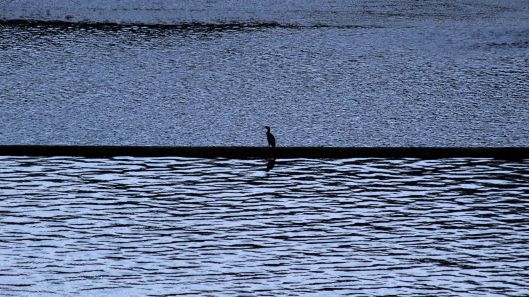
I really like how this photo of the Cormorant turned out. And there was a Common sandpiper just along the pipe from where it was perched.

181119 birding at garwnant and rhaslas (8)

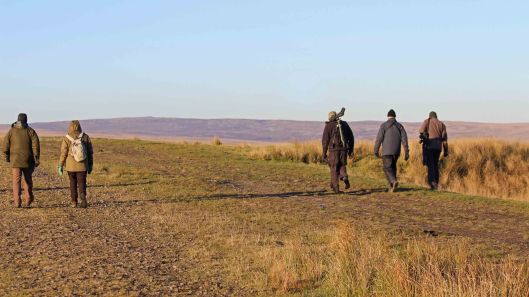
Then it was on for a quick check of Rhaslas pond before the light faded – sunset is around 4.15pm at the moment. It was bitterly cold up on the open moorland as you tell from how rugged up everyone was.

181119 birding at garwnant and rhaslas (9)

Though there weren’t a huge number of birds on the pond, we did see several Goosanders, Wigeon, Tufted ducks and a solitary Goldeneye. It was a smashing end to an excellent day!

181119 birding at garwnant and rhaslas (10)

Here’s my list of birds seen: Wigeon, Teal, Mallard, Tufted Duck, Goldeneye, Goosander, Grey Heron, Cormorant, Red Kite, Buzzard, Kestrel, Common Sandpiper, Black-headed Gull, Lesser Black-backed Gull, Herring Gull, Woodpigeon, Great Spotted Woodpecker, Magpie, Jay, Carrion Crow, Raven, Blue Tit, Great Tit, Coal Tit, Willow Tit, Goldcrest, Wren, Nuthatch, Treecreeper, Blackbird, Mistle Thrush, Robin, Pied Wagtail, Water Pipit, Chaffinch, and Common Crossbill. And somehow I missed the Starling, Song Thrush, Redwing and Fieldfare.

Like Loading...

A Meadow pipit ablutes

17 Saturday Nov 2018

Posted by sconzani in birds, nature

≈ 2 Comments

Tags

bird preening, birding, birdwatching, British birds, Meadow pipit, Meadow pipit preening, pipit ablutions, pipit cleaning


181117 meadow pipit (5)

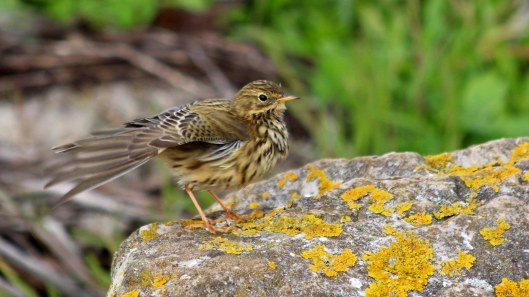
It was while watching this delightful little Meadow pipit at its bath and preening session a couple of weeks ago that I noticed another small bird dotting around on the grass nearby.

181117 meadow pipit (1)
181117 meadow pipit (2)

That bird turned out to be my mega find, a Lapland bunting. But, in all honesty, this little Meadow pipit was just as lovely and, as I was being very quiet and moving very slowly forward, and it was taking great pains over its toilette, it let me get quite close.

181117 meadow pipit (3)
181117 meadow pipit (4)

Meadow pipits have such pretty markings and, at this time of year, when they’ve recently completed their moult, their colouring is rich and warm. I thought this little sweetie deserved its moment in the spotlight as much as the vagrant bunting.

181117 meadow pipit (6)

Like Loading...

LBJ

14 Wednesday Nov 2018

Posted by sconzani in birds, nature

≈ 4 Comments

Tags

birding, birds with brown plumage, birdwatching, brown birds, brown feathers, LBJ, little brown job, small brown birds

In birder-speak (and, actually, also in mycologist-speak), there’s an oft-used abbreviation for those small brown birds that look very much alike and so can sometimes be difficult to identify: LBJ (Little Brown Job). I think you can see why.

181029 LBJ (1)
181029 LBJ (2)
181029 LBJ (3)
181029 LBJ (4)
181029 LBJ (5)
181029 LBJ (6)
181029 LBJ (7)
181029 LBJ (8)
181029 LBJ (9)

(To be completely honest, not all of these images are from LBJs; some are from BBJs. I won’t ask you to guess what they are.)

Like Loading...

Who’s jealous then?

13 Tuesday Nov 2018

Posted by sconzani in birds, nature, winter

≈ 4 Comments

Tags

birding, birdwatching, British birds, Cardiff Bay, Cardiff Bay wetlands, Grey heron

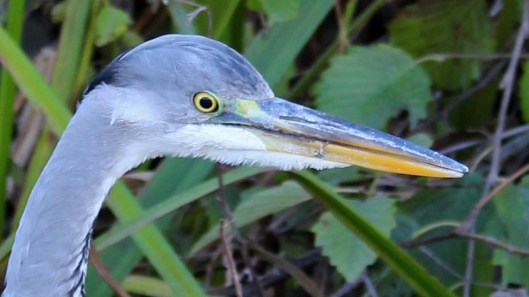
I wasn’t the only one watching the Great crested grebe fishing at Cardiff Bay wetlands on that sublime autumn day. This juvenile Grey heron flew in half way through the fishing session and settled itself first on one side of the small pool, then on the other.


181113 grey heron (1)
181113 grey heron (2)

And the heron watched in awe as the grebe caught fish after fish so effortlessly and in such a short space of time.

181113 grey heron (3)181113 grey heron (4)181113 grey heron (5)181113 grey heron (6)

I’m sure I detected a look of jealousy, and perhaps hunger, on that wide-eyed face!

Like Loading...

Fisher extraordinaire

12 Monday Nov 2018

Posted by sconzani in birds, fish, nature, winter

≈ 3 Comments

Tags

bird fishing, birding, birdwatching, British birds, Cardiff Bay, Cardiff Bay wetlands, Great Crested Grebe, grebe fishing

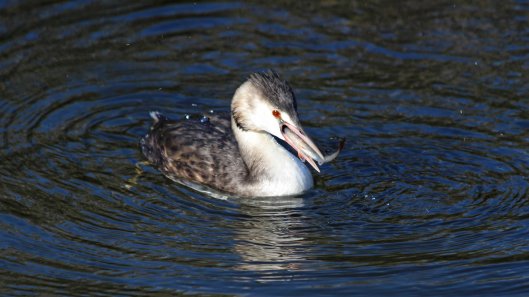
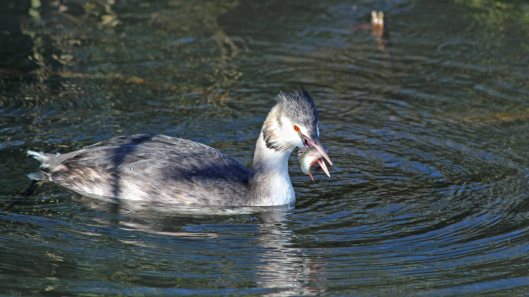
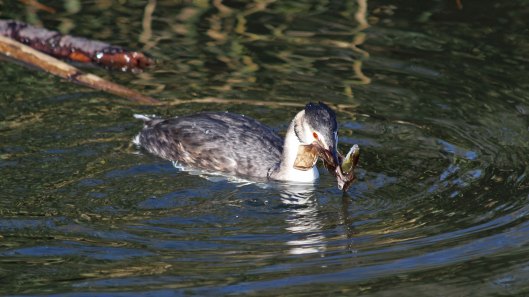
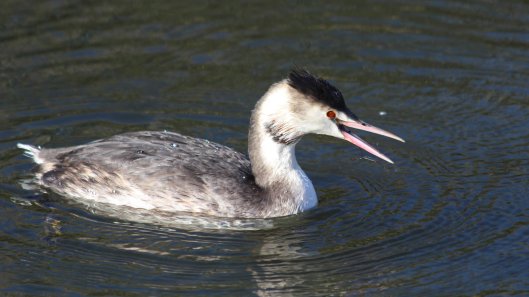
It was a lovely late autumn day, with a bit of a nip in the air but gloriously blue skies overhead and still a little heat in the sun. It was the perfect day, in fact, to stand on the boardwalk at Cardiff Bay Wetlands Reserve and watch this Great crested grebe catching itself breakfast, morning tea, lunch, afternoon tea, dinner and supper, all in the space of just 6 minutes (I can tell from the times on my photographs).

181112 great crested grebe (1)181112 great crested grebe (2)181112 great crested grebe (3)181112 great crested grebe (4)181112 great crested grebe (5)

No wonder this successful little fisher-bird was grinning so broadly as it headed into the reeds for a snooze!

181112 great crested grebe (6)

Like Loading...
← Older posts
Newer posts →

About me

sconzani

sconzani

I'm a writer and photographer; researcher and blogger; birder and nature lover; countryside rambler and city strider; volunteer and biodiversity recorder.

View Full Profile →

Follow earthstar on WordPress.com

Enter your email address to follow this blog and receive notifications of new posts by email.

Recent blog posts

  • Goose barnacles March 26, 2026
  • Black-tailed godwits fighting March 25, 2026
  • Singing from every tree top March 24, 2026
  • Turtle bug March 23, 2026
  • Springtime invasives March 22, 2026

From the archives

COPYRIGHT

Unless otherwise acknowledged, the text and photographs on this blog are my own and are subject to international copyright. Nothing may be downloaded or copied without my permission.

Fellow Earth Stars!

  • Unknown's avatar
  • Unknown's avatar
  • Unknown's avatar
  • Unknown's avatar
  • Unknown's avatar
  • Unknown's avatar
  • Unknown's avatar
  • Unknown's avatar
  • Unknown's avatar
  • Unknown's avatar
  • Unknown's avatar
  • Unknown's avatar
  • Unknown's avatar
  • Unknown's avatar
  • Unknown's avatar
  • Unknown's avatar
  • Unknown's avatar
  • Unknown's avatar
  • Unknown's avatar
  • Unknown's avatar
  • Unknown's avatar
  • Unknown's avatar
  • Unknown's avatar
  • Unknown's avatar
  • Unknown's avatar
  • Unknown's avatar
  • Unknown's avatar
  • Unknown's avatar
  • Unknown's avatar
  • Unknown's avatar
  • Unknown's avatar
  • Unknown's avatar
  • Unknown's avatar
  • Unknown's avatar
  • Unknown's avatar
  • Unknown's avatar
  • Unknown's avatar
  • Unknown's avatar
  • Unknown's avatar
  • Unknown's avatar
  • Unknown's avatar
  • Unknown's avatar
  • Unknown's avatar
  • Unknown's avatar
  • Unknown's avatar
  • Unknown's avatar
  • Unknown's avatar
  • Unknown's avatar
  • Unknown's avatar
  • Unknown's avatar

Blog at WordPress.com.

Privacy & Cookies: This site uses cookies. By continuing to use this website, you agree to their use.
To find out more, including how to control cookies, see here: Cookie Policy
  • Subscribe Subscribed
    • earthstar
    • Join 642 other subscribers
    • Already have a WordPress.com account? Log in now.
    • earthstar
    • Subscribe Subscribed
    • Sign up
    • Log in
    • Report this content
    • View site in Reader
    • Manage subscriptions
    • Collapse this bar
 

Loading Comments...
 

You must be logged in to post a comment.

    %d