• ABOUT
  • BIRDING 2018
  • Birding 2019
  • BLOG POSTS
  • Butterflies 2018
  • Resources

earthstar

~ a celebration of nature

earthstar

Tag Archives: British birds

Birding at Dawlish Warren

19 Sunday Nov 2017

Posted by sconzani in birds, nature

≈ 2 Comments

Tags

birding, birdwatching, Brent geese, British birds, Dawlish Warren, Dunlin, Exe estuary, Grey plover, national nature reserve, Oystercatchers, Shelduck

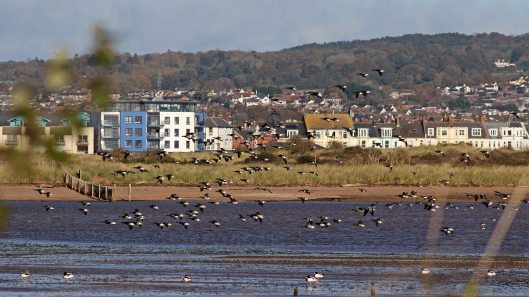
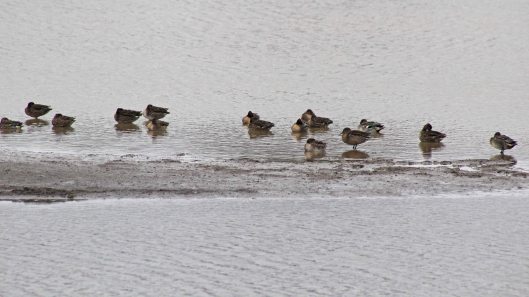
Last Sunday I joined ten hardy souls from the Glamorgan Bird Club (and two of their equally hardy children) to brave the strong polar winds and occasional stinging rain showers to check out the birding delights of south Devon. After a brief stopover at Labrador Bay for the Cirl buntings (see yesterday’s post), we headed to the National Nature Reserve at Dawlish Warren, to check the beach, sand dunes, and mudflats of the Exe estuary.

171119 Dawlish Warren (2)
171119 Dawlish Warren (1)
171119 Dawlish Warren (4)
171119 Dawlish Warren (3)

We had immediate success sea-watching from the beach, with good views of two Red-throated and one Great northern diver – both new birds for me, as well as Great crested grebes, Cormorant and the always-impressive sight of a Gannet crashing headfirst into the waves to dive for fish.
171119 Dawlish Warren (5)171119 Dawlish Warren (6)171119 Dawlish Warren (7)

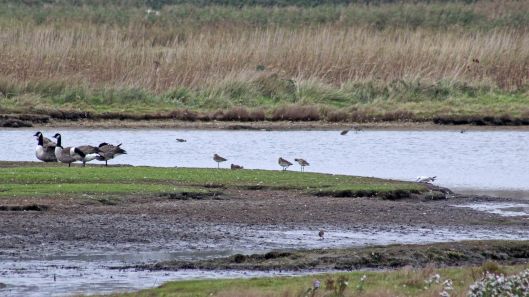
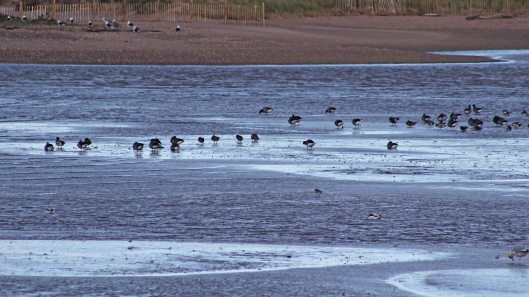
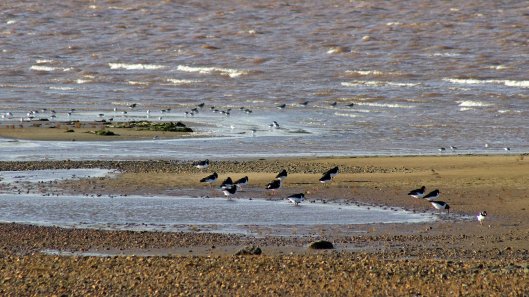
Though half of me got soaked during the walk out to the hide at the end of the sandspit (must invest in good, lined waterproof trousers!), the effort was worth it for the wealth of waders to be seen, feeding along the water’s edge and hunkering down on the sandy beach against the biting winds. As well as large numbers of Oystercatchers and Brent geese, there were also Dunlin and Ringed plover, Shelducks and Sanderlings, Turnstones, Bar- and Black-tailed godwits and a couple of Curlew, plus the ubiquitous gull species.
171119 River Exe (1)171119 River Exe (4)

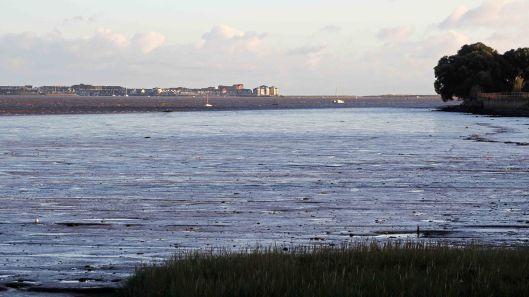
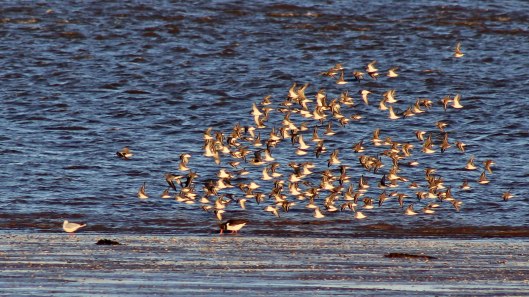
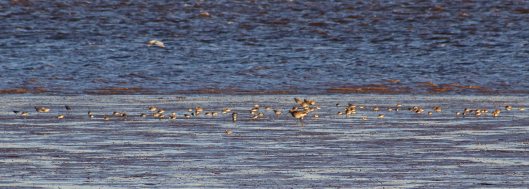
Later, we stopped further up the Exe for a quick look over the river, where I managed to snap three Grey plover amongst a flock of Dunlin flying past. It was a long but grand day’s birding and, with four lifers to add to my sightings’ list, I was well pleased.

171119 River Exe (3)171119 River Exe (5)

You can find out more about the flora and fauna of Dawlish Warren here, and check this link for the latest bird sightings at Dawlish Warren.
171119 River Exe (2)

Like Loading...

Cirl bunting

18 Saturday Nov 2017

Posted by sconzani in birds, nature

≈ Leave a comment

Tags

bird conservation, birding, birdwatching, British birds, Cirl bunting, Cirl Bunting Project, Emberiza cirlus, Glamorgan Bird Club, Labrador Bay

I find the constant reports of dwindling biodiversity, increasing numbers of creatures at risk of extinction, and the destruction of the environment to build yet another road quite depressing so it’s nice to be able to write about a conservation success story. Though the Cirl bunting was once a common bird throughout southern England and Wales, changes in farming practices meant that its population had plummeted to just 118 pairs in 1989. But, thanks to the RSPB and a small number of supportive organisations, plus environmentally aware farmers and The Countryside Stewardship Scheme (which compensates farmers for making small areas of their land more wildlife-friendly), the Cirl bunting population has increased to at least 862 pairs, and the birds have been reintroduced to an area in Cornwall where they had previously died out.

171118 Cirl bunting (1)

On a Glamorgan Bird Club trip to England’s south coast last weekend, our group called in at the RSPB’s Labrador Bay reserve, which was created especially for these gorgeous little birds and, despite the freezing cold, strong winds blowing over this stunning coastal site, we were privileged to see three Cirl buntings dotting about in the hedgerows.

171118 Cirl bunting (2)
171118 Cirl bunting (3)
171118 Cirl bunting (5)

You can read more about the Cirl Bunting Project on the RSPB website. Oh and, in case you’re wondering, Cirl is pronounced Sirl, and the word comes from the bird’s Latin name Emberiza cirlus, which, apparently, comes from the Italian zirlare, meaning to chirp. Let’s hope these little birds keep on chirping, and increasing, in the years ahead.

171118 Cirl bunting (4)

Like Loading...

Gulls are tricksy

11 Saturday Nov 2017

Posted by sconzani in birds, nature

≈ 4 Comments

Tags

birding, birdwatching, British birds, gulls, Larus michahellis, Yellow-legged gull

Gulls were doing my head in earlier this week. A Yellow-legged gull (Larus michahellis) had been reported by local birdwatchers and, as I’d never seen one and the location was on a lovely walking route along the River Taff, I thought I’d go for a look-see. “It was the only large gull on the river so that might help”, said one who had spotted it the previous day. Well, wouldn’t you know it – when I arrived at the site, there were two large gulls there and, to my gull-uneducated eye, they looked very alike.

171111 Yellow-legged gull (2)

The grey back of the Yellow-legged gull is supposed to be somewhere between that of a Herring gull and a Lesser black-backed gull but, when you have neither of those gulls sitting right next to yours to do a comparison and when one of my possibilities was standing in deep shade and the other in full sun, it was almost impossible to see any difference. So, I followed the other advice I’d been given: “Take lots of photos and hope the experts can help you out.” Thanks to those experts, in the South Wales Birding group on Facebook, I can here present to you my first-ever Yellow-legged gull … and I wish you the very best of luck if you’re ever trying to ID one of these for yourself.

171111 Yellow-legged gull (1)

Like Loading...

On a grey Bay day

04 Saturday Nov 2017

Posted by sconzani in birds, nature, walks

≈ 8 Comments

Tags

birding, birds, birdwatching, black-headed gulls, British birds, Canada geese, Cardiff Bay, Coot, Cormorant, fog, Great Crested Grebe, little grebe, long-tailed tit, Moorhen, Mute swan, Pied wagtail, starling, walk around Cardiff Bay

171104 1 Cardiff Bay fog

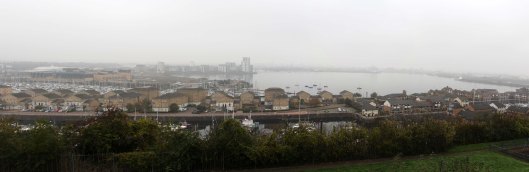
Thick fog hung over Cardiff Bay as I set out on a round-the-bay circuit yesterday morning and, though the fog thinned as the day went on, the day remained grey. Still, never let it be said that grey is boring. Birds there were aplenty (and wildflowers, too … but that’s for tomorrow’s post).

171104 2 Cormorant
171104 2 Little grebes

This cormorant was enjoying a successful spot of fishing in the old Penarth dock area, though it was slim pickings for the three Little grebes around the corner in the River Ely.

171104 3 Pied wagtail (1)
171104 3 Pied wagtail (2)
171104 3 Pied wagtail (3)
171104 3 Pied wagtail (4)

All around the Bay, on almost every man-made structure and clump of rocks near the water, Pied wagtails bobbed, wagged and ‘chisicked’.

171104 4 Coot
171104 4 Moorhen

Coots were even more numerous, and an occasional Moorhen prospected along the shoreline.

171104 5 Cormorant171104 5 Flock of Canada geese

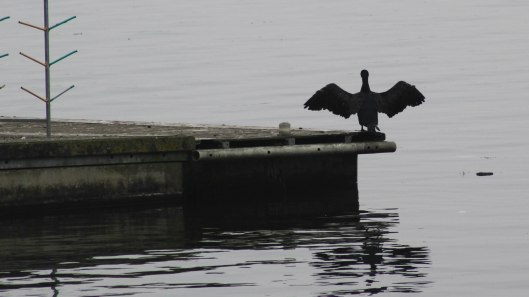
As I was watching this Cormorant drying its wings, our peace and tranquillity was interrupted by the loud honking of a large skein of Canada Geese flying in from the west.

171104 6 Long-tailed tits
171104 6 Starlings and gull

Where concrete and buildings dominate the shoreline and there’s a notable absence of trees, the birds have adapted and perch on tree-like things.

171104 7 Great crested grebe
171104 7 Mute swan

I saw perhaps half a dozen Great crested grebes around the Bay: I always admire how long they can stay underwater when fishing. Mute swans were more numerous. They are birds of such contrasts, looking anything but decorous when flaunting their glorious white bottoms as they feed, yet the picture of elegance when preening.

171104 8 Black-headed gull (3)

The most abundant came at the end of my walk. It was standing room only for the Black-headed gulls on the Barrage.

171104 8 Black-headed gull (1)
171104 8 Black-headed gull (2)
Like Loading...

October on the Ely embankment

31 Tuesday Oct 2017

Posted by sconzani in birds, coastal fauna, nature, walks

≈ Leave a comment

Tags

birding, birdwatching, British birds, Cardiff Bay, Ely embankment, Great Crested Grebe, Linnet, little grebe, Pied wagtail, Redshank, River Ely, Rock pipit, Turnstone, Wheatear

At least once a week I take a turn along the embankment where the River Ely flows out into Cardiff Bay as it makes a nice circular walk from my home on the cliff-top above in Penarth. (It’s good exercise too, as what goes down there must walk back up!) I always record what I see – usually birds – so thought I would share my sightings in an end-of-monthly post.

171031a Ely embankment map
171031b turnstone & coot

A variety of birds make their home in this stretch of water, which they share with a yachting marina and associated water traffic coming and going. There are almost always Turnstones in varying quantities (from one to nine), Mallards, Mute swans, one or two Great Crested Grebes (including their progeny this year), a proliferation of Coots, the occasional Cormorant fishing, usually a couple of Grey wagtails and a couple of Pieds. Gulls fly overhead and there are plenty of hirundines, in the season.
171031c Wheatear
171031d Pied wagtail
171031e Rock pipit

2 October: A Wheatear, an unusual visitor, almost certainly on a migration stopover, was dotting about on the embankment stones; a Pied wagtail was doing its morning stretches, and a Rock pipit was browsing for titbits.

171031f Little grebe

171031g Great crested grebe (1)
171031g Great crested grebe (2)
171031g Great crested grebe (3)

16 October: This was the day before ex-hurricane Ophelia made her presence felt, the day of the jaundiced yellow sky and the rusty red sun, which you can see reflected in my photo of the four Little grebes that were sheltering from the incoming weather. A juvenile Grey wagtail was dotting along the embankment, calling incessantly for its parent; and a Great crested grebe was enjoying a very successful fishing session, coming up with fish in two successive dives.

171031h Linnet

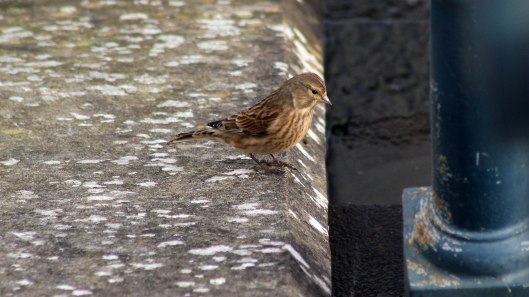
22 October: The day after Storm Brian I walked the embankment to see if any unusual birds had been blown in. The usual suspects were present, except that, most unusually, there wasn’t a single Turnstone. A solitary Linnet flitted back and forth from pavement to stones, and three rather exhausted-looking Redshanks dozed warily along the water line. One of these was colour-ringed and might possibly be the bird I saw back in March but I couldn’t see its rings well enough to be sure.

171031i Redshank

Like Loading...

The return of the tufties

29 Sunday Oct 2017

Posted by sconzani in birds, nature

≈ Leave a comment

Tags

Aythya fuligula, birding, birdwatching, British birds, British ducks, ducks, Tufted duck

171029 Tufted ducks (a)

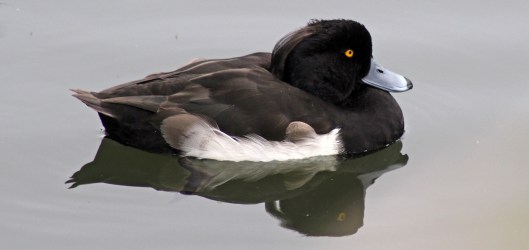
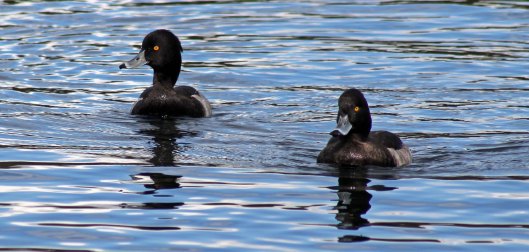
They always make me smile so it’s a joy to see Tufted ducks (Aythya fuligula) back on my local lakes here in south Wales. These ducks tend not to live in Wales year-round: instead, they spend most of the year in England and Scotland, only heading south-west when the days get shorter and the temperatures cooler. Numbers throughout Britain also increase during the winter months as birds from Iceland and northern Europe head to our slightly milder isles.

171029 Tufted ducks (b)
171029 Tufted ducks (c)
171029 Tufted ducks (d)
171029 Tufted ducks (e)
171029 Tufted ducks (f)
171029 Tufted ducks (g)

171029 Tufted ducks (h)

Like Loading...

Birding at Chesil Beach

21 Saturday Oct 2017

Posted by sconzani in birds, coastal fauna, nature

≈ Leave a comment

Tags

birding, birdwatching, Brent geese, British birds, Chesil Beach, Dorset Wildlife Trust Centre, Little egret, Mediterranean gulls, Oystercatchers, Sandwich terns, The Fleet

171021 Chesil Beach (2)

After exploring RSPB Lodmoor, our birding road trip moved on to Chesil Beach, and what an amazing place it is!

171021 Chesil Beach (1)

To quote a brochure I picked up: ‘Chesil Beach is a natural wonder – a bank of 180 billion pebbles stretching for 18 miles along Dorset’s coast, linking Portland to the mainland. Trapped behind the beach is the Fleet, one of the largest saline lagoons in the country and a haven for bird and marine life’.

171021 Med gulls Sandwich terns171021 Brent geese Med gulls

Here we staked ourselves out behind the Dorset Wildlife Trust Centre, trying, somewhat ineffectually, to shelter from the bracing winds. The wind chill was worth it though, as we had good views of a gaggle of Brent geese and a large flock of Mediterranean gulls.

171021 Sandwich terns

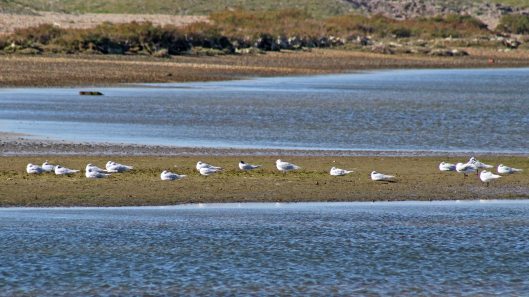
Amongst the gulls were two Sandwich terns, and the beach was also hosting the ubiquitous Oystercatchers and more common gulls, a Bar-tailed godwit and a solitary Dunlin.

171021 Oystercatchers Gull

A Wheatear dotted about on the grass below the pebble bank and, when we briefly stopped here again on our way home on Sunday, a Little egret entertained with its fishing antics, paddling about very successfully in the waterways. Next time I need to climb that bank!

171021 Little egret

Like Loading...

Birding at RSPB Lodmoor

19 Thursday Oct 2017

Posted by sconzani in birds, nature

≈ Leave a comment

Tags

birding, birdwatching, British birds, Canada goose, Great white egret, Kingfisher, Lesser yellowlegs, Mediterranean gull, RSPB Lodmoor, Teal, Tringa flavipes

171019 RSPB Lodmoor

On the way to Portland Bird Observatory last Friday we called in at the RSPB’s Lodmoor Reserve, just outside of Weymouth, to see if we could catch a glimpse of one of their rare visitors, a Lesser yellowlegs (Tringa flavipes), a bird that’s usually more at home in the Americas. Our views weren’t super clear – my photos were taken through tall grasses and bramble – but it was great to see one of these occasional visitors to Europe.

171019 Lesser yellow-legs (1)
171019 Lesser yellow-legs (2)

As well as the Lesser yellowlegs (and the Gadwall I blogged about earlier in the week), there was an abundance of other birdlife.

171019 Various birds

Large numbers of Canada geese flew in while we walked the trails, and there were numerous Teal and Tufted ducks.

171019 Canada geese

171019 Teal

A few Mediterranean as well as the more common gull species …

171019 Assorted gulls (1)
171019 Assorted gulls (2)
171019 Assorted gulls (3)

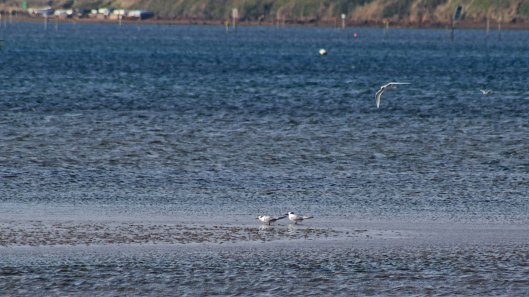
Ruff, Snipe, Little and Great white egrets puddled about in the lagoons; a very confiding Kingfisher posed for photos; two Marsh harriers glided over the distant reed beds; and a Spoonbill was a nice, though distant sighting. I recorded over 30 species of birds at Lodmoor and that was without walking right around the reserve.

171019 Great white egret
171019 Kingfisher
Like Loading...

Gadding about

17 Tuesday Oct 2017

Posted by sconzani in birds, nature

≈ 1 Comment

Tags

Anas strepera, birding, birdwatching, British birds, dabbling duck, duck, Gadwall, Glamorgan Bird Club, Lodmoor, RSPB Lodmoor

Here’s another beauty from last weekend’s wonderful birding trip with the Glamorgan Bird Club. Though this bird is not the rarity of yesterday’s Rustic bunting, it’s not terribly common either, and is ‘Amber listed’, meaning its population has declined in recent years and its situation is being monitored.

171017 Gadwall (1)

This is a male Gadwall (Anas strepera), a very handsome dabbling duck, a little smaller than a Mallard. Sitting on one of the ponds at the RSPB’s Lodmoor Reserve near Weymouth in Dorset, he was looking a little sleepy. Perhaps that’s why he wasn’t bothered about us looking at him, as he actually approached quite near – a bonus for me trying to get reasonable photos. We didn’t hear a peep out of him but, apparently, it’s their chattering call that originally gave the Gadwalls their imitative name.

171017 Gadwall (2)
171017 Gadwall (3)
171017 Gadwall (4)
171017 Gadwall (5)
Like Loading...

A bird in the hand

16 Monday Oct 2017

Posted by sconzani in birds, nature

≈ 6 Comments

Tags

birding, birdwatching, British birds, Emberiza rustica, Glamorgan Bird Club, Portland Bird Observatory, Portland Obs, rare bird, Rustic bunting

I’ve just had a fantastic long weekend’s birding with the Glamorgan Bird Club at the Portland Bird Observatory in Dorset. Not only did we stay in an old lighthouse but we saw an incredible number of amazing birds. I haven’t typed up my list yet but I do know I had fifteen (yes, 15!!!) lifers (for non-birders, I saw fifteen species I had never seen before).

171016 Rustic bunting (3)

This little beauty was one of them: it’s a Rustic bunting (Emberiza rustica), a bird that breeds in northern Europe and in Asia and normally migrates to Japan and parts of China and south-east Asia to over-winter. This little one may have been blown the wrong way by strong winds or perhaps, by mistake, it joined up with a group of other small birds heading for Britain.

171016 Rustic bunting (1)

It was both an amazing experience and a real privilege to see such a rarity up close. (You can read more about this bird and see more pictures on the Portland Obs blog here.)

171016 Rustic bunting (2)

Like Loading...
← Older posts
Newer posts →

About me

sconzani

sconzani

I'm a writer and photographer; researcher and blogger; birder and nature lover; countryside rambler and city strider; volunteer and biodiversity recorder.

View Full Profile →

Follow earthstar on WordPress.com

Enter your email address to follow this blog and receive notifications of new posts by email.

Recent blog posts

  • A proliferation of Peacocks April 1, 2026
  • Little owl March 31, 2026
  • Distant seabirds March 30, 2026
  • Thrift March 29, 2026
  • The day of the Wheatears March 28, 2026

From the archives

COPYRIGHT

Unless otherwise acknowledged, the text and photographs on this blog are my own and are subject to international copyright. Nothing may be downloaded or copied without my permission.

Fellow Earth Stars!

  • Unknown's avatar
  • Unknown's avatar
  • Unknown's avatar
  • Unknown's avatar
  • Unknown's avatar
  • Unknown's avatar
  • Unknown's avatar
  • Unknown's avatar
  • Unknown's avatar
  • Unknown's avatar
  • Unknown's avatar
  • Unknown's avatar
  • Unknown's avatar
  • Unknown's avatar
  • Unknown's avatar
  • Unknown's avatar
  • Unknown's avatar
  • Unknown's avatar
  • Unknown's avatar
  • Unknown's avatar
  • Unknown's avatar
  • Unknown's avatar
  • Unknown's avatar
  • Unknown's avatar
  • Unknown's avatar
  • Unknown's avatar
  • Unknown's avatar
  • Unknown's avatar
  • Unknown's avatar
  • Unknown's avatar
  • Unknown's avatar
  • Unknown's avatar
  • Unknown's avatar
  • Unknown's avatar
  • Unknown's avatar
  • Unknown's avatar
  • Unknown's avatar
  • Unknown's avatar
  • Unknown's avatar
  • Unknown's avatar
  • Unknown's avatar
  • Unknown's avatar
  • Unknown's avatar
  • Unknown's avatar
  • Unknown's avatar
  • Unknown's avatar
  • Unknown's avatar
  • Unknown's avatar
  • Unknown's avatar
  • Unknown's avatar

Blog at WordPress.com.

Privacy & Cookies: This site uses cookies. By continuing to use this website, you agree to their use.
To find out more, including how to control cookies, see here: Cookie Policy
  • Subscribe Subscribed
    • earthstar
    • Join 642 other subscribers
    • Already have a WordPress.com account? Log in now.
    • earthstar
    • Subscribe Subscribed
    • Sign up
    • Log in
    • Report this content
    • View site in Reader
    • Manage subscriptions
    • Collapse this bar
 

Loading Comments...
 

You must be logged in to post a comment.

    %d