
Geology fascinates me, and I am privileged to live in a geologically rich area, but it’s not a subject I know anything about so my geological blog posts on here are very few and far between. However, when a local birder posted on social media about a slab of rock he’d found on a local beach, and a local geologist later confirmed the find and shared a link explaining the rock’s origins, I just had to investigate.

The slab of rock was lying beneath the cliff at Penarth Head on the beach shown in the photo above. And, in fact, when I went and looked, I found several similar slabs. They had fallen from the top section of the cliff, which is known as the Lilstock Formation. Rather than attempt to explain the geology of these cliffs, it seems easiest if I refer you to the blog my geologist friend showed me: ‘Geological Walk at Penarth Head‘, published on the Geologists’ Association – South Wales Group website on 27 June 2021.
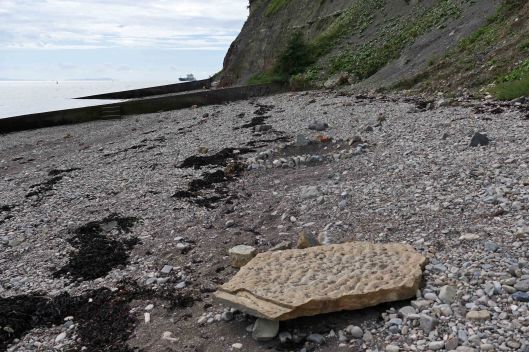
It wasn’t easy to capture in photographs but I hope you can see the ripple effect on the surface of these slabs. This is basically an ancient fossilised beach, the ripples caused by the action of water and tides on a muddy surface millions of years ago. The fact that I could touch a surface formed so long ago is something I find quite mind-boggling.

 earthstar
You must be logged in to post a comment.