
Tags
bracket fungi, British fungi, Daedalea quercina, fungi on Oak, mazegill fungi, mazegills, Oak mazegill
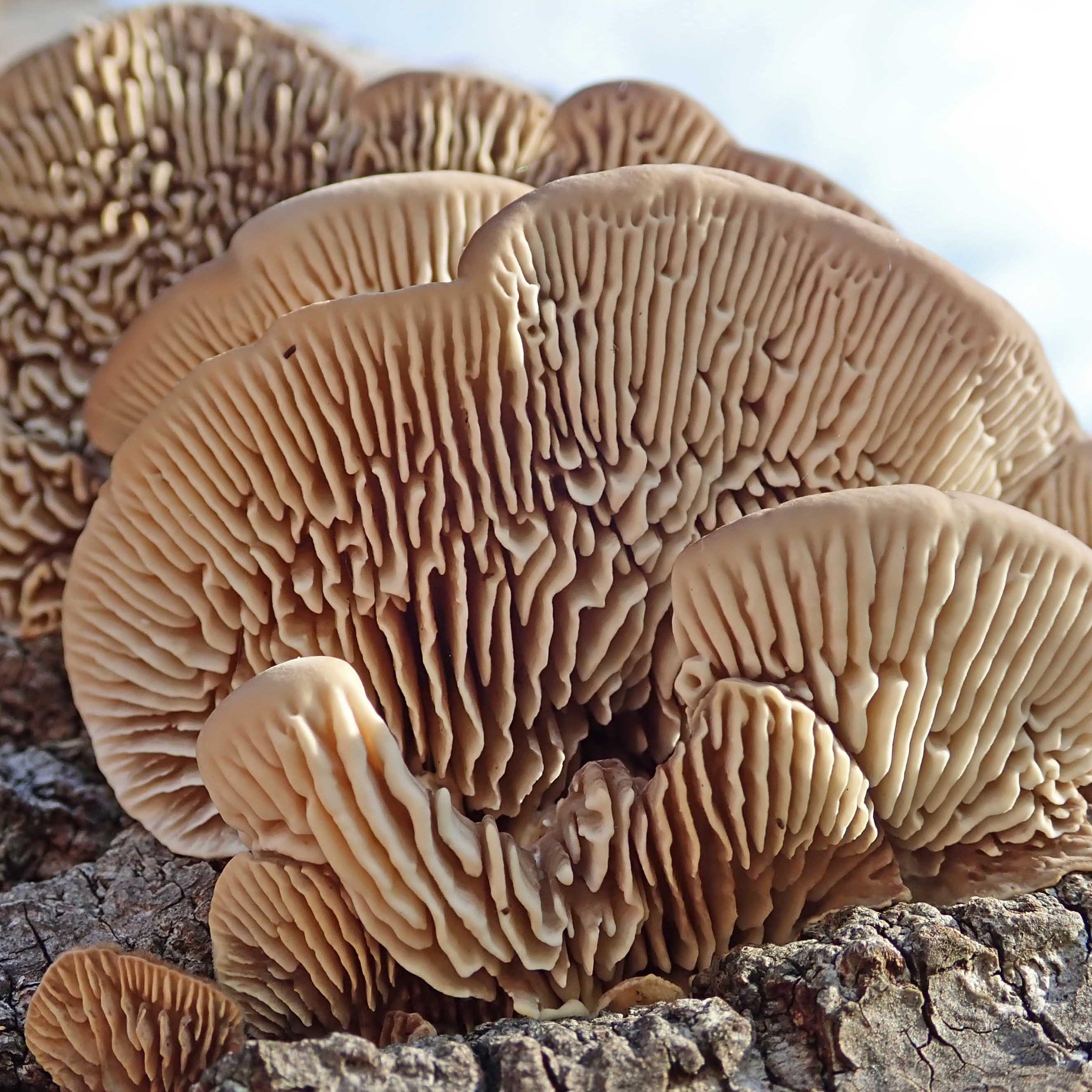
I’m sure I must have seen these stunning bracket fungi, Oak mazegill (Daedalea quercina), before this week but I have no images of them on my laptop. Growing on a huge old fallen Oak – they always grow on Oak (i.e. Quercus species), hence the quercina epithet, consuming dead fallen and still standing trees and large branches, these brackets grow annually, eventually reaching a thickness of 10cm and a diameter of 20cm. And, as you can see from my photos, the fertile surface (i.e. the underside of the bracket, from which the spores are released) has maze-like channels, which explains the mazegill name.
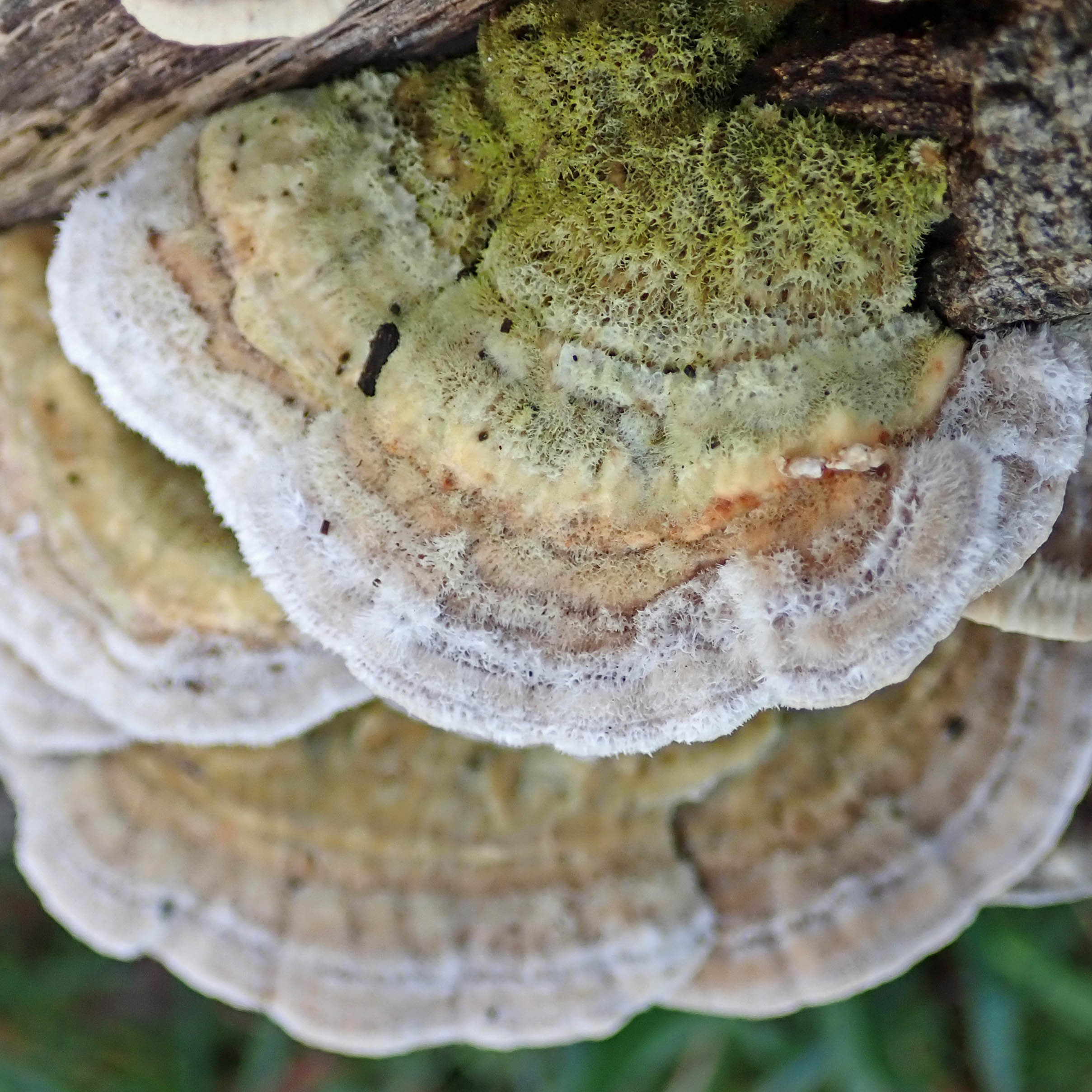
Pat O’Reilly, in his book Fascinated by Fungi, explains that its generic name (Daedalea) refers to Daedalus, the legendary figure who supposedly designed the maze on ancient Crete, in which Pasiphaë, wife of King Minos, hid her offspring the Minotaur, half man and half bull.
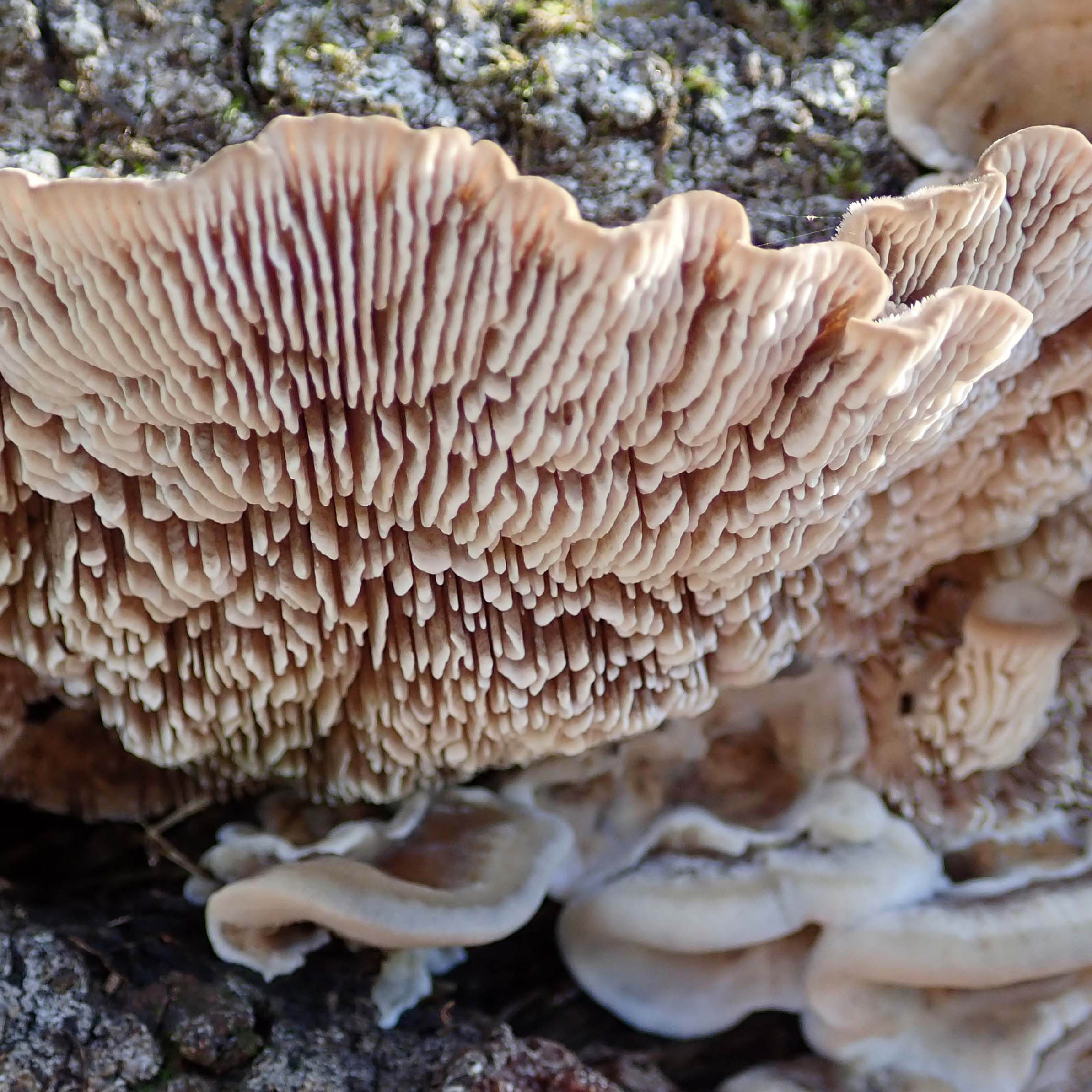
O’Reilly’s book also includes a couple of other fascinating facts about Oak mazegill:
This fungus was valued by beekeepers who used the smoke from smouldering fruitbodies to anaesthetise bees. Once the bees had been calmed by the dense smoke, the beekeeper could open a hive and work on it without triggering painful panic reactions by the occupants.
The deep, hard-wearing channels make these tough and durable brackets very handy as combs for grooming horses – one of their traditional uses.
 earthstar
You must be logged in to post a comment.