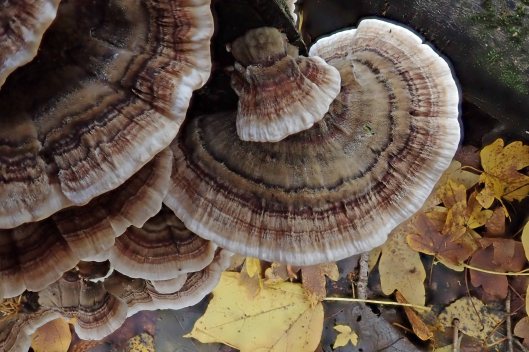
Fungi Friday: Turkey tails
21 Friday Dec 2018
21 Friday Dec 2018
14 Friday Dec 2018
Tags
#FungiFriday, black-and-white fungi, British fungi, diversity of fungi, fungal diversity, fungus, Heath Park, shapes of fungi, textures of fungi
I took myself off for a fungi foray around the woodland at Cardiff’s Heath Park today as it’s usually a good place to find a wide variety of fungi. And, rather than post colour photos of my finds, I thought I’d convert them all to black and white as that shows, I think, the fungal world’s amazing diversity of shapes and textures.
07 Friday Dec 2018
28 Sunday Oct 2018
Here’s a fungus I can actually identify! This is the Butter cap, a name that’s so much easier to say than its scientific name Rhodocollybia butyracea.

Thanks to the most excellent First Nature website, I can tell you that Rhodocollybia is from rhodo, meaning ‘pink’ (a reference to the pinkish tinge of the mushroom’s gills), and collybia means ‘small coin’, while the epithet butyracea means ‘buttery’ (but not in taste – it’s a reference to the greasiness of the cap).

12 Friday Oct 2018
06 Saturday Oct 2018
I was over the moon when I spotted this first little burst of peachiness growing on an old, ivy-smothered log a week ago.
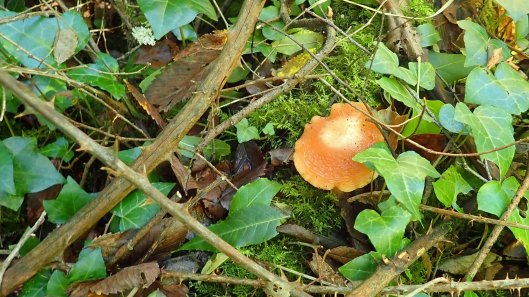
Why? Because this is one of the few fungi I can positively identify by sight, and it’s quite the rarity in most parts of Britain these days because it grows on Elm, a tree that is itself increasingly rare in Britain nowadays. According to the Forest Research website, 60 million Elm trees have been killed by Dutch Elm disease since it was first discovered in Britain in the 1920s, the majority of those dying since the 1970s.

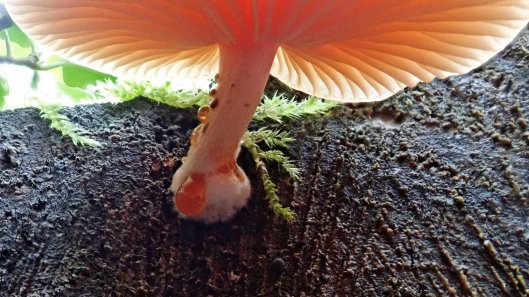
This fungus is the wonderfully named Wrinkled peach (Rhodotus palmatus). Rhodotus comes from the Ancient Greek Rhodon, meaning rose, and palmatus is Latin and means ‘shaped like a hand’, presumably a reference to the surface texture of the fungus’s cap resembling the lines on the palm of a hand.

Incredibly, I found nine of these fungi on two different logs, and then, on a subsequent visit, found another one growing on a log a few metres away. Presumably the logs are the remains of an Elm that was cut down when Dutch Elm disease was at its height.

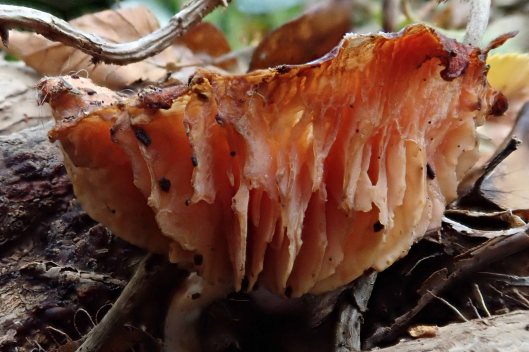
As you can see from my photos, the fungi range from the very young and fresh to the aging and wrinkled and decaying. Wrinkled peach, when seen at all, is usually found between July and November, so I have a few more weeks yet to enjoy these little beauties.


25 Tuesday Sep 2018
Tags
British fungi, brittlestem fungi, Conical brittlestem, fungus, Parasola conopilus, Psathyrella conopilus
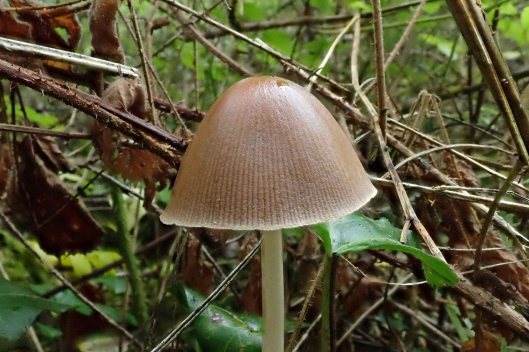
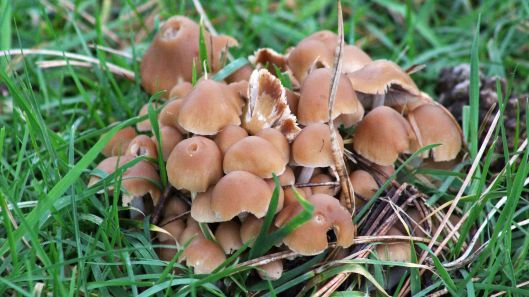
After misidentifying my fungi last week, I’m going to take a huge chance and say that I’m fairly confident these are Conical brittlestems (Parasola conopilus, formerly known as Psathyrella conopilus). I completely understand if you don’t believe me!

21 Friday Sep 2018
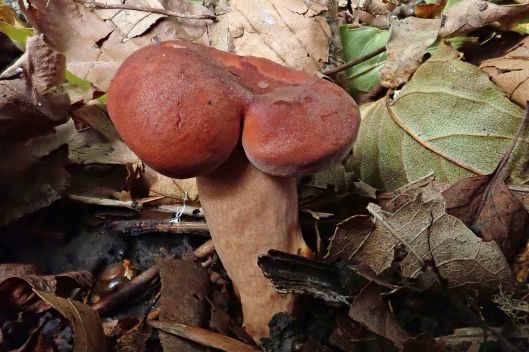
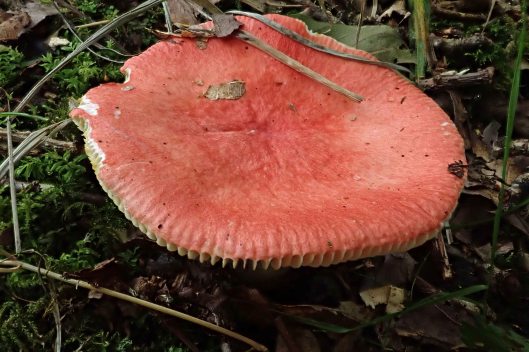
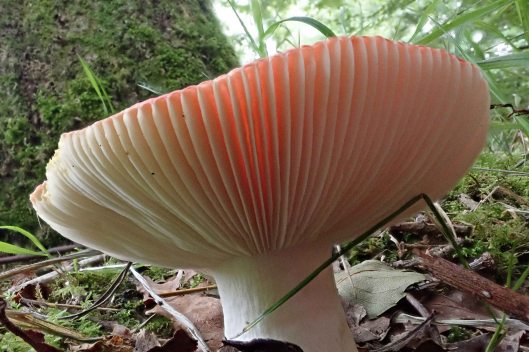
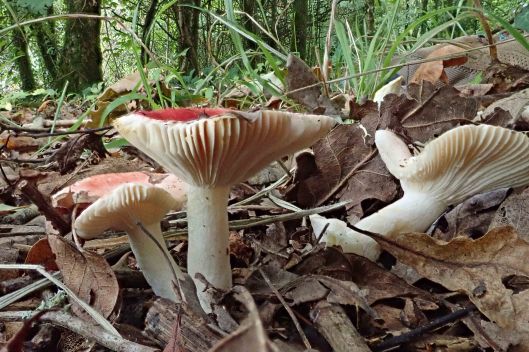
It’s Fungi Friday and today I have for your pleasure and delight one of the Russula species of fungi. According to the First Nature website of fungi expert Pat O’Reilly, around 160 species of Russula can be found in Britain, and I know from venturing out on past forays with the Glamorgan Fungus Group that the reddish-coloured ones can be especially difficult to identify so I’m not even going to try to put a name to these particular fungi. I just think they’re rather lovely and I hope they brighten your day as much as they did mine.


19 Wednesday Sep 2018
Tags
autumn fungi, confusing fungi, Coprinopsis lagopus, Coprinus comatus, fungus, Hare's-foot inkcap, inkcaps, Lawyer's wig, Shaggy inkcap
I think you can see how this shaggy little fungus got one of its common names, Lawyer’s wig, as it so well resembles the wigs lawyers wear in court. This is Coprinus comatus, also, not surprisingly, known as the Shaggy inkcap. Coprinus means ‘living on dung’ but this fungus really just prefers very rich soil with lots of decaying plant matter. These are usually found in groups of up to 20 individuals, and I found this little group of five along the edge of a woodland path, a fairly typical habitat.

Edit: My fungi friend Graham very kindly pointed out that I had mis-identified my initial find but, luckily, I saw some real Shaggy inkcaps today, so I have changed the photos above to show those.
The confusion species, which my initial photos (below) showed, was actually the Hare’s-foot inkcap (Coprinopsis lagopus). Perhaps you can see why I was confused by all that shagginess!
27 Saturday Jan 2018
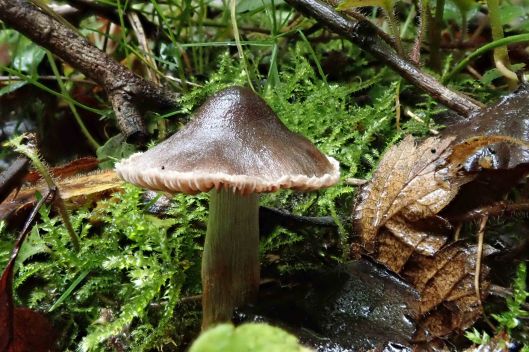
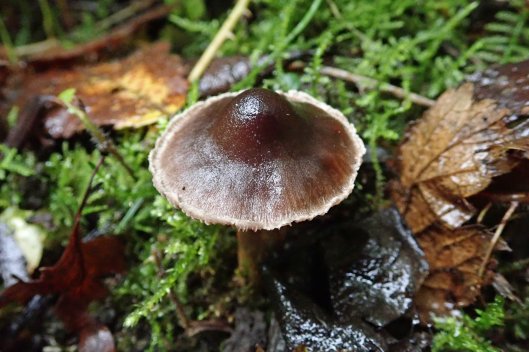
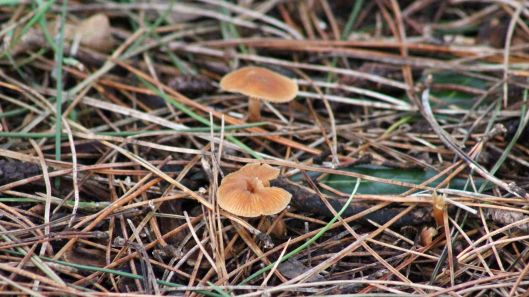
Though I have since learnt that this expression is also used by birders, ‘Little brown job’ is a term I first heard used in relation to fungi, the many and varied, brownish-hued conglomerations of fungi that have few distinguishing characteristics (unless you’re a whizz with a microscope) and so can often be notoriously difficult to identify. Here are some I’ve seen this week.


You must be logged in to post a comment.