• ABOUT
  • BIRDING 2018
  • Birding 2019
  • BLOG POSTS
  • Butterflies 2018
  • Resources

earthstar

~ a celebration of nature

earthstar

Tag Archives: Lodmoor Nature Reserve

A Shelduck or two

28 Saturday Feb 2026

Posted by sconzani in birds

≈ Leave a comment

Tags

birding, birdwatching, British birds, Lodmoor Nature Reserve, RSPB Lodmoor, Shelduck, Tadorna tadorna

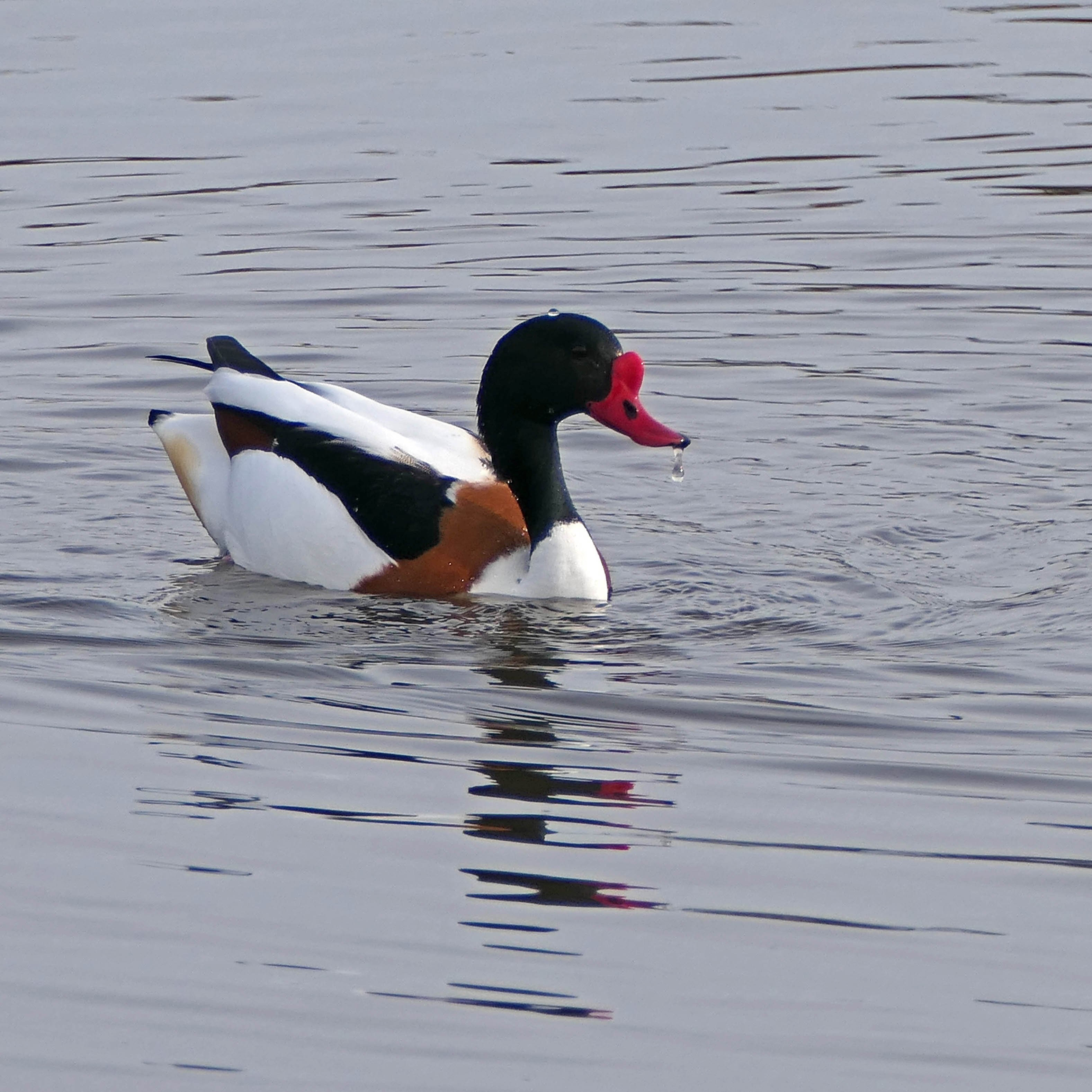
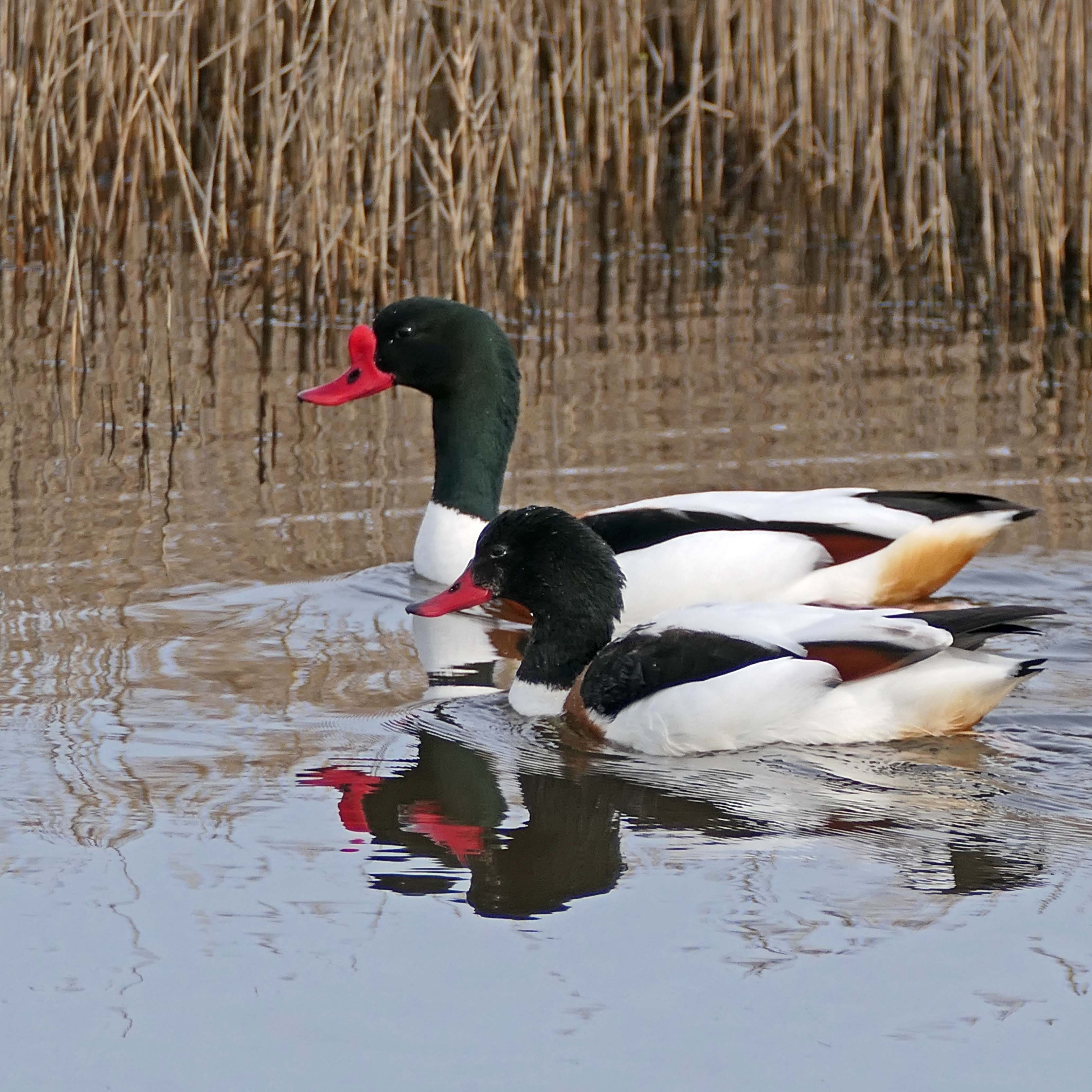
I’ve blogged about our local Shelducks (Tadorna tadorna) before, in How many Shelducks?, 9 October 2019 and Hoovering Shelduck, 25 February 2025. They’re stunning waterfowl that look a bit like a cross between a duck and a goose, coloured by an enthusiast child with bright paints and a vivid imagination.

It’s only occasionally that I manage close views of them, as the Cardiff Bay birds spend most of their local visiting time on the distant mud flats between the Barrage and the Bristol Channel, so I appreciate all the more the times when I can sit on a bench and watch them going about their day, as happened last week at RSPB Lodmoor.

Like Loading...

Wigeon

24 Tuesday Feb 2026

Posted by sconzani in birds, winter

≈ Leave a comment

Tags

Anas penelope, birding, birdwatching, British birds, Lodmoor Nature Reserve, RSPB Lodmoor, Wigeon

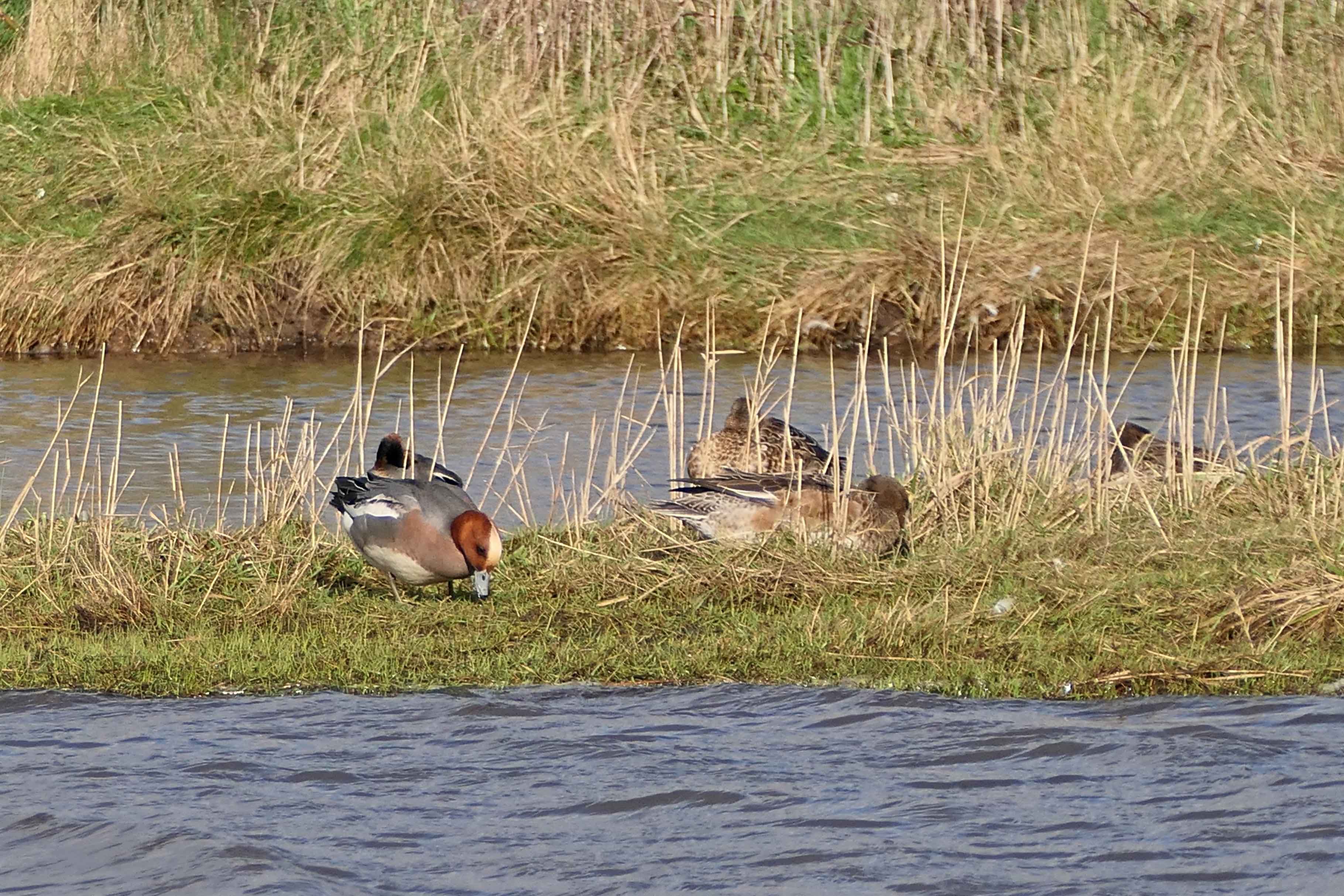
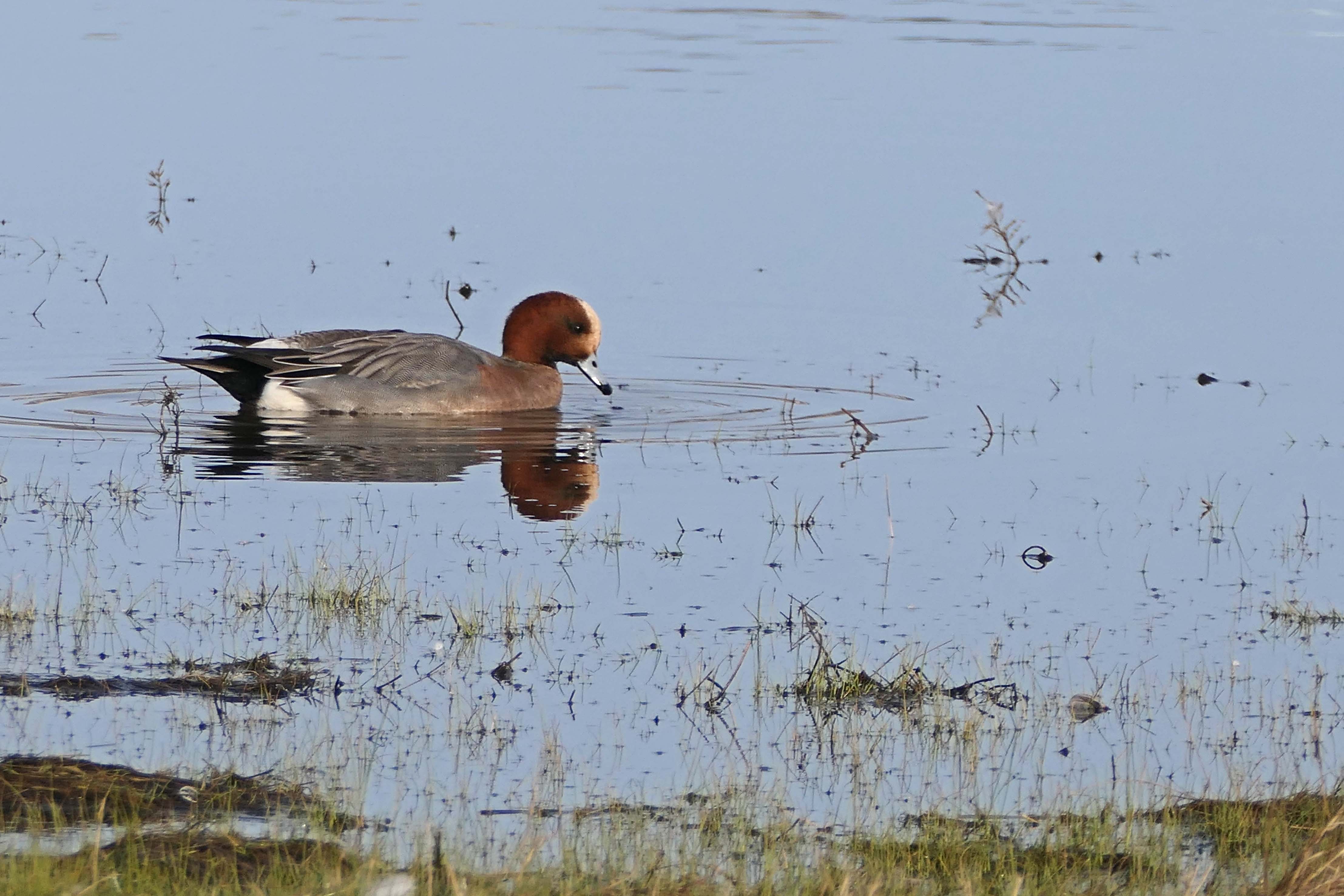
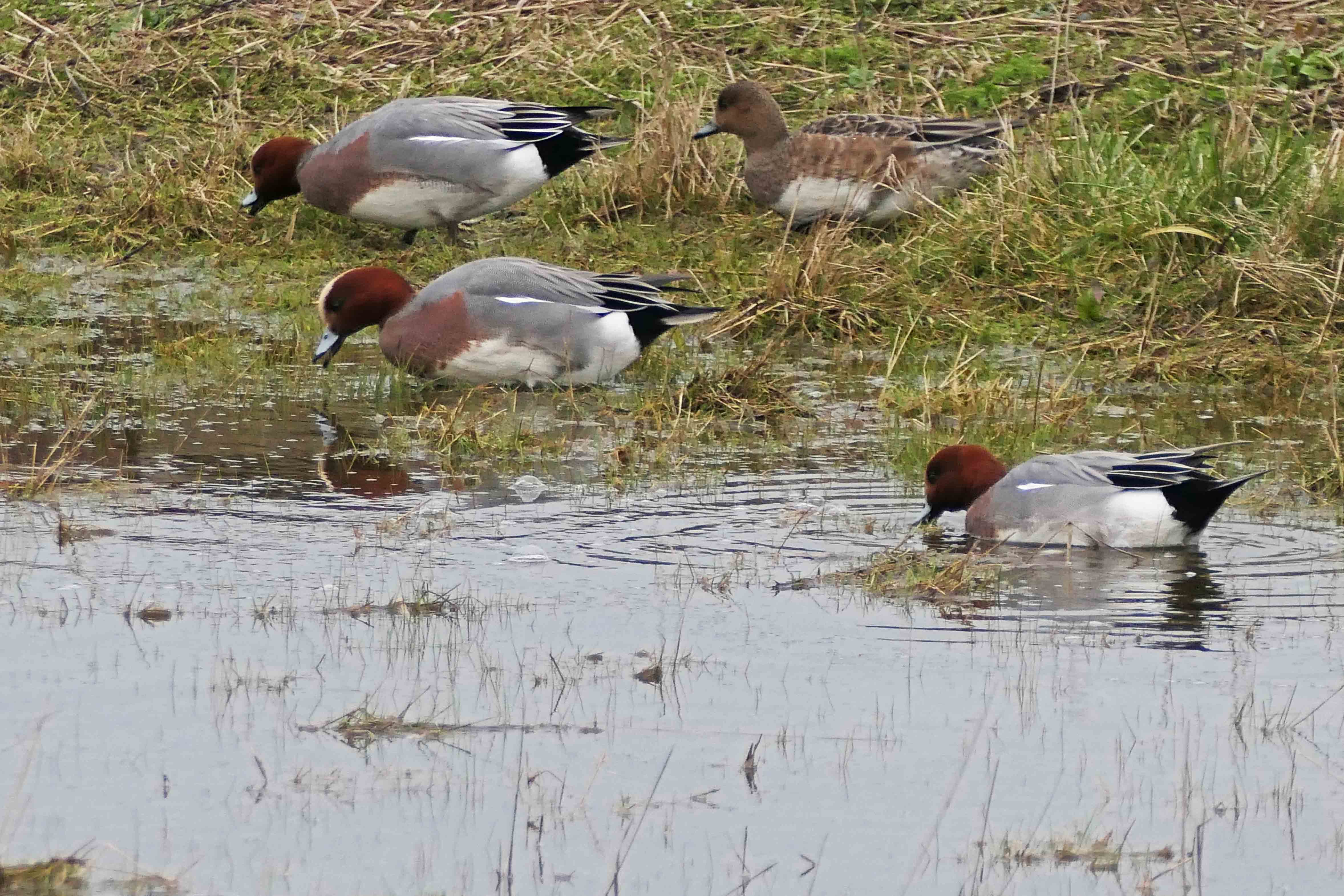
Like Lapwing, the Wigeon (Anas penelope) is another bird I don’t see very often in my home environment. We get a few occasional Wigeon drop in at Cosmeston Lakes Country Park but they don’t usually remain very long. And, having seen them spending a lot of time grazing in very shallow water and on low grassy areas adjacent to the water at RSPB Lodmoor, I can understand why – Cosmeston simply doesn’t have undisturbed areas where the hundreds of local dogs wouldn’t be able to get to them.

So, as with the Lapwing, it was a real treat to see so many of these handsome birds at Lodmoor. The rich chestnut head and grey upper body of the male Wigeon is a particularly attractive colour combination.

I don’t recall hearing them make any noise (though that may be because their sound was drowned out by the other birds) but the name Wigeon is thought to have been derived from their whistling call. Other vernacular names – whew duck (Northumberland); whewer, whim, whistler (eastern England) – are also imitative of their call, according to Buczacki in Fauna Britannica. Here’s a link to their call on the RSPB website, if you fancy a listen.

Like Loading...

Lapwing

23 Monday Feb 2026

Posted by sconzani in birds, winter

≈ 2 Comments

Tags

birding, birdwatching, British birds, Lapwing, Lodmoor Nature Reserve, Peewit, RSPB Lodmoor, Vanellus vanellus

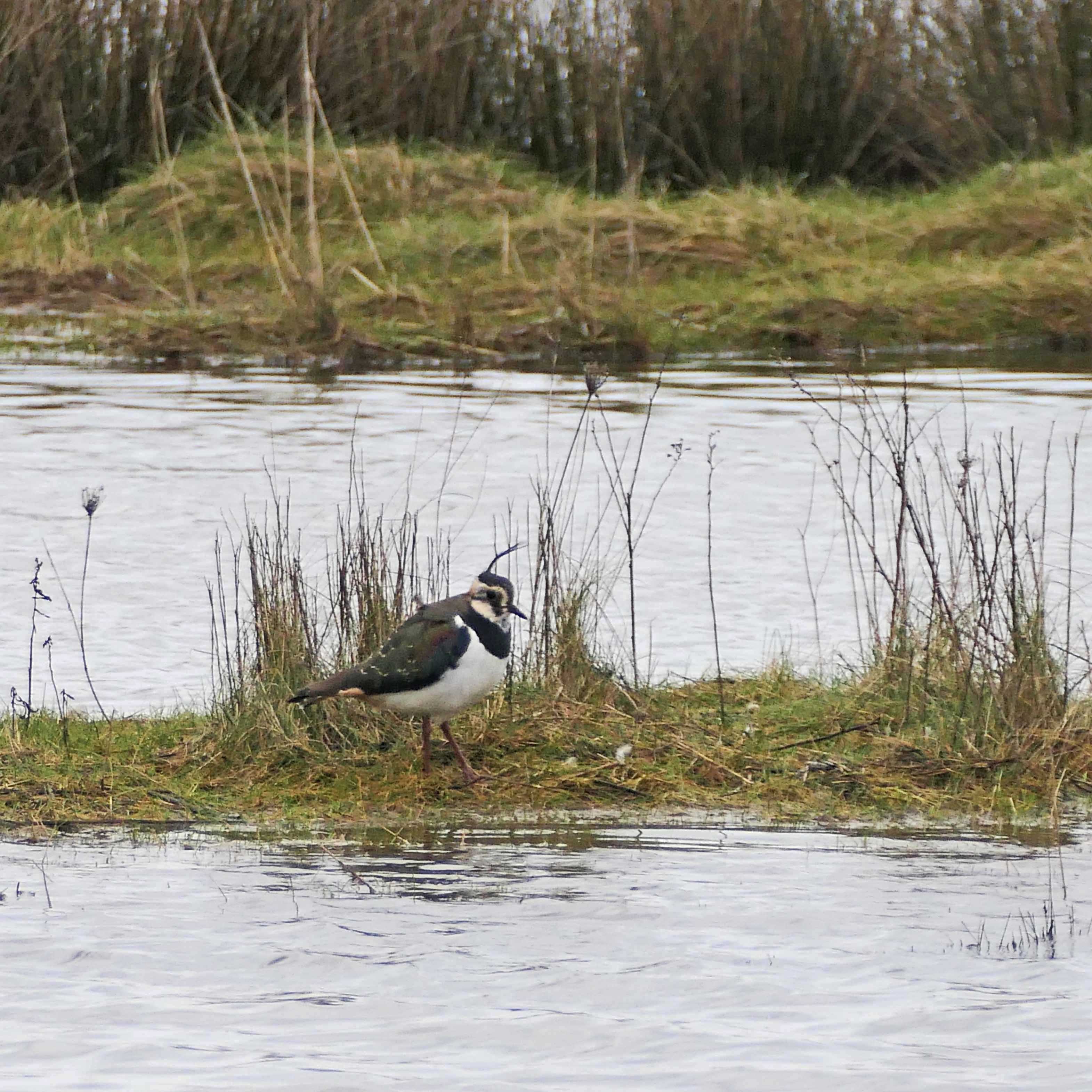
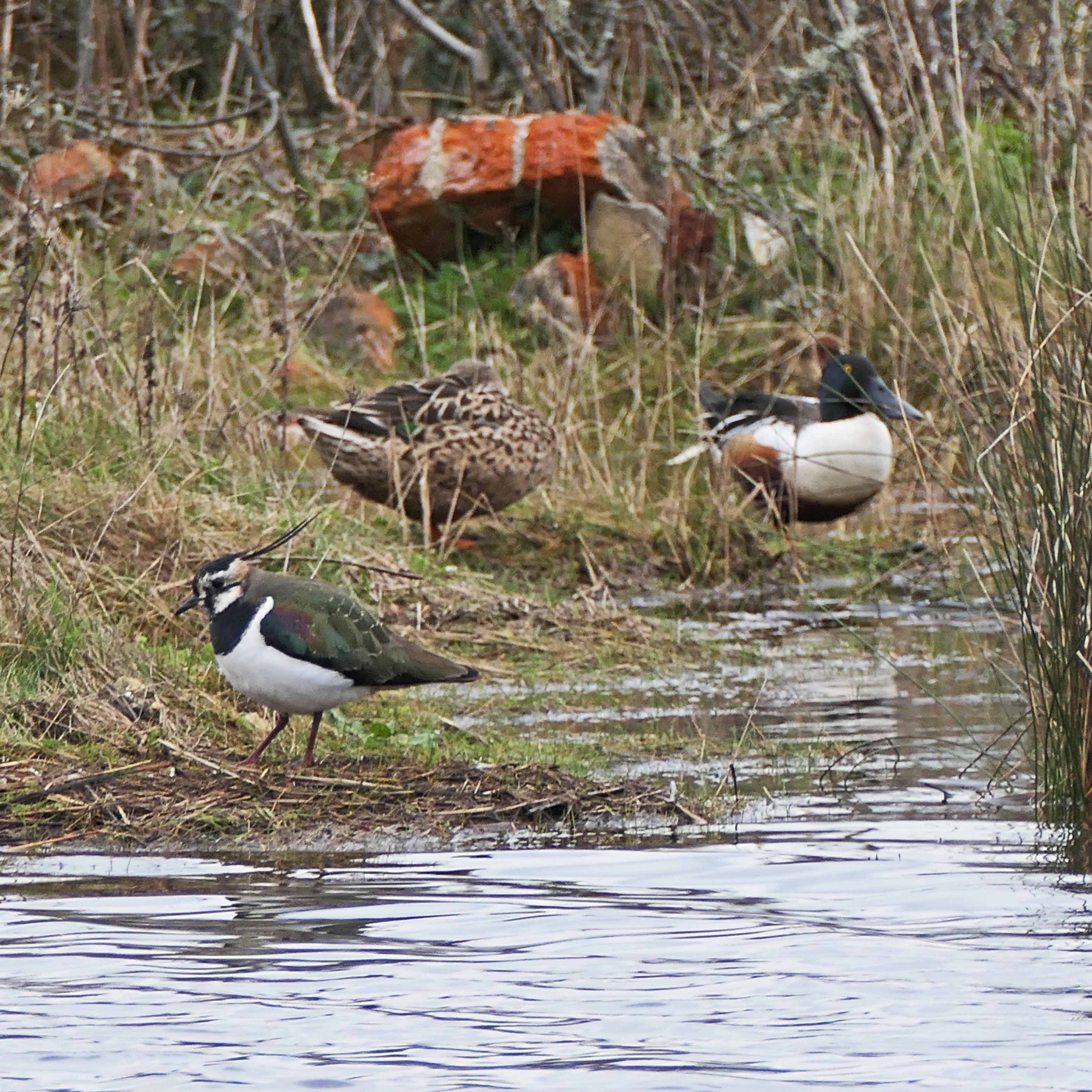
Very occasionally small numbers of Lapwing (Vanellus vanellus) are seen alighting briefly in local farm fields or are spotted passing overhead by keen-eyed birders but, generally speaking, Lapwings are a rarity in my part of south Wales. Which is a great shame because they are stunning looking birds, and their evocative call, the Peewit sound that has given them one of their many common names, is wonderful to hear.

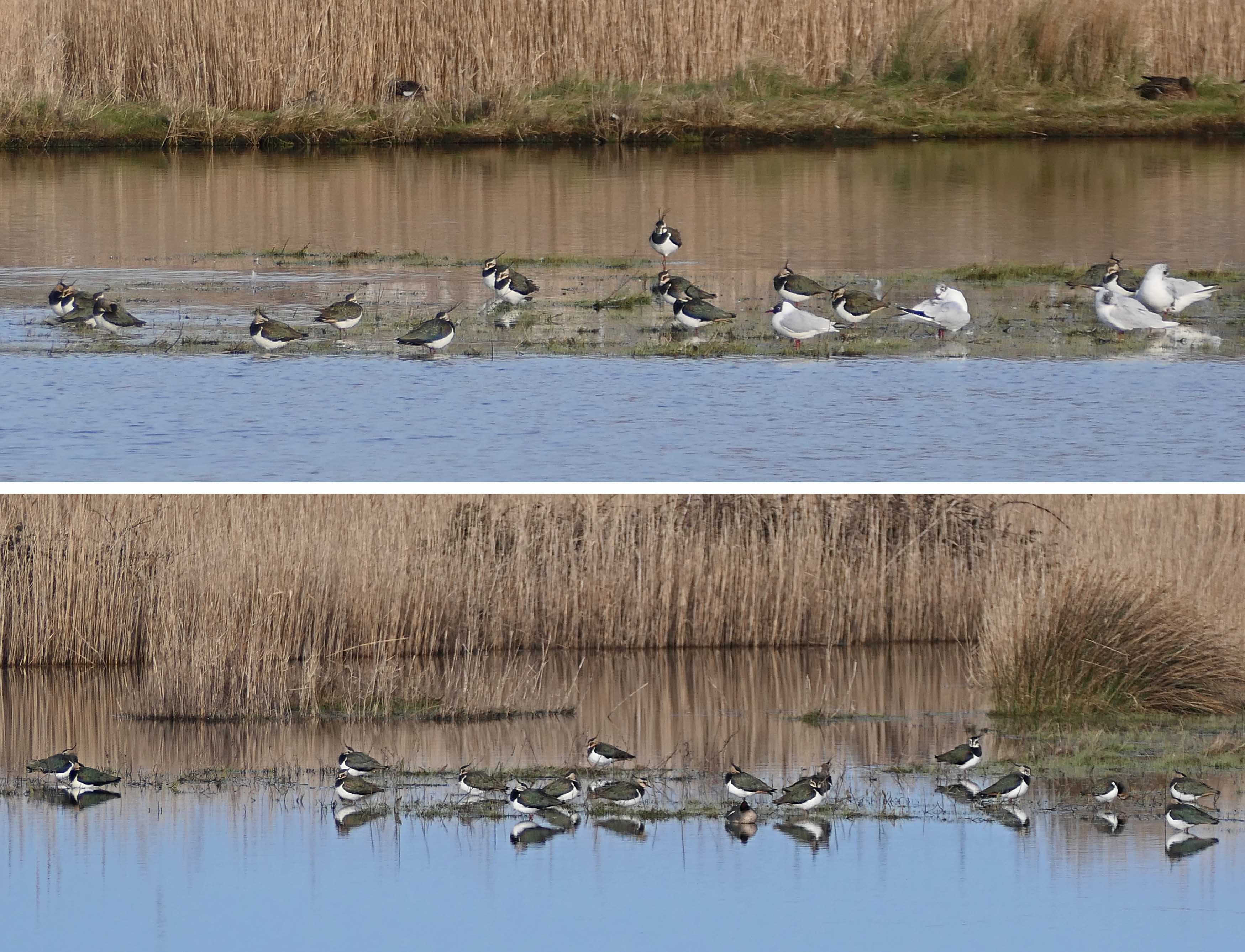
So, you can probably imagine my delight when, on the first afternoon of my most recent Dorset trip, I made my first visit to RSPB Lodmoor and immediately saw and heard large numbers of Lapwings. Sporting the largest crest of any British bird and plumage that flashes with a metallic sheen in the sunshine, Lapwings are very handsome birds.

Somewhat surprisingly, it wasn’t the harvesting of their feathers that caused the Lapwing population to crash in previous centuries; according to Fauna Britannica, the declines were caused by people plundering Lapwing nests for their eggs, which were considered a delicacy. The book cites an example where ‘280 dozen lapwing eggs were taken annually in the 1860s’ from just one estate near Thetford.

Lapwings recovered well after this practice was made illegal in the Lapwing Act of 1926 but numbers are once again declining, this time due to changes in agricultural practices; the birds require fallow fields in which to feed during the winter but the majority of farmers now sow their fields twice each year, in spring and again in autumn. According to the British Trust for Ornithology’s publication Into the Red, the Lapwing population in Wales and southern England has declined by 80 per cent since the 1970s meaning the species is now classified as red-listed. It was a privilege to spend time watching these beautiful birds during my four visits to Lodmoor last week.

Like Loading...

Avocet

21 Saturday Feb 2026

Posted by sconzani in birds, winter

≈ 6 Comments

Tags

Avocet, birding, birdwatching, British birds, Lodmoor Nature Reserve, Recurvirostra avosetta, RSPB Lodmoor, winter birding

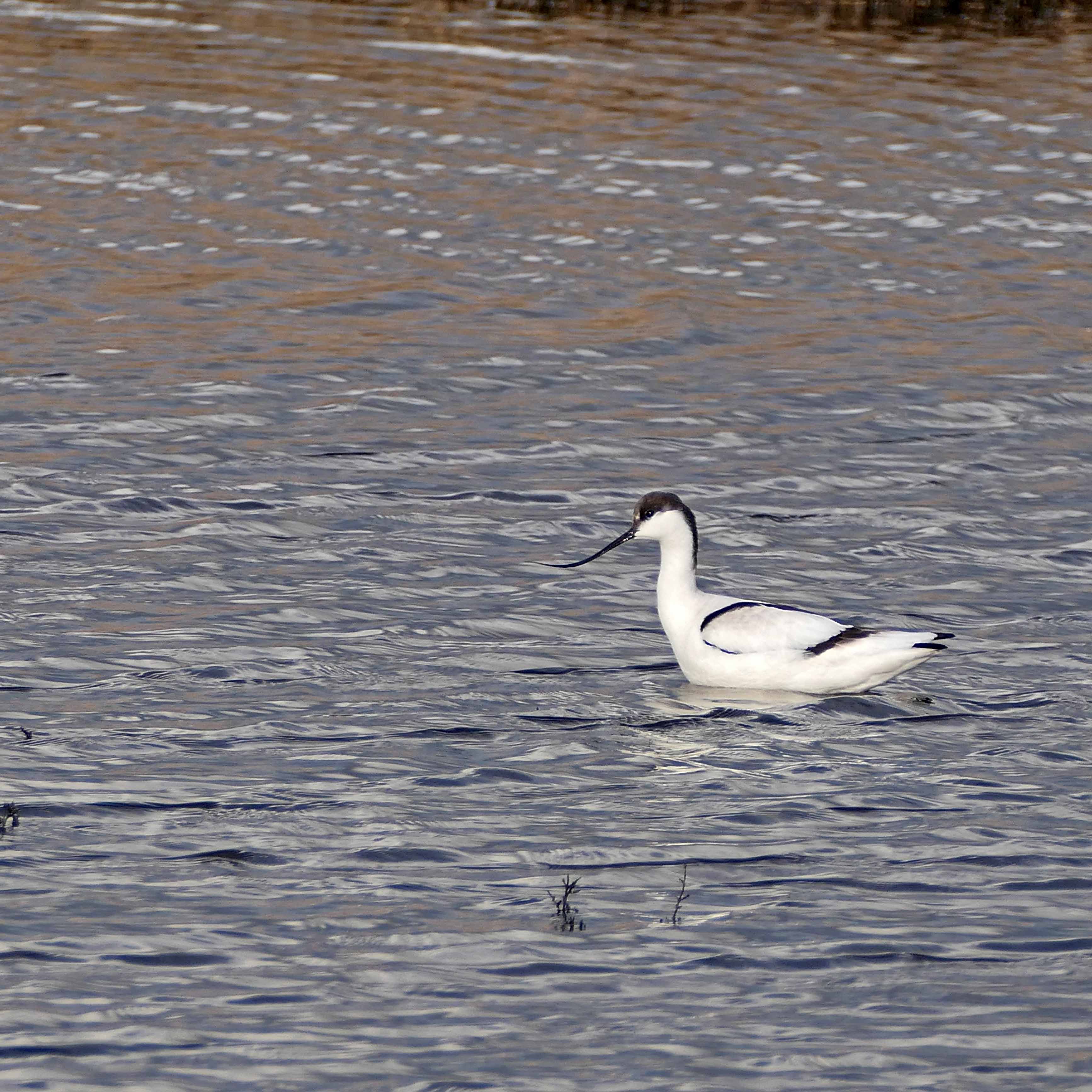
I’ve just returned from my first little holiday since last September, a four-night break in Weymouth, a location that’s now a firm favourite of mine. As has become my habit, after checking in to my guest house, I headed east along the seafront to walk off five hours of train travel with a circuit of Lodmoor Nature Reserve. Though the wetlands were more full of water than usual due to all the recent rain and the paths were, as a result, quite muddy, the birdlife was a delight, and, as expected, the species were quite different from what I’d seen in the summer months. Now, there was an abundance of Teal and Shoveler, Lapwing and Wigeon, the latter two not species I see very often and both new additions to my birding year list. The other new species was a real treat and totally unexpected, this gorgeous Avocet (Recurvirostra avosetta). The Avocet is such an elegant bird, crisply clad in classic black and white, with the upwardly curved beak that makes it instantly recognisable. I was entranced and lingered until dusk watching this bird feeding and preening; it was the perfect start to my holiday!

Like Loading...

Breeding Common terns

17 Tuesday Jun 2025

Posted by sconzani in birds

≈ Leave a comment

Tags

birding, birdwatching, breeding Common terns, British birds, Common tern, Common tern chicks, Lodmoor Nature Reserve, RSPB Lodmoor

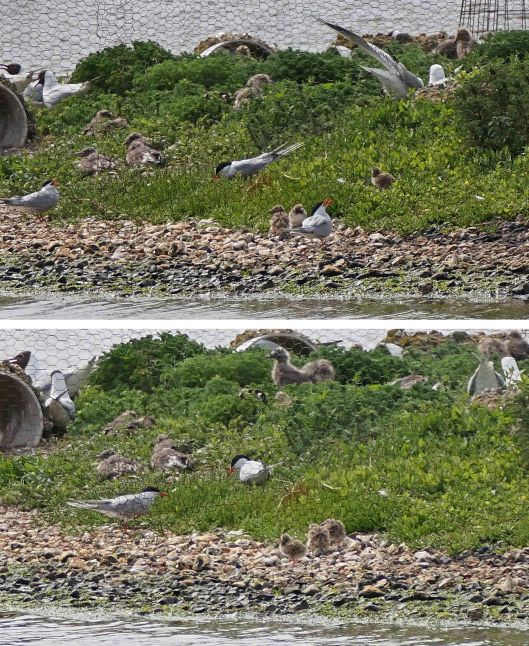
My afternoon walk to Lodmoor Nature Reserve proved the perfect antidote to my five-hour journey on four different trains to get to Weymouth. And what an absolute delight it was when I arrived at Lodmoor to first hear – very raucous, and then see the Common terns and their Black-headed gull companions breeding in close proximity on two artificial islands near the edge of the lakes. (These islands are ring-fenced and fitted out with some enclosed nesting ‘boxes’ to try to offer the birds better protection during the breeding season.)

Though Common terns can be seen at certain times of year when moving on passage up and down the Bristol Channel, I’ve rarely managed to catch sight of them in my local stomping ground, so seeing them at reasonably close quarters, and with their tiny chicks just beginning to explore the world around them, was another special treat of this holiday.

Terns are magnificent aeronauts. Their skill at manoeuvring their streamlined shape through the thermal airwaves, their ability to twist and turn and plunge and lift – these fliers are a joy to watch, particularly when diving for the tiny fish swimming just below the water’s surface. And, with several tiny chicks to feed, these terns were almost constantly in the air. Many seemed to fly straight out to sea where, presumably, their prey was more bountiful but I also noticed, when walking around Weymouth’s other local nature reserve, Radipole Lakes, that the Common terns were successfully exploiting the fishing opportunities there as well.

Like Loading...

About me

sconzani

sconzani

I'm a writer and photographer; researcher and blogger; birder and nature lover; countryside rambler and city strider; volunteer and biodiversity recorder.

View Full Profile →

Follow earthstar on WordPress.com

Enter your email address to follow this blog and receive notifications of new posts by email.

Recent blog posts

  • Cormorants, young and old March 12, 2026
  • Bay bunnies March 11, 2026
  • Beating the gloom March 10, 2026
  • No booming Bittern but … March 9, 2026
  • Danish scurvygrass March 8, 2026

From the archives

COPYRIGHT

Unless otherwise acknowledged, the text and photographs on this blog are my own and are subject to international copyright. Nothing may be downloaded or copied without my permission.

Fellow Earth Stars!

  • Unknown's avatar
  • Unknown's avatar
  • Unknown's avatar
  • Unknown's avatar
  • Unknown's avatar
  • Unknown's avatar
  • Unknown's avatar
  • Unknown's avatar
  • Unknown's avatar
  • Unknown's avatar
  • Unknown's avatar
  • Unknown's avatar
  • Unknown's avatar
  • Unknown's avatar
  • Unknown's avatar
  • Unknown's avatar
  • Unknown's avatar
  • Unknown's avatar
  • Unknown's avatar
  • Unknown's avatar
  • Unknown's avatar
  • Unknown's avatar
  • Unknown's avatar
  • Unknown's avatar
  • Unknown's avatar
  • Unknown's avatar
  • Unknown's avatar
  • Unknown's avatar
  • Unknown's avatar
  • Unknown's avatar
  • Unknown's avatar
  • Unknown's avatar
  • Unknown's avatar
  • Unknown's avatar
  • Unknown's avatar
  • Unknown's avatar
  • Unknown's avatar
  • Unknown's avatar
  • Unknown's avatar
  • Unknown's avatar
  • Unknown's avatar
  • Unknown's avatar
  • Unknown's avatar
  • Unknown's avatar
  • Unknown's avatar
  • Unknown's avatar
  • Unknown's avatar
  • Unknown's avatar
  • Unknown's avatar
  • Unknown's avatar

Blog at WordPress.com.

Privacy & Cookies: This site uses cookies. By continuing to use this website, you agree to their use.
To find out more, including how to control cookies, see here: Cookie Policy
  • Subscribe Subscribed
    • earthstar
    • Join 668 other subscribers
    • Already have a WordPress.com account? Log in now.
    • earthstar
    • Subscribe Subscribed
    • Sign up
    • Log in
    • Report this content
    • View site in Reader
    • Manage subscriptions
    • Collapse this bar
 

Loading Comments...
 

You must be logged in to post a comment.

    %d