• ABOUT
  • BIRDING 2018
  • Birding 2019
  • BLOG POSTS
  • Butterflies 2018
  • Resources

earthstar

~ a celebration of nature

earthstar

Tag Archives: Tanzania

The rock hyrax

06 Wednesday Apr 2016

Posted by sconzani in animals, nature, nature photography

≈ 6 Comments

Tags

Procavia capensis, rock hyrax, Serengeti National Park, Serengeti Plains, Tanzania

On safari in the Serengeti even the places where we stopped for lunch had amazing wildlife, some of them lazing around in the sun as if just waiting for the animal paparazzi to show up. These critters are Rock hyraxes (Procavia capensis), also known as Cape hyraxes and rock badgers. Incredibly, though they look a bit like huge hamsters, their closest living relatives – cousins many times removed – are elephants and sea cows. Just like their cousins, they have prominent (though obviously much smaller) tusk-like upper incisors, and the males’ testes are permanently enclosed inside their abdomens.

160406 hyrax (4)

Their bodies do not regulate heat very efficiently so, though they look rather fat and lazy, they are more active in the early morning and in the evening but need simply to bask during the hottest hours of the day. Hyraxes live in large social groups, using sentries to warn of danger when foraging for their favourite food plants, and communicating through a series of at least 21 different vocalisations which can, apparently, inform other hyraxes of their age, size, body weight, social status and hormonal condition. They can be found in most of the sub-Saharan countries in Africa, and are just plain cute!

160406 hyrax (1)
160406 hyrax (2)
160406 hyrax (3)
Like Loading...

‘The king of the jungle’

30 Wednesday Mar 2016

Posted by sconzani in animals, nature, nature photography

≈ 2 Comments

Tags

king of the jungle, lion, Ngorongoro Crater, Serengeti National Park, Serengeti Plains, Tanzania

Did you know …

160330 lions (1)

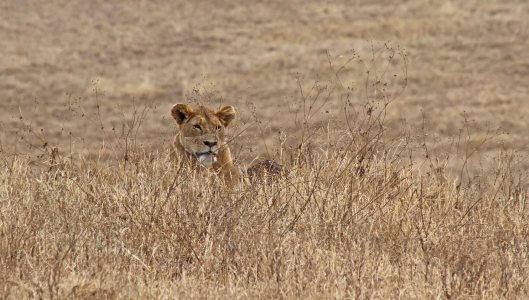
The ‘king of the jungle’ is just an expression as lions actually live in grasslands and plains.

160330 lions (2)

The roar of a lion can be heard up to 8kms (5 miles) away.

160330 lions (3)

A lion can run at 50 mph but only for short distances and can leap as far as 36 feet.

160330 lions (4)

When it walks, a lion’s heels don’t touch the ground.

160330 lions (5)

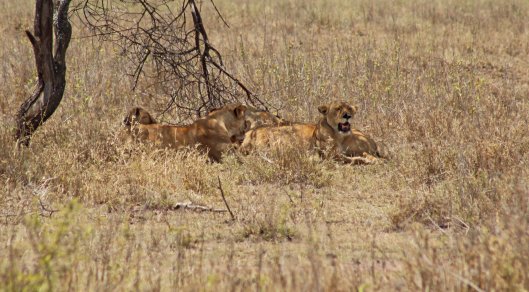
Lions are the only big cats to live in family groups, known as prides.

160330 lions (6)

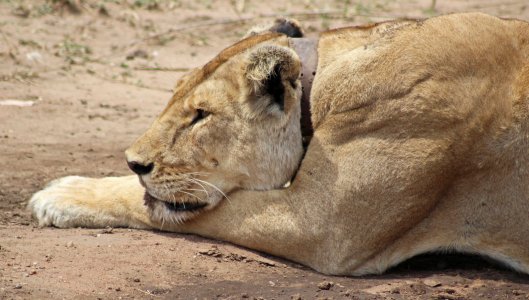
The reason lions spend up to 20 hours a day resting and sleeping is because their bodies have very few sweat glands so it is easier for them to be active in the cool of the night.

160330 lions (7)

Lions’ eyes are six times more sensitive to light than human eyes, which means they have excellent night vision.

160330 lions (8)

The darker the mane, the older the lion, and lionesses seem to prefer males with darker manes.

My photographs of lions were taken on the Serengeti Plains and in the Ngorongoro Crater in Tanzania in 2014, at the end of a week-long trip with The Giving Lens, an organisation that combines photography workshops with mentoring, media and financial support for local NGOs.

Like Loading...

Cat climbs a tree

19 Saturday Mar 2016

Posted by sconzani in animals, nature, nature photography

≈ Leave a comment

Tags

Earth Hour, leopard, leopard climbs a tree, Serengeti National Park, Serengeti Plains, Tanzania

Today, at varying times around the globe, we celebrate Earth Hour, a movement in which 7000 cities and towns around the world unite in turning off their power, as a way of showing their support for environmental issues, as a way of uniting in their desire to protect planet earth.

160319 leopard (1)

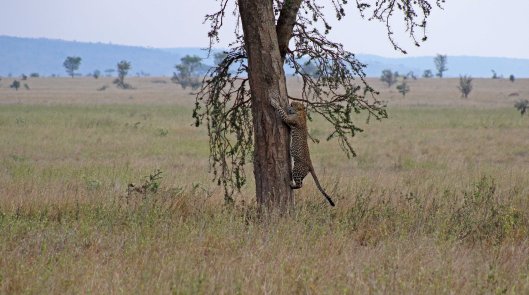
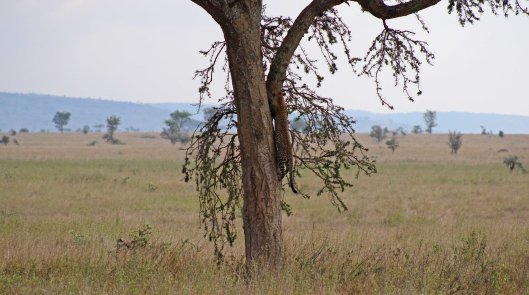
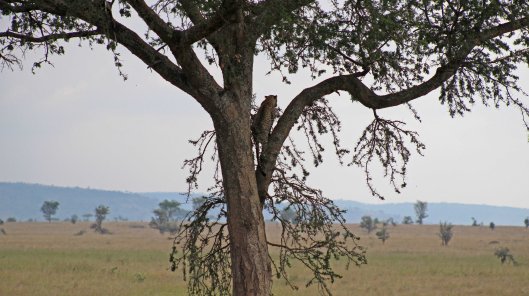
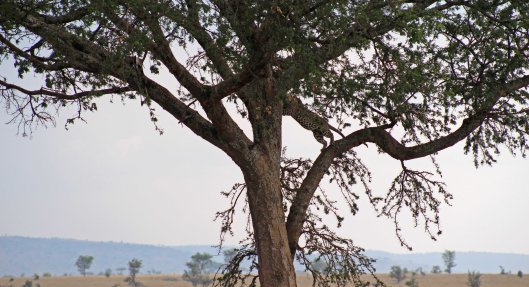
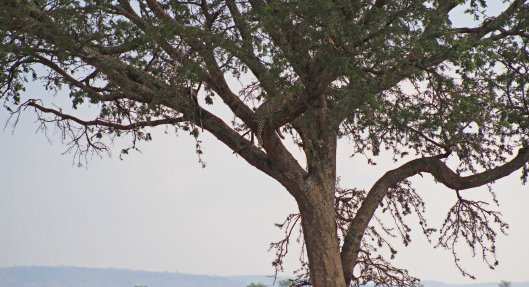
In honour of this special day I thought I would share one of the most special times I have experienced on this amazing planet we call home. If we don’t unite to protect our earth, sights like this will disappear forever. It is a simple act – a cat climbs a tree – but this is not just any cat, this is a pregnant female leopard, climbing the tree where she has previously stashed a kill, in the Serengeti, in Tanzania.

I hope we can all work together to protect our planet so that everyone has the opportunity to see this. I hope one day you get to see this. I hope one day your grandchildren get to see this.

160319 leopard (2)160319 leopard (3)160319 leopard (4)160319 leopard (5)160319 leopard (6)160319 leopard (7)160319 leopard (8)160319 leopard (9)160319 leopard (10)160319 leopard (11)

Like Loading...

Giraffe necking

16 Wednesday Mar 2016

Posted by sconzani in animals, nature, nature photography

≈ 4 Comments

Tags

giraffe, giraffe necking, Serengeti National Park, Serengeti Plains, Tanzania

160315 giraffes 1 (1)

Though I had seen giraffes in zoos, it was a totally different experience to see wild creatures like these in their natural environment, on the Serengeti Plains, in Tanzania, in 2014. In a zoo, you are safe: the animal is confined and, if not tame, at least partially used to human interaction. In the Serengeti, though I never felt unsafe, I was very much aware that I was out of place, an intruder in a savage world, where death and violence are commonplace.

160315 giraffes 1 (2)160315 giraffes 1 (3)

I felt this most when we were watching these three young male giraffes. Initially, they looked like they were just hanging out like good buddies but, as we watched, they started necking. This is a common, often violent ritual to establish dominance in the herd or to impress a female. They swing their necks and try to hit each other with those hard bumps (ossicles) on the tops of their heads. And it must hurt – those whacks and thumps sounded brutal and can apparently be heard up to a kilometre away. These three didn’t injure each other but older males have been known to knock each other unconscious with the power of their blows. It was certainly sobering to watch.

160315 giraffes 1 (4)
160315 giraffes 1 (5)
160315 giraffes 1 (6)
160315 giraffes 1 (7)
Like Loading...

The horse in striped pyjamas

09 Wednesday Mar 2016

Posted by sconzani in animals, nature, nature photography

≈ 6 Comments

Tags

horse in striped pyjamas, Ngorongoro Crater, Serengeti National Park, Tanzania, zebra

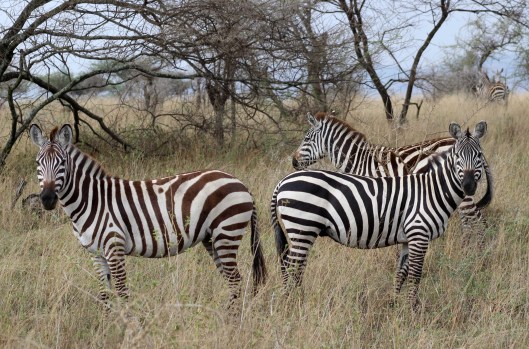
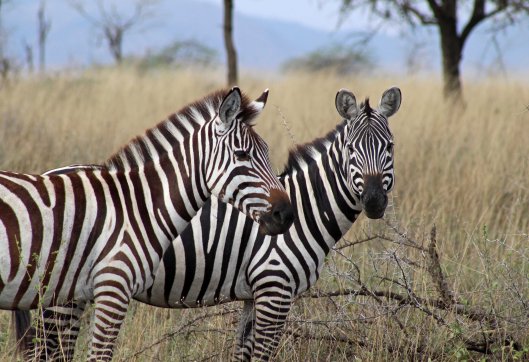
Eight things you might not have known about zebras, until now:

zebras (1)

1 Zebras can move fast, up to 65mph in fact, which, when combined with superb stamina and some cunning zigzagging moves, means they can outrun most of the creatures that might want to eat them.

zebras (2)

2 Zebras are relatively long-lived animals, clocking up between 20 and 30 years in the wild, and up to 40 in zoos.

zebras (3)

3 Though never domesticated, zebras were once trained to pull chariots around the hippodromes of Ancient Rome.

zebras (4)

4 Zebras are clever communicators. As well as oral expression (barks, whinnies and sniffing sounds), they also use facial expressions and the position of their ears and tails to convey how they feel. Beware the zebra with wide-open eyes, bared teeth and ears pulled backwards – he’s mad!
zebras (5)

5 As the old Eddie Arnold song goes, a zebra looks like a horse in striped pyjamas. Turns out, zebras sleep like horses too, standing up and only when safe amongst the herd.

zebras (6)

6 The herd means protection for a zebra, and the larger the herd the better, as then more ears and eyes are keeping watch. Other grazing animals like antelope and wildebeest are also welcome.

zebras (7)

7 Talking of herds – what about that incredible spectacle, the annual 1800-mile migration of zebras, antelopes and wildebeest between Kenya’s Maasai Mara and Tanzania’s mighty Serengeti Plains?

zebras (8)

8 And, finally, about those striped pyjamas – it seems zebras evolved stripes for a multitude of reasons:  en masse in a herd, their stripes visually merge so predators have a tough job focusing on individual animals; stripes also distort distance in low light (i.e. at dawn and dusk); they’re a unique visual fingerprint helping zebras recognise each other; they’re a form of temperature control as stripes are believed to disperse around 70% of the sun’s heat; and new research has shown that their monochrome pattern confuses the visual systems of flies, thus helping to keep those annoying critters at bay.

My photographs of zebras were taken on the Serengeti Plains and in the Ngorongoro Crater in Tanzania in 2014, at the end of a week-long trip with The Giving Lens, an organisation that combines photography workshops with mentoring, media and financial support for local NGOs.

Like Loading...

In honour of elephants

03 Thursday Mar 2016

Posted by sconzani in animals, nature, nature photography

≈ 2 Comments

Tags

#WorldWildlifeDay, elephants, Ngorongoro Crater, Serengeti National Park, Tanzania

For World Wildlife Day …

elephants 1

‘Nature’s great masterpiece, an elephant; the only harmless great thing.’ ~ John Donne

elephants 2

‘If an elephant has its foot on the tail of a mouse and you say that you are neutral, the mouse will not appreciate your neutrality.’ ~ Desmond Tutu

elephants 3

‘Of all African animals, the elephant is the most difficult for man to live with, yet its passing – if this must come – seems the most tragic of all. I can watch elephants (and elephants alone) for hours at a time, for sooner or later the elephant will do something very strange such as mow grass with its toenails or draw the tusks from the rotted carcass of another elephant and carry them off into the bush. There is mystery behind that masked gray visage, and ancient life force, delicate and mighty, awesome and enchanted, commanding the silence ordinarily reserved for mountain peaks, great fires, and the sea.’ ~ Peter Matthiessen, The Tree Where Man Was Born

elephants 4

‘I have a memory like an elephant. I remember every elephant I’ve ever met.’ ~ Herb Caen

elephants 5

‘I have a memory like an elephant. In fact, elephants often consult me.’ ~ Noel Coward

elephants 6

‘Elephants love reunions. They recognize one another after years and years of separation and greet each other with wild, boisterous joy. There’s bellowing and trumpeting, ear flapping and rubbing. Trunks entwine.’ ~ Jennifer Richard Jacobson, Small as an Elephant

elephants 7

‘They say that somewhere in Africa the elephants have a secret grave where they go to lie down, unburden their wrinkled gray bodies, and soar away, light spirits at the end.’ ~ Robert McCammon, Boy’s Life

elephants 8

‘The question is, are we happy to suppose that our grandchildren may never be able to see an elephant except in a picture book?’ ~ David Attenborough

elephants 9

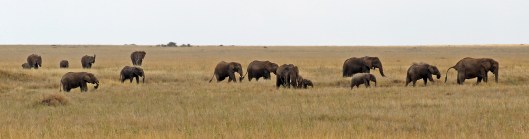
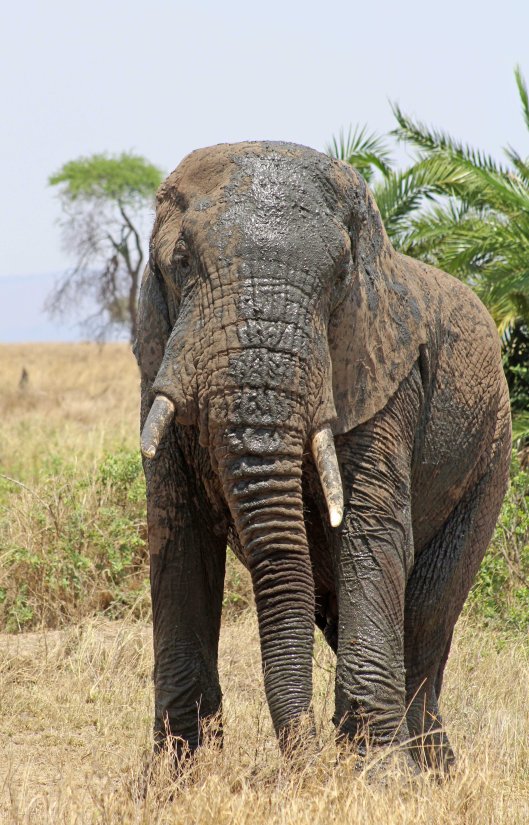
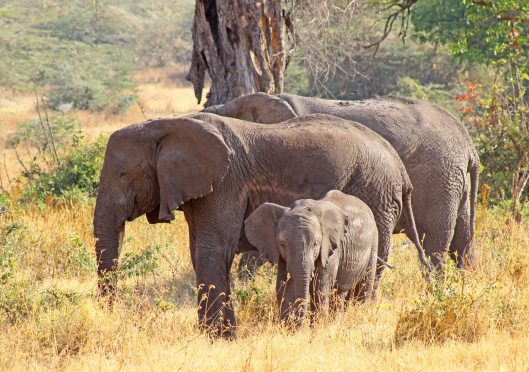
My photographs of elephants were taken on the Serengeti Plains and in the Ngorongoro Crater in Tanzania in 2014, at the end of a week-long trip with The Giving Lens, an organisation that combines photography workshops with mentoring, media and financial support for local NGOs.

Like Loading...

Walk like an Egyptian

27 Saturday Feb 2016

Posted by sconzani in birds, nature, nature photography

≈ 5 Comments

Tags

African birds, Alopochen aegypticus, birding, birds, birdwatching, British birds, Egyptian Goose, Serengeti National Park, Tanzania

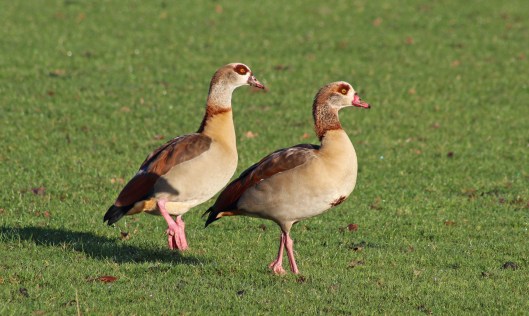
It might look like a goose and be called a goose but the Egyptian Goose (Alopochen aegypticus) is not really a goose at all. It’s more closely related to the Shelduck and occasionally shares that duck’s habit of nesting in a burrow or hole in the ground, though it has also been known to build a nest as high as 80 feet above the ground in a tree. The bird was introduced to Britain as an ornamental wildfowl species, for the king’s collection of birds in St James’s Park in London in 1678, but has since established itself in the wild, though it does still have a penchant for the grounds of large halls and estates, with their perfect habitat combination of old woodland and extensive areas of water.

160227 egyptian goose (2)

My first photo here was taken at just such a place, the wonderful Tatton Park Estate, near Knutsford in Cheshire. But the second photo was taken in the Serengeti National Park in Tanzania. Although it’s called an Egyptian Goose, it is actually native to Africa south of the Sahara and the Nile Valley, but it was considered sacred by the ancient Egyptians, which I presume is how it got its common name.

160227 egyptian goose (1)

Like Loading...
Newer posts →

About me

sconzani

sconzani

I'm a writer and photographer; researcher and blogger; birder and nature lover; countryside rambler and city strider; volunteer and biodiversity recorder.

View Full Profile →

Follow earthstar on WordPress.com

Enter your email address to follow this blog and receive notifications of new posts by email.

Recent blog posts

  • Kestrel 2026 : 86 January 31, 2026
  • Birch polypore January 30, 2026
  • The Marl Med gull January 29, 2026
  • Recording Grey squirrels January 28, 2026
  • Jimmy Wren January 27, 2026

From the archives

COPYRIGHT

Unless otherwise acknowledged, the text and photographs on this blog are my own and are subject to international copyright. Nothing may be downloaded or copied without my permission.

Fellow Earth Stars!

  • Unknown's avatar
  • Unknown's avatar
  • Unknown's avatar
  • Unknown's avatar
  • Unknown's avatar
  • Unknown's avatar
  • Unknown's avatar
  • Unknown's avatar
  • Unknown's avatar
  • Unknown's avatar
  • Unknown's avatar
  • Unknown's avatar
  • Unknown's avatar
  • Unknown's avatar
  • Unknown's avatar
  • Unknown's avatar
  • Unknown's avatar
  • Unknown's avatar
  • Unknown's avatar
  • Unknown's avatar
  • Unknown's avatar
  • Unknown's avatar
  • Unknown's avatar
  • Unknown's avatar
  • Unknown's avatar
  • Unknown's avatar
  • Unknown's avatar
  • Unknown's avatar
  • Unknown's avatar
  • Unknown's avatar
  • Unknown's avatar
  • Unknown's avatar
  • Unknown's avatar
  • Unknown's avatar
  • Unknown's avatar
  • Unknown's avatar
  • Unknown's avatar
  • Unknown's avatar
  • Unknown's avatar
  • Unknown's avatar
  • Unknown's avatar
  • Unknown's avatar
  • Unknown's avatar
  • Unknown's avatar
  • Unknown's avatar
  • Unknown's avatar
  • Unknown's avatar
  • Unknown's avatar
  • Unknown's avatar
  • Unknown's avatar

Blog at WordPress.com.

Privacy & Cookies: This site uses cookies. By continuing to use this website, you agree to their use.
To find out more, including how to control cookies, see here: Cookie Policy
  • Subscribe Subscribed
    • earthstar
    • Join 670 other subscribers
    • Already have a WordPress.com account? Log in now.
    • earthstar
    • Subscribe Subscribed
    • Sign up
    • Log in
    • Report this content
    • View site in Reader
    • Manage subscriptions
    • Collapse this bar
 

Loading Comments...
 

You must be logged in to post a comment.

    %d