• ABOUT
  • BIRDING 2018
  • Birding 2019
  • BLOG POSTS
  • Butterflies 2018
  • Resources

earthstar

~ a celebration of nature

earthstar

Tag Archives: #WildWords

Wild words: primaveral

14 Wednesday Feb 2018

Posted by sconzani in flowers, nature, spring, trees

≈ Leave a comment

Tags

#WildWords, blackthorn, blossom, early spring, primaveral, springtime

Primaveral: adjective, meaning of, relating to, or taking place in early spring (as in, for example, the primaveral blossoming of the Cherry plum tree in my photo).
According to the Oxford Dictionary, the word appeared in the English language in the early 19th century, having come possibly from the Catalan primavera, the Spanish primavera, the Portuguese primavera, or the Italian primavera, which all mean ‘springtime’. And those words probably came from the Latin prīmum vēr, meaning first or earliest spring.

180214 primaveral

Like Loading...

Wild words: apricity

07 Wednesday Feb 2018

Posted by sconzani in birds, nature, winter

≈ 2 Comments

Tags

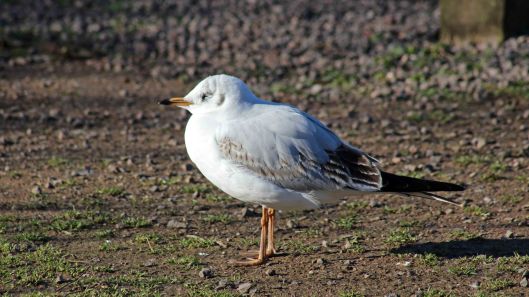
#WildWords, apricity, Black-headed gull, gull, warmth of sun in winter, winter sunshine

This wonderful old word doesn’t appear in the Oxford Dictionary online, presumably because they’ve replaced it with something trendy like ‘mansplain’ and ‘youthquake’. Well, call me old-fashioned but I much prefer something old and meaningful to these modern inventions.

So, then, apricity (thanks to the Merriam-Webster) ‘appears to have entered our language in 1623, when Henry Cockeram recorded (or possibly invented) it for his dictionary The English Dictionary; or, An Interpreter of Hard English Words.’ And it means ‘the warmth of the sun in winter’, something even this gull was seen, last week, to enjoy and appreciate.

180207 apricity

Like Loading...

Wild words: chlorophilia

24 Wednesday Jan 2018

Posted by sconzani in leaves, nature, trees

≈ 1 Comment

Tags

#WildWords, chlorophilia, green leaves, loving all things green

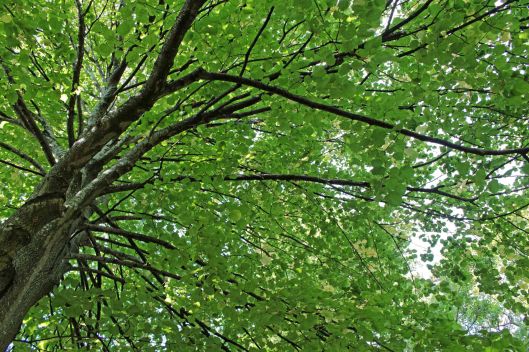
Chlorophilia: from the Greek khlōros, meaning green, and philia, meaning loving; thus, loving all things green and growing.
Now, that sounds straightforward enough and many of us would willingly admit to having chlorophilia but a word of caution. I’ve just been reading on the Wiki Knowledge Dump blog (the place where rejected Wikipedia articles often get resurrected) that the word (which does not appear in standard dictionaries) was ‘invented’ in 2004 to describe a physical or sexual attraction to plants. Tree-huggers, take note!

180124 chlorophilia

Like Loading...

Wild words: brake

17 Wednesday Jan 2018

Posted by sconzani in nature, trees

≈ 4 Comments

Tags

#WildWords, bracu, brake, meaning of brake, thicket

Brake is a word with several meanings. Aside from those to do with stopping, there are also these to do with the enviorment:
From the Oxford Dictionary: a botanical term for a thicket; from the old English bracu; first recorded in the plural in fearnbraca, meaning ‘thickets of fern’; related to the Middle Low German brake, which means ‘branch’ or ‘stump’.
The Merriam-Webster has a slightly different interpretation: a geographical term meaning rough or marshy land overgrown usually with one kind of plant, as in cedar brakes or coastal brakes.
The Collins Dictionary agrees with the Oxford: an area of dense undergrowth, shrubs, brushwood, etc., a thicket.

180117 brake

The word is often seen in English place names as, for example, in Boughton Brake (a forest in Nottinghamshire), Huxham Brake (a coniferous woodland in Devon), Stratfield Brake (a broadleaf woodland near Oxford, owned by the Woodland Trust), and Combe Brake (another Woodland Trust woodland, this one in Exmoor National Park).

Like Loading...

Wild words: nemophilist

10 Wednesday Jan 2018

Posted by sconzani in nature, trees

≈ 4 Comments

Tags

#WildWords, forests, lover of forests, lover of trees, lover of woodlands, nemophilist, woodland

Nemophilist: A haunter of woods; one who loves forests and woodlands, their beauty and solitude. From the Ancient Greek νέμος nemos, meaning a wooded pasture or glade + φιλία philia, meaning loving.
This is me!
IMG_0075

Like Loading...

Wild words: pluviophile

03 Wednesday Jan 2018

Posted by sconzani in nature, weather

≈ 5 Comments

Tags

#WildWords, lover of rain, pluviophile, rain, rainy day, wild words

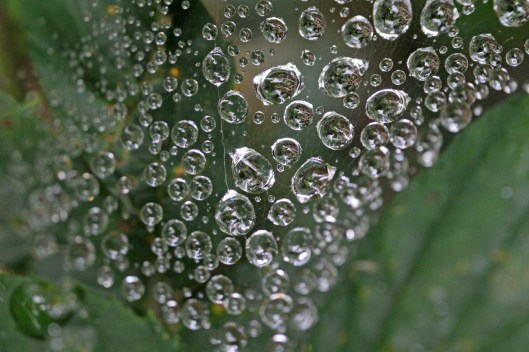
Pluviophile: a lover of rain; someone who finds joy and peace of mind during rainy days.

180103 pluviophile (1)

Of course, some might label such a person crazy and I’m not sure I would categorise myself as a pluviophile but, if I’ve got plenty of indoors things to do, some tasty food to eat, and I’m warm and cosy, then I do find pleasure in the pitter-patter of raindrops on the window panes.

180103 pluviophile (2)

Like Loading...

Wild words: brumous

27 Wednesday Dec 2017

Posted by sconzani in nature, weather, winter

≈ Leave a comment

Tags

#WildWords, brumous, foggy, winter weather, wintry

171227 brumous (1)

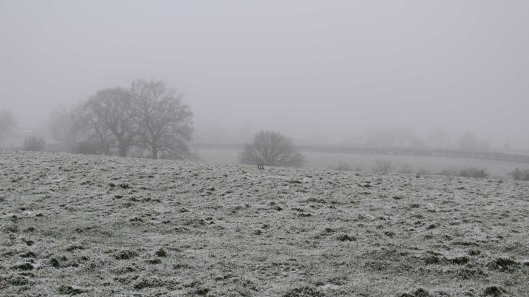
brumous: adjective; meaning foggy and wintry; dating from the mid-19th century; from the French brumeux, meaning misty, from late Latin bruma meaning winter and also the winter solstice (I should have posted this blog last week!). The Merriam-Webster Dictionary gives the following list of synonyms for brumous: beclouded, befogged, hazy, clouded, cloudy, foggy, gauzy, misty, murky, smoggy, soupy. I think you get the idea.

171227 brumous (2)

Like Loading...

Wild words: Pareidolia

20 Wednesday Dec 2017

Posted by sconzani in nature, trees

≈ 2 Comments

Tags

#WildWords, faces in trees, pareidolia

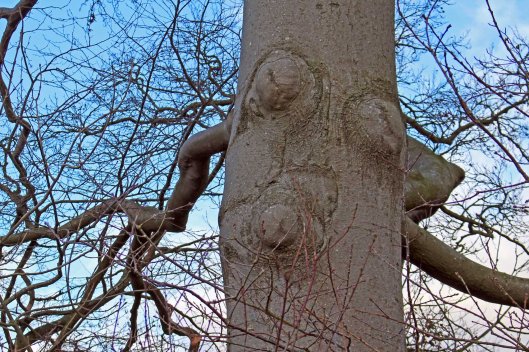
Pareidolia: noun; this is a general term to describe how we humans with active imaginations can bring ourselves to believe that we can see familiar patterns where none, in fact, exist. That’s a bit vague but it will become clearer if I give you some examples: the face of a man in the craters and shadows of the moon; figures of humans and animals in the shapes of clouds, and, in my examples below, human-like faces in trees. Do you see them?

171220 pareidolia (1)
171220 pareidolia (2)

171220 pareidolia (3)

171220 pareidolia (4)
171220 pareidolia (5)
Like Loading...

Wild words: Werifesteria

13 Wednesday Dec 2017

Posted by sconzani in nature, trees, walks

≈ 5 Comments

Tags

#WildWords, forests, invented words, trees, walking in nature, wandering through forests, werifesteria

Although you might read in some corners of the internet that werifesteria is a word with its origins in Old English, this word will not be found in any dictionary. It seems it was invented in late 2014 and can now be found most commonly on social media, overlaying images of trees and forests.

171213 werifesteria (1)

Despite this, I like the word and the meaning that has been attached to it: ‘to wander longingly through the forest in search of mystery’. That’s my kind of verb!

171213 werifesteria (2)


Like Loading...

Wild words: Psithurism

06 Wednesday Dec 2017

Posted by sconzani in autumn, leaves, nature, trees, winter

≈ Leave a comment

Tags

#WildWords, autumn leaves, Psithurism, rustling leaves, sound of rustling leaves, words about Nature

Here’s a word that’s not in the Oxford Dictionary because it’s now considered obsolete but, as Oxford University Press has a habit of somewhat arbitrarily removing words from its dictionaries (since 2007 it was deleted words like ‘buttercup’ and acorn’ from its Junior Dictionary) and replacing them with modern lingo (like ‘cut-and-paste’ and ‘analogue’), I’m doing my bit to revive words before they’re forgotten.

171203 Psithurism (1)

Psithurism, then, is a noun used to describe the sound of rustling leaves. It is, apparently, an adaptation of the Ancient Greek ψιθύρισµα (psithurisma) or ψιθυρισµός (psithurismos), which are derived from ψιθυρίζω (psithurizō, meaning ‘I whisper’) and from ψίθυρος (psithuros, meaning ‘whispering’ or ‘slanderous’). Can you hear them rustling? And, here’s a little test: what’s the word for leaves like these that wither but stay attached to the stem?

171203 Psithurism (2)

Like Loading...
← Older posts
Newer posts →

About me

sconzani

sconzani

I'm a writer and photographer; researcher and blogger; birder and nature lover; countryside rambler and city strider; volunteer and biodiversity recorder.

View Full Profile →

Follow earthstar on WordPress.com

Enter your email address to follow this blog and receive notifications of new posts by email.

Recent blog posts

  • Beating the gloom March 10, 2026
  • No booming Bittern but … March 9, 2026
  • Danish scurvygrass March 8, 2026
  • Four weeks early March 7, 2026
  • Three shieldbug species March 6, 2026

From the archives

COPYRIGHT

Unless otherwise acknowledged, the text and photographs on this blog are my own and are subject to international copyright. Nothing may be downloaded or copied without my permission.

Fellow Earth Stars!

  • Unknown's avatar
  • Unknown's avatar
  • Unknown's avatar
  • Unknown's avatar
  • Unknown's avatar
  • Unknown's avatar
  • Unknown's avatar
  • Unknown's avatar
  • Unknown's avatar
  • Unknown's avatar
  • Unknown's avatar
  • Unknown's avatar
  • Unknown's avatar
  • Unknown's avatar
  • Unknown's avatar
  • Unknown's avatar
  • Unknown's avatar
  • Unknown's avatar
  • Unknown's avatar
  • Unknown's avatar
  • Unknown's avatar
  • Unknown's avatar
  • Unknown's avatar
  • Unknown's avatar
  • Unknown's avatar
  • Unknown's avatar
  • Unknown's avatar
  • Unknown's avatar
  • Unknown's avatar
  • Unknown's avatar
  • Unknown's avatar
  • Unknown's avatar
  • Unknown's avatar
  • Unknown's avatar
  • Unknown's avatar
  • Unknown's avatar
  • Unknown's avatar
  • Unknown's avatar
  • Unknown's avatar
  • Unknown's avatar
  • Unknown's avatar
  • Unknown's avatar
  • Unknown's avatar
  • Unknown's avatar
  • Unknown's avatar
  • Unknown's avatar
  • Unknown's avatar
  • Unknown's avatar
  • Unknown's avatar
  • Unknown's avatar

Blog at WordPress.com.

Privacy & Cookies: This site uses cookies. By continuing to use this website, you agree to their use.
To find out more, including how to control cookies, see here: Cookie Policy
  • Subscribe Subscribed
    • earthstar
    • Join 668 other subscribers
    • Already have a WordPress.com account? Log in now.
    • earthstar
    • Subscribe Subscribed
    • Sign up
    • Log in
    • Report this content
    • View site in Reader
    • Manage subscriptions
    • Collapse this bar
 

Loading Comments...
 

You must be logged in to post a comment.

    %d