
Tags
African birds, Alopochen aegypticus, birding, birds, birdwatching, British birds, Egyptian Goose, Serengeti National Park, Tanzania
It might look like a goose and be called a goose but the Egyptian Goose (Alopochen aegypticus) is not really a goose at all. It’s more closely related to the Shelduck and occasionally shares that duck’s habit of nesting in a burrow or hole in the ground, though it has also been known to build a nest as high as 80 feet above the ground in a tree. The bird was introduced to Britain as an ornamental wildfowl species, for the king’s collection of birds in St James’s Park in London in 1678, but has since established itself in the wild, though it does still have a penchant for the grounds of large halls and estates, with their perfect habitat combination of old woodland and extensive areas of water.
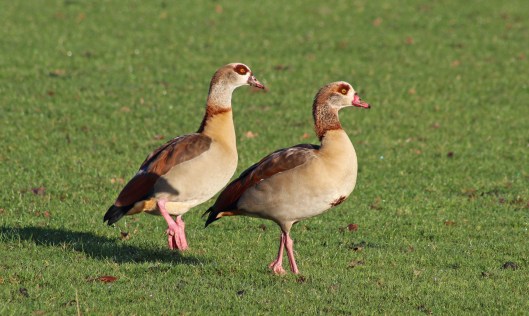
My first photo here was taken at just such a place, the wonderful Tatton Park Estate, near Knutsford in Cheshire. But the second photo was taken in the Serengeti National Park in Tanzania. Although it’s called an Egyptian Goose, it is actually native to Africa south of the Sahara and the Nile Valley, but it was considered sacred by the ancient Egyptians, which I presume is how it got its common name.

 earthstar
Beautiful birds and thank you for the interesting info. I’ve never seen them in the wild, only in reserves.
LikeLiked by 1 person
They were one of the few birds I recognised in Tanzania, apart from the vultures!
LikeLiked by 1 person
Very interesting post. I love these geese.
LikeLiked by 1 person
Very interesting, thanks for the information! I’ve seen Egyptian geese many times on a live safari program in South Africa, but I didn’t realize they weren’t true geese.
LikeLike
You’re welcome, Josh. They’re lovely birds.
LikeLiked by 1 person