
I’ve posted about this phenomenon before (see Wild word: fasciated, back in July 2018) but, as some of you may not have been following me back then, I thought it was worth repeating, especially as I’ve found such a magnificent example.

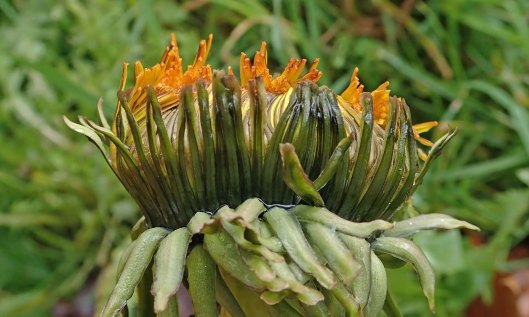
So, this Dandelion stem and flower are fasciated, i.e. both parts of the plant exhibit an abnormal fusion which has resulted in a flattening of their structure. In this particular case, it almost appears as if three separate stems and flowers have fused into one.
I couldn’t resist the alliteration in the title as my spellchecker kept changing fasciated to fascinated – what a difference an ‘n’ makes!

 earthstar
I wonder how this phenomenon relates to the very rare bee, Nomada sexfasciata, the six-banded nomad bee?
LikeLiked by 1 person
I’d never heard of the bee but was interested in your query so have been googling. The Latin root of both words is ‘fasci’, which means bundle or cluster (in Ancient Rome, a magistrate would be preceded by someone bearing fasci, a bundle of rods that symbolised the magistrates power).
Fasciatus means banded, thus sexfasciatus = six-banded, and I guess fasciation refers to how the phenomenon causes one or more stems and flowers to be bundled together.
LikeLike
I have seen instances of this but have not known what it was called – thank you.
LikeLiked by 1 person
You’re welcome. 🙂
LikeLike