
Tags
autumn migration, birding, birdwatching, British birds, Grey phalarope, juvenile Grey phalarope, Phalaropus fulicarius
Storms can be destructive, terrifying, and costly but, sometimes, they can also be bountiful. We were lucky here in south Wales to avoid much of the severe weather from last week’s eleventh named storm of the year, Storm Lilian, but we have had very strong westerlies for several days and, on Sunday, they brought local birders a stunning avian gift in the form of this juvenile Grey phalarope.

And, even better for low-carbon birders like me, this little charmer was very accessible, spending its time on a man-made lake at The Knap in the seaside town of Barry. For me, this was just a walk, a train ride and a second walk away, so I went to see it yesterday morning, a Bank holiday Monday here.

The Grey phalarope (Phalaropus fulicarius) breeds in the Arctic and, at this time of year, is beginning its migration south to the tropical seas where it over-winters. And during its migration, between September and December, is typically when birds like our little visitor are blown inland by storms.
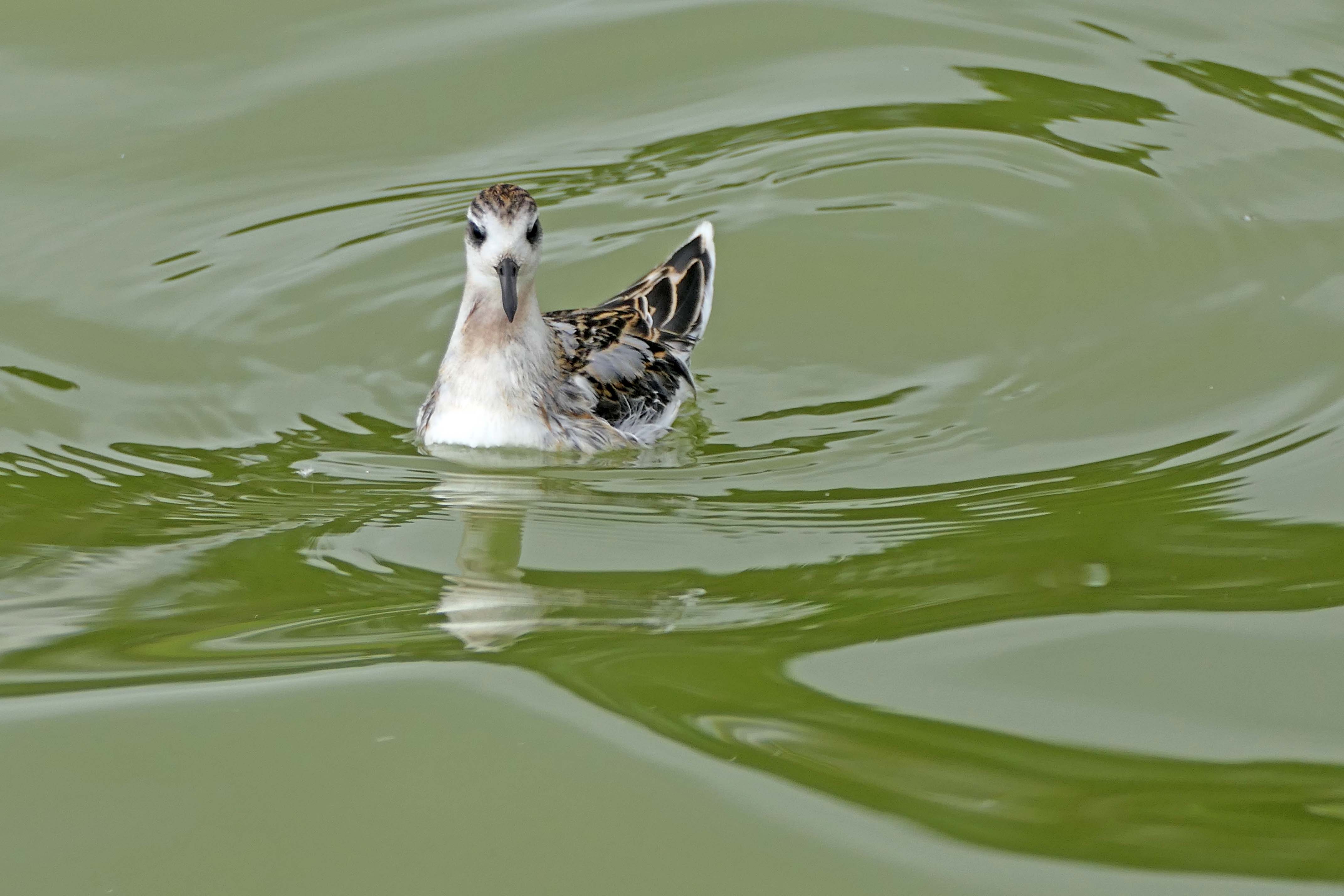
They are stunning birds to watch, as they have quite an unusual method of feeding, constantly spinning left and right and sometimes round and round, as they pick tiny invertebrates from the water. Watching this one almost made me feel giddy, and also made it difficult to photograph as it was never still.

On the positive side though, Grey phalaropes are often very confiding and this little beauty was certainly that, paying absolutely no heed to its many admirers, and coming to within a foot or so of the birders and locals watching it from the lake edge. Such a treat!

 earthstar
You must be logged in to post a comment.