
Tags
British leafminers, Caloptilia rufipennella, leaf-mining moth larvae, leaf-mining moths, leafminers on Sycamore, sycamore
I was really pleased with my leaf-turning results on this particular Sycamore tree as I managed to find all three stages of this leaf-mining larva’s progress through the leaves. They illustrate quite well the breeding cycle of the little brown moth, Caloptilia rufipennella (you can see what it looks like on the UK Moths website).
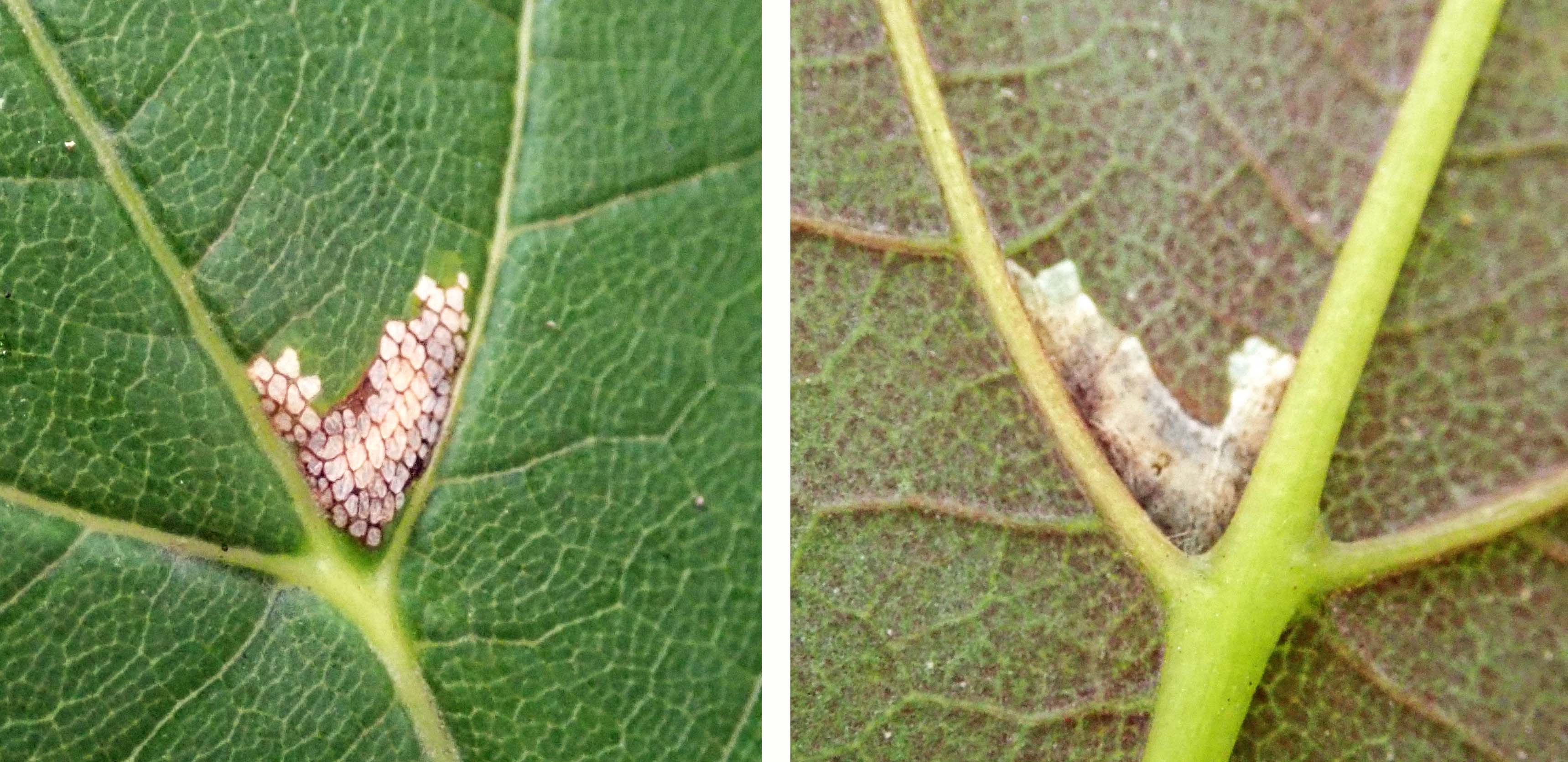
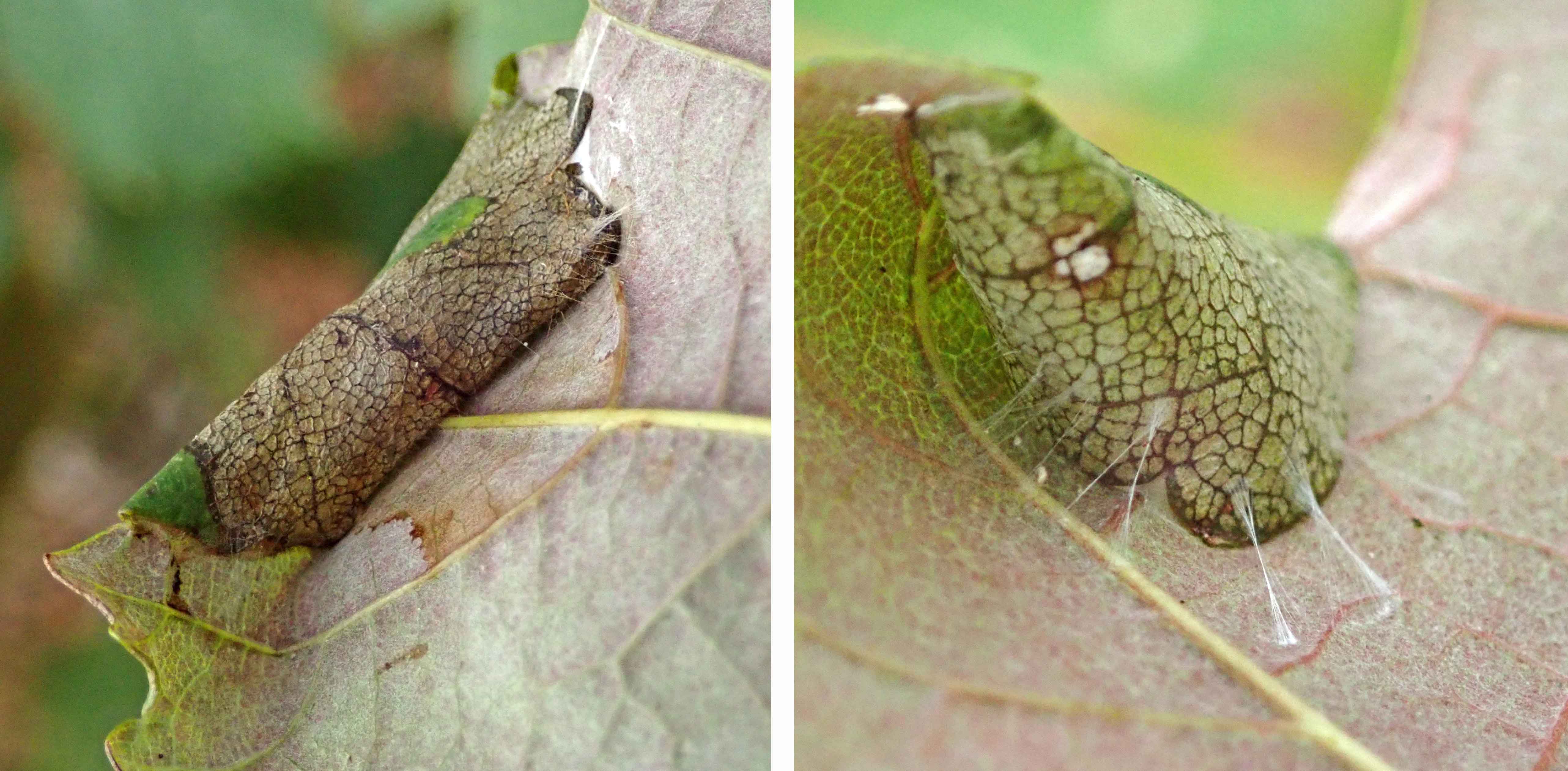
After hatching from its egg, the larva chews away at the leaf, always in the angle between the veins, creating a small, often triangular-shaped blotch. The photos above show the upper and lower sides of the leaf where it has been feeding. The larva then moves to the tips of the lobes of the leaf where it creates a series of two or three cones, folding the tip of the lobe to create a little shelter in which to feed, each cone bigger than the previous one as the larva grows (as shown below).
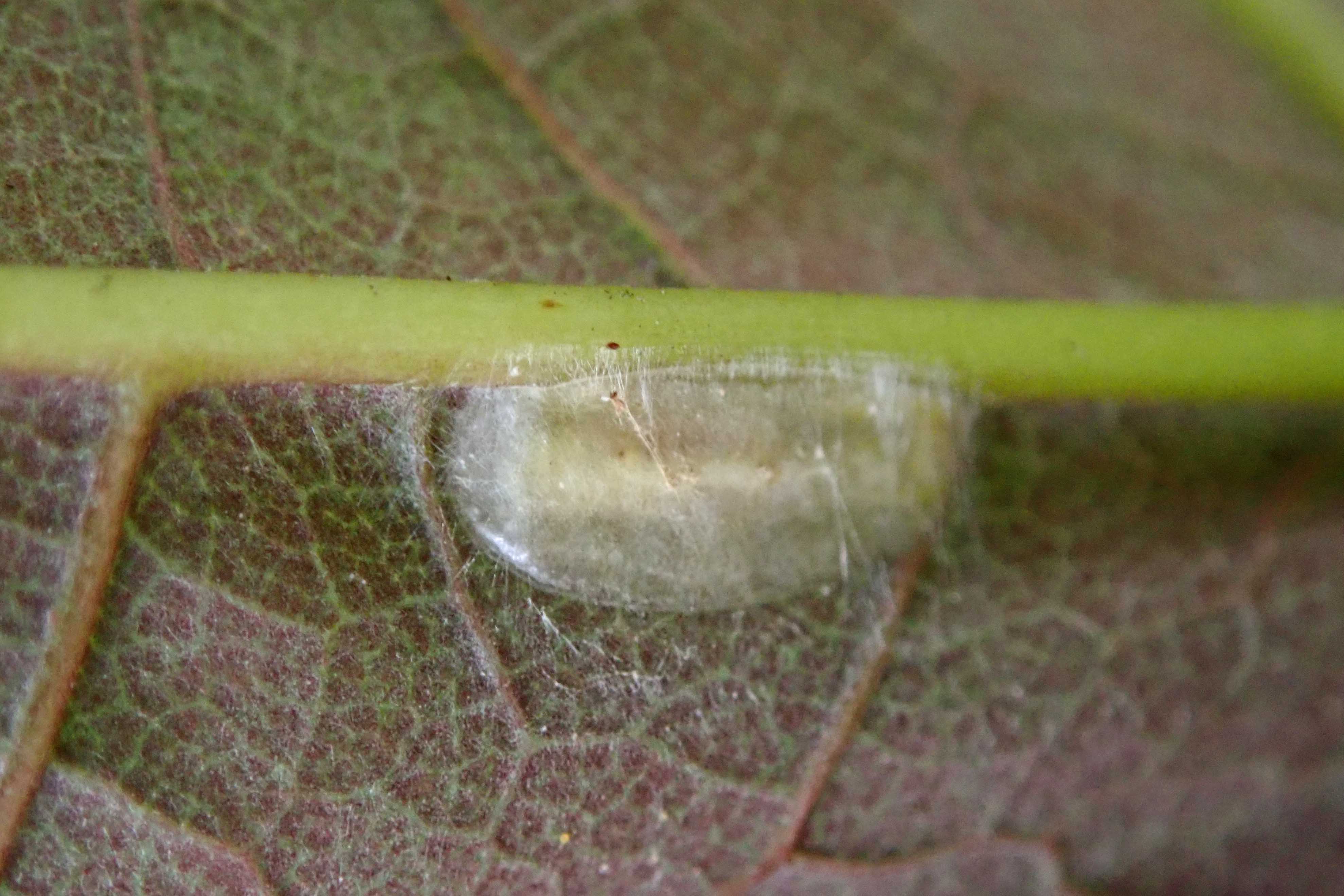
And finally, once it’s fully grown, the larva weaves itself a little cocoon in which to pupate (see below). Interestingly, the UK Moths website says that Caloptilia rufipennella was discovered in Britain as recently as 1970 but is now quite common in most of England and Scotland. Wales doesn’t get a mention but the Welsh national database shows records starting in 1980 and now scattered across the country.
 earthstar
You must be logged in to post a comment.