
Tags
I mentioned in a recent post that one of the ways in which my local biodiversity records office (SEWBReC) supports its volunteer recorders (like me) is through book grants that we recorders can use to buy species guides to help identify our finds. With my grant I have so far obtained one book on spiders and another on craneflies; the third, A Photographic Guide to Flies of Britain & Ireland won’t, unfortunately, be published until October, and I really need it NOW!
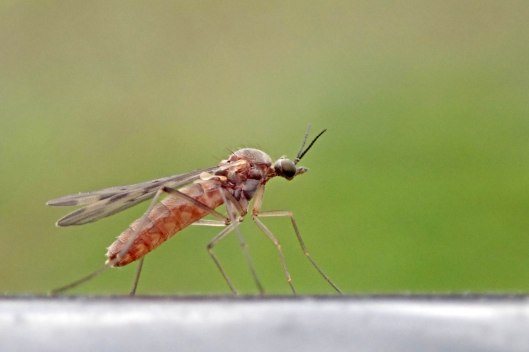
It may be that I still won’t be able to identify some species even when I get the book as many flies require examination of genitalia to accurately determine their species but I’m sure it will help me with many of my finds. In the meantime, this handsome little creature that I photographed on my local park railings yesterday will remain nameless, though I will return and edit this post ** at a later date if I do find out which species it is.
** Well, that didn’t take long. It’s the next day and I might have a name for this little fly, Sylvicola fenestralis, thanks to the very kind help of Gary from the UK Safari website. (It really needs more detailed examination to be certain but this identification looks likely.) If you don’t know the UK Safari site, you really should check it out as it contains a huge treasure trove of information on all aspects of UK wildlife.

 earthstar
It looks quite midge-like. Try a Google image search for “Sylvicola fenestralis”.
LikeLiked by 1 person
That looks right to me, though I see from the Naturespot website that there is a very similar species so you need to check various details to be certain. Still, I’ll record it as ‘likely’. Thanks so much for your help – much appreciated! 🙂
LikeLiked by 1 person
Hello Annie, Flies are notoriously difficult to identify and that looks like a small one. How big would you say the mystery fly was… less than 10 mm?
LikeLiked by 1 person
Hiya. I usually try to put a finger or thumb in one of my photos so I can check size later but forgot to with this one. I think around 10mm.
LikeLike