
Tags
British leafmines, leaf-mining moth larvae, leaf-mining moths, leafmines on Poplar trees, Phyllonocnistis unipunctella
You could easily mistake the leafmines of the tiny moth Phyllonocnistis unipunctella for the dried trails of a snail after it had meandered around a leaf’s surface. This is due to the moth’s larvae mining just underneath the upper epidermis rather than more deeply within the leaf structure (and that can occur on the upper or lower surface of the leaf, though I’ve only found upper surface mines so far). The larvae also do not leave a trail of frass in the mine; I’ve not found any explanation for where that disappears to!
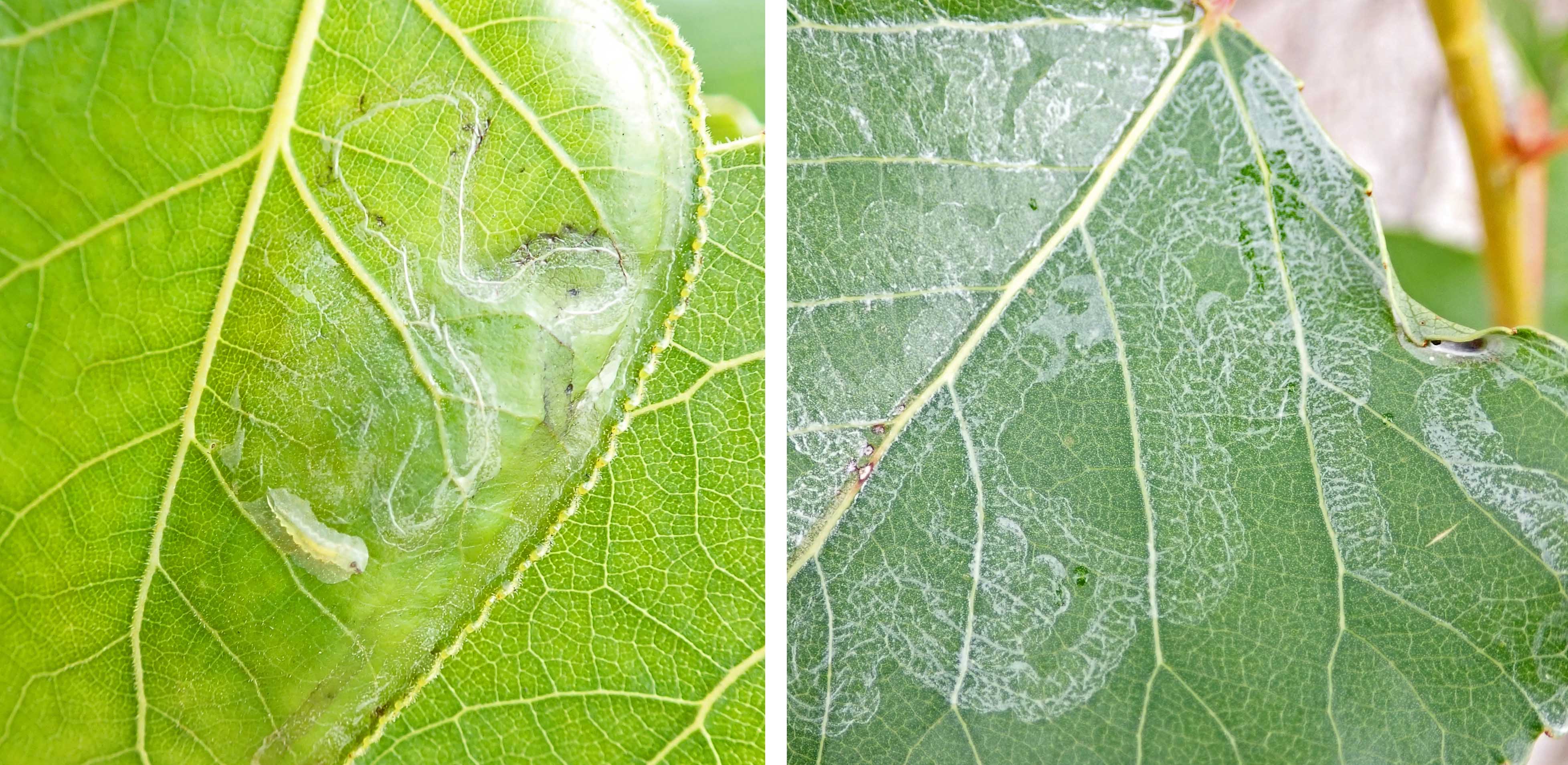
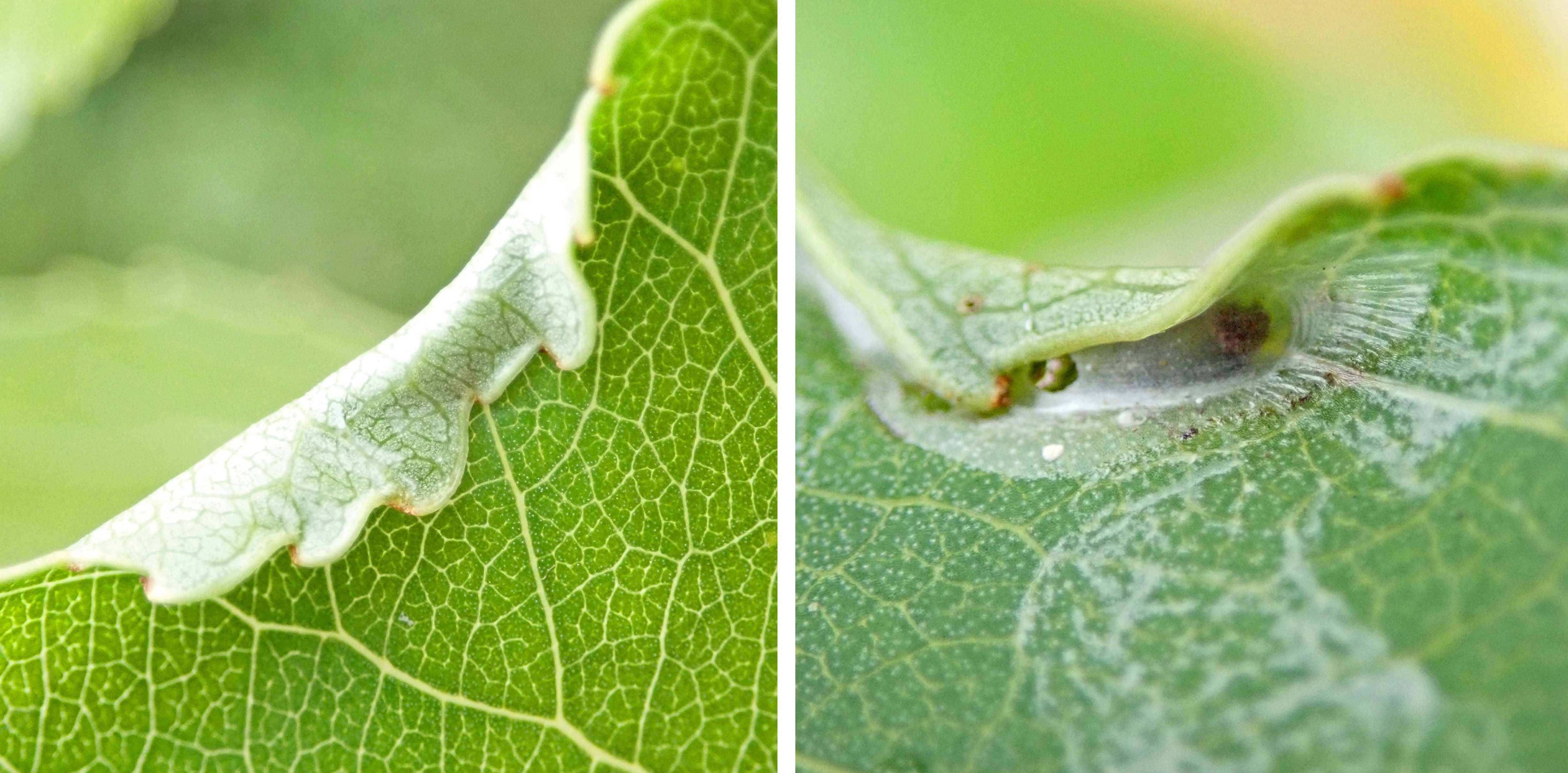
The fact that they mine so close to the leaf surface means the larvae are clearly visible within their mines, as you can see in my photos here. And, once they’ve munched as much leaf matter as necessary, they pupate in a silken membrane they create under the rolled down edge of the leaf, which you can also see in my images.
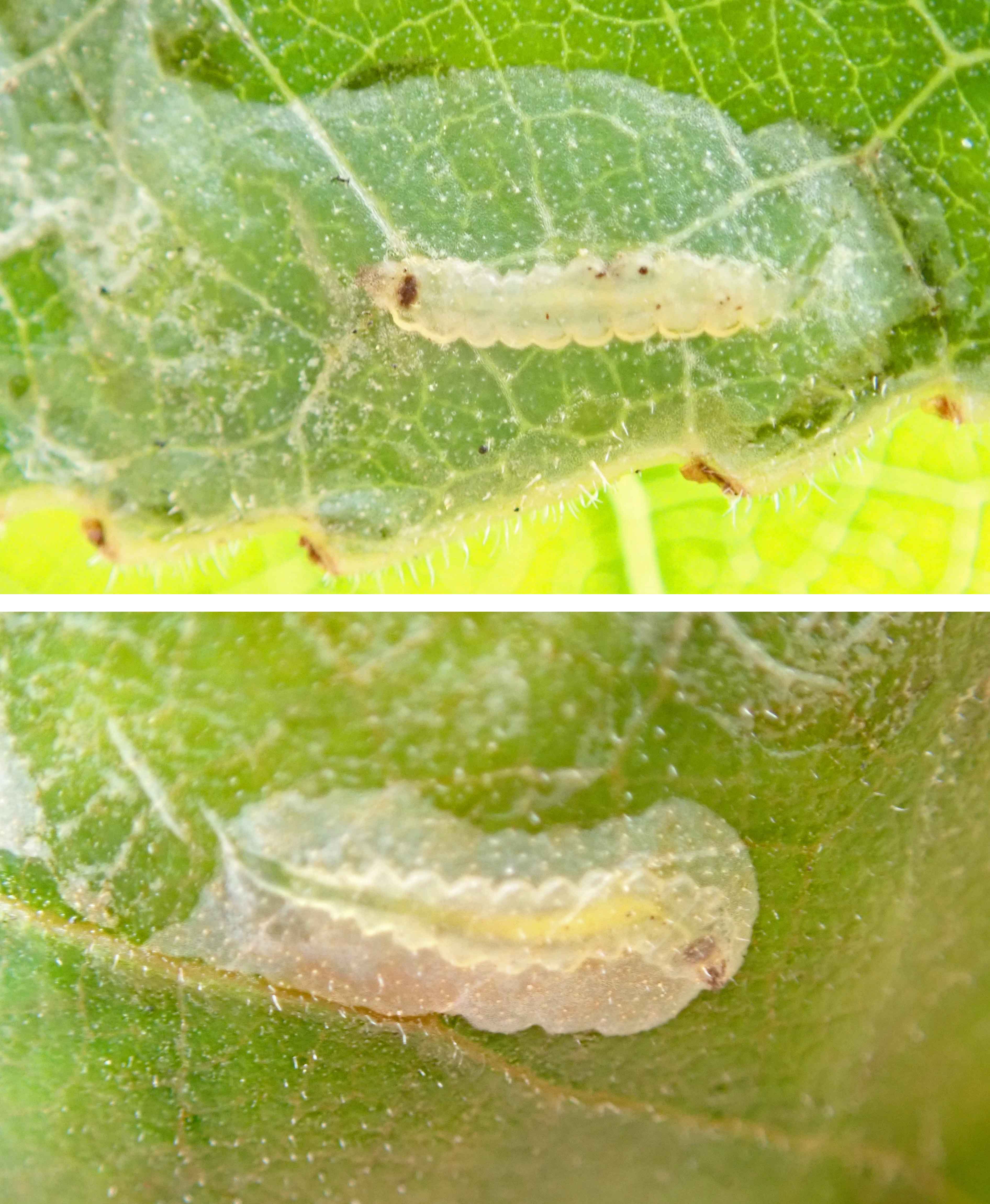
According to the British Leafminers website, Phyllonocnistis unipunctella uses three species of Populus as its larval plant: Black poplar (Populus nigra), Lombardy poplar (Populus x italica) and Black cottonwood (Populus trichocarpa). The mines shown here are from Black and Lombardy poplars found in a local park. You can see the adult moth, a pale silvery creature with a single dot near its tail end (hence the epithet unipunctella), on the UK Moths website.
 earthstar
You must be logged in to post a comment.