
Tags
British wildflowers, Comfrey, Comfrey as healing plant, herbal medicine, RSPB Radipole, Symphytum species, Wildflowers at RSPB Radipole
In Flora Britannica, author Richard Mabey explains that Common comfrey (Symphytum officinale) hybridises freely with Russian comfrey (S. x uplandicum) and Rough comfrey (S. asperum), so I make no apology for not being able to be precise about today’s wildflower species. To further confuse the picture, White comfrey (S. orientale), an introduction from west Russia and Turkey, has become naturalised, and is commonly found in hedgerows and on waste ground in southern England. The combination of species certainly provides a wonderful mix of white, blues, lilacs and purples in the Comfrey flowers, which I noticed the bumblebees were particularly enjoying (the flower nectar, not the colours).
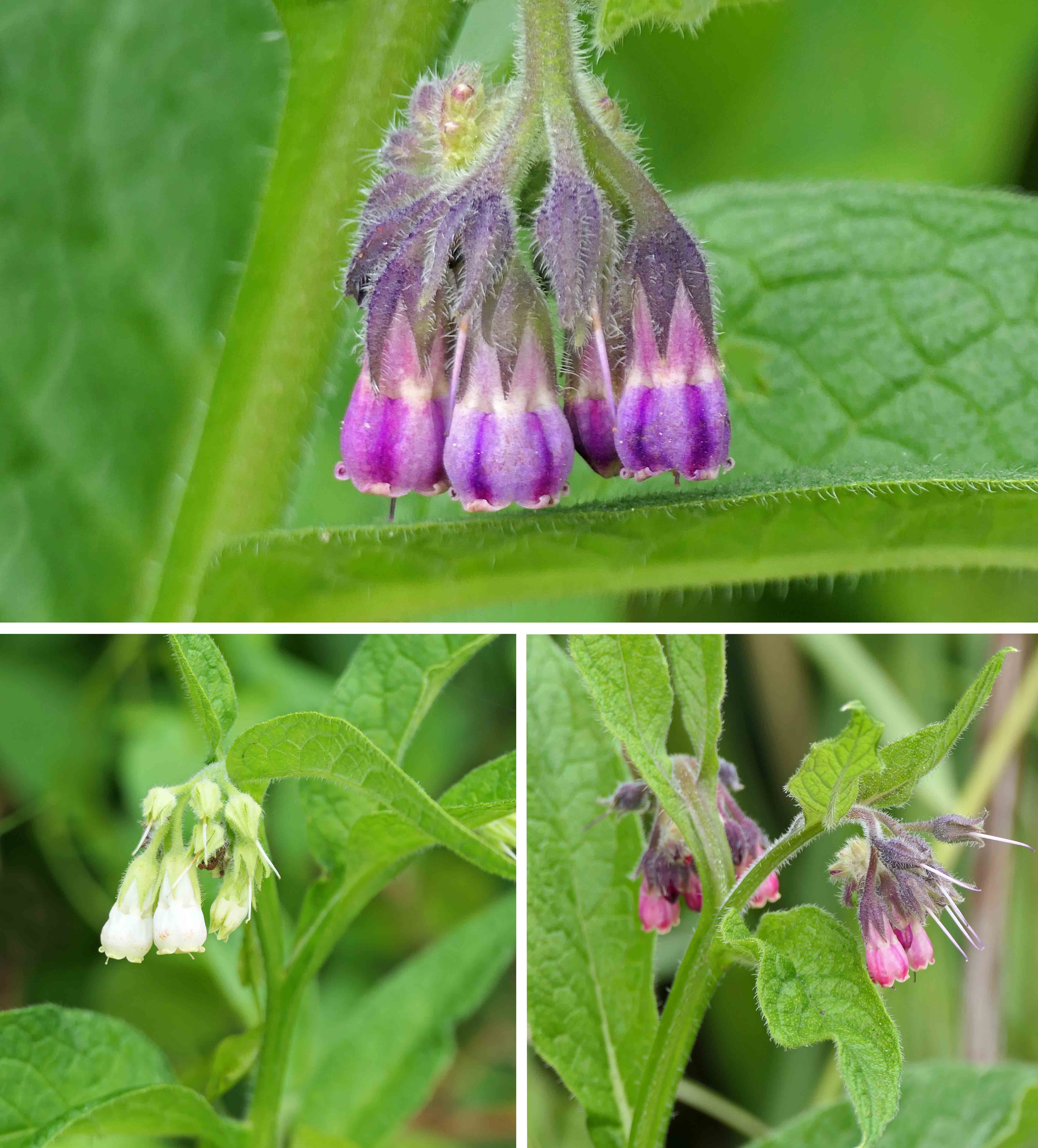
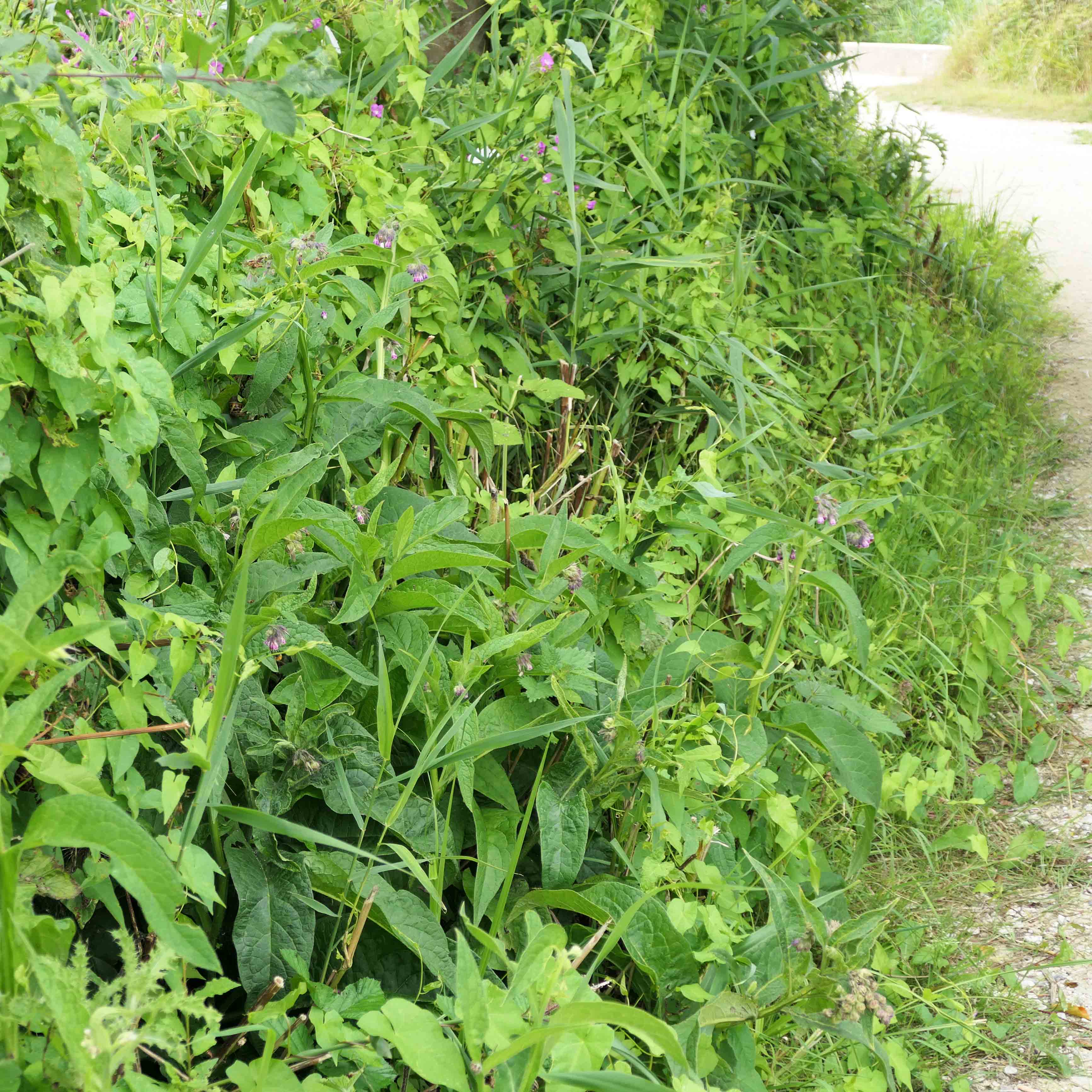
The Comfrey plants shown here was at RSPB Radipole in Weymouth, thriving in the reserve’s damp environment, growing beside the footpaths and along the edges of the reed beds.
You probably know that Comfrey is very commonly used in herbal medicine, especially in connection with healing open wounds, broken bones and severe bruising, hence its common names of Knitbone and Nip-bone. It contains Allantoin, a substance that encourages the healing of connective tissue, and Flora Britannica lists many reports from contributors of poultices being used to heal severe cuts, ease the severely bruised knees of miners, and assist with the knitting of broken bones. One of my grandmothers always grew Comfrey in her garden and would drink an infusion of the leaves to ease her sore back and aching limbs, though Mabey warns that Comfrey contains alkaloids that can cause liver damage, so infusions and tablets are now discouraged.
 earthstar
You must be logged in to post a comment.