
Tags
British ichneumons, British wasps, Ctenicheumon panzeri, Heteropelma amictum, Ichneumon wasps, Ichneumon xanthorius
Two things:
Firstly, my records of these three Ichneumon wasps have not yet been verified so, although I’m fairly confident of their identification, I’m not 100% certain.
And, secondly, I decided to write this blog after someone replied to one of my social media posts, saying – supposedly jokingly – that they had scurried away after seeing one of these creatures, a female with a prominent ‘stinger’ (the implication being that they were frightened of the wasp). So, just to be clear, these wasps will not harm humans; the ‘stinger’ is an ovipositor, for depositing eggs in to their hosts; and many Ichneumon wasps are large, colourful, and really quite beautiful creatures.
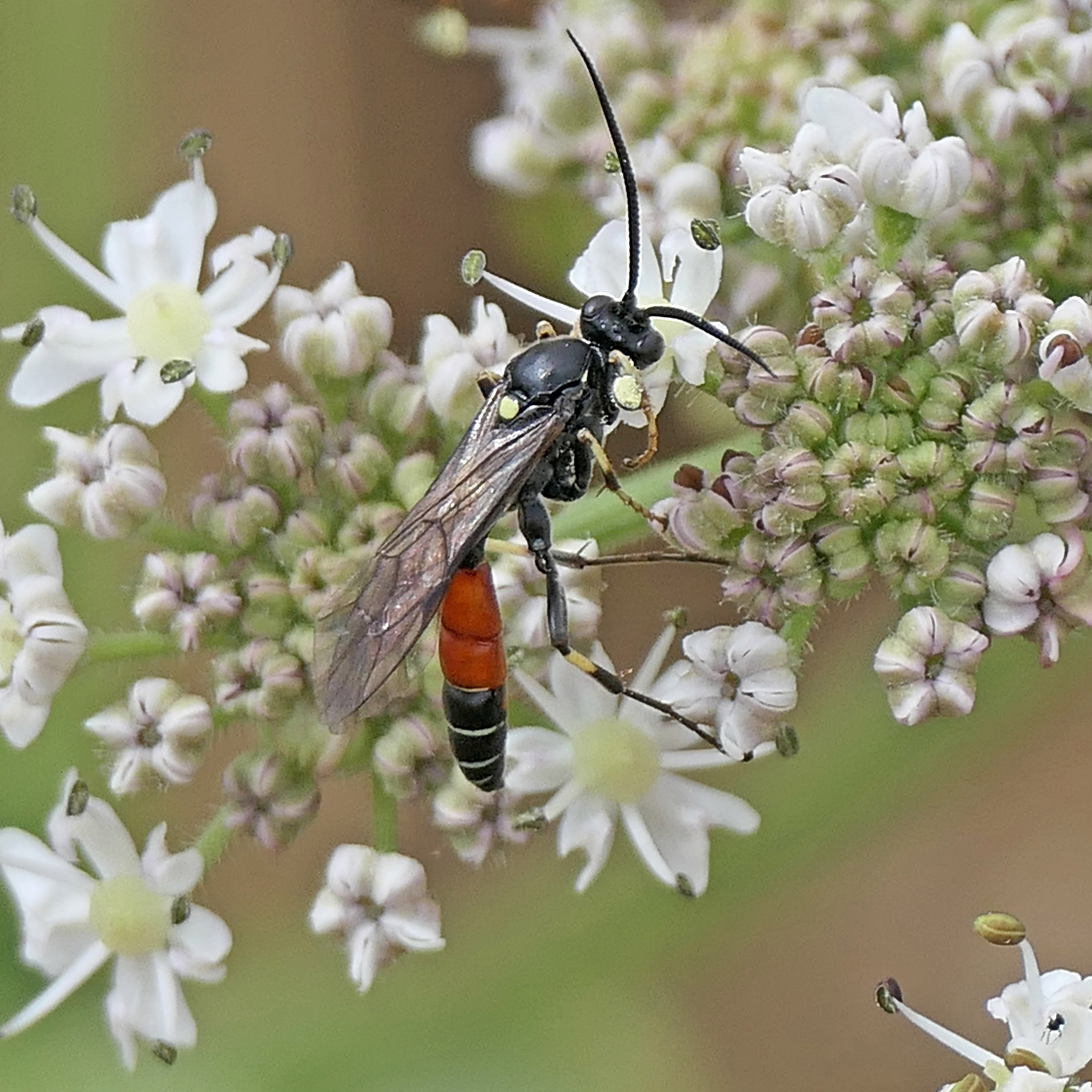
At 10-15mm, Ctenichneumon panzeri is a medium-sized Ichneumon that can often be found on umbellifer flowers, as you can see in my photo. As with all Ichneumon wasps, they are parasitoids; Ctenicheumon panzeri deposits its eggs in the larvae of moths of the Noctuidae family.
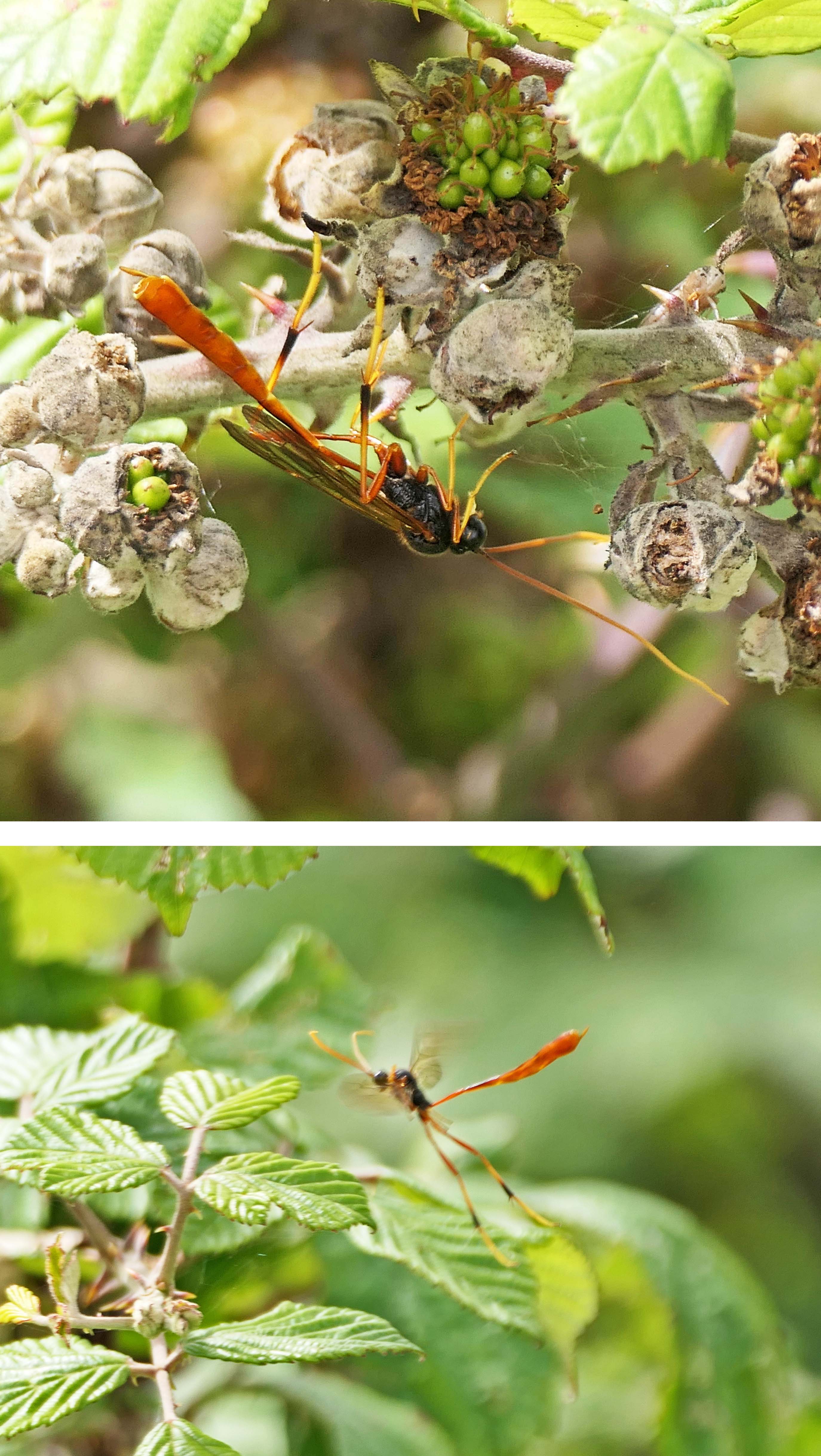
Heteropelma amictum is one of the larger (20-30mm) and more spectacular ichneumonids, with a long narrow body and equally long back legs, both of which are very prominent when it flies (my flight photo is blurry but I wanted to show you how it holds its body erect and dangles its legs below). Heteropelma amictum uses moth pupae, rather than larvae, as its larval hosts.
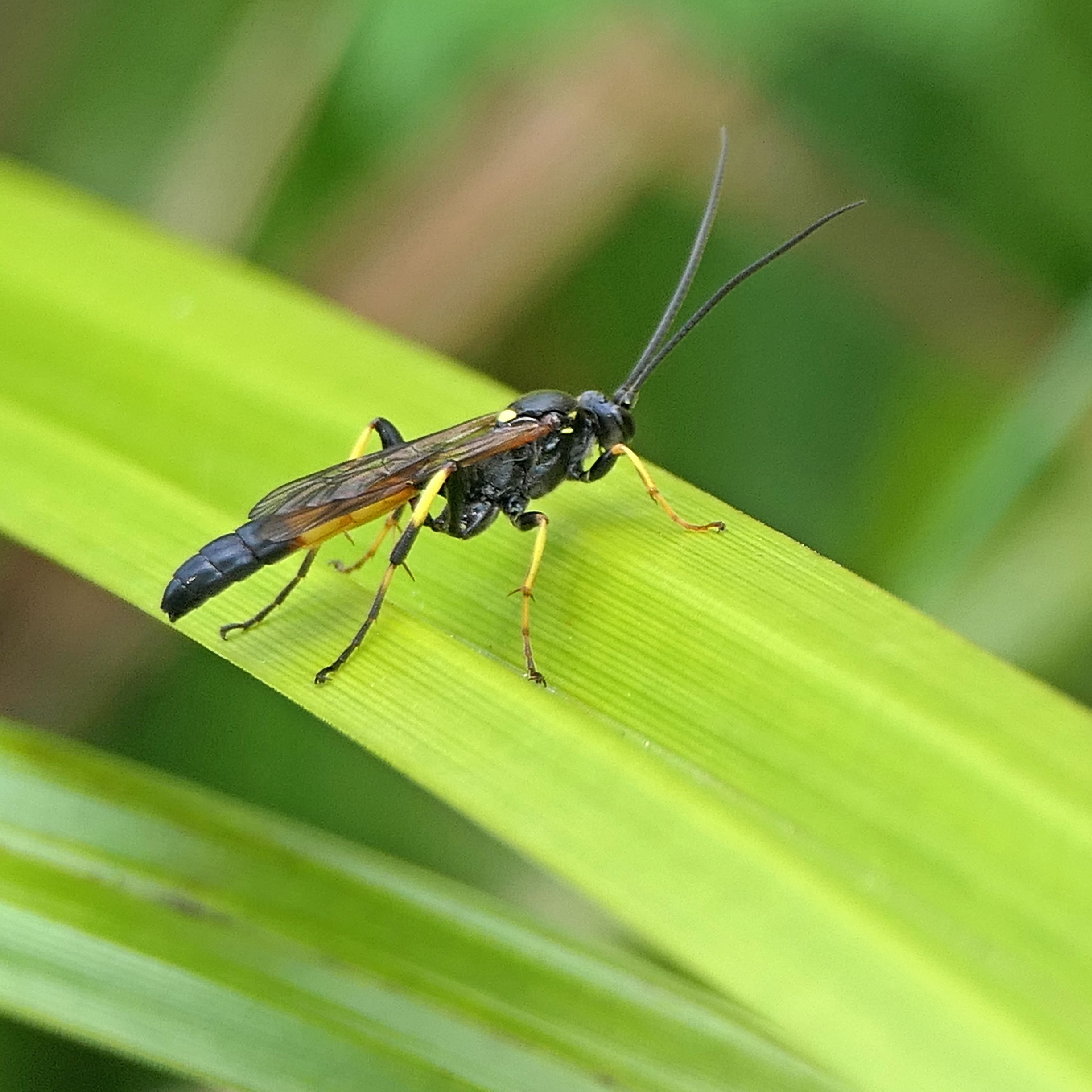
Ichneumon xanthorius is another medium-sized wasp, and one I see more often than other species, when it’s feeding on umbellifer flowers or perching on shrubs and bushes. Its larvae feed on the pupae of both moths and butterflies.
The British Natural History Museum has produced an excellent Beginner’s Guide to identifying British ichneumonids, which you can access and download by clicking on this link.
 earthstar
You must be logged in to post a comment.