
Tags
British lacewings, Brown lacewings, Hemerobiidae, Hemerobius humulinus, Hemerobius micans, lacewings
This is one of those posts where I need to add a cautionary note at the beginning: the species of these lacewings have not yet been verified. In fact, I don’t think any of my lacewing records have ever been verified, which likely means that there is no lacewing expert able to volunteer their time for this task (I must add that I am full of praise for those experts that do volunteer their time as local or national recorders/verifiers) and also that it may not be possible to definitively identify these creatures without microscopic examination. Still, they are beautiful, and I felt them worth sharing.

So, after looking closely at the markings on their wings and checking they were in habitats where they might be expected to live, I think these are both Hemerobiidae (Brown lacewing) species, and I have tentatively labelled the lacewing pictured above as Hemerobius micans. The Naturespot entry for this species states that it ‘has wings which are quite yellow in colour and which have dark dashes on some longitudinal veins, not dots as in some similar species’ and is found ‘with deciduous trees, especially mature oaks’, which is consistent with my findings for this specimen.
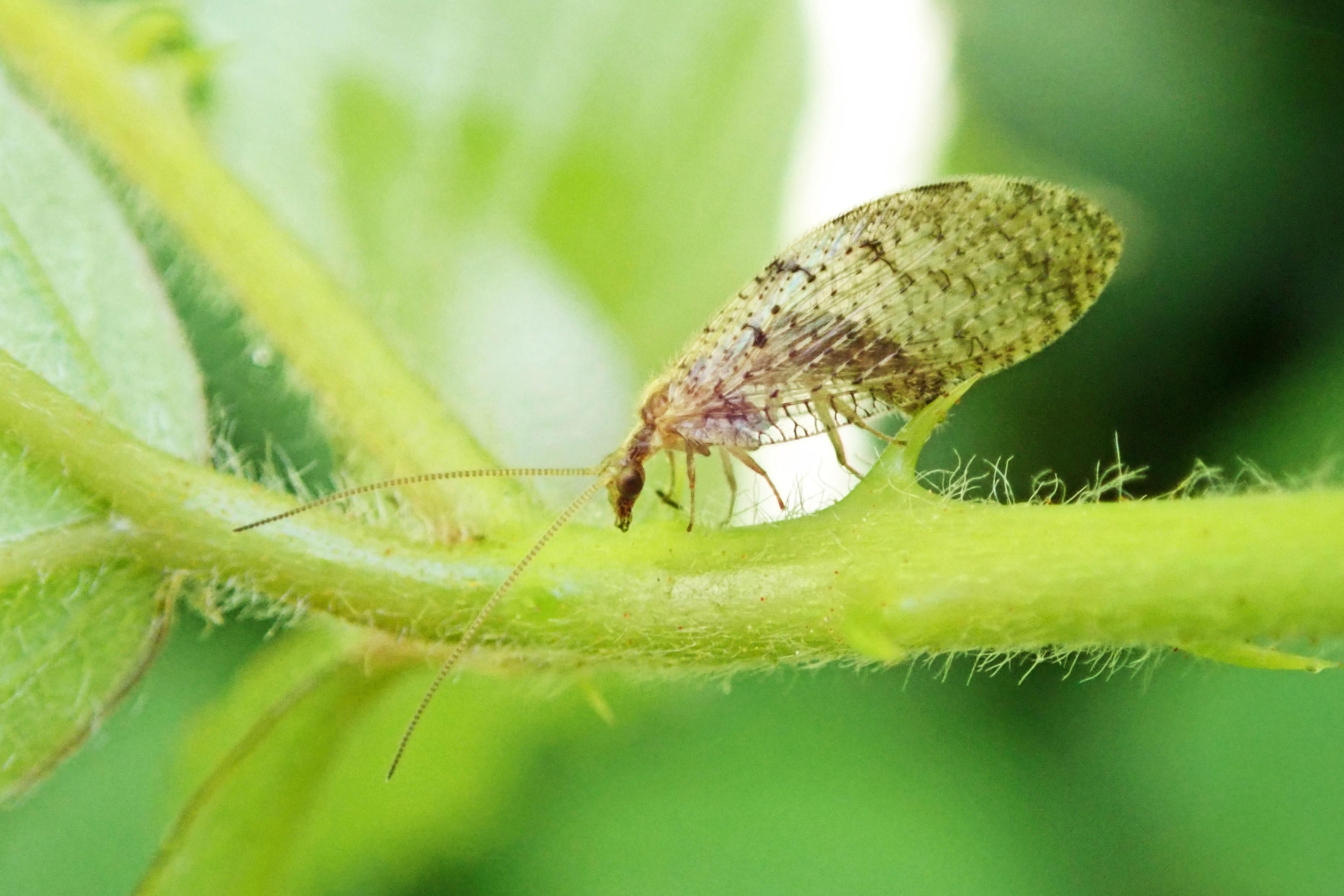
I am even more wary of naming this second lacewing but I wonder if it might be Hemerobius humulinus. After once again consulting the Naturespot website, I found one particular image which shows the wing venation and this appears consistent with what I can see in my photograph. Both these species were found in deciduous woodland, which also fits the species description.
Nb. I did find a Lacewings and Allies Recording Scheme website but it has thus far been populated with very little information; there is a link to a winter 2024 newsletter but many of the pages are relatively empty.
 earthstar
You must be logged in to post a comment.