
Having blogged twice already about my recent afternoon at Ferrybridge, between Weymouth and the Isle of Portland, it occurred to me to show you what it looks like. This photo was taken at the end of the couple of hours I spent there, by which time the tide was well out and the weather that was rolling in was looking quite ominous: time to beat a hasty retreat!

Today’s blog is about the third species I managed to get reasonably close to and spent quality time watching that afternoon, a cousin to the Sanderling and Knot, with which it shares the sandy shores and mud flats, the Dunlin (Calidris alpina).
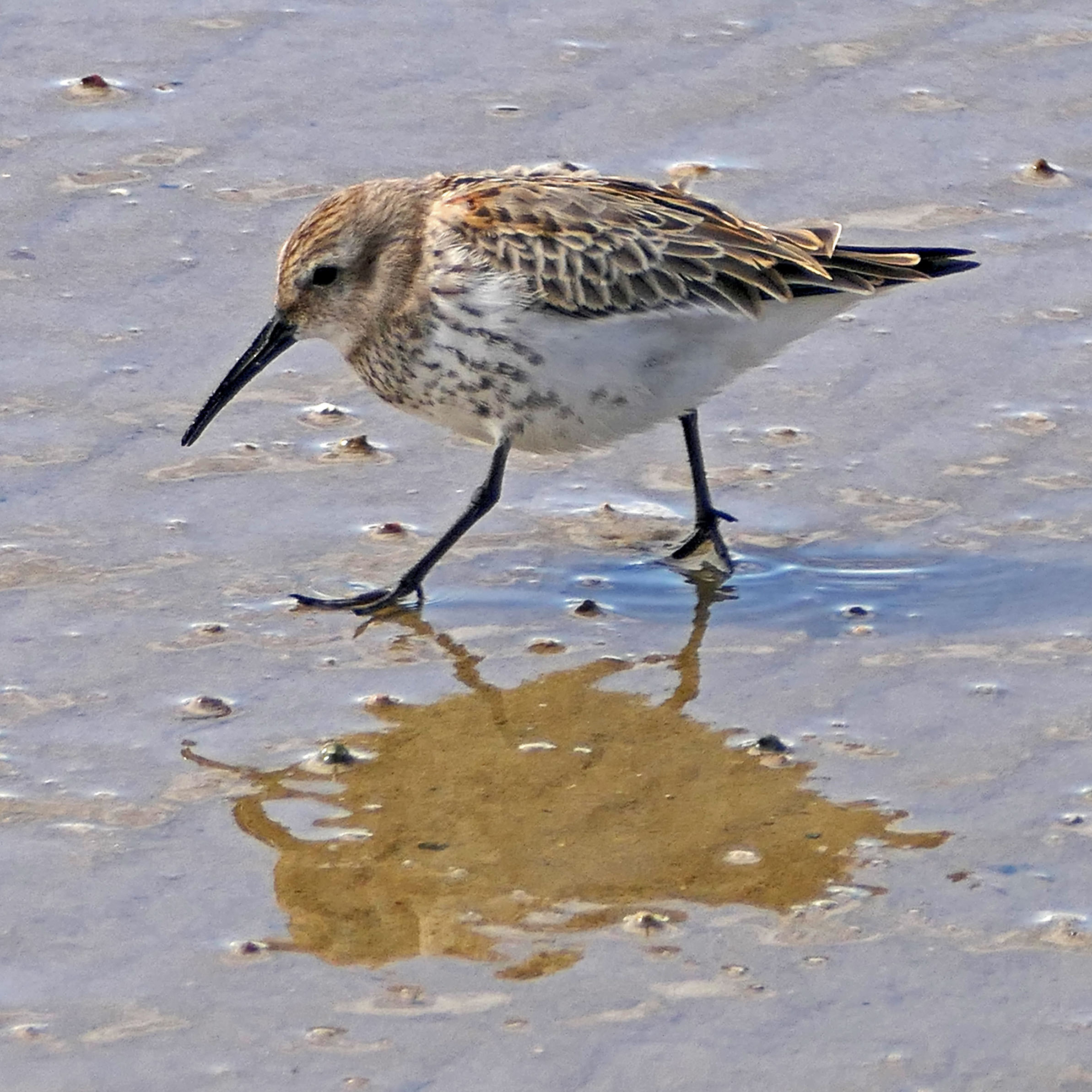
The Dunlin has some wonderfully evocative vernacular names, according to my Fauna Britannica: ebb cock (by the Shetlanders), pickerel (Scotland, in general), sandy (Northumberland), sand mouse (Westmorland), and sea mouse (Dumfries and Lancashire), amongst many others. Each name suggests an image of the bird’s habit of scurrying back and forth along the sandy shores as it forages for tiny sea creatures.
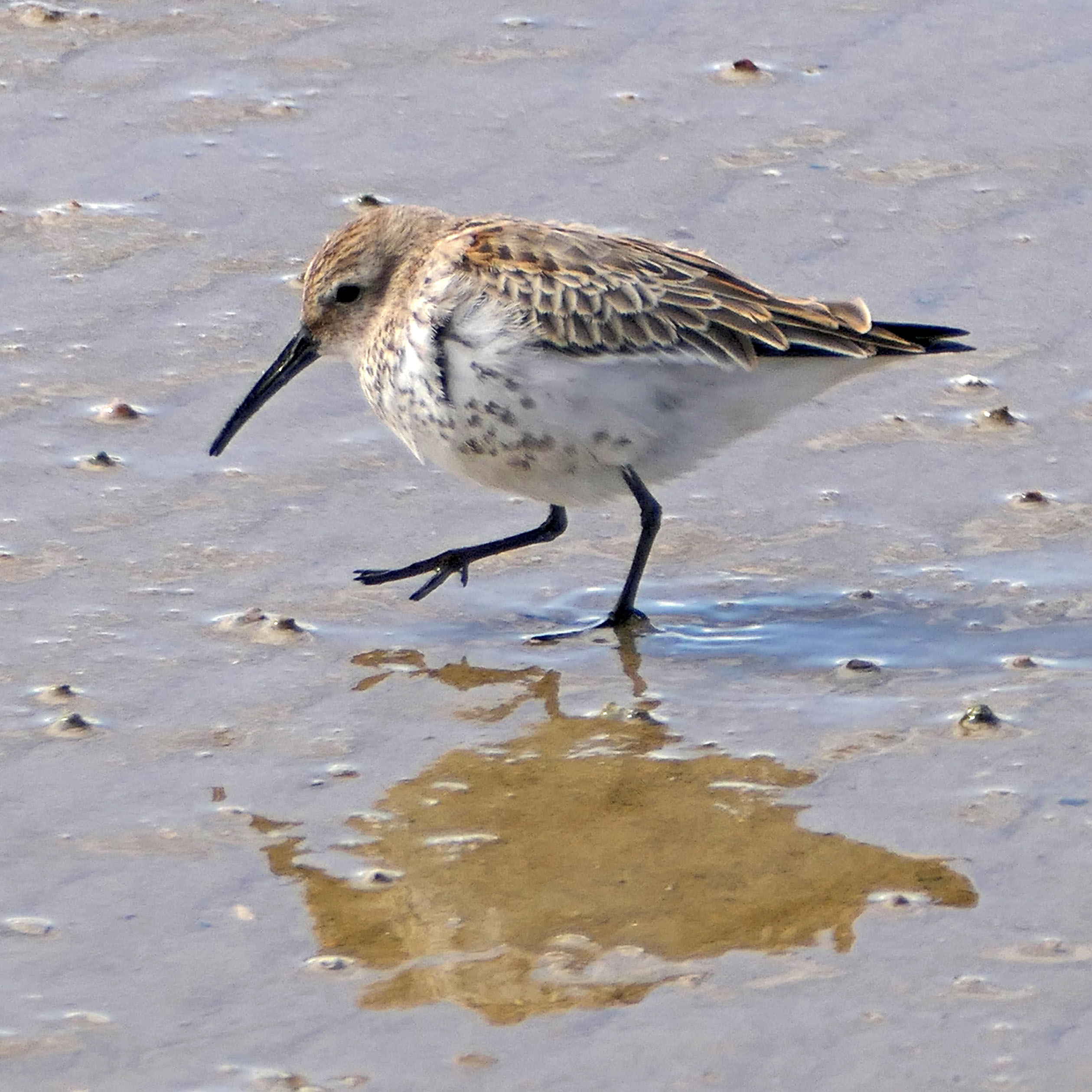
Luckily for me, there were several Dunlin and Ringed plover foraging along the top of the beach when I arrived, and I managed to find a spot, crouched in the lee of a shed out of the blasting wind and camouflaged by some scrubby vegetation where I could spend time watching these wonderful little waders going about their business.

Though the Dunlin seems common and ubiquitous around the British coastline, its numbers are in serious decline here, with the BTO reporting a 24% decline in the over-wintering population between 1997 and 2022. So, although the bird is listed as of ‘least concern’ internationally, here in Britain it is red-listed. It would be a tragedy to lose this sublime little sea mouse so let’s hope its population somehow manages to recover.
 earthstar
You must be logged in to post a comment.