
Tags
Adelius species, British parasitic wasps, moth larva parasite, parasite of Stigmella trimaculella, parasitic wasp, Stigmella trimaculella, wasp that parasitises leaf-mining moth larvae
Back in July, when the leaves were falling early from the trees due to the hot dry conditions, I noticed several ‘green islands’ in the Poplar leaves at a local park and, as I didn’t have my macro camera with me, brought a few home to photograph.
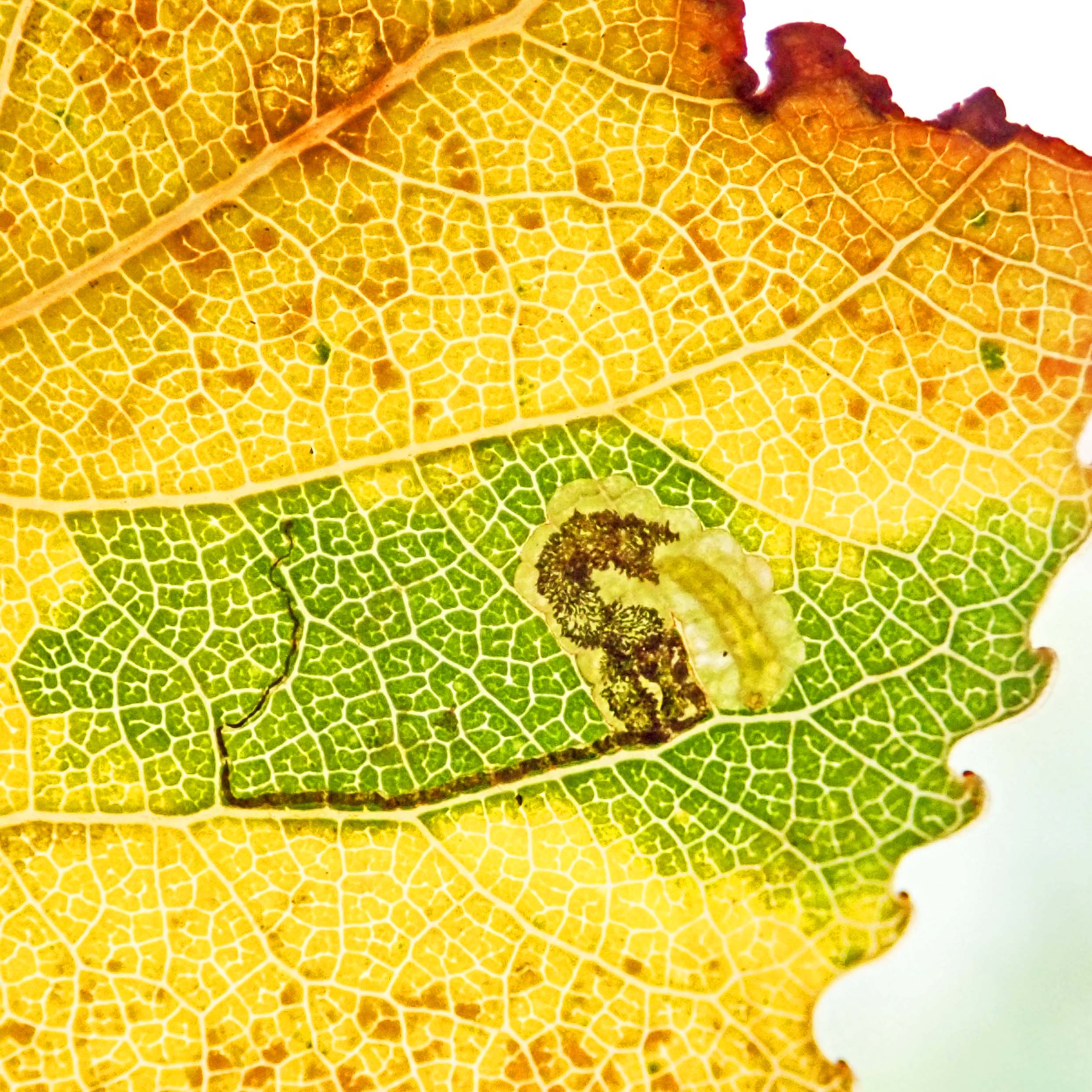
Once home I realised that two of the leaves still had live larvae in them, larvae of the moth Stigmella trimaculella, happily munching away within their green island homes (see Leafmines: Stigmella trimaculella, 21 October 2024).
Rather than return them to the park, I put the leaves in a jar to see whether the larvae would go on to pupate and hatch as adult moths. Though I checked the jar regularly, nothing seemed to be happening. The leaves had dried up as expected but, as the larvae usually pupate in leaf debris on the ground, I didn’t think that would be a problem. This week I decided to empty the jar so tipped everything out on to a sheet of white paper … and found this.
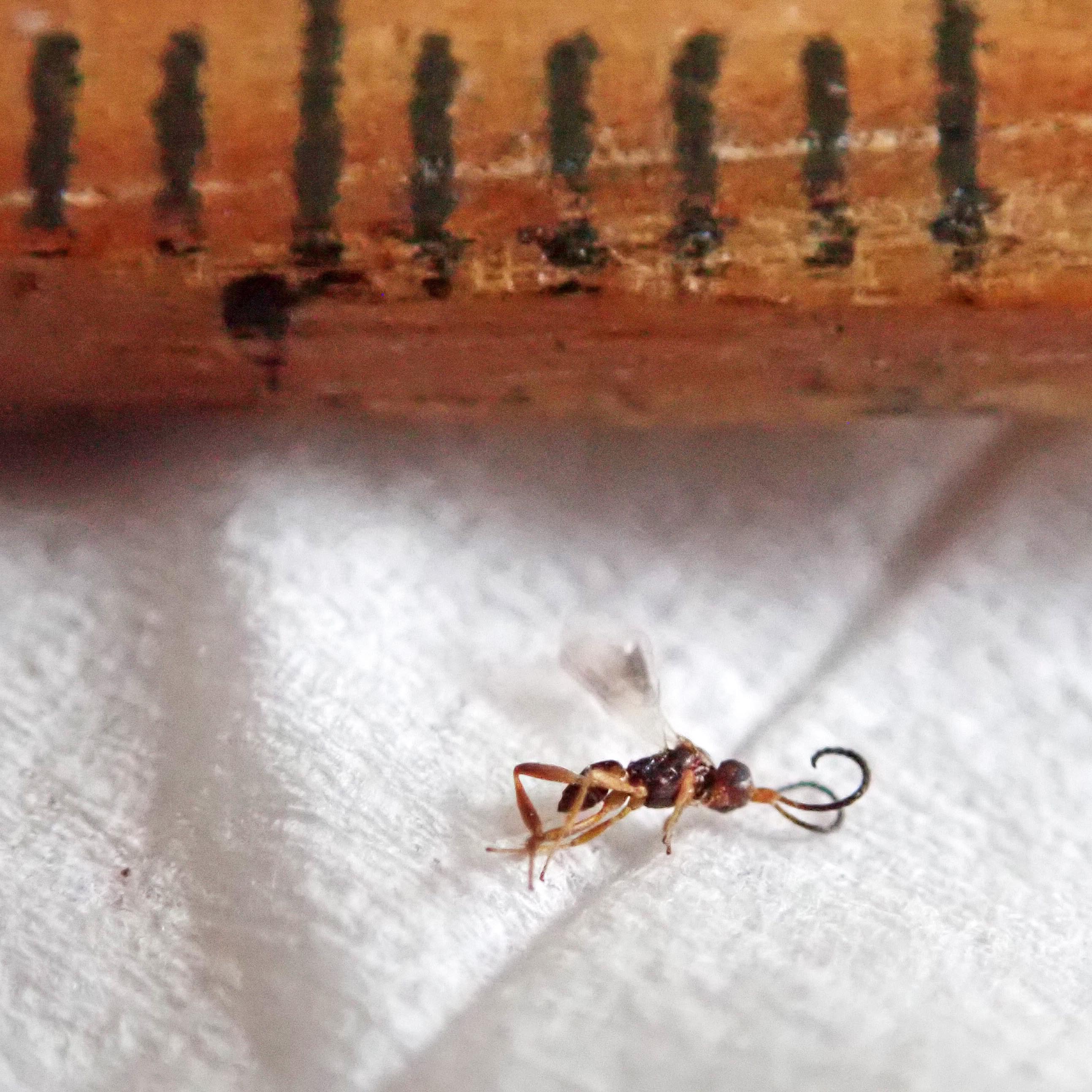
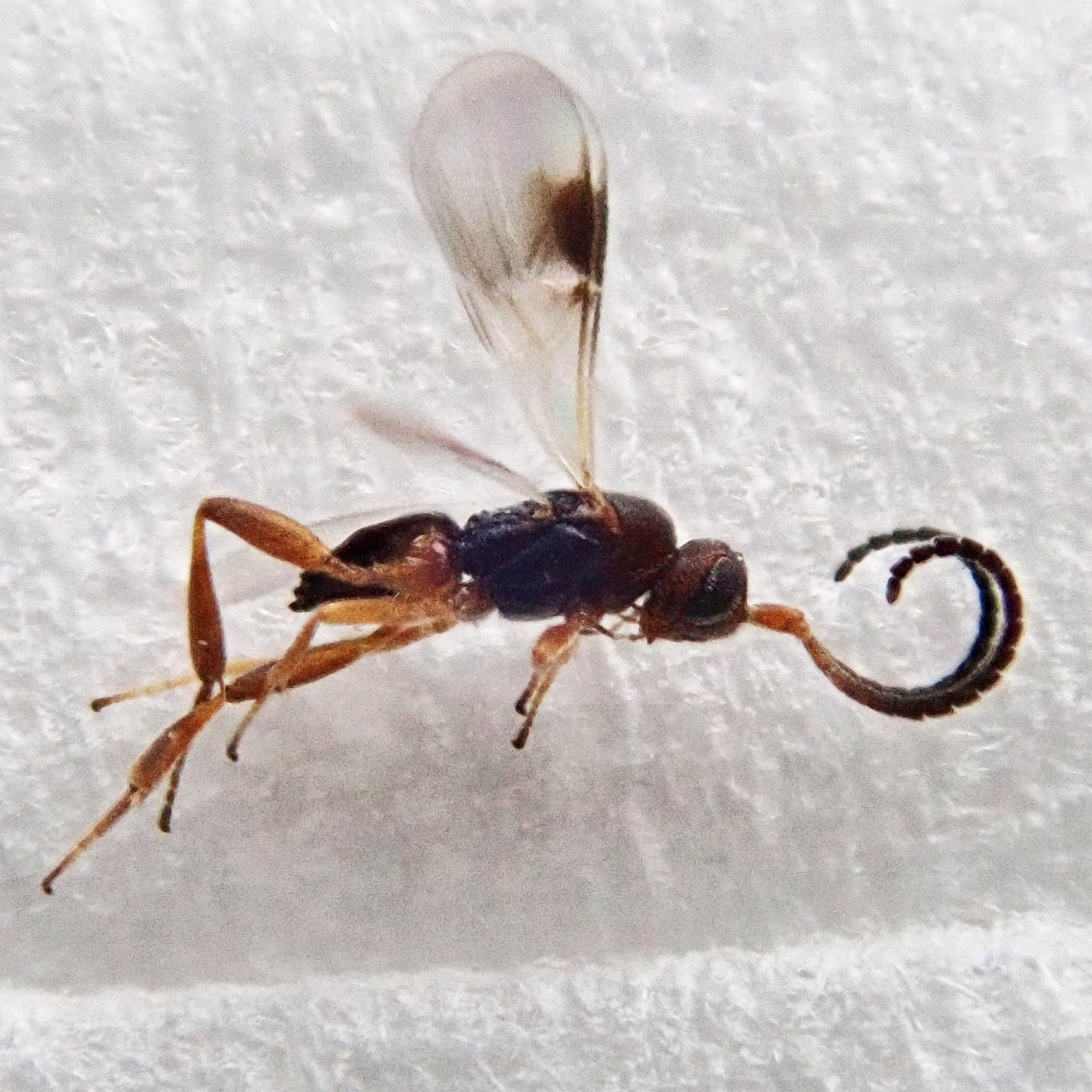
It appears that, although the two larvae seemed to be acting and eating as normal, at least one of them had been parasitised by a wasp, and this adult had emerged. It was miniscule, less than 2mms long, more like a speck of dust than a creature. I didn’t expect to get a decisive answer as to what it was but I took some photos and posted them online. Luckily for me, the wasp person I knew was able to connect me with a national parasitic wasp expert. He gave me a tentative identification based on what he could see and referred me to a document I could follow to try to key the wasp to species. The problem is that the key was very specific and, without a microscope, I simply couldn’t see the features clearly enough. So, this little creature would appear to belong to the family Braconidae, the subtribe Adeliinae, one of the Adelius species of parasitic wasp, but I can’t be 100% sure.
 earthstar
You must be logged in to post a comment.