• ABOUT
  • BIRDING 2018
  • Birding 2019
  • BLOG POSTS
  • Butterflies 2018
  • Resources

earthstar

~ a celebration of nature

earthstar

Category Archives: animals

Sassy Squirrels

30 Monday Jan 2017

Posted by sconzani in animals, nature

≈ 10 Comments

Tags

grey squirrel, red squirrel, Sciurus carolinensis, Sciurus vulgaris

Grey squirrels (Sciurus carolinensis) are constantly vilified for their adverse effect on the local environment here in Britain because they are not native creatures. Their ancestors were North American immigrants, first introduced to the British Isles in the late 1870s by local landowners who considered them ‘exotic’ (what were they thinking?). Not only did the Greys bring with them the squirrelpox virus (SQPV), which doesn’t harm them but kills the native Red squirrels (Sciurus vulgaris), the Greys also compete with the Reds for food. And as the Greys have a broader food range – they’re able to eat nuts with high tannin contents, like acorns, which the Reds cannot digest – they have a better chance of survival when winters are hard and food resources scarce.

170130-grey-squirrel-4
170130-grey-squirrel-3

Luckily, there are plenty of folks out there trying to save the Reds – and you can too, by supporting organisations like the Red Squirrel Survival Trust http://rsst.org.uk/ Let’s hope they’re successful in their efforts as I’d hate to see the locals overcome by the brash interlopers from across the Atlantic.

170130-grey-squirrel-1
170130-grey-squirrel-2

All that being said, there is something incredibly cute about Grey squirrels, about the way they sit back on their hind legs, nibbling on the nuts they’re clutching in their front paws. There’s something about those big doe eyes, and the way they quiver and shake their bushy tails. Though I understand all the arguments against them I can’t help but enjoy their antics.

Like Loading...

World wildlife Wednesday: A howling success!

07 Wednesday Dec 2016

Posted by sconzani in animals, nature

≈ 4 Comments

Tags

Alouatta caraya, Argentina, Argentina Black Howler project, Black howler monkey, Globalteer, monkeys, South American monkey

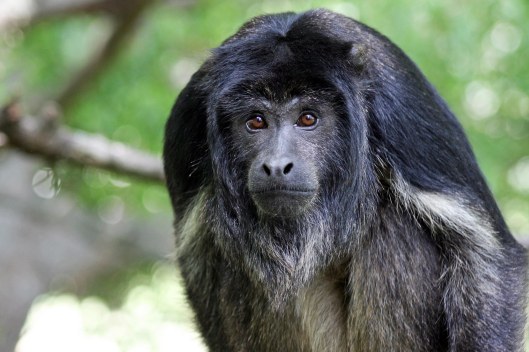
Around this time, back in 2012, I had just enjoyed a flying visit to Argentina, to check out a project where the locals had been working tirelessly for over 20 years to rescue (from the pet trade) and rehabilitate the endangered Black Howler monkey (Alouatta caraya).

161207-black-howler-monkey-1

Although the project is a member of the Great Ape Project and is recognised for its excellent work by the Jane Goodall Institute, it receives no support from the Argentinian government, relying instead on volunteers from around the world to help with donations and manpower. The British charity I was then working for, Globalteer, was looking at partnering with this project, to send them more volunteers and funding, so I was making a preliminary site visit to check it out. (You can now volunteer with Globalteer at this project – check it out here!)

161207-black-howler-monkey-4

I couldn’t get very close to the monkeys, for our mutual protection – theirs from any bugs I might carry and mine from their bites! – but I could certainly hear them. The Howler monkey has the loudest call of any monkey – indeed, of any land animal – it can be heard up to 3 miles away. A small number of the Howlers were caged, while they went through the rehabilitation process, but they would later be released, to join one of the several troops that roam freely in the 360-hectare area of fields and forests owned by the project. Many of the free monkeys seemed curious about the gringa who had come to call and came down from their treetops to peer at me so I managed to get a few decent photos of these incredible creatures.

161207-black-howler-monkey-2
161207-black-howler-monkey-3
Like Loading...

‘Dedicated Naturalist’: Mary on dung

06 Tuesday Dec 2016

Posted by sconzani in 'Dedicated Naturalist' Project, animals, nature

≈ 2 Comments

Tags

animal dung, animal excrement, Dr Mary Gillham, Mary Gillham Archive Project

A snippet from my volunteer work on the ‘Dedicated Naturalist’ Project, helping to decipher and digitise, record and publicise the life’s work of naturalist extraordinaire, Dr Mary Gillham.

Scat, pooh, poop, droppings, guano, ordure, cow pies, cowplop, cow pat, meadow muffin, night soil, manure, excrement, faeces, muck, dung. Call it what you will, it’s part of life, and learning to recognise an animal’s excrement is a necessary skill for a good naturalist. Here are Mary’s words of wisdom on the dung of some of Britain’s mammals, with a couple of my photographs for good measure.
 161205-fox-dung

Fox
Up to 6” long; dropped at irregular intervals and sites. Always black elongated twisted with whip-like tail. Often has mucilaginous coating.
Stoat and polecat
Dark. 1½ – 2” long curved back on itself (boomerang shaped); bigger than weasels. Also an irregular black dollop on track of small mammal. Size of walnut.

161205-squirrel-dung
Squirrel
More oval pellets than those of hares or rabbits.
Field vole
½” long, cylindrical. Greener than small rodents as eat vegetation. Also get bits of chopped grass in runs.

For the full story about the Mary Gillham Archive Project, check out our website, and follow our progress on Facebook and on Twitter.

Like Loading...

‘Dedicated Naturalist’: A mouse in the house

21 Monday Nov 2016

Posted by sconzani in 'Dedicated Naturalist' Project, animals, nature

≈ Leave a comment

Tags

Dr Mary Gillham, Mary Gillham Archive Project, Mary Gillham drawing, Mary Gillham nature diary, mice, mouse, mouse in house

A snippet from my volunteer work on the ‘Dedicated Naturalist’: Mary Gillham Archives Project, to celebrate Explore Your Archive, a campaign co-ordinated jointly by The National Archives and the Archives and Records Association that aims ‘to showcase the unique potential of archives to excite people, bring communities together, and tell amazing stories’.

From one of Mary’s nature diaries, July 1981:

Cat food was shared by 2 mice this month. An adult was holed up in carpet sweeper – the entrance the spiral gap between the brushes – to nest of carpet fluff. Had used for several minutes sweeping carpet before I sensed that all was not well and tipped contents into bucket. Bemused mouse, near asphyxiated and with nerves shattered by the trundling and rumbling, did not jump out of bucket but was tipped into garden and scuttled off under old fridge at end of path. Offered water and a gooseberry, neither of which was seen to be touched.

The 2nd mouse, less than half grown, was surprised feeding on kit-e-kat, the only provender accessible. We played tag round the buckets and mops but this one took refuge under the new fridge. Presumably both were brought in originally by cat, whose ailment of tapeworm inhibits her hunting ability not at all.


161121-gillham-mouse-sketch-1
161121-gillham-mouse-sketch

For the full story about the Mary Gillham Archive Project, check out our website, and follow our progress on Facebook and on Twitter.

Like Loading...

Donkeys of Peru

16 Wednesday Nov 2016

Posted by sconzani in animals, nature

≈ 3 Comments

Tags

donkey, donkey and agriculture, donkey as beast of burden, donkeys in Peru, Equus africanus asinus, Peru rural economy

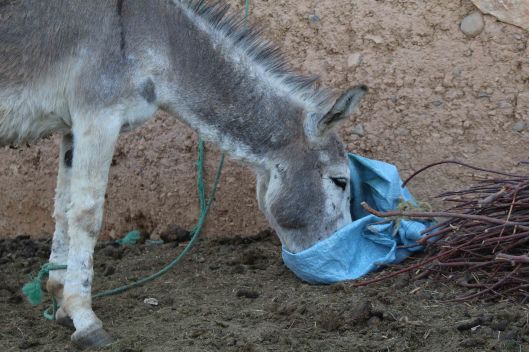
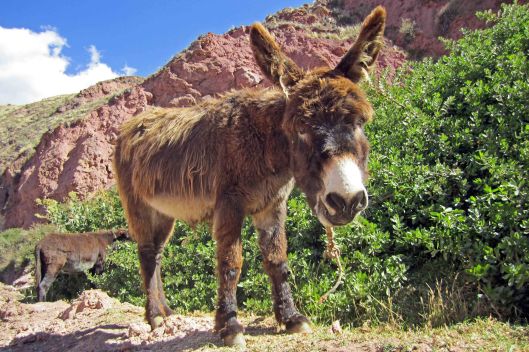
I’ve blogged previously about donkeys in Ireland but, as donkeys are so adorable and today is world wildlife Wednesday, let me introduce you to some of the donkeys I met in Peru.

161116-donkeys-peru-6

Though originally native to Africa, the donkey (Equus africanus asinus) was introduced to the Americas when the ships of Christopher Columbus’s second expedition arrived at the Caribbean Island of Hispaniola in 1495. The monks and priests who quickly spread the Catholic religion throughout South America were also responsible for the spread of the donkey, specialising in the profitable business of breeding and selling donkeys and mules.

161116-donkeys-peru-2

Today in rural Peru, as in most under-developed countries around the globe, donkeys (as well as llamas) are still the principal beasts of burden. They can often be seen carrying loads for farmers, pulling carts or simply grazing in fields. Their burdens look heavy but donkeys are sturdy and strong and, as they represent a substantial monetary investment and their labour is vital to subsistence farmers, donkeys are usually very well cared for.

161116-donkeys-peru-8
161116-donkeys-peru-5
161116-donkeys-peru-4
161116-donkeys-peru-7
161116-donkeys-peru-1
161116-donkeys-peru-3
161116-donkeys-peru-9
Like Loading...

Happy International Sloth Day!

22 Saturday Oct 2016

Posted by sconzani in animals, nature

≈ 8 Comments

Tags

#InternationalSlothDay, Globalteer, International Sloth Day, Oropesa, Peru, Picaflor House, sloth

I had another post lined up for today but, when I found out it was International Sloth Day, I couldn’t miss the opportunity to share these photos with you. Now, I know this is not environmentally correct. I know I really shouldn’t have had a sloth hanging off me. But, when it was offered, I just couldn’t say no, and I think you can see how hilariously happy I was for this short five minutes.

161020-international-sloth-day-7

These photos were taken when I was managing an NGO near Cusco, Peru, back in 2011-2012. The British charity I was working for, Globalteer, runs an after-school programme at Picaflor House in the small town of Oropesa, near Cusco. On this day in August 2011, we were about to farewell a fabulous group of people who had been volunteering at our project and who all chipped in to give our children an extra-special treat, a visit to a local wildlife refuge and sanctuary.

161020-international-sloth-day-1
161020-international-sloth-day-3
161020-international-sloth-day-2

The children were overjoyed, the refuge were very happy for the financial support of the entry fees and, just as we were leaving, one of the rangers brought this sloth to show us, offering to hang it off me as they looked. I wasn’t allowed to touch it – human germs! – which is why my arms are constantly outstretched, but it truly was one of the most incredible experiences of my life!

International Sloth Day was the brainchild of The Sloth Institute, in Costa Rica, one of many environmental organisations helping to research, rescue and release back into the wild these magnificent creatures. I don’t know enough about the organisation to endorse them but I would urge everyone to do what they can to help preserve the sloth and its environment all around the world.

161020-international-sloth-day-4
161020-international-sloth-day-5
161020-international-sloth-day-6
Like Loading...

‘Dedicated Naturalist’: Mary and the donkeys

19 Wednesday Oct 2016

Posted by sconzani in 'Dedicated Naturalist' Project, animals, nature

≈ 8 Comments

Tags

Catherine Duigan, donkey, Dr Mary Gillham, Irish donkeys, Mary Gillham Archive Project

A snippet from my volunteer work on the ‘Dedicated Naturalist’ Project, helping to decipher and digitise, record and publicise the life’s work of naturalist extraordinaire, Dr Mary Gillham.

Thanks in part to the slide-perusing efforts of one of our most fervent supporters and advisory board member, Catherine Duigan of Natural Resources Wales, we have come to realise that Mary Gillham was a sucker for donkeys.

17_8_017-sml

Catherine is Irish and has been blogging, on her own blog and for the Mary Gillham Archive Project website, about Mary’s adventures in Ireland, where the donkey still played a vital part in industry and transportation, especially in the more rural areas and on the Irish islands Mary visited.

In her book This Island Life: Discovering Britain’s Offshore Gems (Halsgrove, 2007, p.20), Mary writes about the use of horse- and donkey-power on Cape Clear Island, County Cork:

Most ploughing, and certainly harrowing, and lighter jobs, were dependent on horse power. Horse, donkey and mule might be teamed together to pull the heavier implements and we also encountered the less usual hinny, the sire a horse stallion and the dam a mare donkey, jennet or jenny. This is the opposite cross to the one producing a mule.

You’ll find some delightful reproductions of Mary’s donkey slides in Catherine’s blogs (here and here) but I couldn’t resist hunting out a few more. They capture a wonderful slice of local Irish life which, I imagine, has now mostly disappeared so Mary’s archival records are helping to preserve these important and thoroughly charming aspects of Irish cultural and social history. 

Revegetated plot from pierhead. Jaunting cart 2006
Fence preserves Inisheer's cemetary 1979
Fence preserves Inisheer’s cemetary 1979
Mutual preening. Big northeast bay-> lagoon. Lotus, Aran
childrens-cart-inisheer-1979
Donkeys help Nance James peel an apple, Aran
Old man comes out to mount ass. Aran
Great sandy inlet being cut off from sea. Kilronan
Plane landing on ungrazed airstrip, Inisheer

For the full story about the Mary Gillham Archive Project, check out our website, https://marygillhamarchiveproject.wordpress.com/  and follow our progress on Facebook and on Twitter.

Like Loading...

The Llama panorama

05 Wednesday Oct 2016

Posted by sconzani in animals, nature

≈ 2 Comments

Tags

llama, llama communication, llama in Bolivia, llama wool

Did you know:

The llama is sturdy and sure-footed, making it the ideal beast to carry heavy loads along the narrow mountain trails of South America.

The fine undercoat of wool on llamas is used to make clothing and handcrafts, and the more coarse outer wool is often made into rugs.

161005 llamas (3)

Llamas mate lying down – it’s called a kush position (sounds cushy to me!) – which is rather unusual for such a big animal and, also unusual for their size, their mating is no quick fling. Instead, they’re at it for between 20 and 45 minutes, plus the sexually aroused male makes a gargling sound – called an orgle – before and during the mating process.

Female llamas have very short tongues, preventing them from licking their newly born babies (called crias) so, instead of bonding with their offspring through the licking process, the mummy llamas nuzzle their babies and hum to them.

Llamas are family animals, sharing a strong familial bond and looking out for each other. When threatened, a llama will emit a warning bray to alert the rest of the herd, and llamas often hum to each other as a way of communicating. As well as these sounds, they also make groaning noises or produce a ‘mwa’ noise when they’re afraid or angry. Strange then that humans use ‘mwa’ as an expression for sending someone a kiss.

161005 llamas (2)
161005 llamas (4)
161005 llamas (5)
161005 llamas (6)
161005-llamas-1

a large herd of llamas on the hills behind La Paz, in Bolivia

Like Loading...

‘Dedicated Naturalist’: What is a cow?

03 Monday Oct 2016

Posted by sconzani in 'Dedicated Naturalist' Project, animals, nature

≈ 3 Comments

Tags

cow, cow as a machine, dairy cow, Dr Mary Gillham, fun description of a cow, Mary Gillham Archive Project

A snippet from my volunteer work on the ‘Dedicated Naturalist’ Project, helping to decipher and digitise, record and publicise the life’s work of naturalist extraordinaire, Dr Mary Gillham. This piece is from Mary’s days as a Land Girl during the Second World War and is, it seems, ‘a dairying student’s concept of a cow’.

A cow is a completely automatic milk manufacturing machine. It is encased in untanned leather and mounted on four movable vertical supports, one on each corner.

161003-marys-cows-1

The front end contains the cutting and grinding machine, as well as headlights, air inlet and exhaust, and bumper and foghorn. At the rear is the dispensing apparatus and an automatic fly swatter.

The central portion houses a hydrochemical conversion plant. This consists of four fermentation and storage tanks connected in series by an intricate network of flexible plumbing. This section also contains the heating plant complete with automatic temperature controls, pumping station and main ventilating system. The waste processing and disposal apparatus is located at the rear of this central section.

161003-marys-cows-2
161003-marys-cows-3

In brief, the external visible features are: two lookers, two hookers, four stander-uppers, four hanger-downers and a swishy-wishy.

There is a similar machine known as a bull which should not be confused with a cow. It produces no milk but has other interesting features. 

161003-marys-cows-4
161003-marys-cows-5

For the full story about the Mary Gillham Archive Project, check out our website, and follow our progress on Facebook and on Twitter.

Like Loading...

El culpeo

21 Wednesday Sep 2016

Posted by sconzani in animals, nature

≈ 2 Comments

Tags

Andean fox, Andean wolf, Bolivia, Bolivian Altiplano, Culpeo, fox, Fuegian dog, Lycalopex culpaeus, Red Planet Expedition

For world wildlife Wednesday we head back to Bolivia for a closer look at this character, the Culpeo, Lycalopex culpaeus, also known as the Andean fox or wolf. True to the characterisation of foxes as wily, this one knew a tourist vehicle when it saw it and, though its normal diet would include rabbits, birds, rodents and whatever other small beasties it could hunt down, this fox obviously equated tourists with food. And it was not disappointed. On our Red Planet Expedition, in 4-wheel-drive vehicles deep in the remote regions of the Bolivian Altiplano, we carried food with us and our drivers prepared our lunches each day. El culpeo dined on chicken bones as we drove slowly off to our next destination.

160921-andean-fox

The Andean fox can be found in many South American countries, ranging from parts of Ecuador, Peru and Colombia in the north down to Patagonia and Tierra del Fuego in the south, though is mostly found on the western side of the mighty Andes mountain range. Just as today’s domesticated dogs all have a common ancestor in the wild wolf, there was once a breed of domesticated dog (the Fuegian dog) that was derived from this fox, but it became extinct some time in the late 19th or early 20th century.

160921-andean-fox-3
160921-andean-fox-1
160921-andean-fox-2
Like Loading...
← Older posts
Newer posts →

About me

sconzani

sconzani

I'm a writer and photographer; researcher and blogger; birder and nature lover; countryside rambler and city strider; volunteer and biodiversity recorder.

View Full Profile →

Follow earthstar on WordPress.com

Enter your email address to follow this blog and receive notifications of new posts by email.

Recent blog posts

  • City Hall Peregrine January 12, 2026
  • Blackthorn in bloom January 11, 2026
  • Weevil: Mecinus pyraster January 10, 2026
  • Red in beak and claw January 9, 2026
  • Who’s watching who? January 8, 2026

From the archives

COPYRIGHT

Unless otherwise acknowledged, the text and photographs on this blog are my own and are subject to international copyright. Nothing may be downloaded or copied without my permission.

Fellow Earth Stars!

  • Unknown's avatar
  • Unknown's avatar
  • Unknown's avatar
  • Unknown's avatar
  • Unknown's avatar
  • Unknown's avatar
  • Unknown's avatar
  • Unknown's avatar
  • Unknown's avatar
  • Unknown's avatar
  • Unknown's avatar
  • Unknown's avatar
  • Unknown's avatar
  • Unknown's avatar
  • Unknown's avatar
  • Unknown's avatar
  • Unknown's avatar
  • Unknown's avatar
  • Unknown's avatar
  • Unknown's avatar
  • Unknown's avatar
  • Unknown's avatar
  • Unknown's avatar
  • Unknown's avatar
  • Unknown's avatar
  • Unknown's avatar
  • Unknown's avatar
  • Unknown's avatar
  • Unknown's avatar
  • Unknown's avatar
  • Unknown's avatar
  • Unknown's avatar
  • Unknown's avatar
  • Unknown's avatar
  • Unknown's avatar
  • Unknown's avatar
  • Unknown's avatar
  • Unknown's avatar
  • Unknown's avatar
  • Unknown's avatar
  • Unknown's avatar
  • Unknown's avatar
  • Unknown's avatar
  • Unknown's avatar
  • Unknown's avatar
  • Unknown's avatar
  • Unknown's avatar
  • Unknown's avatar
  • Unknown's avatar
  • Unknown's avatar

Blog at WordPress.com.

Privacy & Cookies: This site uses cookies. By continuing to use this website, you agree to their use.
To find out more, including how to control cookies, see here: Cookie Policy
  • Subscribe Subscribed
    • earthstar
    • Join 669 other subscribers
    • Already have a WordPress.com account? Log in now.
    • earthstar
    • Subscribe Subscribed
    • Sign up
    • Log in
    • Report this content
    • View site in Reader
    • Manage subscriptions
    • Collapse this bar
 

Loading Comments...
 

You must be logged in to post a comment.

    %d