• ABOUT
  • BIRDING 2018
  • Birding 2019
  • BLOG POSTS
  • Butterflies 2018
  • Resources

earthstar

~ a celebration of nature

earthstar

Category Archives: flowers

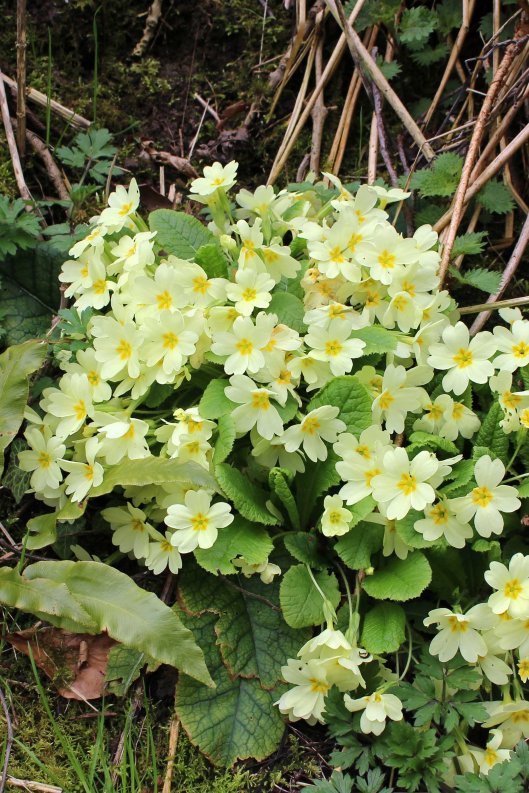
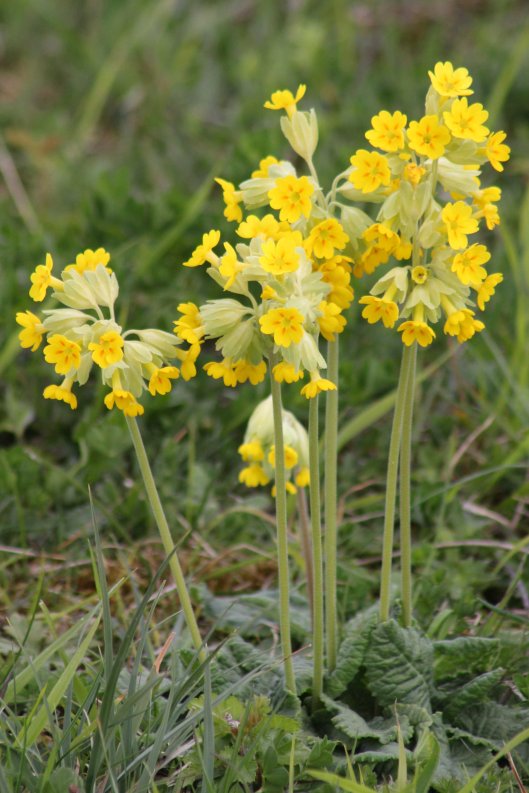
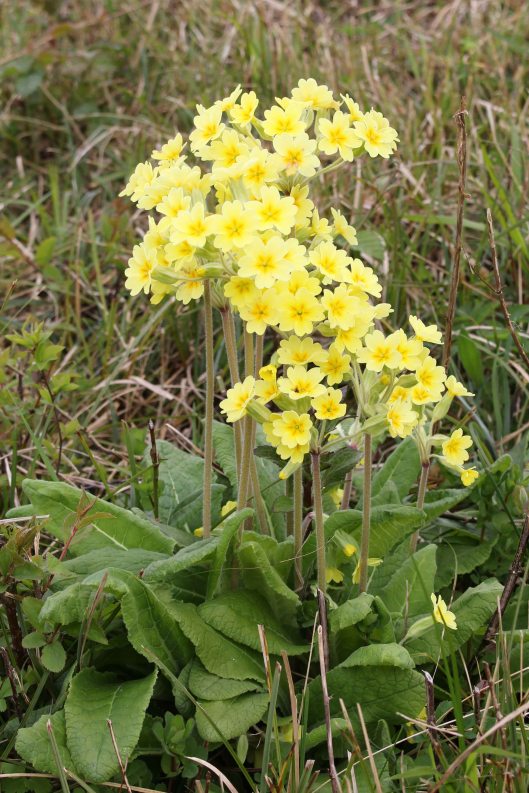
Primrose x Cowslip = False Oxlip

12 Friday May 2017

Posted by sconzani in flowers, nature, wildflowers

≈ Leave a comment

Tags

British flora, British wildflowers, Cowslip, False oxlip, flora hybridisation, flower hybrids, primrose, Primula veris, Primula vulgaris, Primula vulgaris x veris = P. x polyantha


Where Primroses (Primula vulgaris) and Cowslips (Primula veris) grow in close proximity they will occasionally hybridise to produce the False Oxlip (Primula vulgaris x veris = P. x polyantha). Though this is not really clear from my images, the hybrid is usually a larger plant than the Cowslip, and I think it combines the prettiest traits of both parents to produce a real stunner!

170512 A Primrose
170512 B Cowslip
170512 C False oxlip
Like Loading...

Early purple orchid

05 Friday May 2017

Posted by sconzani in flowers, nature, spring, wildflowers

≈ Leave a comment

Tags

Early purple orchid, Native British orchid, native orchids, Orchis mascula

170505 Early purple orchid (1)

This does what it says on the tin: The Early purple orchid (Orchis mascula) is one of the 56 species of native orchid to be found in Britain, it flowers early in spring and is usually the first orchid to flower each year, and it’s a magnificently imperial shade of purple.

170505 Early purple orchid (2)
170505 Early purple orchid (3)
Like Loading...

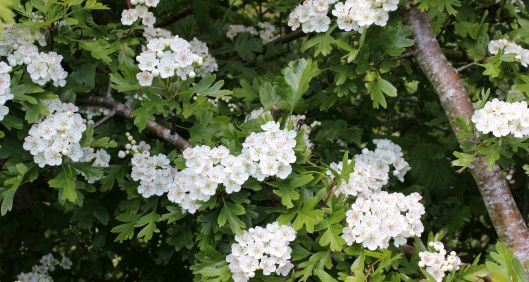
Hawthorn: did you know … ?

04 Thursday May 2017

Posted by sconzani in flowers, nature, spring, trees

≈ 6 Comments

Tags

Crataegus monogyna, Hawthorn, Hawthorn wood, May-tree, uses for hawthorn berries

170504 Hawthorn (3)

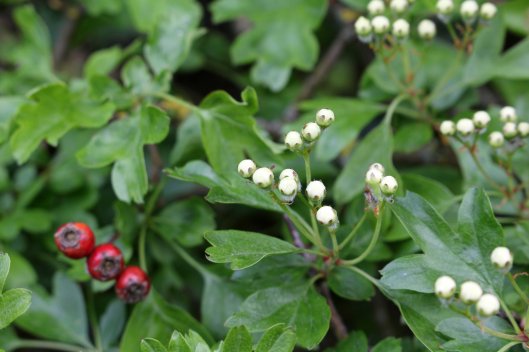
>   Hawthorn’s scientific name is Crataegus monogyna. Crataegus comes from the Greek kratos, meaning strength, and akis, meaning sharp, and monogyna is derived from mono, meaning one or single, and gyna, meaning seed or ovary.
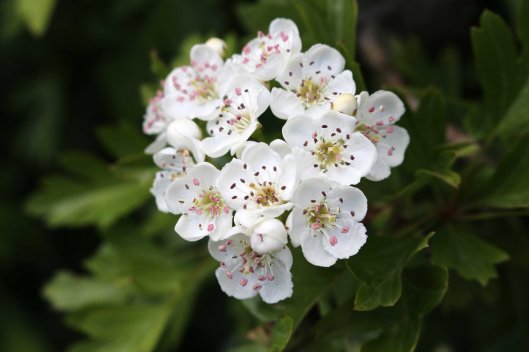
>   Hawthorn is also known as the May-tree, Mayblossom and Maythorn, not surprisingly because it usually flowers during May. It is the only British plant named after the month in which it blooms.

170504 Hawthorn (4)
170504 Hawthorn (1)

>   The Hawthorn’s white flowers can be either male or female. You can tell the male flowers by their pink-tipped stamens.
>   Hawthorn’s red berries, the haws, not only serve as food for birds, particularly the thrushes, they can also be used to make jams and jellies and wine.
>   The Hawthorn provides food for more than 150 different species of insect, like the hawthorn shield bug, the common earwig and common flower bug, bumblebees and cockchafers, to name just a few.

170504 Hawthorn (5)

>   Due to its dense growth and long thorns, Hawthorn has served as the perfect impenetrable hedge for thousands of years. Individual trees can live for 400 years or more.
>   In years gone by, the wood of the Hawthorn, because it has a very fine grain and is very hard, was used for making things like tool handles and engravers’ blocks. The root wood was also used to make combs and small boxes.

170504 Hawthorn (2)

Like Loading...

Ivy-leaved toadflax

27 Thursday Apr 2017

Posted by sconzani in flowers, nature, wildflowers

≈ 4 Comments

Tags

coliseum ivy, Cymbalaria muralis, Ivy-leaved toadflax, Kenilworth ivy, mother of thousands, non-native British wildflowers, Oxford weed, pennywort

170427 Ivy-leaved toadflax (4)

I see this plant so very often that I would’ve sworn it was a native British wildflower but no! Ivy-leaved toadflax (Cymbalaria muralis) only came to Britain in the early 1600s. In his excellent book Weeds: How vagabond plants gatecrashed and changed the way we think about nature (Profile Books, London, 2010), author Richard Mabey relates the story that the plant’s seeds ‘were caught up in the packing of some marble statuary imported from Italy to Oxford, whence, like the city’s eponymous ragwort, they migrated into the wider world via the college walls’. This explains why Ivy-leaved toadflax was, for a time, known as ‘Oxford weed’, though it has accumulated several other common names as well: Kenilworth ivy, coliseum ivy, mother of thousands, and pennywort.

170427 Ivy-leaved toadflax (3)

Ivy-leaved toadflax came originally from the mountains of southern Europe but, in Britain and many other parts of the world, it has swapped alpine rocks and stones for the bricks and stones of man-made walls. Its pretty little snapdragon-like flowers can be seen from April through to September.

170427 Ivy-leaved toadflax (1)
170427 Ivy-leaved toadflax (5)
170427 Ivy-leaved toadflax (2)
Like Loading...

From mud comes beauty

26 Wednesday Apr 2017

Posted by sconzani in flowers, nature

≈ Leave a comment

Tags

Buddhist proverb, Cambodia, Flowers of Cambodia, Lotus, Lotus flower, lotus grows from mud, No mud no lotus

170426 Lotus

The lotus flower blooms most beautifully from the deepest and thickest mud.
~ Buddhist Proverb

Like Loading...

‘A silent eloquence’

21 Friday Apr 2017

Posted by sconzani in flowers, nature, spring, wildflowers

≈ 4 Comments

Tags

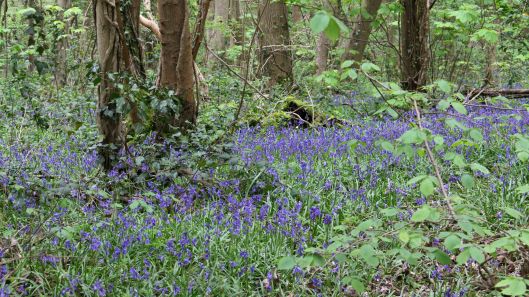
Bluebell, Bluebells in springtime, British bluebells, Hyacinthoides non-scripta, quintessential spring flower, wildflowers

170421 bluebells (1)

‘A fine and subtle spirit dwells
In every little flower,
Each one its own sweet feeling breathes
With more or less of power.
There is a silent eloquence
In every wild bluebell
That fills my softened heart with bliss
That words could never tell.’
~ from ‘The Bluebell’ by Anne Brontë

170421 bluebells (4)
170421 bluebells (2)
170421 bluebells (3)
170421 bluebells (5)

170421 bluebells (6)

Like Loading...

Attracting thunderstorms and adders?

18 Tuesday Apr 2017

Posted by sconzani in flowers, nature, wildflowers

≈ Leave a comment

Tags

Cardamine pratensis, Cuckooflower, Lady's smock, Milkmaid, Spring colour, spring flowers, wildflowers

170418 Cuckooflower (3)

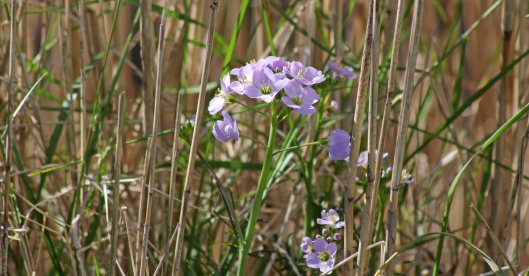
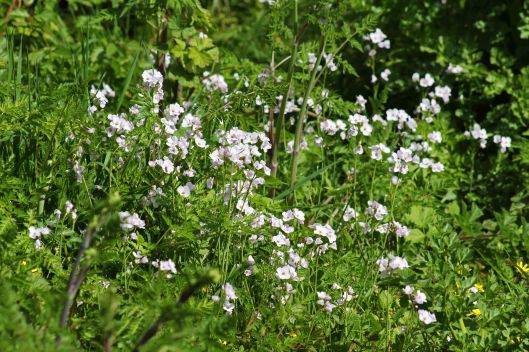
It seems that everywhere I walk at the moment there’s Cuckooflower. With its penchant for damp soggy ground, it can be found sprinkled amongst the reeds at the edge of Cardiff Bay wetlands, underlining the willow scrub along the edges of the River Taff, accentuating the lines of a drying drain at Cosmeston Lakes Country Park. And it’s such a pretty little thing, with its pale lilac flowers sitting high on an upright stalk, all the better for the bees and butterflies to find them.

170418 Cuckooflower (1)
170418 Cuckooflower (2)

Its scientific name is Cardamine pratensis and, if you don’t know it as Cuckooflower (it flowers at the time the cuckoos return to Britain), then you may know it by its other popular names, Milkmaid and Lady’s smock. Milkmaid is the older name, possibly a reference to its feminine colour and blousy shape when the flowers are first opening and I read, in an article in the Darlington & Stockton Times 23 June 2006, that

‘When Christianity came to these islands, that feminine association was transferred to the Virgin Mary, which led to a host of other names for the flower, such as my lady’s smock, lady’s glove and dozens more.
There is one old story which says that St Helena found Our Lady’s smock in a cave near Bethlehem, an article of clothing she left behind. It was later taken to St Sophia and then to Aix la Chapelle, where it was venerated for centuries, with this little wild flower being named in several European countries in honour of that relic.
‘In Europe, a lot of superstition used to surround this flower. It was thought that if anyone picked it, a thunderstorm would break out. It was also thought to generate lightning and for this reason was never taken into a house. In parts of England, it was believed to attract adders, Britain’s only poisonous snake, with a notion that anyone picking the flower would be bitten before the year was out.’

170418 Cuckooflower (5)
170418 Cuckooflower (4)

Luckily, I prefer to leave wildflowers where they are for everyone to enjoy so haven’t picked any, though I’m now almost tempted, just to see what happens … almost.

170418 Cuckooflower (6)

Like Loading...

Enjoying the blues

14 Friday Apr 2017

Posted by sconzani in flowers, nature

≈ 2 Comments

Tags

blue flowers, Grape hyacinth, Muscari armenaicum, Muscari sp., Spring colour, spring flowers

Blue is not a colour we see often in flowers – I can only think of a few blue-flowering plants: delphiniums, agapanthus, hydrangeas, cornflowers, bluebells of course, and today’s plant, the Grape hyacinth (Muscari sp.). The scarcity of blue flowers is due to plants having no true blue pigment so they must perform a degree of chemical manipulation to make the colour. According to author David Lee, who wrote Nature’s Palette: The science of plant color (University of Chicago Press, 2010), ‘Plants tweak, or modify, [their] red anthocyanin pigments to make blue flowers. They do this through a variety of modifications involving pH shifts and mixing of pigments, molecules and ions.’

174014 grape hyacinth (1)

That knowledge makes me appreciate even more the delicate Grape hyacinths that are currently adorning many of my neighbours’ gardens and blooming prolifically at the local cemetery. They are probably Muscari armenaicum – muscari comes from the Greek muschos, referring to their musky scent, and armenaicum is a clue to their area of origin, Armenia and the meadows and woodlands of the eastern Mediterranean right through to the Caucasus. The Grape hyacinth was first cultivated in European gardens in the 1870s but spreads freely and rapidly so has become naturalised in Britain, much of Europe and North America.

174014 grape hyacinth (5)
174014 grape hyacinth (4)
174014 grape hyacinth (2)
174014 grape hyacinth (3)
Like Loading...

Mad with joy

07 Friday Apr 2017

Posted by sconzani in flowers, nature, spring, wildflowers

≈ 12 Comments

Tags

spring, Spring colour, spring flowers, wildflowers

‘People from a planet without flowers would think we must be mad with joy the whole time to have such things about us.’ ~ Iris Murdoch

170407 spring flowers (1)
170407 spring flowers (2)
170407 spring flowers (3)
170407 spring flowers (4)
170407 spring flowers (5)
170407 spring flowers (6)
170407 spring flowers (7)
170407 spring flowers (8)
170407 spring flowers (9)
Like Loading...

Station blooms

05 Wednesday Apr 2017

Posted by sconzani in flowers, nature, spring, wildflowers

≈ 2 Comments

Tags

daffodil, Penarth railway station, Penarth station, Snake’s head fritillary, Spring blooms, Spring colour, spring flowers, tulips

Though Penarth is a wonderfully historic Victorian seaside town, with lovely parks, an iconic pier and grand buildings, its station is nothing to write home about. The original stone-built station buildings were demolished in the 1980s and replaced with a functional but ugly brick structure. So, it’s not one of those picturesque stations with hanging baskets full of summer flowers but it does have one redeeming feature. The scruffy and uncared-for dirt bank alongside the platform is currently home to a delightful display of Spring blooms. So, while the other morning commuters spend their waiting time scrolling through the latest social media happenings on their smartphones, completely oblivious to their surroundings, I enjoy the flowers. I hope you do too!

170407 Penarth station blooms (1)
170407 Penarth station blooms (2)
170407 Penarth station blooms (3)
170407 Penarth station blooms (4)
170407 Penarth station blooms (5)
170407 Penarth station blooms (6)
170407 Penarth station blooms (7)
170407 Penarth station blooms (8)
170407 Penarth station blooms (9)
Like Loading...
← Older posts
Newer posts →

About me

sconzani

sconzani

I'm a writer and photographer; researcher and blogger; birder and nature lover; countryside rambler and city strider; volunteer and biodiversity recorder.

View Full Profile →

Follow earthstar on WordPress.com

Enter your email address to follow this blog and receive notifications of new posts by email.

Recent blog posts

  • Singing from every tree top March 24, 2026
  • Turtle bug March 23, 2026
  • Springtime invasives March 22, 2026
  • Singing Dunnocks March 21, 2026
  • New cat: Large yellow underwing March 20, 2026

From the archives

COPYRIGHT

Unless otherwise acknowledged, the text and photographs on this blog are my own and are subject to international copyright. Nothing may be downloaded or copied without my permission.

Fellow Earth Stars!

  • Unknown's avatar
  • Unknown's avatar
  • Unknown's avatar
  • Unknown's avatar
  • Unknown's avatar
  • Unknown's avatar
  • Unknown's avatar
  • Unknown's avatar
  • Unknown's avatar
  • Unknown's avatar
  • Unknown's avatar
  • Unknown's avatar
  • Unknown's avatar
  • Unknown's avatar
  • Unknown's avatar
  • Unknown's avatar
  • Unknown's avatar
  • Unknown's avatar
  • Unknown's avatar
  • Unknown's avatar
  • Unknown's avatar
  • Unknown's avatar
  • Unknown's avatar
  • Unknown's avatar
  • Unknown's avatar
  • Unknown's avatar
  • Unknown's avatar
  • Unknown's avatar
  • Unknown's avatar
  • Unknown's avatar
  • Unknown's avatar
  • Unknown's avatar
  • Unknown's avatar
  • Unknown's avatar
  • Unknown's avatar
  • Unknown's avatar
  • Unknown's avatar
  • Unknown's avatar
  • Unknown's avatar
  • Unknown's avatar
  • Unknown's avatar
  • Unknown's avatar
  • Unknown's avatar
  • Unknown's avatar
  • Unknown's avatar
  • Unknown's avatar
  • Unknown's avatar
  • Unknown's avatar
  • Unknown's avatar
  • Unknown's avatar

Blog at WordPress.com.

Privacy & Cookies: This site uses cookies. By continuing to use this website, you agree to their use.
To find out more, including how to control cookies, see here: Cookie Policy
  • Subscribe Subscribed
    • earthstar
    • Join 642 other subscribers
    • Already have a WordPress.com account? Log in now.
    • earthstar
    • Subscribe Subscribed
    • Sign up
    • Log in
    • Report this content
    • View site in Reader
    • Manage subscriptions
    • Collapse this bar
 

Loading Comments...
 

You must be logged in to post a comment.

    %d