• ABOUT
  • BIRDING 2018
  • Birding 2019
  • BLOG POSTS
  • Butterflies 2018
  • Resources

earthstar

~ a celebration of nature

earthstar

Category Archives: fungi

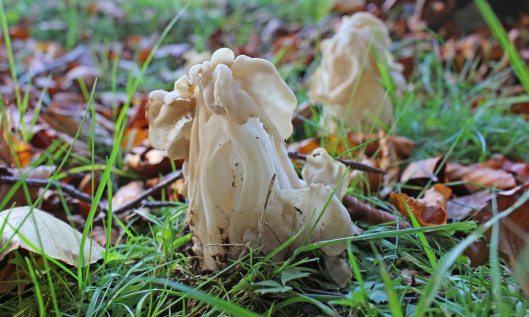
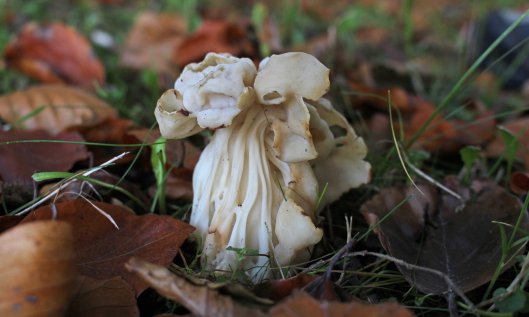
Helvella crispa

09 Tuesday Nov 2021

Posted by sconzani in fungi

≈ 4 Comments

Tags

British fungi, fungi under Beech, Helvella crispa, White saddle, woodland fungi

I think I’m developing an obsession with these beautiful fungi, Helvella crispa, commonly known as White saddles.

211109 helvella crispa (1)

These photos were taken during last week’s cemetery meander but I’ve also found a large group of these fungi recently in the woodland at Cosmeston Lakes Country Park.

211109 helvella crispa (2)

Perhaps it’s my imagination, but I fancy I can make out forms, spooky, ghostly creatures that have emerged from the earth.

211109 helvella crispa (3)

Like Loading...

Ears on the ground

05 Friday Nov 2021

Posted by sconzani in autumn, fungi

≈ Leave a comment

Tags

British fungi, ear fungi, Hare's ears, Otidea fungi, Otidea onotica

Growing on the ground under a large old beech tree is not where I’d usually expect to see ‘ears’ but there they were. Admittedly, I did initially think these were a species of cup fungus, and it wasn’t until I was looking more closely at my photos that I realised the cups had a split down the side, which indicates they are not cups but ‘ears’, one of the Otidea species.

211105 otidea species (1)

There are several species of Otidea growing in Britain: the two most common in Wales are Hare’s ear (Otidea onotica) and Tan ear (Otidea alutacea) but neither have been recorded in the Cardiff area. Though my finds look a little different from the usual Hare’s ear fungi, I suspect that, as mine were growing under Beech, they probably are Hare’s ears but they really need microscopic analysis to be certain.

211105 otidea species (2)

Despite not being able to positively identify these ‘ears’, I was absolutely delighted to have my first sighting of them, though it did make me wish my knees were younger and I was better able to get down on the ground to properly enjoy and photograph them!

211105 otidea species (3)

Like Loading...

Dothidella ulmi

29 Friday Oct 2021

Posted by sconzani in fungi, leaves, nature, trees

≈ Leave a comment

Tags

British fungi, Dothidella ulmi, fungi on Wych elm, spots on Wych elm leaves, Wych elm

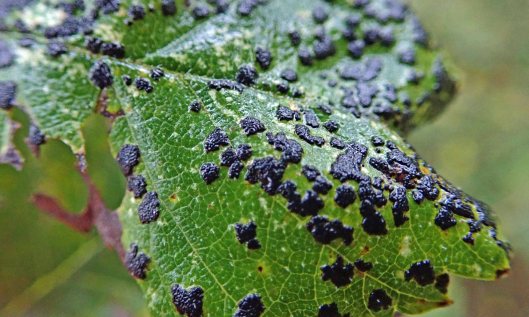
Fungi come in an amazing variety of forms and colours. Here’s one I found for the first time a week or so ago.

211029 Dothidella ulmi (1)

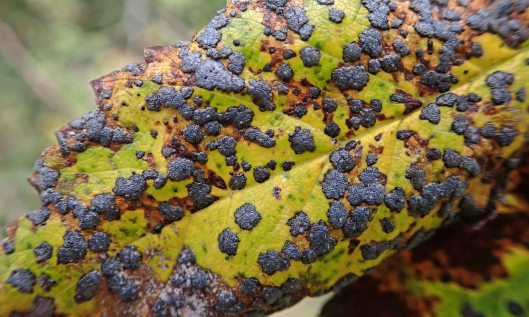
You’re probably familiar with Sycamore tarspot (Rhytisma acerinum), which makes black spots on the leaves of Sycamore trees. Well, this is superficially similar, though not as widely recorded in Britain: it’s Dothidella ulmi, a fungus that develops under the epidermis of leaves on Elm trees, in this case Wych elm, then erupts in a mass of grey blisters.

211029 Dothidella ulmi (2)

Like Loading...

The stars of the fungi world

22 Friday Oct 2021

Posted by sconzani in autumn, fungi

≈ 2 Comments

Tags

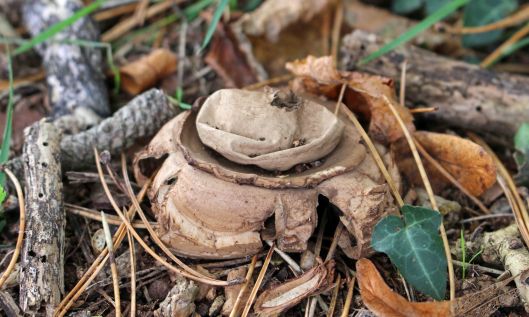
British fungi, collared earthstar, earthstar, Earthstar fungi, Geastrum triplex

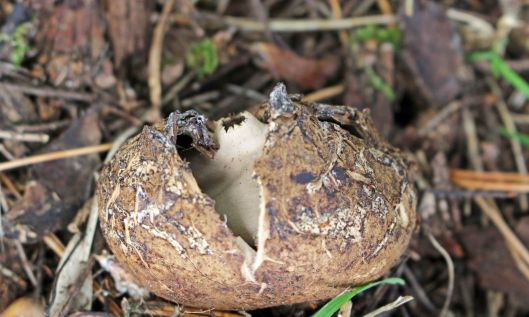
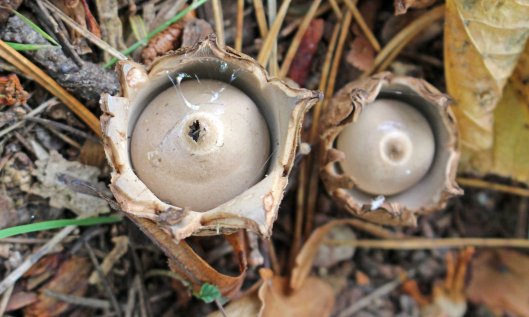
It’s that time of year when stars appear, as if by magic, from the earth and delight those of us lucky enough to find them with their outlandishness.

211022 earthstars (1)211022 earthstars (2)

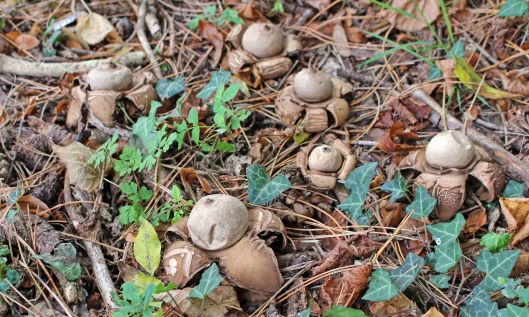
And so I made my annual pilgrimage to the location I found a few years ago in a Cardiff cemetery, where I was absolutely delighted to see a very healthy profusion of these beauties.

211022 earthstars (3)

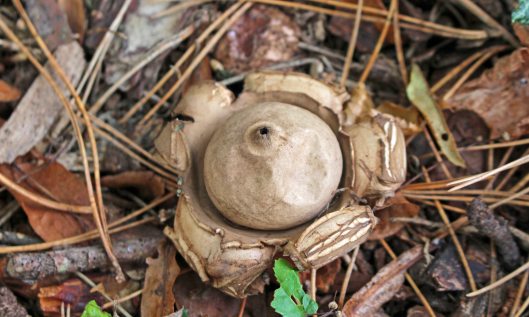
There were at least 40, with more still emerging from their ‘shells’. I am, of course, referring to the fungi for which this blog is named, the Earthstars, in this case Collared earthstars (Geastrum triplex).

211022 earthstars (4)211022 earthstars (5)

Like Loading...

Finding tongues in trees

08 Friday Oct 2021

Posted by sconzani in fungi, trees

≈ 4 Comments

Tags

Alder cones, Alder tongue, British fungi, fungi on Alder cones, Taphrina alni

‘And this our life, exempt from public haunt,
Finds tongues in trees, books in the running brooks,
Sermons in stones, and good in everything.’
~ William Shakespeare, As You Like It, Act II, scene I, lines 15-17

When the Duke in As You Like It referred to finding tongues in trees, I think Shakespeare was probably thinking more of the whispers of rustling leaves that finding Alder tongue fungi on the cones of Alder trees, but I like the quote and the way Shakespeare highlights how eloquently Nature speaks to so many of us. And it fits well with all the Alder tongues (Taphrina alni) I’ve been finding lately.

211008 alder tongue (1)
211008 alder tongue (2)
211008 alder tongue (3)
211008 alder tongue (4)
Like Loading...

Puffballs

02 Saturday Oct 2021

Posted by sconzani in fungi

≈ Leave a comment

Tags

British fungi, Common puffball, fungus, Lycoperdon perlatum, puffball, UK Fungi Day

Happy UK Fungi Day 2021! We have heavy rain here and it’s forecast to last all day. Being something of a wet weather wimp, I’m not heading out on a fungi hunt so have only some puffballs to offer.

211002 common puffball (1)
211002 common puffball (2)

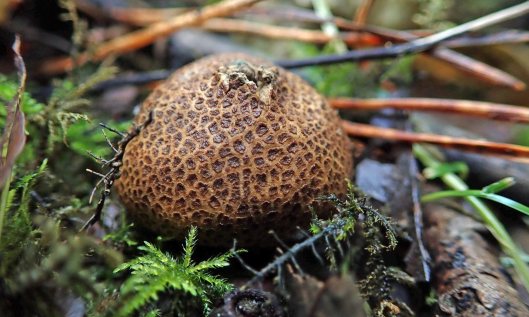
But I shouldn’t say ‘only’, as puffballs are fungi that many people will be able to find for themselves, and I think they’re rather stunning. Just look at their amazing textured surface, especially on the smallest, youngest specimen, above left. Though that looks quite spiny to me, I think these are all Common puffballs (Lycoperdon perlatum), as opposed to Spiny puffballs (Lycoperdon echinatum).

211002 common puffball (3)

Puffballs lack gills from which to release their spores; instead, their surface is covered with tiny pores through which spores can be released to the wind. Of course, if the surface becomes damaged and rips open, as in my final photo, spores can be released en masse, and we might expect to see even more of these sculptural beauties in the future.
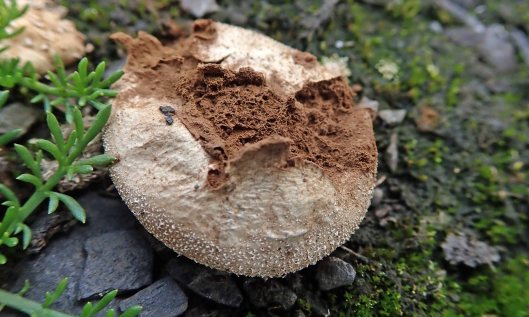

211002 common puffball (4)

Like Loading...

Those eyelashes

24 Friday Sep 2021

Posted by sconzani in autumn, fungi

≈ Leave a comment

Tags

#FungiFriday, British fungi, Eyelash fungi, Scutellinia fungi, Scutellinia species

Fluttering at me from a log in the woodland … well, not really, but you get the picture. It’s always a delight to spot one of the Eyelashes, the Scutellinia species of fungi.

210924 eyelash fungi

Like Loading...

Earthballs

17 Friday Sep 2021

Posted by sconzani in autumn, fungi

≈ Leave a comment

Tags

British fungi, Common earthball, earthball, Scleroderma citrinum

It’s #FungiFriday, and even the earthballs are smiling!

Though there are several species of earthball fungi in Britain, I’m fairly sure these are Common earthballs (Scleroderma citrinum), as they were found in the typical habitat of ‘acid soils with deciduous trees, usually Oak, Beech or birches’ (Collins Complete Guide to British Mushrooms & Toadstools, p.278).

Like Loading...

Chicken-of-the-woods

10 Friday Sep 2021

Posted by sconzani in fungi

≈ Leave a comment

Tags

bracket fungi, British fungi, Chicken-of-the-woods, Laetiporus sulphurous

This glorious cascade of brackets was a delightful surprise during a recent woodland meander.

210910 chicken-of-the-woods (1)
210910 chicken-of-the-woods (2)

This is the wonderfully named Chicken-of-the-woods (Laetiporus sulphurous), which apparently tastes like chicken, hence the name. However, as Pat O’Reilly writes in Fascinated by Fungi: ‘Young caps taste rather like chicken; old ones taste more like the wood!’ and ‘Never eat Chicken of the Woods gathered from Yews’ because, of course, almost every part of the Yew is poisonous.

210910 chicken-of-the-woods (3)

I’ve only seen these bright yellow-and-orange brackets growing on Oak, though they can also be found on Beech and Sweet chestnut as well as Yew. They are large, growing up to 40cm across, with a velvety upper surface and pores below.

Like Loading...

Persistent waxcaps

27 Friday Aug 2021

Posted by sconzani in fungi

≈ 2 Comments

Tags

British fungi, British waxcaps, Hygrocybe acutoconica, Persistent waxcap, waxcap fungi, waxcaps

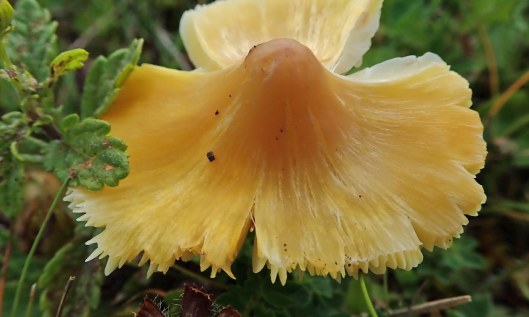
I used to love finding waxcaps in the grounds of my local cemetery when I lived in Cardiff but hardly see any in my current area. So, it was a delight to spot these Persistent waxcaps (Hygrocybe acutoconica) in one of the paddocks at Cosmeston earlier this week.

210827 persistent waxcap (1)

Their caps range in shade from yellow to orange and, though initially moist like most waxcaps, they soon dry out and often crack as they expand, especially when growing in an exposed location. The caps start off conical (hence the epithet acutoconica), which means these fungi can sometimes be confused with other species like the Blackening waxcap (Hygrocybe conica), but these Persistent caps don’t blacken.

210827 persistent waxcap (2)

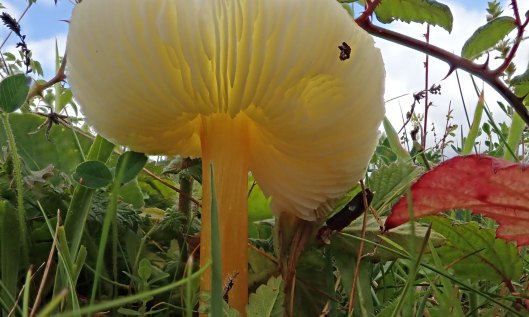
The gills and stem of this fungus also range in colour from yellow to orange, and the stem sometimes looks grooved and fibrous.

210827 persistent waxcap (3)

Persistent waxcaps are most often found in unfertilised grasslands, particularly on calcareous soils, and can also pop up on sandy soils and even amongst sand dunes.

Like Loading...
← Older posts
Newer posts →

About me

sconzani

sconzani

I'm a writer and photographer; researcher and blogger; birder and nature lover; countryside rambler and city strider; volunteer and biodiversity recorder.

View Full Profile →

Follow earthstar on WordPress.com

Enter your email address to follow this blog and receive notifications of new posts by email.

Recent blog posts

  • No woodland here March 15, 2026
  • Family comes first March 14, 2026
  • Local Little egrets March 13, 2026
  • Cormorants, young and old March 12, 2026
  • Bay bunnies March 11, 2026

From the archives

COPYRIGHT

Unless otherwise acknowledged, the text and photographs on this blog are my own and are subject to international copyright. Nothing may be downloaded or copied without my permission.

Fellow Earth Stars!

  • Unknown's avatar
  • Unknown's avatar
  • Unknown's avatar
  • Unknown's avatar
  • Unknown's avatar
  • Unknown's avatar
  • Unknown's avatar
  • Unknown's avatar
  • Unknown's avatar
  • Unknown's avatar
  • Unknown's avatar
  • Unknown's avatar
  • Unknown's avatar
  • Unknown's avatar
  • Unknown's avatar
  • Unknown's avatar
  • Unknown's avatar
  • Unknown's avatar
  • Unknown's avatar
  • Unknown's avatar
  • Unknown's avatar
  • Unknown's avatar
  • Unknown's avatar
  • Unknown's avatar
  • Unknown's avatar
  • Unknown's avatar
  • Unknown's avatar
  • Unknown's avatar
  • Unknown's avatar
  • Unknown's avatar
  • Unknown's avatar
  • Unknown's avatar
  • Unknown's avatar
  • Unknown's avatar
  • Unknown's avatar
  • Unknown's avatar
  • Unknown's avatar
  • Unknown's avatar
  • Unknown's avatar
  • Unknown's avatar
  • Unknown's avatar
  • Unknown's avatar
  • Unknown's avatar
  • Unknown's avatar
  • Unknown's avatar
  • Unknown's avatar
  • Unknown's avatar
  • Unknown's avatar
  • Unknown's avatar
  • Unknown's avatar

Blog at WordPress.com.

Privacy & Cookies: This site uses cookies. By continuing to use this website, you agree to their use.
To find out more, including how to control cookies, see here: Cookie Policy
  • Subscribe Subscribed
    • earthstar
    • Join 668 other subscribers
    • Already have a WordPress.com account? Log in now.
    • earthstar
    • Subscribe Subscribed
    • Sign up
    • Log in
    • Report this content
    • View site in Reader
    • Manage subscriptions
    • Collapse this bar
 

Loading Comments...
 

You must be logged in to post a comment.

    %d