Tags
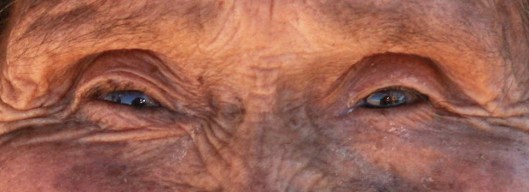
‘An animal’s eyes have the power to speak a great language.’ ~ Martin Buber



14 Tuesday Nov 2017
Tags
‘An animal’s eyes have the power to speak a great language.’ ~ Martin Buber
26 Thursday Oct 2017
Tags
Avocet, birding, birdwatching, Cervus nippon, Corfe Castle, Glamorgan Bird Club, RSPB Arne, Sika deer, Sika fawn, Sika hind
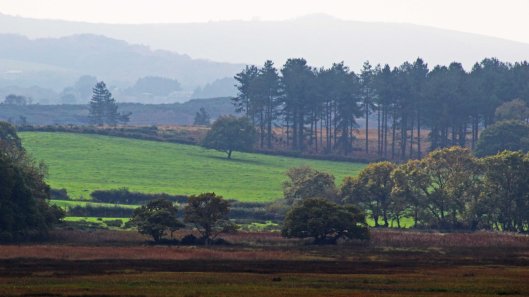
On the way back from Portland our group of Glamorgan Bird Clubbers detoured to RSPB Arne to follow up on the reported sighting of a Stilt sandpiper.


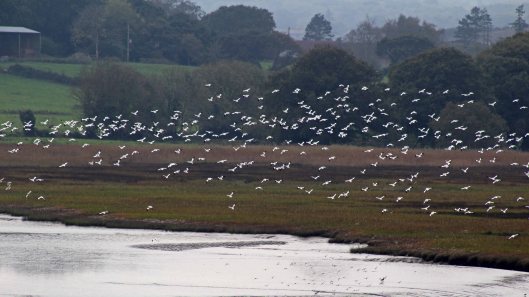
It was down there somewhere, amidst the large numbers of waders – it was a real treat to see so many Avocets together – but I can’t definitively say I saw it.
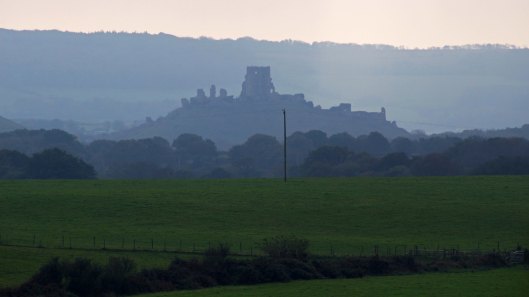
However, we did have fabulous views of the surrounding countryside and the distant Corfe Castle – another place added to my list of ‘must visits’ – and, to my delight, we also had wonderful views of a Sika deer mother and fawn, the first time I’ve seen these deer.

The Sika (Cervus nippon) is about the size of a Fallow deer – this hind would’ve been between 50 and 90cm at the shoulder, her fawn, obviously, smaller – but the Sika’s coat is generally darker. They do have whitish spots in the summer but these can be very faint, almost invisible in the winter months. Fawns are usually born in May – June so this little one must’ve been 4 to 5 months old.


The countryside at Arne is perfect for Sika as they prefer coniferous woodlands and acidic heathland, where they nibble away at grasses and heather. Although these Sika are not a native British species – three different Asian species have been kept on estates and parklands, escapees from the Japanese species (hence C. nippon) can be found through much of Britain where the habitat is right, particularly in parts of Scotland.
27 Wednesday Sep 2017
If you don’t like rats, look away now!
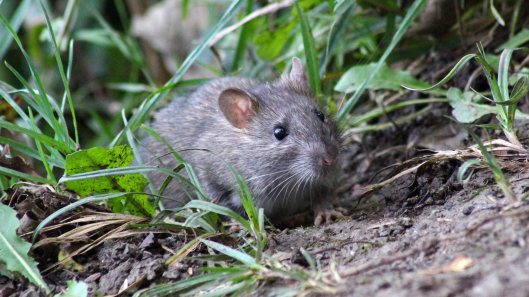
While I realise that a blog about rats might not appeal to everyone, I rarely get to see or write about mammals so, when these two rats came brazenly sniffing around for the seeds I was feeding to the birds at Cosmeston, I couldn’t resist taking photos. And once I have photos, a blog shall surely follow.


These are Brown rats (Rattus norvegicus), immigrants from central Asia that arrived in Britain around 1720. Of course, I don’t mean these two individuals arrived in 1720 – rats usually only live about a year in the wild – but their ancestors were sea-going rodents that just loved to sail the oceans wide and jumped ship wherever they docked. Nowadays, rats are more settled, and they’ll live almost anywhere – houses, gardens, parks, farmlands and farm buildings – you name it, there’s probably a rat in it somewhere.
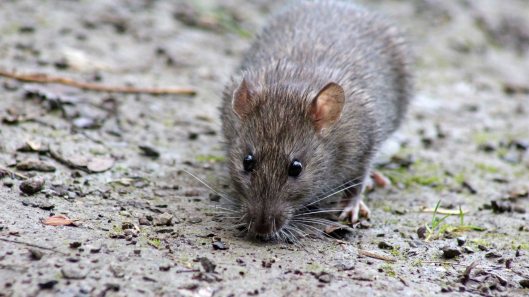
They particularly like cereals – so, my bird seed would’ve gone down a treat – but they’ll eat pretty much anything, from small birds and their eggs to molluscs and food scraps. If you’re someone who hates these much-maligned creatures, remember that they too play an important part in the food chain, in particular as food for the owls and foxes that everyone loves.
23 Saturday Sep 2017
Tags
British mammals, mammal, Pygmy shrew, rodent, shrew, Sorex minutus
I have only ever seen two shrews, both sadly deceased. Britain has two species of shrew, the Common (Sorex araneus) and the Pygmy (Sorex minutus), but I believe the ones I have seen have been Pygmy shrews. Though both species have brown fur on their backs and silvery grey fur on their bellies, and they are of a similar size, the Pygmy shrew has a tail that is two-thirds the length of its body, whereas the Common shrew’s is half the length. It’s a small distinction and I’m sure experts could point to more scientific methods of distinguishing one from the other but, for me, the tail has to be the telling point.
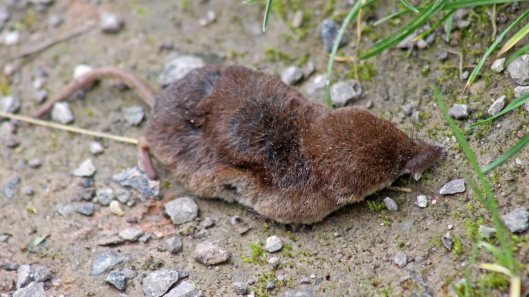
Pygmy shrews lead short but frantic lives. In their twelve to eighteen months of life the females can give birth to two, sometimes three litters of between 5 and 7 young. Though very few people ever see them, they are common in much of Britain, ferreting about frantically, in grasslands, woodlands, the fringes of arable fields and in the urban garden, for the small insects they like to eat. As you can see, they have tiny eyes but that relatively large snout gives them a keen sense of smell to help find their prey.
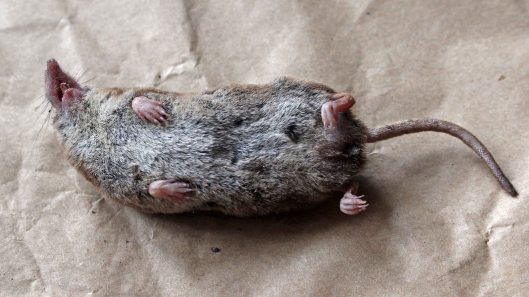
In case you’re wondering how I managed to get such detailed photos of this little Pygmy shrew, I brought it home with me. This wasn’t just to get photos – through someone I know who is doing a PhD in biosciences at Cardiff University, this little creature has been donated to science. Its details will help in the study of these often elusive small mammals, and it will be preserved and used as a teaching aid. I was sad to find such a gorgeous wee beastie dead but at least its death has not been in vain.


 earthstar
You must be logged in to post a comment.