• ABOUT
  • BIRDING 2018
  • Birding 2019
  • BLOG POSTS
  • Butterflies 2018
  • Resources

earthstar

~ a celebration of nature

earthstar

Category Archives: nature

Eco mowers

20 Monday Nov 2017

Posted by sconzani in animals, mammal, nature

≈ 3 Comments

Tags

British fauna, Dartmoor ponies as eco-mowers, Dartmoor pony, Dawlish Warren, national nature reserve

On our Glamorgan Bird Club trip to Dawlish Warren National Nature Reserve, we came across this small group of ponies. The Teignmouth District Council website reports: ‘Helping to keep the grasslands in shape, Dartmoor ponies are used in the winter months to help produce ideal conditions for rare flowers and invertebrates. These are “working”, wild animals, so DO NOT feed them or try to stroke them.’

171120 Dawlish warren ponies (5)

Not having read this before we saw them, we did stroke them and, luckily, they were friendly enough, but they were much more concerned with doing their job as ‘eco mowers’ than basking in human attention.

171120 Dawlish warren ponies (2)
171120 Dawlish warren ponies (4)
171120 Dawlish warren ponies (3)
171120 Dawlish warren ponies (1)
Like Loading...

Birding at Dawlish Warren

19 Sunday Nov 2017

Posted by sconzani in birds, nature

≈ 2 Comments

Tags

birding, birdwatching, Brent geese, British birds, Dawlish Warren, Dunlin, Exe estuary, Grey plover, national nature reserve, Oystercatchers, Shelduck

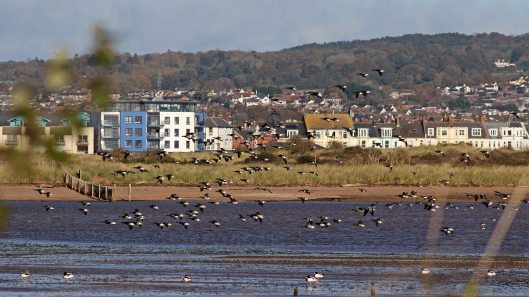
Last Sunday I joined ten hardy souls from the Glamorgan Bird Club (and two of their equally hardy children) to brave the strong polar winds and occasional stinging rain showers to check out the birding delights of south Devon. After a brief stopover at Labrador Bay for the Cirl buntings (see yesterday’s post), we headed to the National Nature Reserve at Dawlish Warren, to check the beach, sand dunes, and mudflats of the Exe estuary.

171119 Dawlish Warren (4)
171119 Dawlish Warren (3)
171119 Dawlish Warren (1)
171119 Dawlish Warren (2)

We had immediate success sea-watching from the beach, with good views of two Red-throated and one Great northern diver – both new birds for me, as well as Great crested grebes, Cormorant and the always-impressive sight of a Gannet crashing headfirst into the waves to dive for fish.
171119 Dawlish Warren (5)171119 Dawlish Warren (6)171119 Dawlish Warren (7)

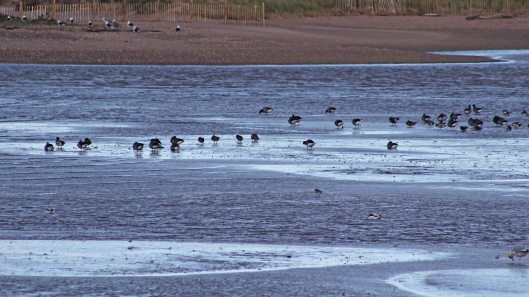
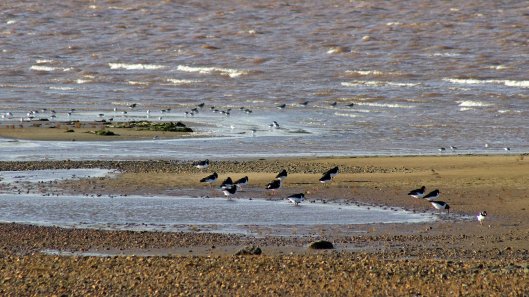
Though half of me got soaked during the walk out to the hide at the end of the sandspit (must invest in good, lined waterproof trousers!), the effort was worth it for the wealth of waders to be seen, feeding along the water’s edge and hunkering down on the sandy beach against the biting winds. As well as large numbers of Oystercatchers and Brent geese, there were also Dunlin and Ringed plover, Shelducks and Sanderlings, Turnstones, Bar- and Black-tailed godwits and a couple of Curlew, plus the ubiquitous gull species.
171119 River Exe (1)171119 River Exe (4)

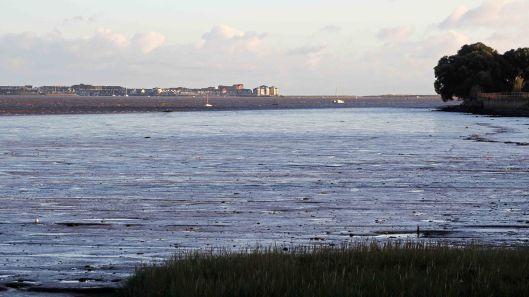
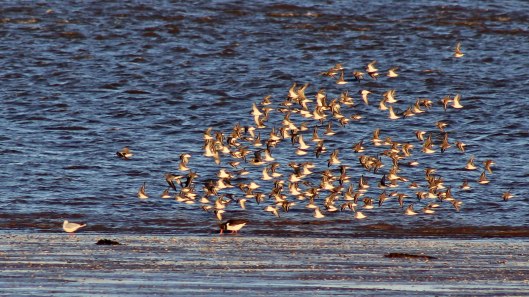
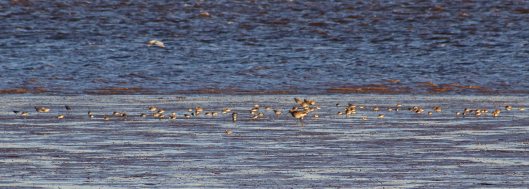
Later, we stopped further up the Exe for a quick look over the river, where I managed to snap three Grey plover amongst a flock of Dunlin flying past. It was a long but grand day’s birding and, with four lifers to add to my sightings’ list, I was well pleased.

171119 River Exe (3)171119 River Exe (5)

You can find out more about the flora and fauna of Dawlish Warren here, and check this link for the latest bird sightings at Dawlish Warren.

171119 River Exe (2)

Like Loading...

Cirl bunting

18 Saturday Nov 2017

Posted by sconzani in birds, nature

≈ Leave a comment

Tags

bird conservation, birding, birdwatching, British birds, Cirl bunting, Cirl Bunting Project, Emberiza cirlus, Glamorgan Bird Club, Labrador Bay

I find the constant reports of dwindling biodiversity, increasing numbers of creatures at risk of extinction, and the destruction of the environment to build yet another road quite depressing so it’s nice to be able to write about a conservation success story. Though the Cirl bunting was once a common bird throughout southern England and Wales, changes in farming practices meant that its population had plummeted to just 118 pairs in 1989. But, thanks to the RSPB and a small number of supportive organisations, plus environmentally aware farmers and The Countryside Stewardship Scheme (which compensates farmers for making small areas of their land more wildlife-friendly), the Cirl bunting population has increased to at least 862 pairs, and the birds have been reintroduced to an area in Cornwall where they had previously died out.

171118 Cirl bunting (1)

On a Glamorgan Bird Club trip to England’s south coast last weekend, our group called in at the RSPB’s Labrador Bay reserve, which was created especially for these gorgeous little birds and, despite the freezing cold, strong winds blowing over this stunning coastal site, we were privileged to see three Cirl buntings dotting about in the hedgerows.

171118 Cirl bunting (2)
171118 Cirl bunting (3)
171118 Cirl bunting (5)

You can read more about the Cirl Bunting Project on the RSPB website. Oh and, in case you’re wondering, Cirl is pronounced Sirl, and the word comes from the bird’s Latin name Emberiza cirlus, which, apparently, comes from the Italian zirlare, meaning to chirp. Let’s hope these little birds keep on chirping, and increasing, in the years ahead.

171118 Cirl bunting (4)

Like Loading...

It’s Fungi Friday!

17 Friday Nov 2017

Posted by sconzani in autumn, fungi, nature

≈ 4 Comments

Tags

#FungiFriday, Apricot Club, Candlesnuff fungi, Cathays Cemetery, Clouded funnel, club fungi, Cortinarius, fungi, fungus, Heath Park, Stump puffballs, Trooping funnel

I needed a fungi fix so went for a wander around a couple of my old haunts, Heath Park and Cathays Cemetery, both in Cardiff. Here’s what I found …

171117 fungi (2)
171117 fungi (3)
171117 fungi (4)
171117 fungi (5)
171117 fungi (6)
171117 fungi (7)
171117 fungi (8)
171117 fungi (9)
171117 fungi (10)
171117 fungi (11)
171117 fungi (12)
171117 fungi (13)
171117 fungi (14)
171117 fungi (1)
Like Loading...

As the Herring gull said to the Lesser Black-backed …

16 Thursday Nov 2017

Posted by sconzani in birds, nature

≈ 2 Comments

Tags

birding, birdwatching, gull conversation, gulls, Herring gull, Lesser black-backed gull

171116 gull chat (1)

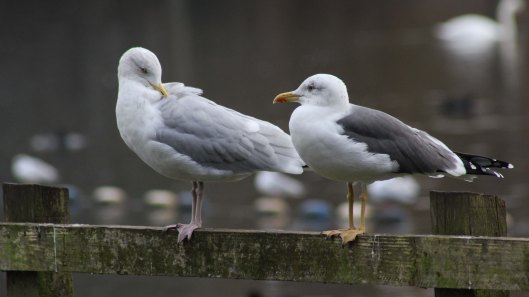
Herb: “Don’t look now but there’s a human over there with one of those black pointy thingies covering one eye, looking in our direction.”
Alby: “Do you think it’s going to hurt us, Herb? What should we do?”
Herb: “Those things don’t usually hurt. Maybe if we just keep perfectly still, it’ll go away.”

171116 gull chat (2)

Alby: “I think it’s still there. Can you take a look, Herb?”

171116 gull chat (3)

Herb: “Yep, still there. It’s making a clicking noise.”
Alby: “What should we do?”
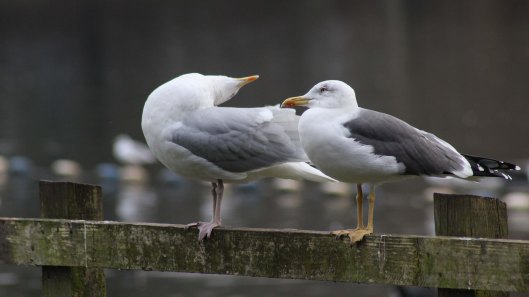
Herb: “Let’s do something really weird. That might scare it off.”

171116 gull chat (4)

Like Loading...

Wild words: Crown shyness

15 Wednesday Nov 2017

Posted by sconzani in nature, trees

≈ 2 Comments

Tags

#WildWords, canopy disengagement, Canopy shyness, Crown shyness, Intercrown spacing, tree behaviour

Who would’ve thought that trees value their personal space? Well, they do … or, at least, some trees, particularly those of the same species, do.

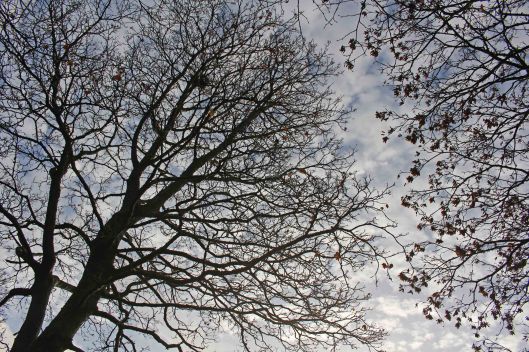
Next time you go walking amongst trees, look up and you may notice gaps in the tree canopy, where trees appear to be avoiding touching each other. This phenomenon is known as crown shyness (sometimes also called canopy shyness, intercrown spacing and canopy disengagement). There have been various hypotheses to explain crown shyness: these include ‘reciprocal pruning’ caused by the trees rubbing together in windy conditions; ‘photoreceptor-mediated shade avoidance response’, a long-winded term for trees adapting to the shade caused by their neighbours; and the idea that trees are actively limiting the spread of insects by not touching each other (though, presumably, insects could simply crawl down one tree, across the ground and up the next!). Whatever the true reason, crown shyness can create some lovely patterns in the canopy and I’ll be looking up more often from now on.

171115 crown shyness

Like Loading...

The eyes have it

14 Tuesday Nov 2017

Posted by sconzani in animals, mammal, nature

≈ 3 Comments

Tags

animal eyes, eye, eyes, mammal eyes

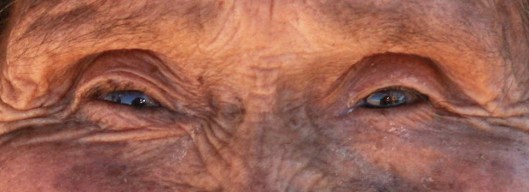
‘An animal’s eyes have the power to speak a great language.’ ~ Martin Buber

171114 1 Sheep171114 2 Child171114 3 Baboon171114 4 squirrel171114 5 Cow171114 6 Cat171114 7 Rabbit171114 8 Horse171114 9 Old woman

Like Loading...

Wearing a diadem

13 Monday Nov 2017

Posted by sconzani in nature, spiders

≈ 7 Comments

Tags

Araneus diadematus, Crowned orb weaver, Diadem spider, Garden cross spider, Garden spider

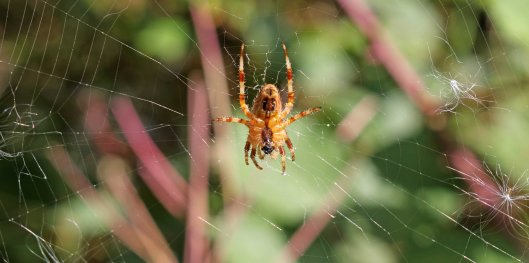
I know a lot of people freak out about spiders but these are not dangerous in any way and they’re incredibly beautiful. They’re Garden spiders (Araneus diadematus), and are also known as Crowned orb weavers, Garden cross spiders and Diadem spiders because of the intricate crown-like patterns on their backs. And it’s those patterns that I want to focus on here.

171113 Araneus diadematus Garden spider (7)

As you can see below, the designs vary from spider to spider, a little like fingerprints and retina patterns in humans. As you can also see, their colours are quite varied, ranging from an orangey brown right through to very dark brown, verging on black. So, next time you spot one of their large webs strung across the plants in your garden, take a closer look … and be amazed.

171113 Araneus diadematus Garden spider (1)
171113 Araneus diadematus Garden spider (2)
171113 Araneus diadematus Garden spider (3)
171113 Araneus diadematus Garden spider (4)
171113 Araneus diadematus Garden spider (5)
171113 Araneus diadematus Garden spider (6)
Like Loading...

Autumn leaves, 3

12 Sunday Nov 2017

Posted by sconzani in autumn, leaves, nature, seasons, trees

≈ 2 Comments

Tags

autumn, autumn colour, autumn leaves, Fall colour

There is so much to love about autumn: it’s as if Nature is an award-winning play, and all the trees are her actors. She’s coming to the end of another successful season, it’s the last grand finale, the players are dressed in magnificent richly coloured costumes ready to take their final bows before a rapturous audience amidst great critical acclaim … and then the curtain comes down for another year.

171112 autumn leaves (1)
171112 autumn leaves (2)
171112 autumn leaves (3)
171112 autumn leaves (4)
171112 autumn leaves (5)
171112 autumn leaves (6)
171112 autumn leaves (7)
171112 autumn leaves (8)
Like Loading...

Gulls are tricksy

11 Saturday Nov 2017

Posted by sconzani in birds, nature

≈ 4 Comments

Tags

birding, birdwatching, British birds, gulls, Larus michahellis, Yellow-legged gull

Gulls were doing my head in earlier this week. A Yellow-legged gull (Larus michahellis) had been reported by local birdwatchers and, as I’d never seen one and the location was on a lovely walking route along the River Taff, I thought I’d go for a look-see. “It was the only large gull on the river so that might help”, said one who had spotted it the previous day. Well, wouldn’t you know it – when I arrived at the site, there were two large gulls there and, to my gull-uneducated eye, they looked very alike.

171111 Yellow-legged gull (2)

The grey back of the Yellow-legged gull is supposed to be somewhere between that of a Herring gull and a Lesser black-backed gull but, when you have neither of those gulls sitting right next to yours to do a comparison and when one of my possibilities was standing in deep shade and the other in full sun, it was almost impossible to see any difference. So, I followed the other advice I’d been given: “Take lots of photos and hope the experts can help you out.” Thanks to those experts, in the South Wales Birding group on Facebook, I can here present to you my first-ever Yellow-legged gull … and I wish you the very best of luck if you’re ever trying to ID one of these for yourself.

171111 Yellow-legged gull (1)

Like Loading...
← Older posts
Newer posts →

About me

sconzani

sconzani

I'm a writer and photographer; researcher and blogger; birder and nature lover; countryside rambler and city strider; volunteer and biodiversity recorder.

View Full Profile →

Follow earthstar on WordPress.com

Enter your email address to follow this blog and receive notifications of new posts by email.

Recent blog posts

  • First damsels of 2026 April 25, 2026
  • NFY: Green-veined white April 24, 2026
  • The return of the Willow warblers April 23, 2026
  • Bug: Harpocera thoracica April 22, 2026
  • A female Tawny April 21, 2026

From the archives

COPYRIGHT

Unless otherwise acknowledged, the text and photographs on this blog are my own and are subject to international copyright. Nothing may be downloaded or copied without my permission.

Fellow Earth Stars!

  • Unknown's avatar
  • Unknown's avatar
  • Unknown's avatar
  • Unknown's avatar
  • Unknown's avatar
  • Unknown's avatar
  • Unknown's avatar
  • Unknown's avatar
  • Unknown's avatar
  • Unknown's avatar
  • Unknown's avatar
  • Unknown's avatar
  • Unknown's avatar
  • Unknown's avatar
  • Unknown's avatar
  • Unknown's avatar
  • Unknown's avatar
  • Unknown's avatar
  • Unknown's avatar
  • Unknown's avatar
  • Unknown's avatar
  • Unknown's avatar
  • Unknown's avatar
  • Unknown's avatar
  • Unknown's avatar
  • Unknown's avatar
  • Unknown's avatar
  • Unknown's avatar
  • Unknown's avatar
  • Unknown's avatar
  • Unknown's avatar
  • Unknown's avatar
  • Unknown's avatar
  • Unknown's avatar
  • Unknown's avatar
  • Unknown's avatar
  • Unknown's avatar
  • Unknown's avatar
  • Unknown's avatar
  • Unknown's avatar
  • Unknown's avatar
  • Unknown's avatar
  • Unknown's avatar
  • Unknown's avatar
  • Unknown's avatar
  • Unknown's avatar
  • Unknown's avatar
  • Unknown's avatar
  • Unknown's avatar
  • Unknown's avatar

Blog at WordPress.com.

Privacy & Cookies: This site uses cookies. By continuing to use this website, you agree to their use.
To find out more, including how to control cookies, see here: Cookie Policy
  • Subscribe Subscribed
    • earthstar
    • Join 642 other subscribers
    • Already have a WordPress.com account? Log in now.
    • earthstar
    • Subscribe Subscribed
    • Sign up
    • Log in
    • Report this content
    • View site in Reader
    • Manage subscriptions
    • Collapse this bar
 

Loading Comments...
 

You must be logged in to post a comment.

    %d