Look what I found hiding in the grass at Cathays Cemetery during a recent walk around: gorgeous fungal gems!



10 Friday Nov 2017
Look what I found hiding in the grass at Cathays Cemetery during a recent walk around: gorgeous fungal gems!
09 Thursday Nov 2017
Tags
berries and birds, berry eating birds, birding, birdwatching, Mistle thrush, Redwing, Song thrush, thrush, Turdus iliacus, Turdus philomelos, Turdus viscivorus
Officially, in Britain, the resident true thrushes are the Ring ouzel, Fieldfare, Blackbird, Song thrush, Mistle thrush and Redwing, while other thrush species are occasional, sometimes rare visitors.

The thrushes I’ve been noticing most in recent weeks have been the Song thrush, Mistle thrush and Redwing, partly due to their seasonal migration southwards to our ever so slightly milder south Wales climate and partly due to this being prime berry-eating time.


Song thrushes (Turdus philomelos) are resident here all year round, though there is some movement through Britain from Scandinavian birds heading south for the winter.


It can sometimes be difficult to distinguish Song from Mistle thrushes (Turdus viscivorus), though the Mistles have a tendency to perch high in the tree tops (or, I discovered, on TV aerials, in urban areas!) and to stand with heads held high when foraging on the ground, and their football-rattle song is unmistakeable. I saw my first Mistle thrushes of the season on 9 October and there are now quite large numbers in local parks and reserves.

Redwings (Turdus iliacus) were reported locally in early October but it was the 30th before I caught up with a small flock at Cathays Cemetery in Cardiff, and I’ve since spent several hours following them around the berry trees at Cosmeston, trying to get close enough for photos. They’re easily spooked though so my shots so far have not been that great – I’ll keep trying, and I’ll need to try to find Ring ouzels and Fieldfare as well.
08 Wednesday Nov 2017
Tags
#WildWords, Andricus kollari, gall wasps, hymenoptera living in Marble gall, Inquiline, Marble gall, oak galls, Oak Marble gall
I learnt this word the day a mystery wasp hatched out of an Oak Marble gall I’d brought home. Though I thought it must be the gall-causing wasp, it turned out that it was not and could, in fact, have been any one of 29 other species of hymenoptera that can, potentially, make their home in a Marble gall. According to an article I found on the Natural History Museum website (‘Oak-galls in Britain’ by Robin Williams), 21 of those other gall inhabitants are parasitoid (their larvae consume the original gall wasp’s larvae) and 8 are inquiline, which is to say that they are simply ‘exploiting the living space of another’ creature. And the Oxford Dictionary online actually gives the instance of ‘an insect that lays its eggs in a gall produced by another’.
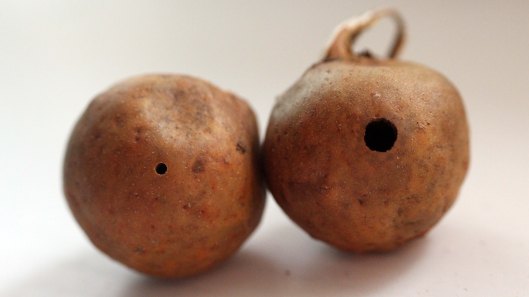
Of course, if I’d been smart and compared the size of the holes in other Marble galls I have to that of the newly emerged creature, I would’ve twigged that they must be quite different. I’m afraid my curiosity then got the better of me and I sliced in half one of the Marble galls I had, which means that the little creatures I exposed will not survive. The larva (and large hole) in the centre is the gall wasp Andricus kollari, and the little larvae and holes are representatives of the other 29 possibilities.


Lesson – and new word – learnt, I have now returned to the wild the other various galls, of several kinds, that I’d brought home thinking they were empty, in case they also have little creatures growing inside them!
07 Tuesday Nov 2017
‘One for the rock, one for the crow, one to die, and one to grow.’
~ an old English saying


06 Monday Nov 2017
Tags
burying acorns, food cache, grey squirrel, Jay, nut caching, nut hoarding, scatter hoarding, stashing nuts, storing food for winter
Winter is coming!

The squirrels know it; the jays know it; and they and many other small critters are busy storing food away for the cold lean days to come. The nut is one such food, the acorn a particular favourite of many.

Creatures create two different types of winter food supply. Some have just the one larder where they hide away all their precious finds of nuts and seeds, but the Grey squirrel is a scatter hoarder, secreting food in many different places. You’ve probably seen them dashing madly about the ground, burying nuts in seemingly random locations. Other creatures, like wood mice, coal tits, nuthatches and jays are also scatter hoarders, stashing their winter stores in a variety of different caches. But, I wonder, do they always remember where they’ve put their secret stashes? Somehow I doubt it.


05 Sunday Nov 2017
Posted in flowers, nature, wildflowers
Do you know about #WildflowerHour? Its aim is to spread the love of plants – not garden plants (though, of course, they are also lovely) but the glorious flowers that grow wild in Britain’s woods and meadows, alongside tracks, beneath hedgerows, beside streams, around buildings, in cracks in pavements. The idea is to take photos of the wildflowers you see, try to identify them (but others will help if you’re not sure), then post your photos on Facebook or Twitter (with the #WildflowerHour tag) every Sunday night between 8 and 9pm.
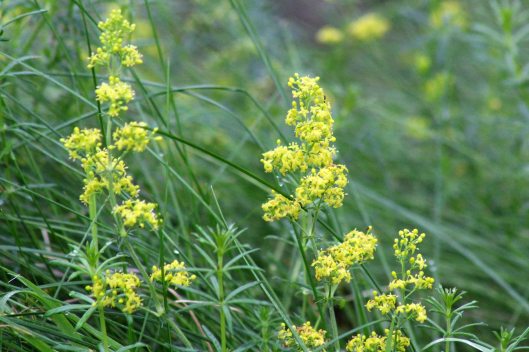
On 20 October the folks at WildflowerHour issued a new challenge: ‘our weekly winter challenge is #thewinter10 which is to find ten different wild flowers in bloom each week. Once you’ve found them, work out what they are, and post them for the rest of us to see.’ So, as I walked around Cardiff Bay on a grey, gloomy Friday, I kept an eye out for wild flowers. To be honest, I was amazed to find so many still in bloom (not just 10 but 24!). I have not managed to name them all but I hope you enjoy seeing them as much as I did.


04 Saturday Nov 2017
Tags
birding, birds, birdwatching, black-headed gulls, British birds, Canada geese, Cardiff Bay, Coot, Cormorant, fog, Great Crested Grebe, little grebe, long-tailed tit, Moorhen, Mute swan, Pied wagtail, starling, walk around Cardiff Bay
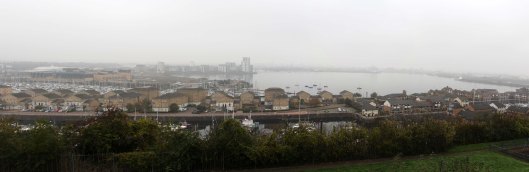
Thick fog hung over Cardiff Bay as I set out on a round-the-bay circuit yesterday morning and, though the fog thinned as the day went on, the day remained grey. Still, never let it be said that grey is boring. Birds there were aplenty (and wildflowers, too … but that’s for tomorrow’s post).


This cormorant was enjoying a successful spot of fishing in the old Penarth dock area, though it was slim pickings for the three Little grebes around the corner in the River Ely.


All around the Bay, on almost every man-made structure and clump of rocks near the water, Pied wagtails bobbed, wagged and ‘chisicked’.


Coots were even more numerous, and an occasional Moorhen prospected along the shoreline.
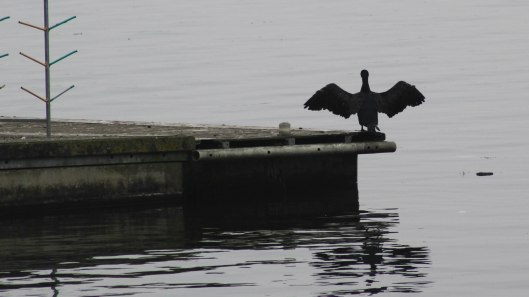

As I was watching this Cormorant drying its wings, our peace and tranquillity was interrupted by the loud honking of a large skein of Canada Geese flying in from the west.


Where concrete and buildings dominate the shoreline and there’s a notable absence of trees, the birds have adapted and perch on tree-like things.


I saw perhaps half a dozen Great crested grebes around the Bay: I always admire how long they can stay underwater when fishing. Mute swans were more numerous. They are birds of such contrasts, looking anything but decorous when flaunting their glorious white bottoms as they feed, yet the picture of elegance when preening.

The most abundant came at the end of my walk. It was standing room only for the Black-headed gulls on the Barrage.


03 Friday Nov 2017
Posted in 'Dedicated Naturalist' Project, flowers, nature, wildflowers
Tags
botanical drawing, Dr Mary Gillham, Geranium Robertianum, Herb Robert, Mary Gillham Archive Project, plant anatomy
A snippet from my volunteer work on the ‘Dedicated Naturalist’ Project, helping to decipher and digitise, record and publicise the life’s work of naturalist extraordinaire, Dr Mary Gillham.

As part of my current work to research and write the story of Mary’s life for the project website, I was, this week, going through items from Mary’s university days – she held a BSc in agriculture and botany from the University of Wales at Aberystwyth and a PhD from the University of Wales at Bangor. Amongst the treasures Mary had retained was a folder of botanical drawings, and I couldn’t resist choosing a few to scan for the website and also to share here.

The paper Mary used is tissue-thin so doesn’t scan well – the details on the reverse show through – and I’ve had to clean this up a lot on photoshop. It’s still not great but I love the level of detail in these drawings and, as Herb Robert (Geranium robertianum) is still to be found blooming here and there (photographed yesterday), this seemed a good flower to feature.

For the full story about the Mary Gillham Archive Project, check out our blog, https://marygillhamarchiveproject.wordpress.com/ and follow our progress on Facebook and on Twitter.
02 Thursday Nov 2017
‘I am rich today with autumn’s gold.’ ~ Gladys Harp


01 Wednesday Nov 2017
There’s a whole new lingo to learn when you move more seriously into birdwatching. There’s dipping (missing out on seeing a particular bird), confiding (used to describe a bird that allows good views), twitching (chasing rare sightings, a pursuit that can get obsessive), LBJs (Little brown jobs, describing small brown birds that can be indistinguishable one from the other; interestingly, also applied to fungi), as well as the shortened names for the birds themselves (Blackwit for Black-tailed godwit; Mipit for Meadow pipit but Rockit not Ripit for Rock pipit).
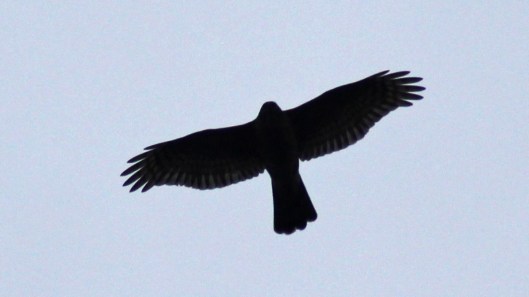
The word I like best, though it provides the biggest challenge – indeed, this will be a rest-of-my-lifetime challenge, is jizz, ‘the characteristic impression given by a particular species of animal or plant’. Let me give you an example: I see a bird flying overhead and, though the bird is distant and its exact features difficult to see, I can recognise which bird it is from its silhouette and the way it is flying. I had a moment of great jubilation just this week when I was able to identify a Sparrowhawk flying over a local field, from its outline and its distinctive flap-flap-glide flying pattern.
 earthstar
You must be logged in to post a comment.