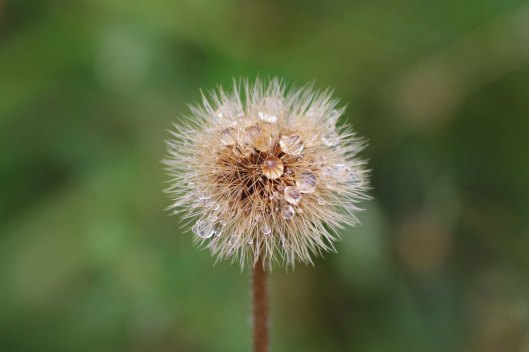
Yesterday it rained, it poured, it bucketed down and, after several weeks with scarcely a drop of rain, it was life-giving, cleansing, greening, quenching, reviving, freshening …

20 Saturday Jul 2019
Posted in 365DaysWildin2019, nature, weather
Yesterday it rained, it poured, it bucketed down and, after several weeks with scarcely a drop of rain, it was life-giving, cleansing, greening, quenching, reviving, freshening …
03 Sunday Mar 2019
Posted in 365DaysWildin2019, nature, weather
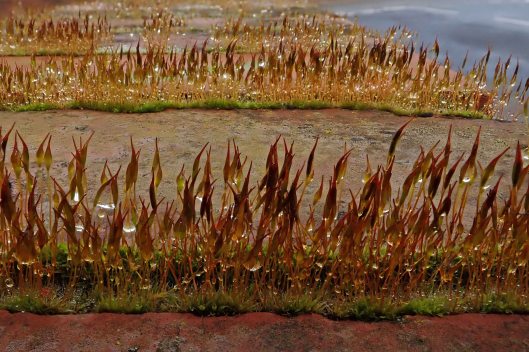
With Storm Freya blasting us today, I only managed an hour’s stomp between rain bands but even that was difficult, trying to walk back up the hill from the marina into a 25mph head wind. My head was down, which was probably how I spotted these lovely bands of moss on top of a brick wall. It was interesting how the moss was only growing in strips where the mortar butted up against the terracotta bricks, not on the mortar or the bricks themselves. It sure looked pretty covered in rain drops.
01 Friday Feb 2019
It was wonderful to wake up to a white landscape this morning but, with the wind chill taking the temperature down to -5°C and the pavements and roads very slippery in places, I didn’t linger long outdoors, just did a circuit of local streets and spent some time in the tree-filled Victoria Square that surrounds the Church of All Saints. This square is filled with an excellent variety of trees – very grand old oaks, a selection of tall conifers, smaller birch and cherry plum. The square looked like a magical winter wonderland today so I thought I’d share some snowy tree photos.
31 Thursday Jan 2019
Posted in 365DaysWildin2019, birds, flowers, nature, weather, wildflowers, winter

It was frosty white this morning but, as I write this at 4pm, the forecast snow hasn’t arrived. If I sound disappointed, it’s because I am – as an Antipodean who’s not seen much snow, I love it when it does happen. Still, I enjoyed crunching around the fields at Cosmeston this morning and made sure I took plenty of bird seed for all my hungry feathered friends.

15 Tuesday Jan 2019
Posted in 365DaysWildin2019, nature, trees, weather, winter
Tags
More un-forecast rain stopped play today or, at least, limited it to a stroll around the town in full wet weather gear. Still, there are always things to see, especially if you work with the weather, and use a little imagination. So, while you might think this is just water running down a tree trunk, I see an eye shedding a tear.

26 Wednesday Sep 2018
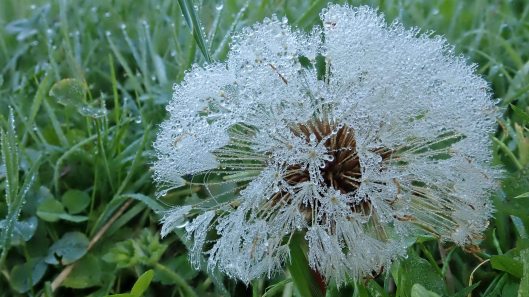
Dew: Noun; tiny drops of water that form on cool surfaces at night, when atmospheric vapour condenses (Oxford Dictionary).
26 Tuesday Jun 2018
Tags
#30DaysWild, 30 Days Wild, heatwave, Penarth, shrew, summer heat
And I thought yesterday was hot!

On day 26 of #30DaysWild the temperature hit 29°C here in Penarth, even hotter than yesterday. And while people may be enjoying this weather (I am not!), it’s really tough for wildlife. I’m not sure what caused this little shrew to die but it’s easy to believe it was the heat, or perhaps thirst. We’ve had a couple of dry months now, and ponds and streams are running low and / or drying up. So, if you’re in a position to put water out for the birds and the beasties, please do – they really need all the help they can get right now.

01 Tuesday May 2018
Tags
birding, birdwatching, British birds, Cardiff Bay, Ely embankment, Redshank, River Ely, Turnstone
I thought I’d avoid an April Fool’s Day visit to ‘my patch’ in case a long-extinct Dodo should suddenly appear before me (!) so my first wander this month was on 2 April.

There were no particular surprises lurking, just the standard avians – two Pied wagtails and one Grey, and two Redshanks, but the treat was a total of 15 Turnstones, many now showing signs of their change to summer plumage. I assume these birds were enjoying a short stopover in Cardiff Bay before continuing their journey north. According to information on the Joint Nature Conservancy Committee website, the Turnstones that winter on the coasts of north-west Europe (including Britain and Ireland) are part of the Western Palearctic population and breed on Canada’s Ellesmere Island, and in north and east Greenland.
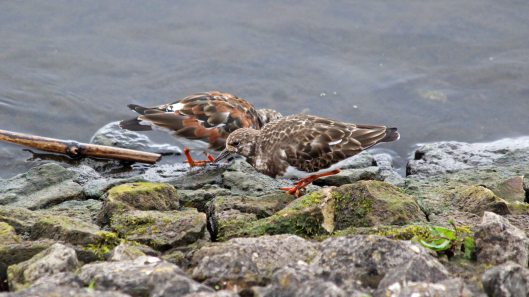
A good comparison: lower bird changing to breeding plumage, upper bird in winter dress.
The rest of April reads pretty much like that first visit – the occasional one or two Redshanks, the occasional one or two Pied and Grey wagtails, and Turnstone numbers in the low to mid teens. The weather varied considerably, from damp and foggy winter-like gloom to brilliant blue skies with the water so still you could perfect reflections mirrored in it, but the bird numbers and varieties remained fairly static.
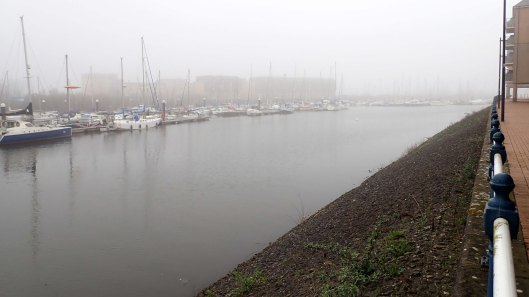

So, what I think I will do in subsequent months is expand my monthly catch up to include the whole of Cardiff Bay. I walk right round on a regular basis and, as the habitats are more varied, there is more chance of spotting something a little more interesting. Let’s see what May brings …


Redshank and Turnstones: I still love ’em!
08 Thursday Mar 2018
Tags
#StormEmma, #TheBeastfromtheEast, birding, birdwatching, British birds, cold weather effect on birds, Fieldfare, Green woodpecker, Redwing, Song thrush, thrushes
Nature’s cold weather events may be lovely to look at – and I freely admit that, as a Kiwi unused to snow, I absolutely loved the heavy snow we had last week as a result of ‘The Beast from the East’ and Storm Emma – but such events come at a high cost, particularly to wildlife. The extreme cold and gale-force easterlies blew across from Europe thousands of Fieldfares and Redwings, and displaced a myriad of other birds: Golden plovers and Lapwing, Woodcocks and Snipe were all reported in parklands and farmers’ fields, all desperately looking for food.
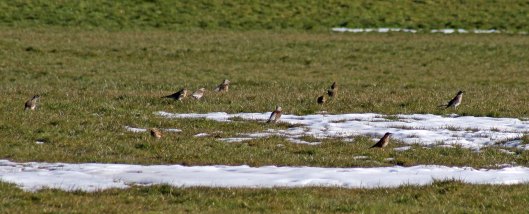


I’d not seen many Fieldfares before this storm hit but a walk around local parks and Cardiff Bay on Sunday and Monday gave me the opportunity to see large numbers of them and Redwings.

In Penarth Marina Park, I spotted five of Britain’s six thrush species grazing (Song thrush, Mistle thrush, Blackbird, Redwing and Fieldfare) (accompanied by a Green woodpecker), and in trees alongside the River Taff, I got my closest views yet of Fieldfare – such beautiful markings.
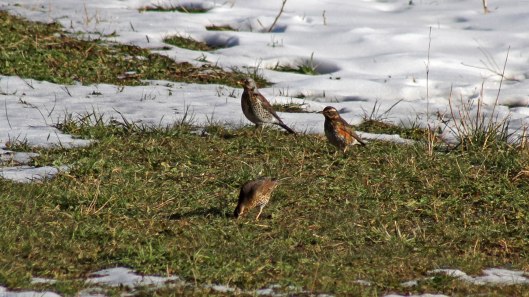

Let’s hope they now have the strength to head back to where they came from and that the cold blast won’t have any long-term effects on their populations.
28 Wednesday Feb 2018
Tags
#WildWords, Cardiff Bay, Ely embankment, ice, icicle, ickel, winter chill
Icicle: noun; a hanging, tapering piece of ice formed by the freezing of dripping water (Oxford Dictionary). The word comes from the Old English word gicel, which morphed into ikyl or ikel, and later ickle, a word which is still used in parts of Yorkshire.

My photos were taken on the Ely embankment in Cardiff Bay yesterday, as Britain shivers its way through a blast of chilly Siberian air. The combination of freezing temperatures and the constant lapping of the water on to the branches that litter the shoreline resulted in some beautiful icicles.

 earthstar
You must be logged in to post a comment.