310/365 Living fossil

Tags

, , ,

The Equisetums are such wonderfully sculptural plants, living fossils that are so old they once thrived beneath the trees in the Paleozoic era, more than 250 million years ago. The name comes from the Latin equus, meaning horse, and seta, meaning bristle, which is probably why these plants are also known as horsetails.

191106 equisetum

309/365 Starling adoration

Tags

, , , , ,

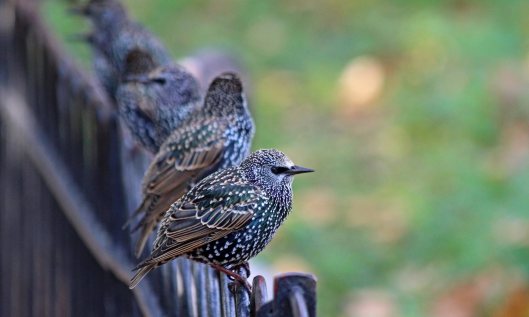
I know I blogged about Starlings just last week but I simply can’t resist giving them more air time. This is partly because the Starlings I encountered in London’s St James’s Park last week allowed close views and I managed to get some reasonable photos of their stunning plumage.

191105 starlings (1)

But it’s also because when I was on a Glamorgan Bird Club field trip to Rhossili last Sunday, we were treated to some small murmurations and one of these gatherings looks to my eye just like a seal – did I mention I have a vivid imagination?!

191105 starlings (4)

308/365 Birds of St James’s Park

Tags

, , , , , , , , , , , , , ,

I’ve just returned from three days with two friends in London. We were doing touristy things as our Australian friend hadn’t been to London before but I did manage some birding during our walk through St James’s Park. Though abundant and obviously breeding locally, most of these cannot really be classed as wild birds but they’re lovely just the same.

191104 st james park

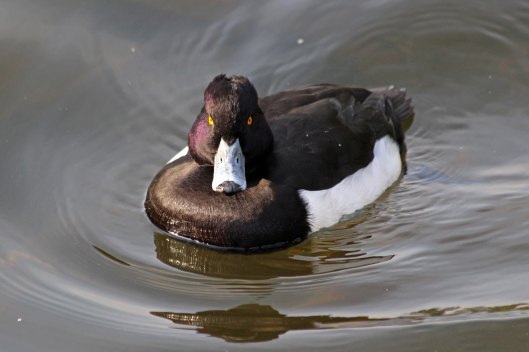
The birds we saw included Mute swan and Black swan, Black-headed gull, Moorhen, Egyptian and Greylag and Canada goose, Feral pigeon, Shelduck and some species of white duck that I don’t recognise, Grey heron, Ring-necked parakeet, Bahama pintail, Tufted duck and more. Unfortunately, the resident Pelicans were hiding on their island so we saw them not.

191104 moorhen
191104 egyptian goose

191104 heron white ducks191104 ring-necked parakeet

191104 can goose coot191104 tufted duck

307/ 365 Grey phalarope

Tags

, , , ,

191103 grey phalarope (1)

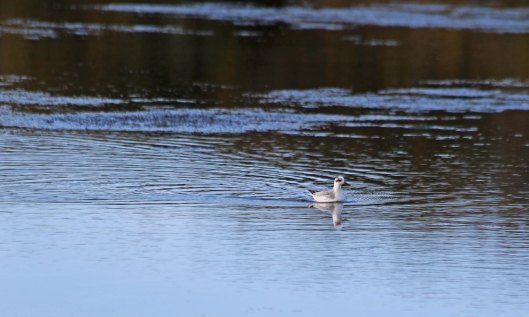
A week ago today, during a short break in East Sussex, I enjoyed a superb long walk with two good friends at Cuckmere Haven, and there was a wonderful birding bonus, a Grey phalarope (Phalaropus fulicarius).

191103 grey phalarope (2)

I knew the bird had been seen in the vicinity but Cuckmere is a huge area and was then much submerged after recent heavy rains so I didn’t expect to spot one small bird amongst the many enjoying all the water. My luck was in though, as this lovely creature was swimming about on a pool of water quite close to the main path down to the beach.

191103 grey phalarope (3)

This was only my second ever sighting of a Grey phalarope, as these are birds that breed in the Arctic, spend most of their lives far out at sea, and only usually turn up around the British coast after bad weather.

191103 grey phalarope (4)

306/365 Starlings and a cock

Tags

, , , , , ,

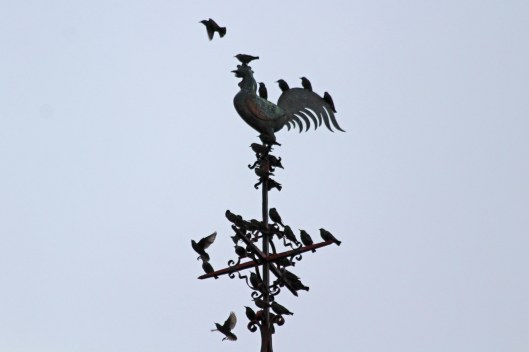
At this time of year, Starlings start to congregate, at first in small gatherings and then forming the large murmurations that astound all who see them. In the late afternoons / early evenings I am treated to a modest number that rendezvous on the roof of the church opposite my house and vie, noisily, for the prime position of sitting atop the cock on the steeple.

191103 starlings (1)

304/365 Portland pipits

Tags

, , , ,

During each of my three visits to Portland there has been a plethora of pipits, especially Rock pipits, like this one, using the stone walls of the lighthouse compound as its rocky shore, parachuting down on to the grass within to strut and probe, then popping back up to survey the scene … and the nearby photographer.

This slideshow requires JavaScript.

301/365 Wanderings of a Great black-backed gull

Tags

, , , , , , ,

191028 GBB gull (1)

We saw a lot of Great black-backed gulls during our long weekend birding at Portland Bird Observatory at the end of September, both tackling the strong westerly winds out over the huge seas and also taking a breather from those winds, snoozing in a field just along from the Obs. And, while the rest of our group was seawatching near the obelisk, I walked west along the coastal path and found one Great black-backed gull standing alone on rocks at the water’s edge.

191028 GBB gull (2)

This particular gull was ringed so I reported the sighting. It turns out the bird was not far from where it was first ringed in June 2015, on the breakwaters of Portland Harbour, as part of the Portland Gulls project. Joint project leader Terry Coombs kindly emailed me the history of P:49B and commented that ‘From the sightings we have it seems to favour Portland in the winter and cruising the Channel during the warmer months’. Apart from many sightings in the Portland area, it has also been spotted at RSPB Dungeness, on 16 March 2015 and 9 March 2019, and on the Axe estuary, on 19 August 2015.

191028 GBB gull (3)

My sincere thanks to Terry for providing the history of this gull. You can read more about his Portland Gulls project on their blog, and please do report the ringed birds (of all species) that you see – tracking bird movements is a huge part of their protection and conservation.