
Tags
aphids parasitised by wasps, Drepanosiphum platanoidis, Drepanosiphum platanoidis parasitised by Dyscritulus planiceps, Dyscritulus planiceps, parasitic wasp, parasitised aphids, Praon flavinode, Tuberculatus parasitised by Praon flavinode, Tuberculatus species
You can tell I’m no baker – I got my pie crusts confused, what should’ve been puff pastry was really a pizza base. And now you’re confused … let me explain.
Back on 19 September, I wrote about A parasitised aphid, and said that ‘The Praon genus of parasitic wasps are the only ones that create this disc-shaped attachment beneath their host’. That was wrong (and I’ve now edited that post). The Praon wasps are actually responsible for an attachment beneath their host that looks more like puff pastry. Here are examples of the two types of pie crust.
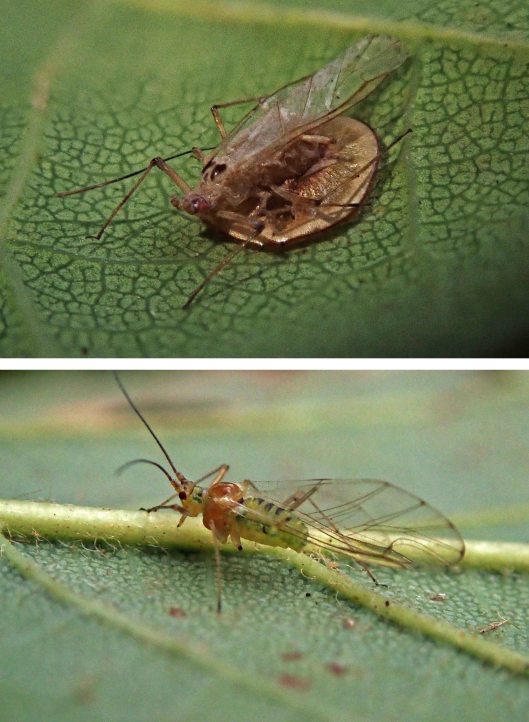
First, the pizza base. The first photo above shows the aphid Drepanosiphum platanoidis, which has been parasitised by the wasp Dyscritulus planiceps. The second photo, just for comparison, shows the same species of aphid when alive.
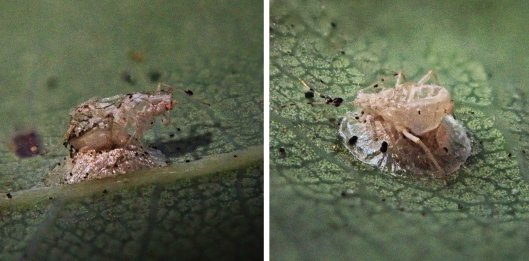
Second, the puff pastry. And these two are both Tuberculatus species of aphids that have been parasitised by Praon wasps, most likely Praon flavinode (the local expert I’ve now made contact with tells me ‘There are quite a few species of Praon/Praini but flavinode will almost certainly be the species involved with Tuberculatus on oak’). What was that I said about ‘standing at the top of a very slippery slope, at the bottom of which is a chasm filled with aphids and their parasites!’ (Aphid mummies, 26 September)? Always learning!
 earthstar
You must be logged in to post a comment.