• ABOUT
  • BIRDING 2018
  • Birding 2019
  • BLOG POSTS
  • Butterflies 2018
  • Resources

earthstar

~ a celebration of nature

earthstar

Tag Archives: birding

November on the Ely embankment

30 Thursday Nov 2017

Posted by sconzani in birds, nature

≈ Leave a comment

Tags

birding, birdwatching, British birds, Cardiff Bay, Coot, Ely embankment, Lesser black-backed gull, Linnet, long-tailed tit, Redshank, River Ely, Rock pipit, Turnstone
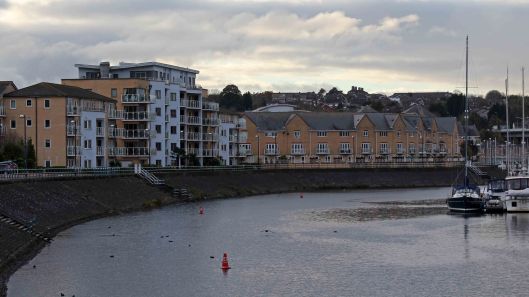
171130 9th Ely embankment

The 9th of November was a ‘5 Turnstone, 2 Rock pipit, 1 Grey wagtail’ kind of day at Cardiff Bay, with a cool wind blowing through huge banks of clouds and the odd rain shower. That didn’t deter the birds browsing along the embankment edge though.

171130 9th rock pipits (1)
171130 9th rock pipits (2)

On the 15th, a beautifully marked Song thrush was feasting on berries in the small front garden of one of the apartments that sits on the edge of the embankment (see Berries and Birds a few days ago), and, as well as 2 Rock pipits and 6 Turnstones, there were 3 Redshank grazing along the water’s edge – a nice treat. Also, a Lesser black-backed gull was looking exceedingly pleased with itself for finding a huge dead fish and vociferously defending its prize with loud screeching.

171130 15th redshank (1)
171130 15th redshank (2)

171130 15th LBB and fish

On the 17th – a ‘3 turnstone’ day – the star of the show was a lovely little Linnet. I’d seen a family party of parents and two fledglings grazing amongst the rocks here back in August so perhaps this bird was one of those.

171130 17th Linnet and turnstone
171130 17th Linnet

My last November wander by the Ely was on the 25th, when 3 Turnstones, 2 Linnets (nice to see them again), 2 Pied and 2 Grey wagtails, and 1 Redshank were joined by a Dunnock and a small flock of Long-tailed tits passing through the shrubs edging the walkway. Also, something freaked out a group of Coots and, rather than ‘run’ rapidly across the top of the water as they usually do, they actually flew. I’d never seen coots fly before.
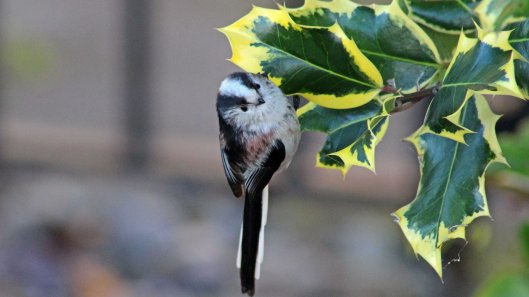
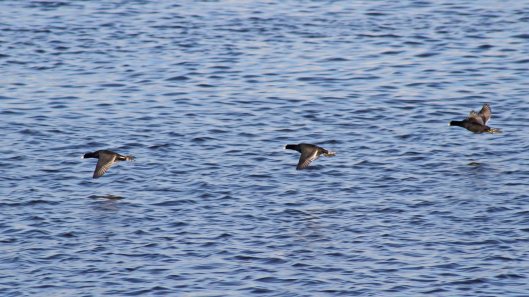
171130 25th Long-tailed tit171130 25th Flying coots

Like Loading...

Through a hedge, quietly

27 Monday Nov 2017

Posted by sconzani in birds, nature

≈ 7 Comments

Tags

birding, birdwatching, British birds, Cosmeston Lakes Country Park, Green woodpecker, Picus viridis, woodpecker

171127 Green woodpecker (1)

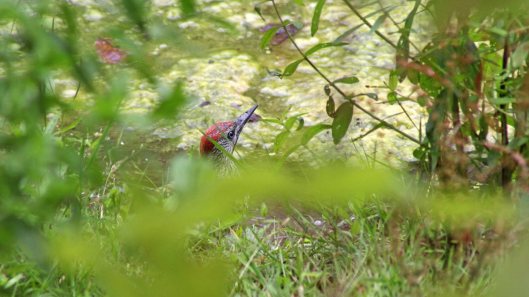
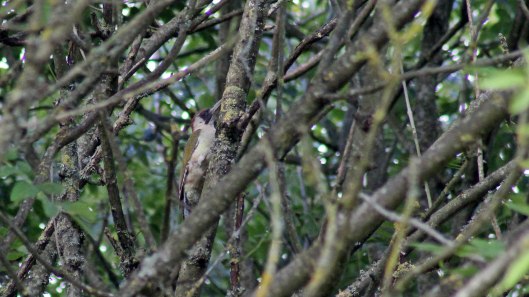
My usual view of the Green woodpecker (Picus viridis) is a flash of its bright red Mohawk, bright green body and bright yellow rump as it rockets rapidly away from me. They are notoriously nervous birds and, as they usually feed on wide open expanses of grass – all the better to spot the dreaded photographer trying to creep up on them, they easily spot my clumsy attempts at stalking, and fly off at the drop of an ant. So, the few photos I’d managed to get were with my long lens on full zoom, with, invariably, the bird partly obscured by branches, twigs or long grass.

171127 Green woodpecker (3)

Until last Friday that is…. I was enjoying a wander at Cosmeston, when, having already unsuccessfully stalked one bird, I spotted another in a different field. This time, this woodpecker was completely occupied with poking in the damp soil for ants, and I was on a footpath behind a hedge. I moved to the grassy verge, took care not to step on anything that might crack or rustle, and kept my head down. If the bird looked up, I froze until it got back to its digging. There weren’t many gaps in the hedge so I still couldn’t get very clear or very close shots but I am still ridiculously pleased to have got these couple.

171127 Green woodpecker (4)171127 Green woodpecker (5)

Like Loading...

Berries and birds

25 Saturday Nov 2017

Posted by sconzani in autumn, birds, nature, plants

≈ 1 Comment

Tags

autumn berries, berries, berries and birds, berry eating birds, birding, birdwatching, Song thrush, thrush

In recent days, on my regular walks, whether in suburban streets or in the local parks and nature reserves, wherever I see berries there are birds, usually thrushes, gobbling down as many berries as they can find.

171125 Thrush and berries (1)

A Song thrush found its golden treasure trove in a tiny, but well-planted-for-wildlife garden amongst the apartments of Penarth Marina, and, below, this thrush, at Cosmeston Lakes Country Park, looked to have chosen a berry far too big for its beak but it persevered and, eventually, by applying a little pressure to squash the berry a fraction, down the hatch it went.

171125 Thrush and berries (2)

Like Loading...

Birding at Dawlish Warren

19 Sunday Nov 2017

Posted by sconzani in birds, nature

≈ 2 Comments

Tags

birding, birdwatching, Brent geese, British birds, Dawlish Warren, Dunlin, Exe estuary, Grey plover, national nature reserve, Oystercatchers, Shelduck

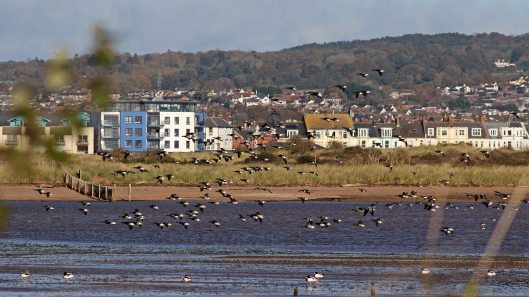
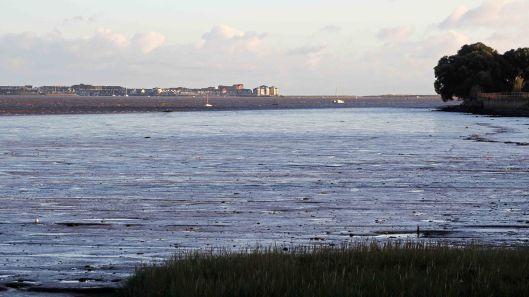
Last Sunday I joined ten hardy souls from the Glamorgan Bird Club (and two of their equally hardy children) to brave the strong polar winds and occasional stinging rain showers to check out the birding delights of south Devon. After a brief stopover at Labrador Bay for the Cirl buntings (see yesterday’s post), we headed to the National Nature Reserve at Dawlish Warren, to check the beach, sand dunes, and mudflats of the Exe estuary.

171119 Dawlish Warren (4)
171119 Dawlish Warren (2)
171119 Dawlish Warren (3)
171119 Dawlish Warren (1)

We had immediate success sea-watching from the beach, with good views of two Red-throated and one Great northern diver – both new birds for me, as well as Great crested grebes, Cormorant and the always-impressive sight of a Gannet crashing headfirst into the waves to dive for fish.

171119 Dawlish Warren (5)171119 Dawlish Warren (6)171119 Dawlish Warren (7)

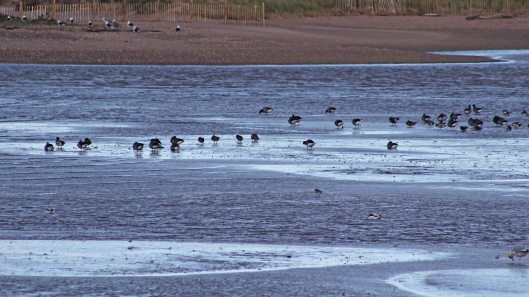
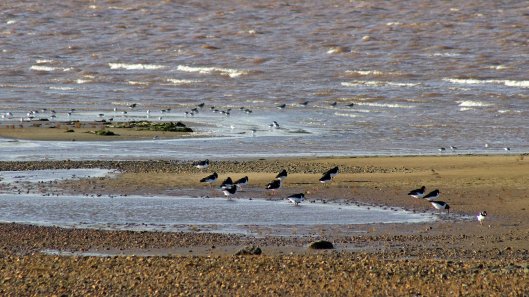
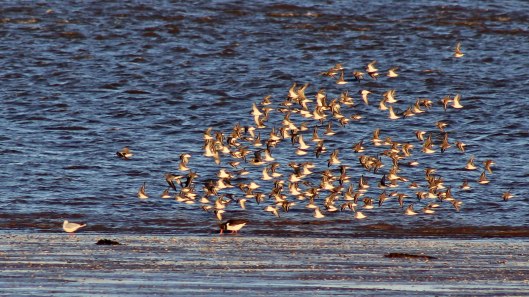
Though half of me got soaked during the walk out to the hide at the end of the sandspit (must invest in good, lined waterproof trousers!), the effort was worth it for the wealth of waders to be seen, feeding along the water’s edge and hunkering down on the sandy beach against the biting winds. As well as large numbers of Oystercatchers and Brent geese, there were also Dunlin and Ringed plover, Shelducks and Sanderlings, Turnstones, Bar- and Black-tailed godwits and a couple of Curlew, plus the ubiquitous gull species.

171119 River Exe (1)171119 River Exe (4)

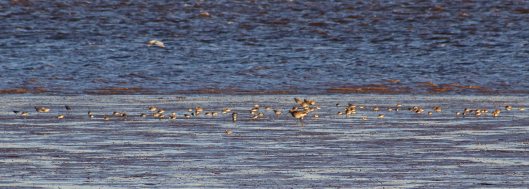
Later, we stopped further up the Exe for a quick look over the river, where I managed to snap three Grey plover amongst a flock of Dunlin flying past. It was a long but grand day’s birding and, with four lifers to add to my sightings’ list, I was well pleased.

171119 River Exe (3)171119 River Exe (5)

You can find out more about the flora and fauna of Dawlish Warren here, and check this link for the latest bird sightings at Dawlish Warren.

171119 River Exe (2)

Like Loading...

Cirl bunting

18 Saturday Nov 2017

Posted by sconzani in birds, nature

≈ Leave a comment

Tags

bird conservation, birding, birdwatching, British birds, Cirl bunting, Cirl Bunting Project, Emberiza cirlus, Glamorgan Bird Club, Labrador Bay

I find the constant reports of dwindling biodiversity, increasing numbers of creatures at risk of extinction, and the destruction of the environment to build yet another road quite depressing so it’s nice to be able to write about a conservation success story. Though the Cirl bunting was once a common bird throughout southern England and Wales, changes in farming practices meant that its population had plummeted to just 118 pairs in 1989. But, thanks to the RSPB and a small number of supportive organisations, plus environmentally aware farmers and The Countryside Stewardship Scheme (which compensates farmers for making small areas of their land more wildlife-friendly), the Cirl bunting population has increased to at least 862 pairs, and the birds have been reintroduced to an area in Cornwall where they had previously died out.

171118 Cirl bunting (1)

On a Glamorgan Bird Club trip to England’s south coast last weekend, our group called in at the RSPB’s Labrador Bay reserve, which was created especially for these gorgeous little birds and, despite the freezing cold, strong winds blowing over this stunning coastal site, we were privileged to see three Cirl buntings dotting about in the hedgerows.

171118 Cirl bunting (2)
171118 Cirl bunting (3)
171118 Cirl bunting (5)

You can read more about the Cirl Bunting Project on the RSPB website. Oh and, in case you’re wondering, Cirl is pronounced Sirl, and the word comes from the bird’s Latin name Emberiza cirlus, which, apparently, comes from the Italian zirlare, meaning to chirp. Let’s hope these little birds keep on chirping, and increasing, in the years ahead.

171118 Cirl bunting (4)

Like Loading...

As the Herring gull said to the Lesser Black-backed …

16 Thursday Nov 2017

Posted by sconzani in birds, nature

≈ 2 Comments

Tags

birding, birdwatching, gull conversation, gulls, Herring gull, Lesser black-backed gull

171116 gull chat (1)

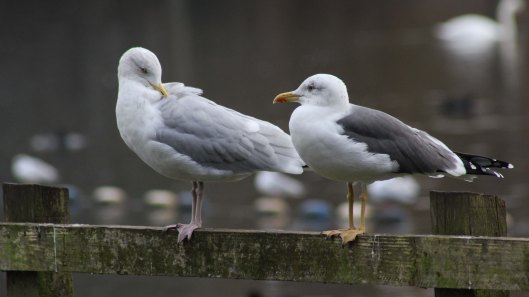
Herb: “Don’t look now but there’s a human over there with one of those black pointy thingies covering one eye, looking in our direction.”
Alby: “Do you think it’s going to hurt us, Herb? What should we do?”
Herb: “Those things don’t usually hurt. Maybe if we just keep perfectly still, it’ll go away.”

171116 gull chat (2)

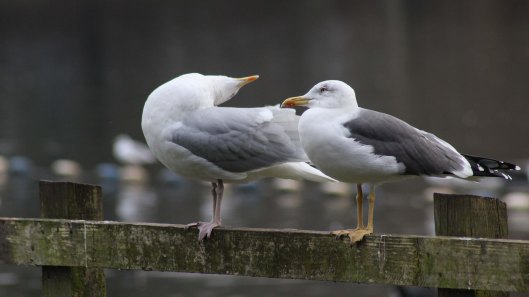
Alby: “I think it’s still there. Can you take a look, Herb?”

171116 gull chat (3)

Herb: “Yep, still there. It’s making a clicking noise.”
Alby: “What should we do?”
Herb: “Let’s do something really weird. That might scare it off.”

171116 gull chat (4)

Like Loading...

Gulls are tricksy

11 Saturday Nov 2017

Posted by sconzani in birds, nature

≈ 4 Comments

Tags

birding, birdwatching, British birds, gulls, Larus michahellis, Yellow-legged gull

Gulls were doing my head in earlier this week. A Yellow-legged gull (Larus michahellis) had been reported by local birdwatchers and, as I’d never seen one and the location was on a lovely walking route along the River Taff, I thought I’d go for a look-see. “It was the only large gull on the river so that might help”, said one who had spotted it the previous day. Well, wouldn’t you know it – when I arrived at the site, there were two large gulls there and, to my gull-uneducated eye, they looked very alike.

171111 Yellow-legged gull (2)

The grey back of the Yellow-legged gull is supposed to be somewhere between that of a Herring gull and a Lesser black-backed gull but, when you have neither of those gulls sitting right next to yours to do a comparison and when one of my possibilities was standing in deep shade and the other in full sun, it was almost impossible to see any difference. So, I followed the other advice I’d been given: “Take lots of photos and hope the experts can help you out.” Thanks to those experts, in the South Wales Birding group on Facebook, I can here present to you my first-ever Yellow-legged gull … and I wish you the very best of luck if you’re ever trying to ID one of these for yourself.

171111 Yellow-legged gull (1)

Like Loading...

’Tis the time of the thrushes

09 Thursday Nov 2017

Posted by sconzani in autumn, birds, nature

≈ 3 Comments

Tags

berries and birds, berry eating birds, birding, birdwatching, Mistle thrush, Redwing, Song thrush, thrush, Turdus iliacus, Turdus philomelos, Turdus viscivorus

Officially, in Britain, the resident true thrushes are the Ring ouzel, Fieldfare, Blackbird, Song thrush, Mistle thrush and Redwing, while other thrush species are occasional, sometimes rare visitors.

171109 Redwing (2)

The thrushes I’ve been noticing most in recent weeks have been the Song thrush, Mistle thrush and Redwing, partly due to their seasonal migration southwards to our ever so slightly milder south Wales climate and partly due to this being prime berry-eating time.

171109 Song thrush (1)
171109 Song thrush (2)

Song thrushes (Turdus philomelos) are resident here all year round, though there is some movement through Britain from Scandinavian birds heading south for the winter.

171109 Mistle thrush (2)
171109 Mistle thrush (3)

171109 Mistle thrush (1)

171109 Mistle thrush (4)
171109 Mistle thrush (5)

It can sometimes be difficult to distinguish Song from Mistle thrushes (Turdus viscivorus), though the Mistles have a tendency to perch high in the tree tops (or, I discovered, on TV aerials, in urban areas!) and to stand with heads held high when foraging on the ground, and their football-rattle song is unmistakeable. I saw my first Mistle thrushes of the season on 9 October and there are now quite large numbers in local parks and reserves.

171109 Redwing (1)

Redwings (Turdus iliacus) were reported locally in early October but it was the 30th before I caught up with a small flock at Cathays Cemetery in Cardiff, and I’ve since spent several hours following them around the berry trees at Cosmeston, trying to get close enough for photos. They’re easily spooked though so my shots so far have not been that great – I’ll keep trying, and I’ll need to try to find Ring ouzels and Fieldfare as well.

Like Loading...

On a grey Bay day

04 Saturday Nov 2017

Posted by sconzani in birds, nature, walks

≈ 8 Comments

Tags

birding, birds, birdwatching, black-headed gulls, British birds, Canada geese, Cardiff Bay, Coot, Cormorant, fog, Great Crested Grebe, little grebe, long-tailed tit, Moorhen, Mute swan, Pied wagtail, starling, walk around Cardiff Bay

171104 1 Cardiff Bay fog

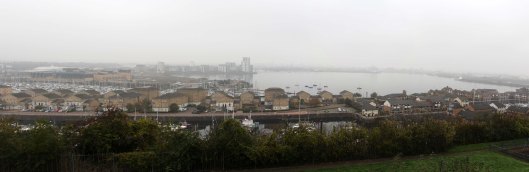
Thick fog hung over Cardiff Bay as I set out on a round-the-bay circuit yesterday morning and, though the fog thinned as the day went on, the day remained grey. Still, never let it be said that grey is boring. Birds there were aplenty (and wildflowers, too … but that’s for tomorrow’s post).

171104 2 Cormorant
171104 2 Little grebes

This cormorant was enjoying a successful spot of fishing in the old Penarth dock area, though it was slim pickings for the three Little grebes around the corner in the River Ely.

171104 3 Pied wagtail (1)
171104 3 Pied wagtail (2)
171104 3 Pied wagtail (3)
171104 3 Pied wagtail (4)

All around the Bay, on almost every man-made structure and clump of rocks near the water, Pied wagtails bobbed, wagged and ‘chisicked’.

171104 4 Coot
171104 4 Moorhen

Coots were even more numerous, and an occasional Moorhen prospected along the shoreline.

171104 5 Cormorant171104 5 Flock of Canada geese

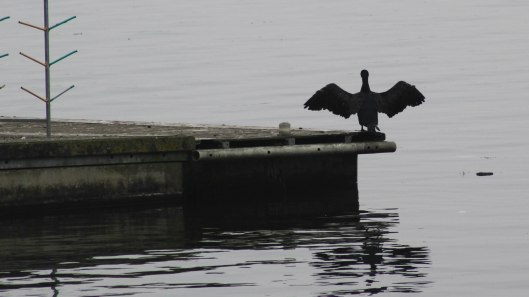
As I was watching this Cormorant drying its wings, our peace and tranquillity was interrupted by the loud honking of a large skein of Canada Geese flying in from the west.

171104 6 Long-tailed tits
171104 6 Starlings and gull

Where concrete and buildings dominate the shoreline and there’s a notable absence of trees, the birds have adapted and perch on tree-like things.

171104 7 Great crested grebe
171104 7 Mute swan

I saw perhaps half a dozen Great crested grebes around the Bay: I always admire how long they can stay underwater when fishing. Mute swans were more numerous. They are birds of such contrasts, looking anything but decorous when flaunting their glorious white bottoms as they feed, yet the picture of elegance when preening.

171104 8 Black-headed gull (3)

The most abundant came at the end of my walk. It was standing room only for the Black-headed gulls on the Barrage.

171104 8 Black-headed gull (1)
171104 8 Black-headed gull (2)
Like Loading...

Wild words: jizz

01 Wednesday Nov 2017

Posted by sconzani in birds, nature

≈ Leave a comment

Tags

#WildWords, birding, birding lingo, birding words, birdwatching, jizz, words in nature

There’s a whole new lingo to learn when you move more seriously into birdwatching. There’s dipping (missing out on seeing a particular bird), confiding (used to describe a bird that allows good views), twitching (chasing rare sightings, a pursuit that can get obsessive), LBJs (Little brown jobs, describing small brown birds that can be indistinguishable one from the other; interestingly, also applied to fungi), as well as the shortened names for the birds themselves (Blackwit for Black-tailed godwit; Mipit for Meadow pipit but Rockit not Ripit for Rock pipit).

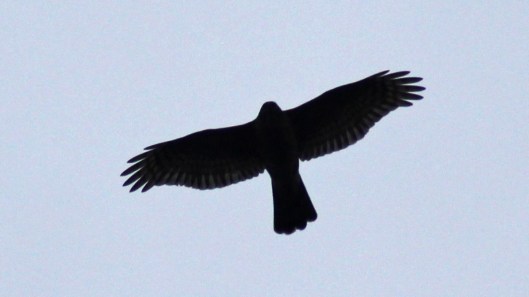
171101 sparrowhawk

The word I like best, though it provides the biggest challenge – indeed, this will be a rest-of-my-lifetime challenge, is jizz, ‘the characteristic impression given by a particular species of animal or plant’. Let me give you an example: I see a bird flying overhead and, though the bird is distant and its exact features difficult to see, I can recognise which bird it is from its silhouette and the way it is flying. I had a moment of great jubilation just this week when I was able to identify a Sparrowhawk flying over a local field, from its outline and its distinctive flap-flap-glide flying pattern.

Like Loading...
← Older posts
Newer posts →

About me

sconzani

sconzani

I'm a writer and photographer; researcher and blogger; birder and nature lover; countryside rambler and city strider; volunteer and biodiversity recorder.

View Full Profile →

Follow earthstar on WordPress.com

Enter your email address to follow this blog and receive notifications of new posts by email.

Recent blog posts

  • Little owl March 31, 2026
  • Distant seabirds March 30, 2026
  • Thrift March 29, 2026
  • The day of the Wheatears March 28, 2026
  • Cetti’s warblers March 27, 2026

From the archives

COPYRIGHT

Unless otherwise acknowledged, the text and photographs on this blog are my own and are subject to international copyright. Nothing may be downloaded or copied without my permission.

Fellow Earth Stars!

  • Unknown's avatar
  • Unknown's avatar
  • Unknown's avatar
  • Unknown's avatar
  • Unknown's avatar
  • Unknown's avatar
  • Unknown's avatar
  • Unknown's avatar
  • Unknown's avatar
  • Unknown's avatar
  • Unknown's avatar
  • Unknown's avatar
  • Unknown's avatar
  • Unknown's avatar
  • Unknown's avatar
  • Unknown's avatar
  • Unknown's avatar
  • Unknown's avatar
  • Unknown's avatar
  • Unknown's avatar
  • Unknown's avatar
  • Unknown's avatar
  • Unknown's avatar
  • Unknown's avatar
  • Unknown's avatar
  • Unknown's avatar
  • Unknown's avatar
  • Unknown's avatar
  • Unknown's avatar
  • Unknown's avatar
  • Unknown's avatar
  • Unknown's avatar
  • Unknown's avatar
  • Unknown's avatar
  • Unknown's avatar
  • Unknown's avatar
  • Unknown's avatar
  • Unknown's avatar
  • Unknown's avatar
  • Unknown's avatar
  • Unknown's avatar
  • Unknown's avatar
  • Unknown's avatar
  • Unknown's avatar
  • Unknown's avatar
  • Unknown's avatar
  • Unknown's avatar
  • Unknown's avatar
  • Unknown's avatar
  • Unknown's avatar

Blog at WordPress.com.

Privacy & Cookies: This site uses cookies. By continuing to use this website, you agree to their use.
To find out more, including how to control cookies, see here: Cookie Policy
  • Subscribe Subscribed
    • earthstar
    • Join 642 other subscribers
    • Already have a WordPress.com account? Log in now.
    • earthstar
    • Subscribe Subscribed
    • Sign up
    • Log in
    • Report this content
    • View site in Reader
    • Manage subscriptions
    • Collapse this bar
 

Loading Comments...
 

You must be logged in to post a comment.

    %d