• ABOUT
  • BIRDING 2018
  • Birding 2019
  • BLOG POSTS
  • Butterflies 2018
  • Resources

earthstar

~ a celebration of nature

earthstar

Tag Archives: birdwatching

Tracking Mr Redshank

16 Thursday Mar 2017

Posted by sconzani in birds, nature

≈ 3 Comments

Tags

bird-ringing, birding, birdwatching, British birds, BTO, colour rings on Redshank, European Colour-ring birding, Redshank

I first spotted this ringed Redshank on 27 January, near Penarth Marina in Cardiff Bay, and I saw it again, in almost the exact same location, on 11 March. I reported my initial sighting through the European Colour-ring Birding website – it’s really easy to do this and excellent for long-term research into bird behaviour so please do report any ringed birds you see. As the website is totally run by volunteers, it’s taken a little while to get information back on my bird but, today I got this email report from Emily at BTO (British Trust for Ornithology):

170316 Redshank

This bird was ringed (DK10753) as an adult on 22/2/2016 at Peterstone Great Wharf, and has been re-sighted a number of times at/around Cardiff Bay (on 3/3/16, 3/1/17 and 22/1/17). It was also seen at St Thomas Head on 11/3/16. It was ringed as part of a study examining the winter movements of Redshank, Curlew, Dunlin, Wigeon, Teal and Shelduck in relation to the proposed tidal lagoon (see HERE for more details).

170316 Redshank map

So, my Redshank has spent his winter months – all the sightings were between January and March – in locations not very far from that initial ringing spot but I wonder where he goes in the summer to breed? Previous BTO research has shown that British-ringed Redshanks breed in Iceland and along the coastline of north-western Europe, so this little bird may soon be heading off on rather a long flight.
Like Loading...

Mr Grumpy Robin

13 Monday Mar 2017

Posted by sconzani in birds, nature

≈ 4 Comments

Tags

birding, birdwatching, British birds, conversations with robins, Mr Grumpy, robin

170313-mr-grumpy-robin-1

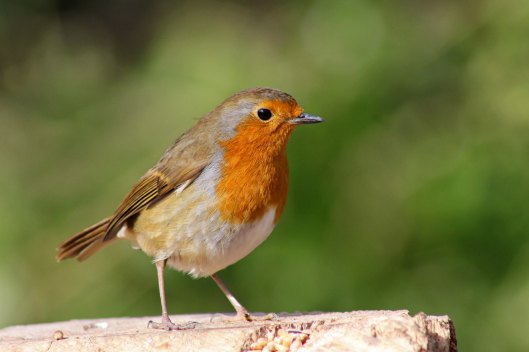
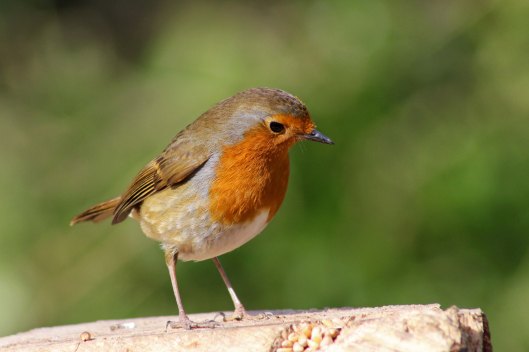
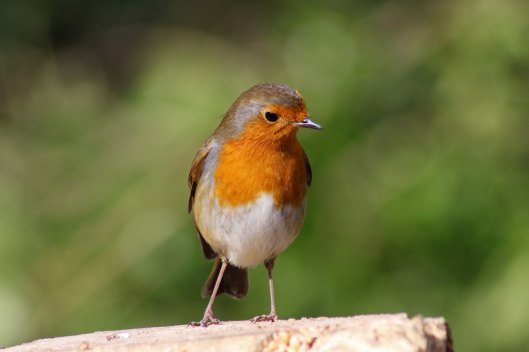
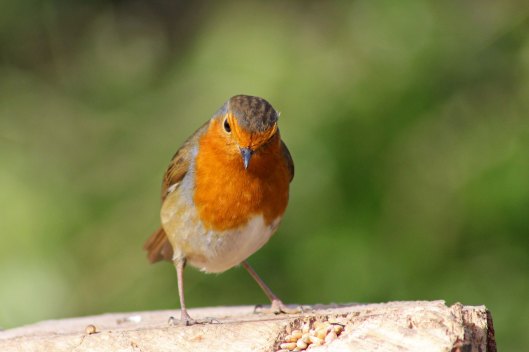
It looks like Mr Grumpy is not at all happy with the food he’s been given – maybe it doesn’t have the fruity flavoured suet pellets he likes best.

170313-mr-grumpy-robin-2

Perhaps Mr Grumpy doesn’t like the fact that the food has been tucked into a crack in the wooden post – maybe that makes it too hard to get at.

170313-mr-grumpy-robin-3

Or perhaps Mr Grumpy is really Mr Fusspot or even Mr Lazy in disguise.

170313-mr-grumpy-robin-4

Mr Grumpy is certainly glaring very rudely at Ms Happy.

170313-mr-grumpy-robin-5

Unfortunately, Mr Tickler is nowhere to be found so there is no way to make Mr Grumpy less grouchy so I think Ms Happy will just leave him to wallow in his bad mood all by himself.

170313-mr-grumpy-robin-6

Like Loading...

The Yellow-billed stork

08 Wednesday Mar 2017

Posted by sconzani in birds, nature

≈ 4 Comments

Tags

African birds, birding, birdwatching, Kuala Lumpur Bird Park, Mycteria ibis, stork, Yellow-billed stork

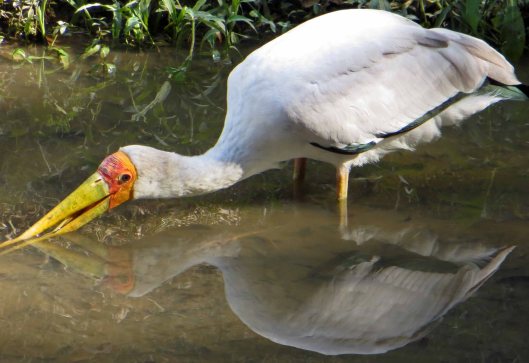
Today’s World Wildlife Wednesday comes to you from Kuala Lumpur, in Malaysia, though that is not the homeland of the Yellow-billed storks (Mycteria ibis). I found these storks in KL’s world-famous Bird Park but they are natives of sub-Saharan Africa, though most numerous in the swamps and marshlands, lagoons and mudflats of the east African countries of Zambia, Zimbabwe and Madagascar.

170309-yellow-billed-stork-1

The storks in my photos may look a bit odd, as if they’re drinking an awful lot of water, but they are, in fact, fishing. Rather than using their vision to see their prey, of small fish and frogs, crustaceans, worms and insects, they use their sense of touch, detecting movement and vibrations through their bills and then quickly snapping shut those bills to secure their food before gulping it down whole.

170309-yellow-billed-stork-2
170309-yellow-billed-stork-3

The Yellow-billed stork – also known as the Wood stork or the Wood ibis – stands about a metre tall when fully grown, and, just like us humans, their foreheads seem to get more and more wrinkly with age. The bird shown below left is a juvenile, so it is still wearing its mottled brown baby feathers.

170309-yellow-billed-stork-4
170309-yellow-billed-stork-5
Like Loading...

Nom, nom, nom

07 Tuesday Mar 2017

Posted by sconzani in birds, nature, plants

≈ 2 Comments

Tags

birding, birdwatching, Branta canadensis, Canada goose, diet of Canada goose

Until a couple of days ago I had only ever seen the Canada goose (Branta canadensis) grazing the grass on farmland in Cheshire and around Roath Park Lake or guzzling the offerings of generous humans, so it had never really occurred to me to wonder about what else they might consume. Now I find they are quite partial to aquatic vegetation like pondweed, horsetail, bulrushes and various reeds. This particular bird was not fussy as to preparation – it was a simple case of rip, roll, rinse, ruminate, repeat.

170307-canada-goose-1170307-canada-goose-2170307-canada-goose-3170307-canada-goose-4170307-canada-goose-5

Like Loading...

Weeeeeeeeeeeeeee!

27 Monday Feb 2017

Posted by sconzani in birds, nature

≈ 4 Comments

Tags

Aegithalos caudatus, birding, birdwatching, British birds, long-tailed tit

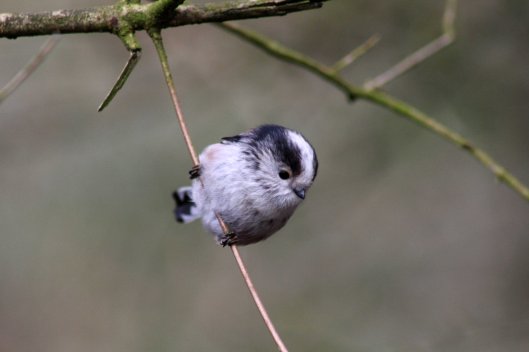
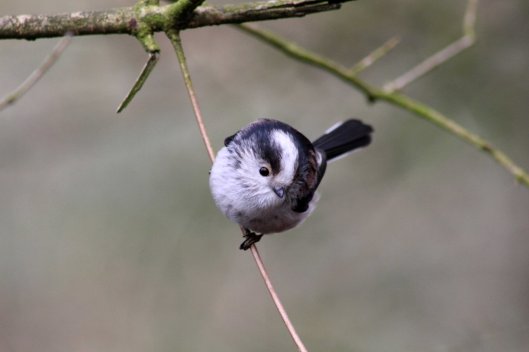
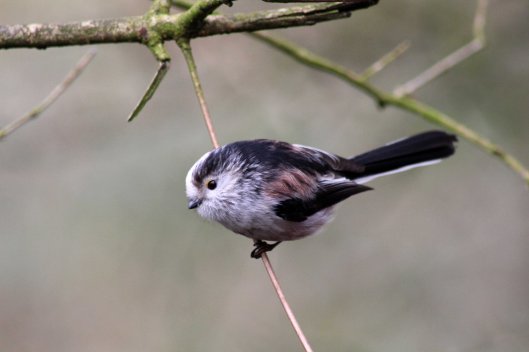
I tried to make this sequence of photos into a gif file, one of those ever-so-short movies that can either be fun or very annoying when you’re scrolling through your social media feeds. Sadly (or luckily, depending on how you look at it), I only have an old, poor-woman’s version of photoshop and, though I faithfully followed the tutorial, my gif-making efforts failed. So, you’ll just have to use your imagination to envisage how this tiny and ever-so-cute Long-tailed tit (Aegithalos caudatus) was rocking back and forth on its twig in order to get a better look at the seeds, its avian opposition and the human who was lurking nearby. It was gorgeous!

170227-long-tailed-tit-1170227-long-tailed-tit-2170227-long-tailed-tit-3

Like Loading...

A shufti at some Tufties

25 Saturday Feb 2017

Posted by sconzani in birds, nature

≈ 4 Comments

Tags

Aythya fuligula, birding, birdwatching, British birds, Cosmeston Lakes Country Park, Tufted duck

I’ve blogged about Tufted ducks (Aythya fuligula) before (back in January 2016 and, quite recently, when I caught them landing at Cosmeston Lakes) but, with that adorable little topknot of dark plumage, they are just such delightful creatures that I can’t resist sharing some recent photos. I hope they make you smile as much as me.

170235-tufted-duck-1

170235-tufted-duck-3
170235-tufted-duck-4
170235-tufted-duck-5
170235-tufted-duck-6

170235-tufted-duck-2

Like Loading...

A yodelling duck?

23 Thursday Feb 2017

Posted by sconzani in birds, nature

≈ 4 Comments

Tags

birding, birdwatching, British birds, Cardiff Bay, Clangula hyemalis, duck that yodels, Long-tailed duck

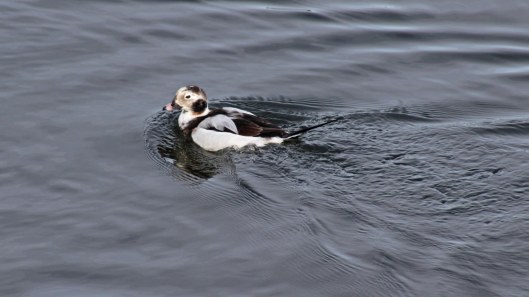
The Long-tailed duck (Clangula hyemalis) is an uncommon visitor to south Wales – the RSPB website recommends looking for them ‘from seawatching points around the coast in winter, particularly in northern Scotland, Shetland and Orkney’ – but this one has been over-wintering in Cardiff Bay with a raft of 8 Greater scaup (Aythya marila), and I finally got to see it a few days ago. (I had tried a couple of times previously but on those occasions the Scaup had Coots and the odd Great crested grebe accompanying them.)

170223-long-tailed-duck-1

The Long-tailed duck is a smallish sea duck that dives for the small fish, crabs and bivalve molluscs that make up its diet. It doesn’t breed in Britain but heads north to the Arctic regions, to Iceland and areas in northern Europe and northern America, so I guess this little guy (only the males have the really long tails) will be heading off soon to find a mate.

170223-long-tailed-duck-2

I didn’t hear this particular duck make any sound but apparently their call sounds something like a yodel and that is reflected in the names it’s known by in the northern isles of Shetland and Orkney: calaw, caloo and coal-and-candlelight are all derived from the sounds the duck makes. I think I would’ve been rather surprised to hear a duck yodel but I certainly feel privileged to have been able to sit and enjoy watching it.

170223-long-tailed-duck-3

with two of its Scaup friends, a male (front) and female (behind)

Like Loading...

Gwas y gog

21 Tuesday Feb 2017

Posted by sconzani in birds, nature

≈ 2 Comments

Tags

'servant of the cuckoo', Anthus pratensis, birding, birdwatching, British birds, Butty lark, Cardiff Bay, Cuckoo's sandie, Cuckoo's titling, Gwas y gog, Meadow pipit, pipit

While sitting watching some water birds at Cardiff Bay the other day, I heard the familiar call of a wagtail and turned to see two Pied wagtails bobbing about on the gravel path behind me but then was delighted to also see that they had a friend with them, a lovely little Meadow pipit (Anthus pratensis). I had seen a pair of Meadow pipits nearby the previous week but not been able to get close enough for good photos. This time I was in luck, probably because I was sitting down so there was no movement to catch its eye. I was able to slowly pivot round far enough to catch a few shots of the bird foraging for insects in the short grass.

170221-meadow-pipit-1

The Meadow pipit looks a bit like a song thrush but is smaller, about the same size as the wagtails this one was feeding near. Once very common, their numbers have been in decline over the last 40 years so they have now been added to the amber list, reflecting an increasing level of concern for their conservation. They tend to nest in moorland and heathland, habitats that have declined significantly in extent in recent years, which is likely to be the most significant factor in their decline.

170221-meadow-pipit-2

The Meadow pipit has long been associated with the Cuckoo, which often lays its eggs in the nests of these little pipits, and the association is reflected in the Meadow pipit’s many common names. In Hampshire it’s known as the Butty lark – Butty meaning friend or companion; in Durham it’s the Cuckoo’s sandie and the Cuckoo’s titling; and in the Welsh language it’s Gwas y gog which translates as ‘servant of the cuckoo’.

170221-meadow-pipit-3

Like Loading...

Permission to land

20 Monday Feb 2017

Posted by sconzani in birds, nature

≈ 2 Comments

Tags

birding, birdwatching, British birds, Cardiff, Cardiff Bay, Mute swan, swan landing on water

170220-swan-landing-1

‘Cardiff Bay approach, Swan 1702, level two hundred.”
‘Swan 1702, Cardiff Bay approach, descend and maintain one hundred.’

170220-swan-landing-2

‘Down to one hundred, Swan 1702.’
‘Swan 1702, Cardiff Bay Tower, cleared to land.’
‘Swan 1702, roger, cleared to land.’

170220-swan-landing-3

‘Cardiff Bay Ground (er, Water), Swan 1702, off runway 28T at alpha five.’
‘Swan 1702, roger, alpha five.’

170220-swan-landing-4

‘Swan 1702, swim straight ahead to gate bravo five.’
‘Straight ahead to bravo five, roger, Swan 1702.’

Like Loading...

From disappointment to delight

16 Thursday Feb 2017

Posted by sconzani in birds, nature

≈ Leave a comment

Tags

birding, birdwatching, British birds, Cosmeston Lakes Country Park, dunnock, Prunella modularis

170216-dunnock-1

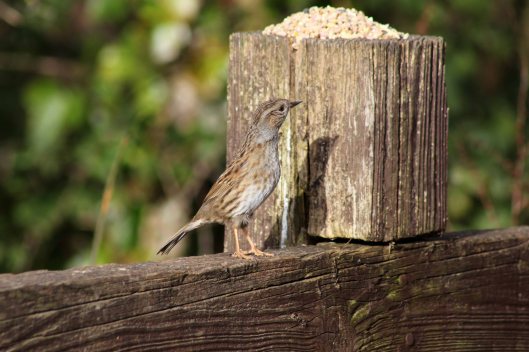
‘I wonder if there’s anything up there to eat. Humans do sometimes leave food for us birds on these posts.’

170216-dunnock-2

Disappointment, and a rather accusatory glare at me, perhaps hoping that I might remedy the lack of seeds but I didn’t have any.

170216-dunnock-3

What a difference a week makes! The sun is shining, the dunnock stretches as high as it can to see if there’s any food and, joy, a kind human has left a huge pile of seeds!

Like Loading...
← Older posts
Newer posts →

About me

sconzani

sconzani

I'm a writer and photographer; researcher and blogger; birder and nature lover; countryside rambler and city strider; volunteer and biodiversity recorder.

View Full Profile →

Follow earthstar on WordPress.com

Enter your email address to follow this blog and receive notifications of new posts by email.

Recent blog posts

  • Spider: Dysdera crocata April 18, 2026
  • Recent Reed buntings April 17, 2026
  • Tiny but feisty April 16, 2026
  • NFY: Large and Small whites April 15, 2026
  • A loveliness of ladybirds April 14, 2026

From the archives

COPYRIGHT

Unless otherwise acknowledged, the text and photographs on this blog are my own and are subject to international copyright. Nothing may be downloaded or copied without my permission.

Fellow Earth Stars!

  • Unknown's avatar
  • Unknown's avatar
  • Unknown's avatar
  • Unknown's avatar
  • Unknown's avatar
  • Unknown's avatar
  • Unknown's avatar
  • Unknown's avatar
  • Unknown's avatar
  • Unknown's avatar
  • Unknown's avatar
  • Unknown's avatar
  • Unknown's avatar
  • Unknown's avatar
  • Unknown's avatar
  • Unknown's avatar
  • Unknown's avatar
  • Unknown's avatar
  • Unknown's avatar
  • Unknown's avatar
  • Unknown's avatar
  • Unknown's avatar
  • Unknown's avatar
  • Unknown's avatar
  • Unknown's avatar
  • Unknown's avatar
  • Unknown's avatar
  • Unknown's avatar
  • Unknown's avatar
  • Unknown's avatar
  • Unknown's avatar
  • Unknown's avatar
  • Unknown's avatar
  • Unknown's avatar
  • Unknown's avatar
  • Unknown's avatar
  • Unknown's avatar
  • Unknown's avatar
  • Unknown's avatar
  • Unknown's avatar
  • Unknown's avatar
  • Unknown's avatar
  • Unknown's avatar
  • Unknown's avatar
  • Unknown's avatar
  • Unknown's avatar
  • Unknown's avatar
  • Unknown's avatar
  • Unknown's avatar
  • Unknown's avatar

Blog at WordPress.com.

Privacy & Cookies: This site uses cookies. By continuing to use this website, you agree to their use.
To find out more, including how to control cookies, see here: Cookie Policy
  • Subscribe Subscribed
    • earthstar
    • Join 642 other subscribers
    • Already have a WordPress.com account? Log in now.
    • earthstar
    • Subscribe Subscribed
    • Sign up
    • Log in
    • Report this content
    • View site in Reader
    • Manage subscriptions
    • Collapse this bar
 

Loading Comments...
 

You must be logged in to post a comment.
    %d