• ABOUT
  • BIRDING 2018
  • Birding 2019
  • BLOG POSTS
  • Butterflies 2018
  • Resources

earthstar

~ a celebration of nature

earthstar

Tag Archives: Black-tailed godwit

Black-tailed godwits

28 Friday Feb 2025

Posted by sconzani in birds

≈ Leave a comment

Tags

birding, birdwatching, Black-tailed godwit, British birds, godwits, Limosa limosa

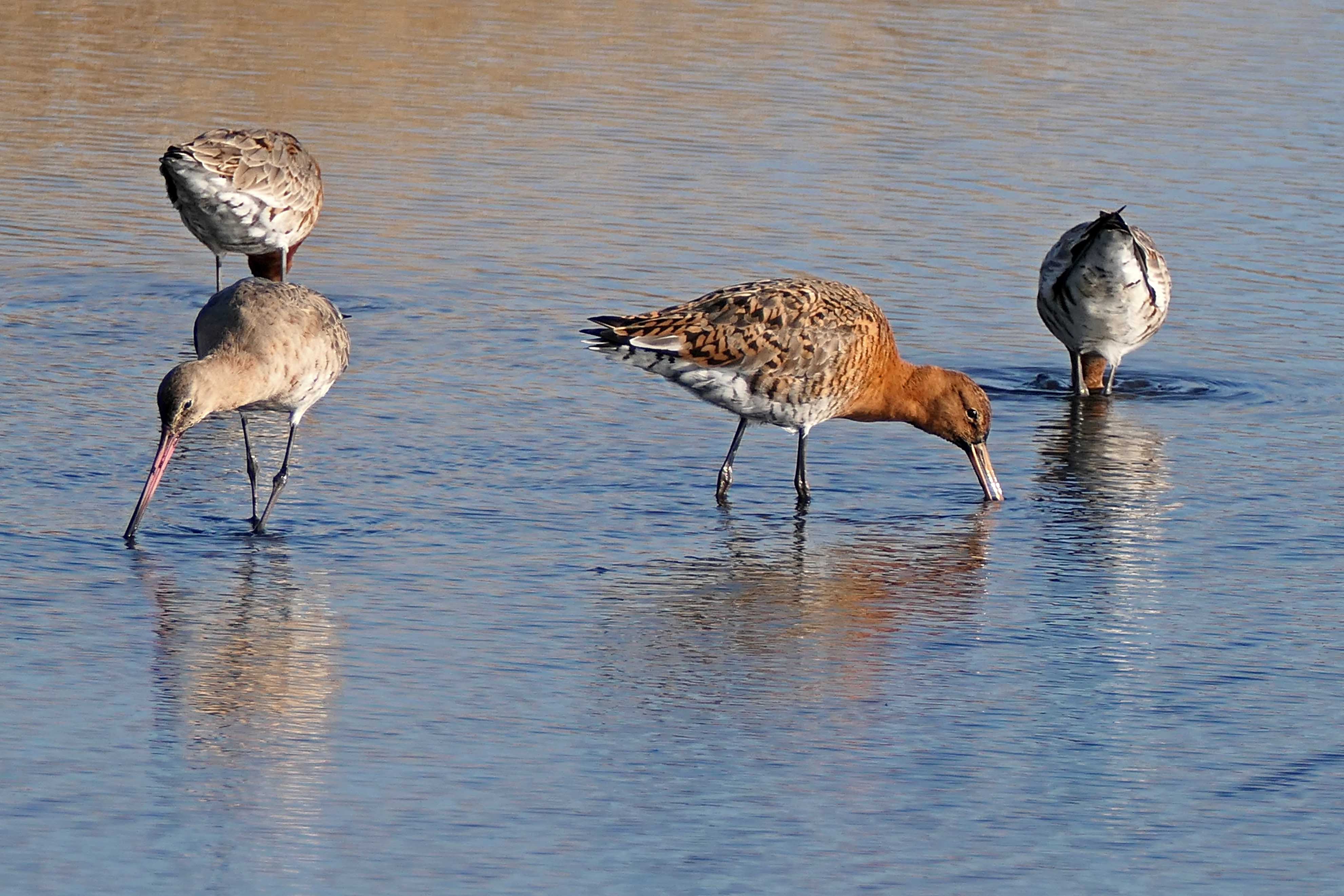
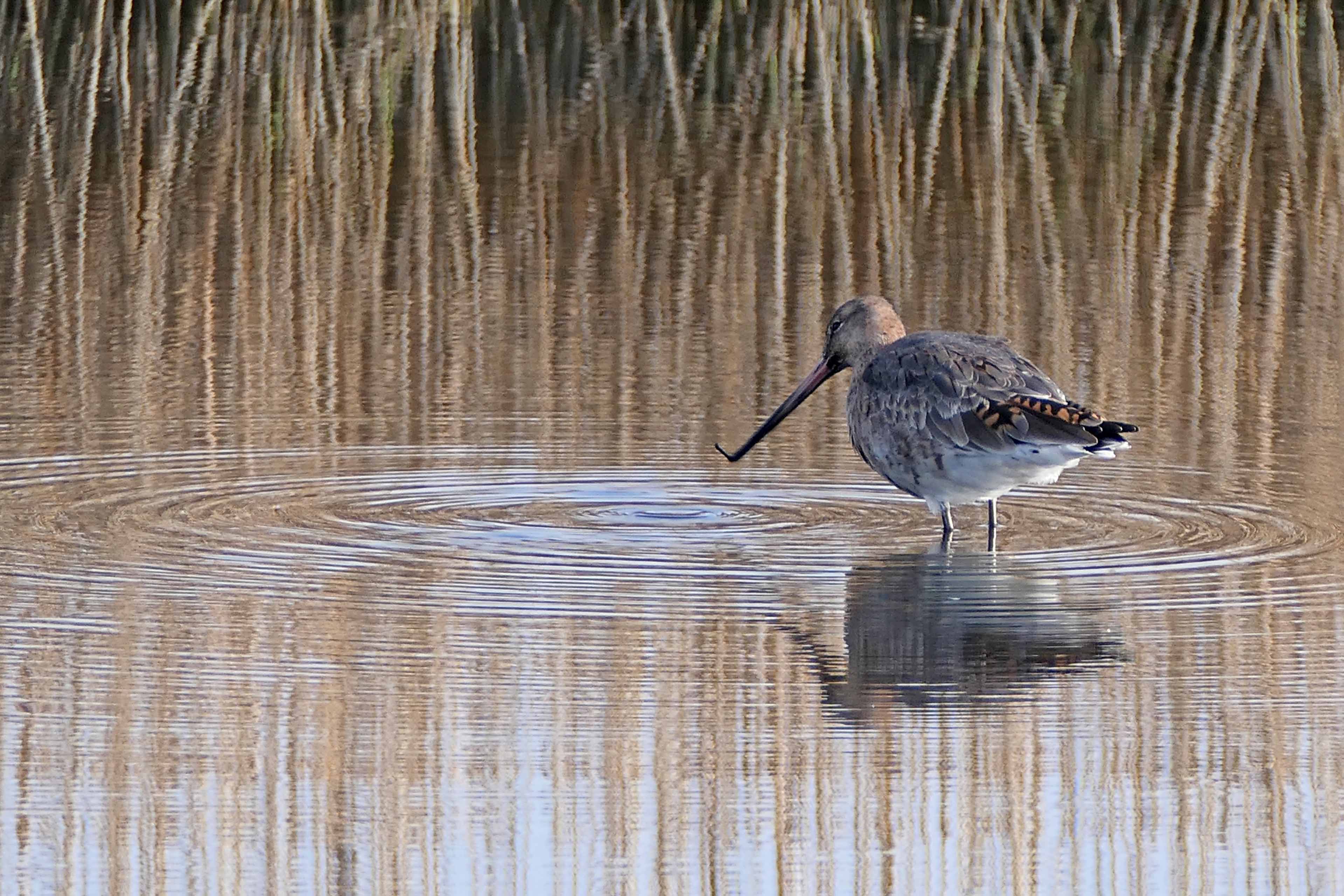
The most numerous bird species in Monday’s murmuration (see Wednesday’s blog for photos) was undoubtedly the Black-tailed godwit (Limosa limosa). With their long legs, necks and beaks and well-proportioned bodies, these are elegant birds.

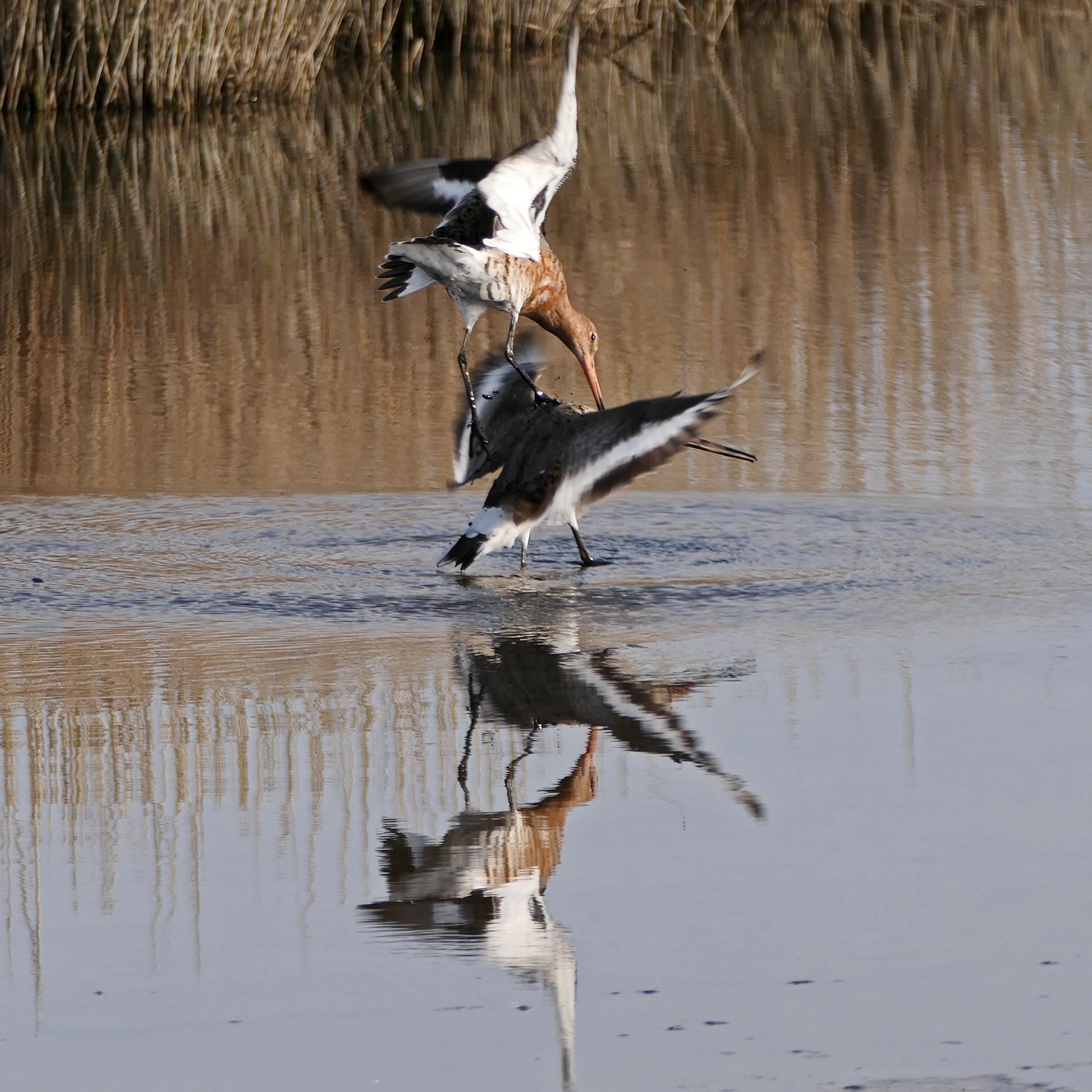
We have two species of godwit in Britain, Black-tailed and Bar-tailed (Limosa lapponica), and, at first glance, they can be difficult to tell apart but, as you can see in some of my photos, the Black-tailed have broad white wing-bars and their white tails finish with a black band, hence their name.

Some of these local birds are starting to change in to their breeding plumage of brick-red heads, necks and breasts, which is why the birds’ colours pictured here are so different. Only a very small number of Black-tailed godwits breed in the UK; most, if not all, of the birds pictured will soon be heading north-west to their breeding grounds in Iceland.

And that breeding location is one of the reasons Black-tailed godwits are now on the British red list, as the lowland Icelandic grasslands these birds favour are increasingly being converted to arable production and forestry. Climate change and environmental pressures are also affecting the locations in Britain where the birds over-winter, so they are facing pressure all year round. I feel privileged to have seen so many of these stunning creatures at such close quarters and to see their incredibly well synchronised aerial display earlier this week.

Like Loading...

Murmuration

26 Wednesday Feb 2025

Posted by sconzani in nature

≈ 2 Comments

Tags

birding, birdwatching, Black-tailed godwit, British birds, Dunlin, Knot, large flock of flying birds, murmuration

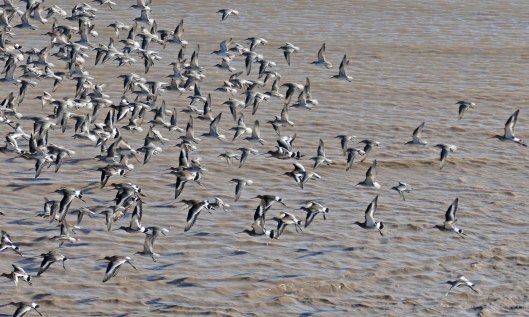
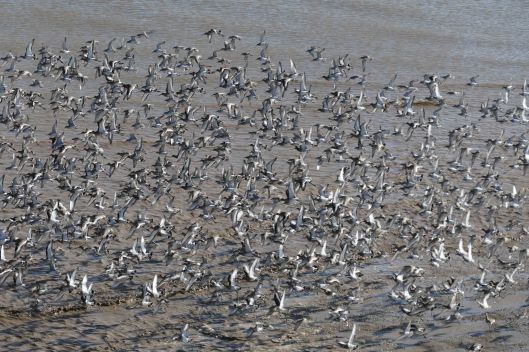
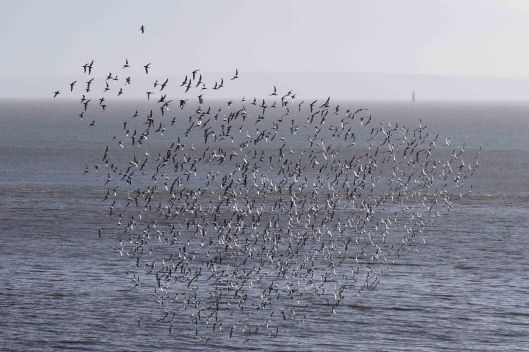
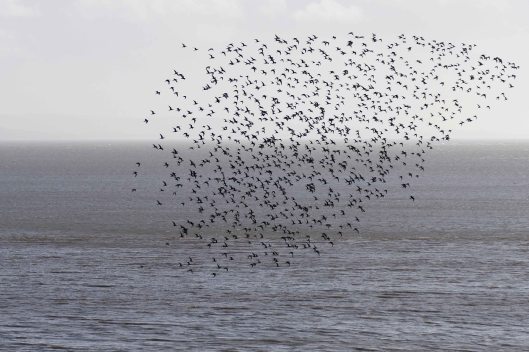
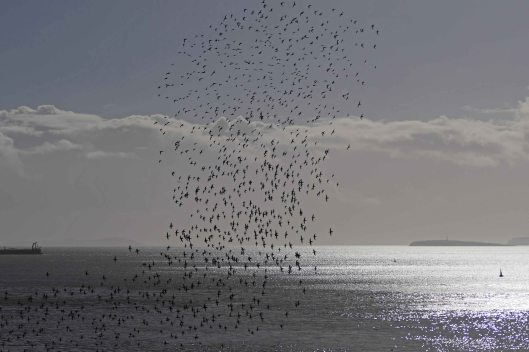
When you hear or read the word murmuration, you probably think of Starlings and the incredible sight of thousands of those birds flying though the evening sky in perfect unison. But it isn’t only Starlings that execute such amazing aerial displays; many other species of bird perform similar feats of synchronised flying and, on Monday, I was privileged to see just such a spectacle.

As soon as I arrived at the Cardiff Bay Barrage, I saw a large flock of birds flying around the area outside the Barrage, on the edge of the Bristol Channel. Luckily for me, the birds settled on one of the mudflats and began feeding. In my almost ten years of living in the area, I had never seen so many waders doing this; they usually feed on mudflats north of Cardiff.

The flock must have been several hundred strong and consisted of three species of wader, Black-tailed godwit, Knot and Dunlin. For 45 minutes, I watched and listened to and photographed these stunning birds, sharing my delight and wonder with a man who was out walking his dog and who’d never seen anything like this sight in his many years of living locally.

Then, for some unknown reason, the Barrage operations staff opened more of the sluice gates that allow water in Cardiff Bay to flow out in to the Bristol Channel, creating a small wave that swiftly encroached on the area of mud where the flock was feeding, and eventually covering it completely. As the wave reached them, the birds took to the air, creating an ever expanding cloud of flying birds. As one, they flew around the outer Barrage area, looking for another place to land but there was nowhere. For perhaps ten minutes, they swirled high into the air, then back down towards the water, wheeling left and right in perfect harmony, before abandoning their search for more mudflats and heading northwards along the coast. It was a sublime aerial symphony that I will never forget.

Like Loading...

275/365 Black-tailed godwits

02 Wednesday Oct 2019

Posted by sconzani in autumn, birds, nature

≈ Leave a comment

Tags

birding, birdwatching, Black-tailed godwit, British birds, RSPB Lodmoor

For me, the Black-tailed godwits were a highlight of our walk around RSPB Lodmoor. They’re not uncommon birds but I don’t see them on my local patch and don’t often get close views of them.

191002 black-tailed godwit (1)

There were several at Lodmoor but the little beauty shown below was feeding quite close to the western path. That feeding was a constant repetition of probing the mud to locate some choice morsel, raising its beak from the water and throwing back its head to gulp down said morsel, then plunging its head down into the water again. If its frequent gulps were any indication, the bird was finding plenty of food.

191002 black-tailed godwit (2)191002 black-tailed godwit (3)

Black-tailed godwits are handsome waders that can be seen almost year round in Britain. Though local populations migrate to overwinter in Africa, birds from Iceland come to Britain to enjoy our relatively milder winter climate.

191002 black-tailed godwit (4)

Like Loading...

175/365 The eye of faith

24 Monday Jun 2019

Posted by sconzani in 365DaysWildin2019, birds, nature

≈ 4 Comments

Tags

#365DaysWild, birding, birdwatching, Bittern, Black-tailed godwit, British birds, Cuckoo, Great white egret, Grey heron, Hobby, Marsh harrier, RSPB Ham Wall, Shapwick Heath, Whitethroat

You’re just going to have to believe me when I tell you that the photo on the left below is of a Cuckoo in a tree, and the photo on the right is of a Hobby in the same tree four minutes later.

190624 cuckoo
190624 hobby

Today’s photos were taken during yesterday’s Glamorgan Bird Club field trip to RSPB Ham Wall and Shapwick Heath on the Somerset Levels, a very watery place, as you can imagine, and one where, depending on the time of year, you’re almost guaranteed to see Marsh harriers, Bitterns, Great white and Little egrets. So, here they are, plus a couple of extras. It was a grand day out, as usual on these birding field trips.

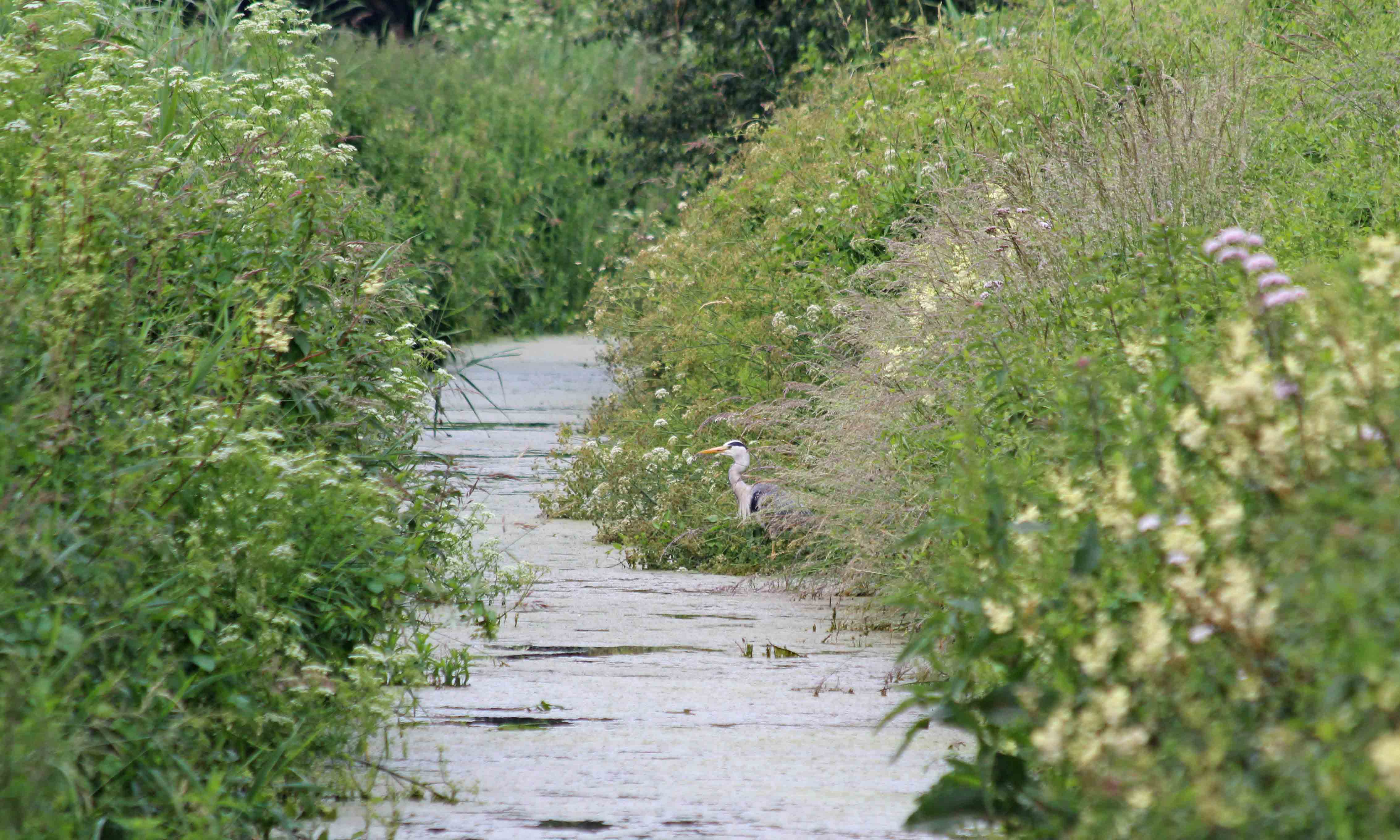
A Grey heron hunts in one of the lush reens …

190624 heron in a reen

The obligatory blurry bittern fly-past shot.

190624 bittern flypast

The equally obligatory distant Marsh harrier shot … but I did manage to get two in one frame.

190624 marsh harriers

Great white egrets aplenty …

190624 great white egret

Black-tailed godwits and a couple of Lapwings doing a turn of the pond. And “Look at me! Look at me!” called the handsome little Whitethroat, so we did.

190624 godwits and lapwings
190624 whitethroat

Like Loading...

The doubly muddy godwits

06 Tuesday Nov 2018

Posted by sconzani in birds, coastal fauna, nature

≈ Leave a comment

Tags

birding, birdwatching, Black-tailed godwit, British birds, godwit, Limosa limosa, RSPB Lodmoor

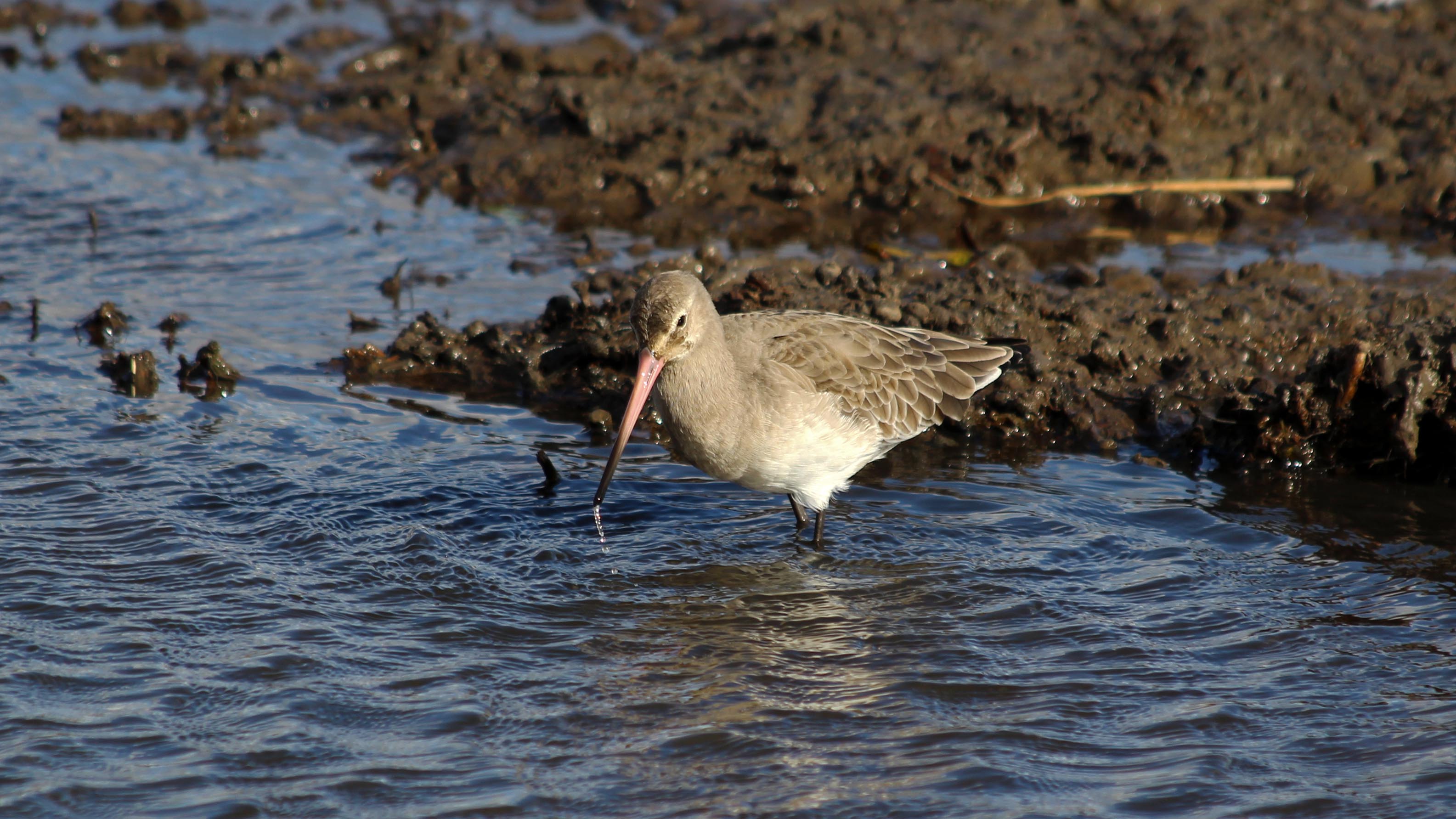
This is the Black-tailed godwit in its winter plumage, a delicate combination of white below and pale beige and grey above, with just a hint of pink from the soft autumn light.

181106 black-tailed godwit (1)

The Black-tailed godwit used to be much more numerous in Britain, with a strong breeding population. But not any more. Now, although as many as 40,000 birds come from Iceland to over-winter on these isles, just 60 pairs breed here.

181106 black-tailed godwit (2)

The Back from the Brink project is trying to change that terrifying statistic. By monitoring the nests of existing birds, by protecting them from predators through the installation of electric fences, by providing more areas where the birds can breed, by collecting eggs from at-risk nests and hand-rearing them, the project hopes to ensure Black-tailed godwits have a future in Britain.

181106 black-tailed godwit (6)

The birds I saw recently at RSPB Lodmoor are almost certainly birds that have bred in Iceland but they all look the same. They are large wading birds, with long beaks they use to probe the mud for snails, worms and insects – the birds I was watching must’ve been hungry as I managed to take a lot of photos with their heads under water! Their scientific name, Limosa limosa, reflects their love of mud – limosa comes from the Latin limus, meaning mud, so these godwits are doubly muddy.

181106 black-tailed godwit (4)
181106 black-tailed godwit (5)

Interestingly, when researching this post I found out that the female Black-tailed godwits have longer beaks than the males, which means they don’t compete for food – a fascinating evolutionary adaption.

181106 black-tailed godwit (3)

Like Loading...

Lesser yellowlegs

04 Sunday Nov 2018

Posted by sconzani in birds, nature

≈ Leave a comment

Tags

American bird, autumn migration, birding, birdwatching, Black-tailed godwit, British vagrant bird, Dunlin, Greenshank, Lesser yellowlegs, RSPB Lodmoor, Tringa flavipes

Its name says it all really – the Lesser yellowlegs (Tringa flavipes) is a slender wader, with long yellow legs, and the smudgy, less defined markings on the breast of this particular bird point to it being a juvenile.

181104 lesser yellowlegs (1)

The Lesser yellowlegs is native to the Americas, spending its summers breeding in the northern forests that lie between Alaska and Quebec and its winters on the United States’ Gulf coast and in parts of South America.

181104 lesser yellowlegs (2)
181104 lesser yellowlegs (3)

The birds we see here in Britain are vagrants, birds that have strayed or been blown off course during their migration. On average, about ten birds are seen in various parts of Britain each year and, amazingly, there was also a Lesser yellowlegs at RSPB Lodmoor when we visited during last year’s Portland trip

181104 lesser yellowlegs (4)
181104 lesser yellowlegs (5)

Two interesting facts about this bird from the Cornell Lab of Ornithology website:

Both the male and female Lesser Yellowlegs provide parental care to the young, but the female tends to leave the breeding area before the chicks can fly, thus leaving the male to defend the young until fledging.

and …

The oldest recorded Lesser Yellowlegs was at least 4 years, 11 months old when it was found in South Dakota in 1965. It had been banded in the Lesser Antilles in 1960.

181104 lesser yellowlegs (6)

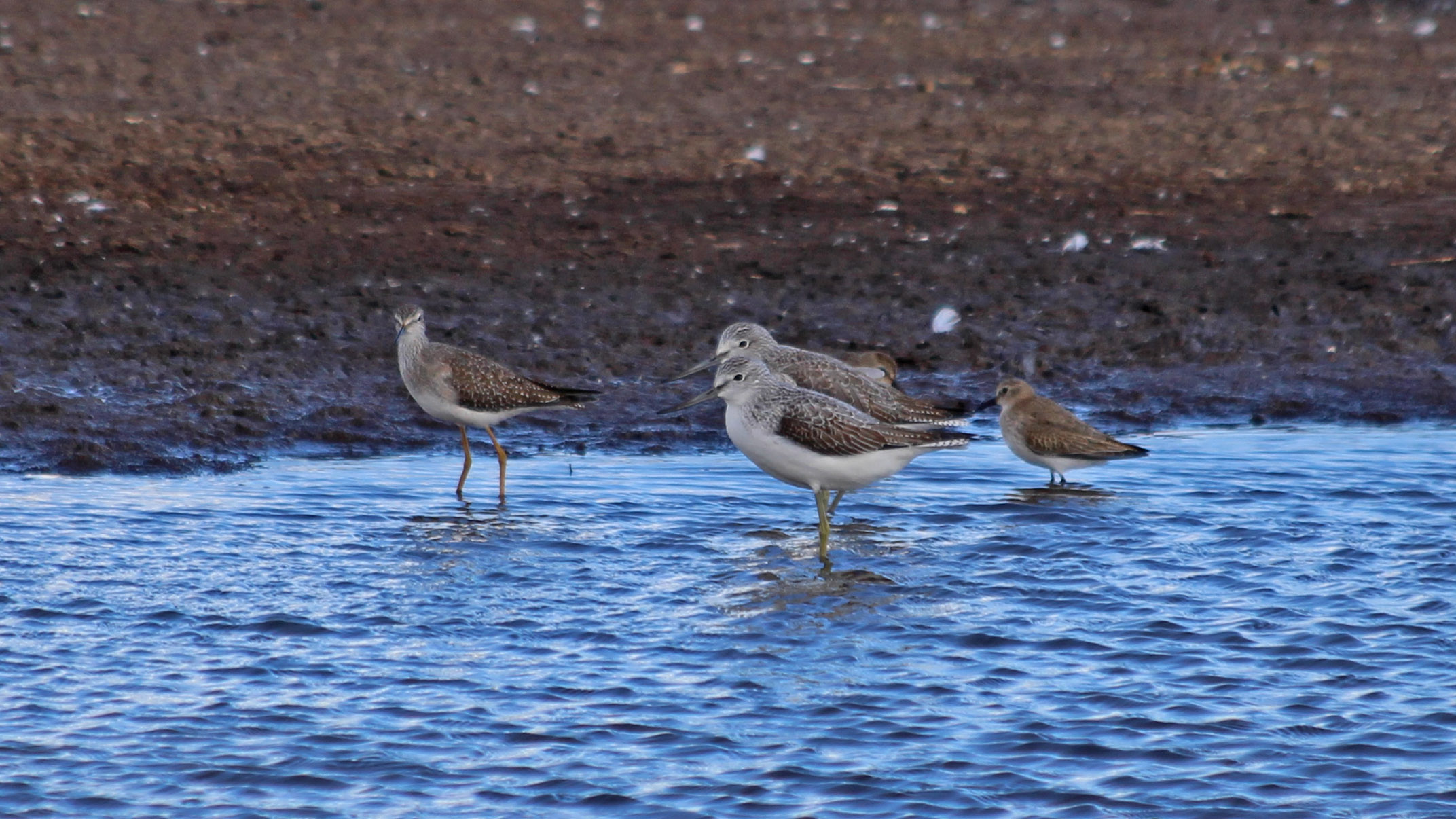
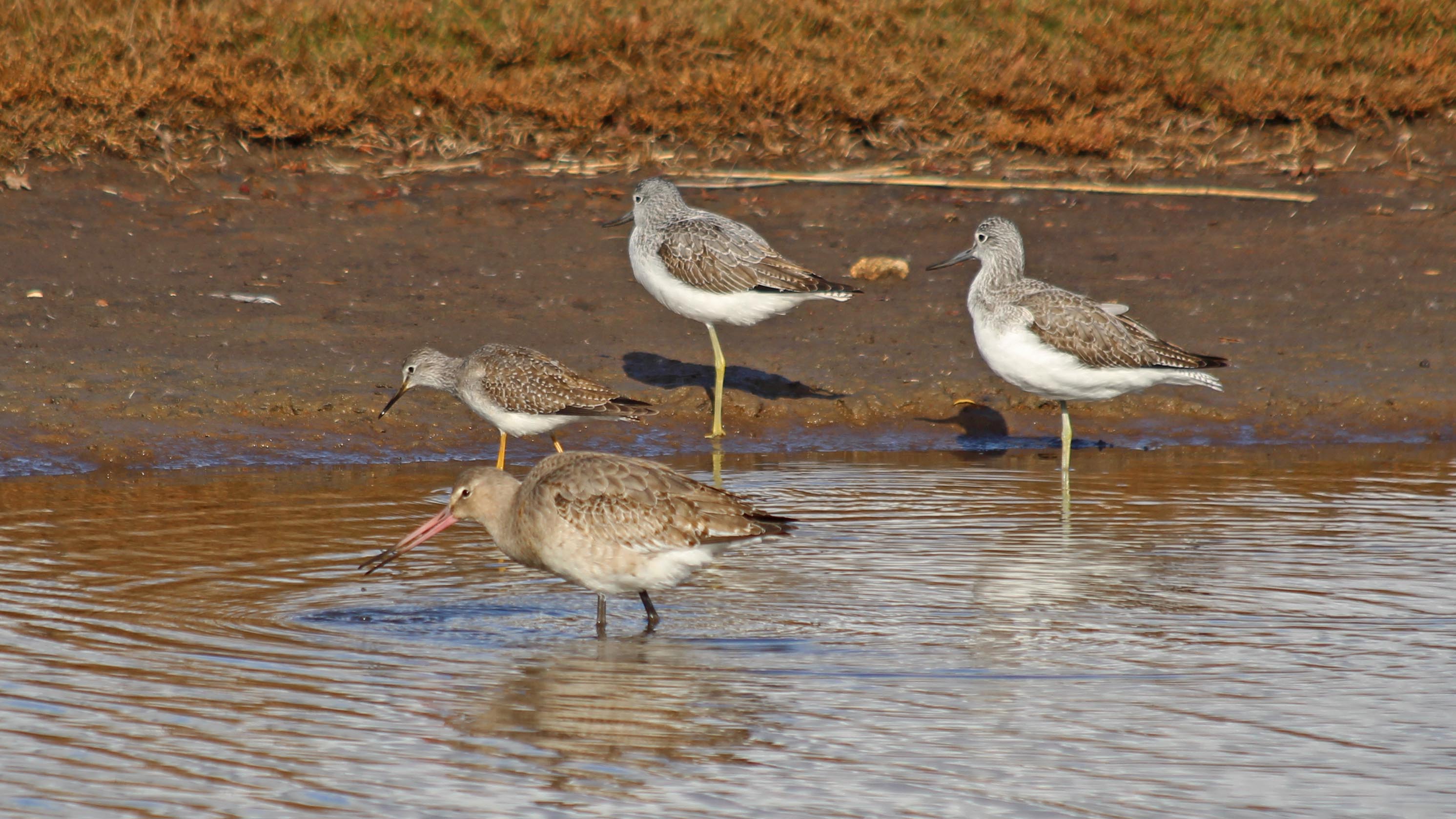
Back here in Dorset, it was great to get such close views of the Lodmoor Lesser yellowlegs and particularly to see it in close company firstly with two Greenshanks and a Black-tailed godwit (photo above), and then with the same two Greenshanks and a Dunlin (below). This really helped to see the relative differences in size, shape and plumage.

181104 lesser yellowlegs (7)

Heck, I even managed to get a short video of the lovely little thing. Enjoy!

Like Loading...

Birding at RSPB Lodmoor

31 Wednesday Oct 2018

Posted by sconzani in autumn, birds, nature

≈ Leave a comment

Tags

birding, birdwatching, Black-tailed godwit, British birds, Greenshank, Lapwing, Lesser yellowlegs, Little egret, Lodmoor, RSPB Lodmoor, Ruff, Snipe, Teal

Oh to have somewhere like RSPB Lodmoor as my local birding patch! Its 76 hectares of wetlands and grasslands, saltmarsh and reed beds are home to a huge variety of birds and often attract passing rarities, plus it’s a lovely place to walk and all within a mile of Weymouth town centre.

181031 birding Lodmoor (1)

This was our second stop on the way to Portland last Friday. Our target bird was the Lesser yellowlegs – amazingly, a Lesser yellowlegs was also at Lodmoor when we went to Portland in 2017 – but there were many other lovely birds to be seen, and, as I was able to get reasonably good photos, some of these birds will be getting their own blog posts in the coming days. So, here are some tasters of what you can expect to see at this outstanding reserve.

181031 birding Lodmoor (2)181031 birding Lodmoor (3)

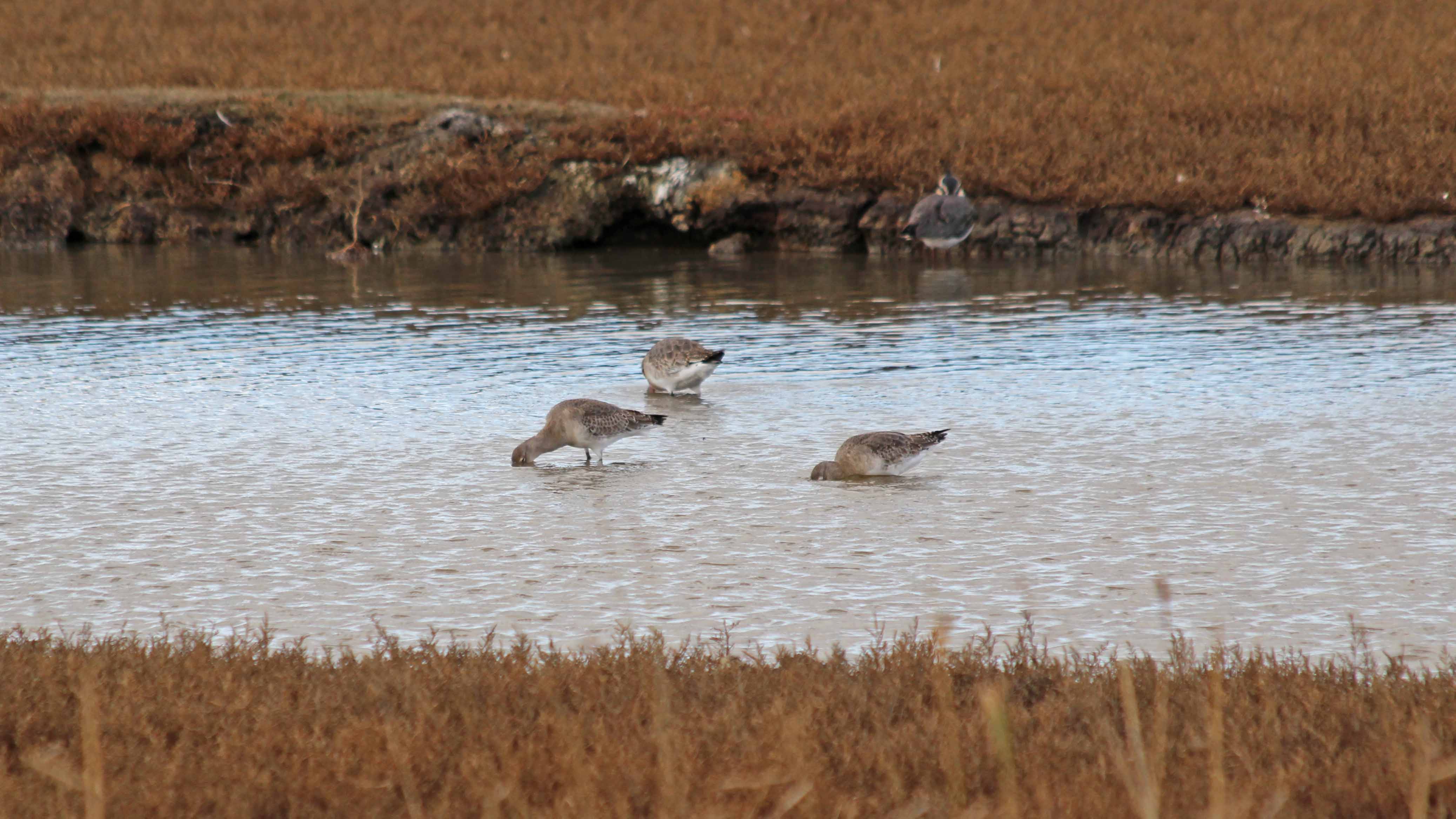
Most of my photos of the Black-tailed godwits are like this first one – heads down, bottoms up – but I did manage to get some head shots.

181031 birding Lodmoor (4)

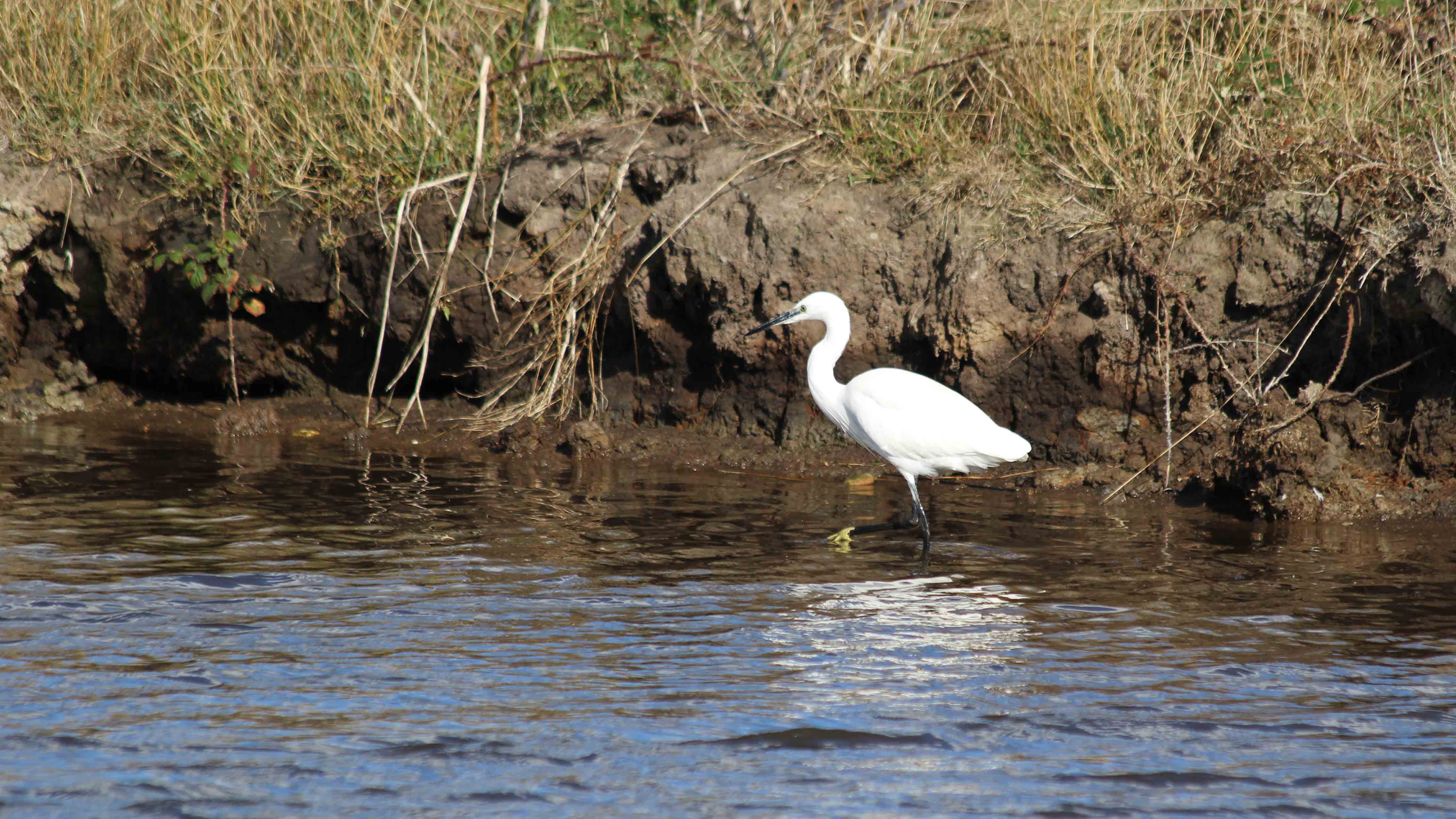
Just a few years ago Little egrets would have been a rare sight in Britain but not any more. They’re now well settled, breeding and frequently seen.

181031 birding Lodmoor (5)
181031 birding Lodmoor (6)

I love the colours in the Lapwings’ plumage. They look plain black and white from a distance but are, in fact, adorned in rich sumptuous greens. Such elegant birds.

181031 birding Lodmoor (7)

We saw several Snipe poking about in the mud for food.

181031 birding Lodmoor (8)

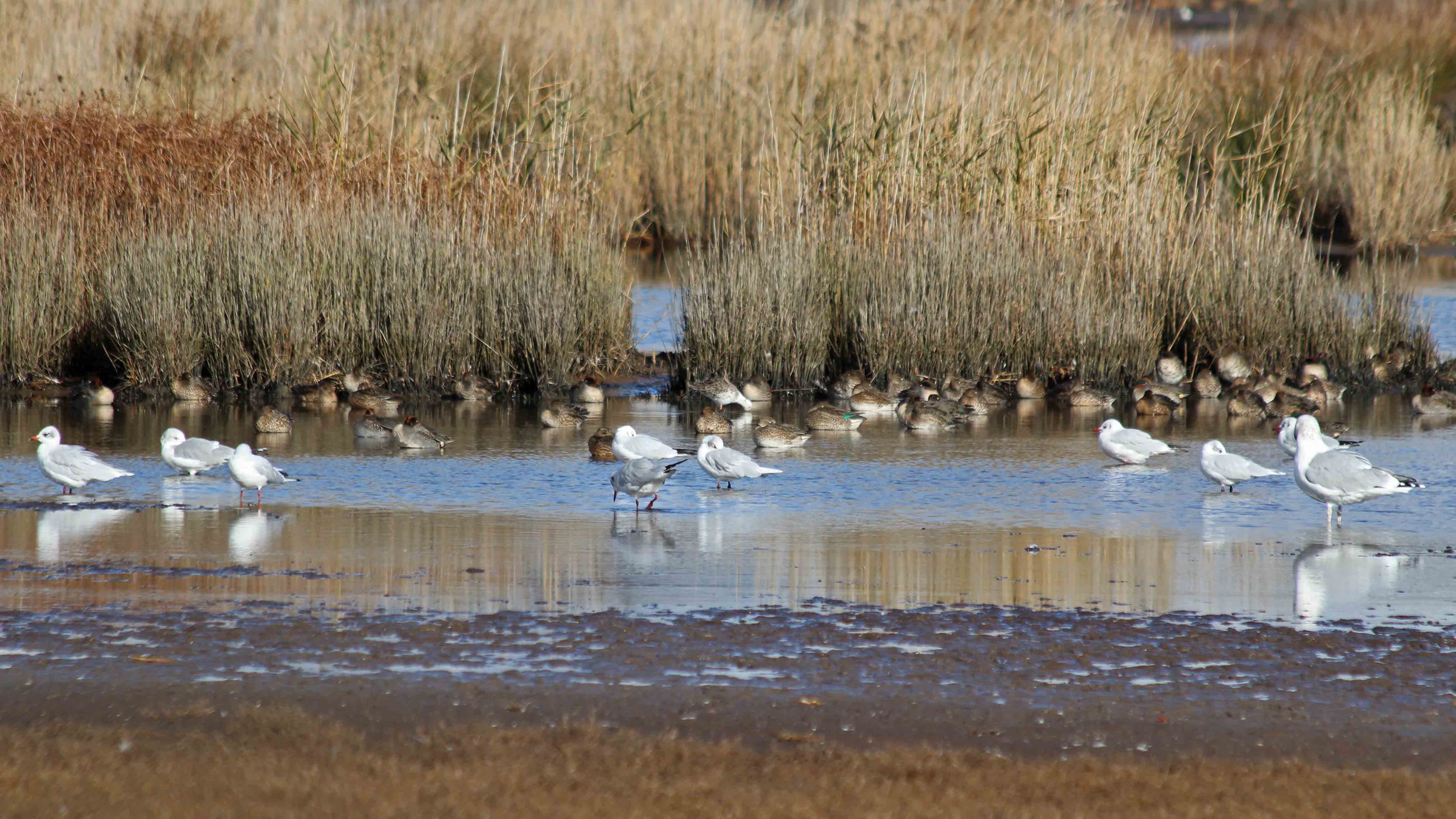
After the Canada geese, probably the second most abundant species of bird we saw was Teal, many of which were sheltering from the freezing wind behind clumps of reeds. If you look carefully, you can just see a Ruff in the centre near the reeds.

181031 birding Lodmoor (9)

The star of the Lodmoor show, the Lesser yellowlegs, seen here behind a Black-tailed godwit and to the left of 2 lovely Greenshanks. All three of these birds will be getting their own blog posts.

Like Loading...

About me

sconzani

sconzani

I'm a writer and photographer; researcher and blogger; birder and nature lover; countryside rambler and city strider; volunteer and biodiversity recorder.

View Full Profile →

Follow earthstar on WordPress.com

Enter your email address to follow this blog and receive notifications of new posts by email.

Recent blog posts

  • M is for mite December 18, 2025
  • L is for lepidopteran lifers December 17, 2025
  • K is for Keeled skimmers December 16, 2025
  • J is for Jersey tiger December 15, 2025
  • I is for Ichneumon December 14, 2025

From the archives

COPYRIGHT

Unless otherwise acknowledged, the text and photographs on this blog are my own and are subject to international copyright. Nothing may be downloaded or copied without my permission.

Fellow Earth Stars!

  • Unknown's avatar
  • Unknown's avatar
  • Unknown's avatar
  • Unknown's avatar
  • Unknown's avatar
  • Unknown's avatar
  • Unknown's avatar
  • Unknown's avatar
  • Unknown's avatar
  • Unknown's avatar
  • Unknown's avatar
  • Unknown's avatar
  • Unknown's avatar
  • Unknown's avatar
  • Unknown's avatar
  • Unknown's avatar
  • Unknown's avatar
  • Unknown's avatar
  • Unknown's avatar
  • Unknown's avatar
  • Unknown's avatar
  • Unknown's avatar
  • Unknown's avatar
  • Unknown's avatar
  • Unknown's avatar
  • Unknown's avatar
  • Unknown's avatar
  • Unknown's avatar
  • Unknown's avatar
  • Unknown's avatar
  • Unknown's avatar
  • Unknown's avatar
  • Unknown's avatar
  • Unknown's avatar
  • Unknown's avatar
  • Unknown's avatar
  • Unknown's avatar
  • Unknown's avatar
  • Unknown's avatar
  • Unknown's avatar
  • Unknown's avatar
  • Unknown's avatar
  • Unknown's avatar
  • Unknown's avatar
  • Unknown's avatar
  • Unknown's avatar
  • Unknown's avatar
  • Unknown's avatar
  • Unknown's avatar
  • Unknown's avatar

Blog at WordPress.com.

Privacy & Cookies: This site uses cookies. By continuing to use this website, you agree to their use.
To find out more, including how to control cookies, see here: Cookie Policy
  • Subscribe Subscribed
    • earthstar
    • Join 667 other subscribers
    • Already have a WordPress.com account? Log in now.
    • earthstar
    • Subscribe Subscribed
    • Sign up
    • Log in
    • Report this content
    • View site in Reader
    • Manage subscriptions
    • Collapse this bar
 

Loading Comments...
 

You must be logged in to post a comment.

    %d