• ABOUT
  • BIRDING 2018
  • Birding 2019
  • BLOG POSTS
  • Butterflies 2018
  • Resources

earthstar

~ a celebration of nature

earthstar

Tag Archives: British birds

Silly as a coot

12 Tuesday Jan 2016

Posted by sconzani in birds, nature, nature photography

≈ Leave a comment

Tags

birding, birds, birdwatching, British birds, Coot

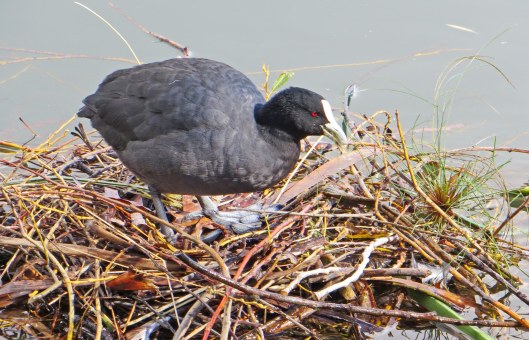
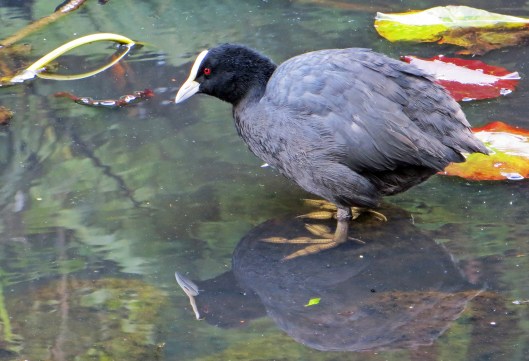
The Common coot (Fulica atra) is considered a game bird in Britain, with the same hunting season as the moorhen, though I would certainly never be tempted to kill one. Maybe it’s something to do with birds and water, but these are very entertaining to watch. The bird’s captivating silliness is probably where the idiom ‘silly coot’, used to describe a foolish person, originated. And the coot’s white head shield is the source of another common expression ‘to be as bald as a coot’, though bald here does not, in fact, mean hairless; an alternate definition of bald is ‘marked or streaked with white’.
160112 coot (1)

Although I’m a New Zealander, the coot is very familiar to me as it was introduced to New Zealand in 1958 and, like most immigrants, has made itself right at home. I am constantly fascinated by its bizarre lobed feet, a cross between the long toes of wading birds and the webbed feet of swimming birds like ducks. Coots are mostly vegetarians, though they do also consume snails and insect larvae, and will readily join the line up at the local lake when humans are dishing out food to the ducks, geese and swans.
160112 coot (2)

Like Loading...

The cute little tufties

09 Saturday Jan 2016

Posted by sconzani in birds, nature, nature photography

≈ 1 Comment

Tags

birding, birds, birdwatching, British birds, Tufted duck

160109 tuffted duck (3)

Every time I walk around my local lake these charming little ducks delight me as they dive to feed on the roots, seeds and buds of aquatic plants, clams and snails, aquatic insects and sometimes amphibians and small fish. Until 150 years ago, they were only winter visitors but the resident population of the Tufted Duck (Aythya fuligula) expanded rapidly during the late 19th and early 20th centuries due to the colonisation of British waterways by the small freshwater bivalve, the Zebra Mussel.
 160109 tuffted duck (2)

I particularly love their floppy little top-knot and it’s easy to see how they got their common name but, like most British birds, they’ve gained a wide variety of other vernacular names: black curre, black poker, black topping duck, black wigeon, doucker, douver, crested diver and magpie diver. Those last two seem particularly appropriate given their tufts and colours. However, though the males may look black and white, when you see them in the sunlight you soon realise their plumage has a range of colours, from brown and green to purple. And, personally, I think there’s something slightly demonic about that bright yellow eye, particularly in the male, where the colour contrast is greater.

160109 tuffted duck (1)

Like Loading...

The early bird

06 Wednesday Jan 2016

Posted by sconzani in birds, nature, nature photography

≈ 4 Comments

Tags

birding, birds, birdwatching, British birds, proverb, Song thrush, thrush, worm

… catches the worm!

160106 song thrush (1)160106 song thrush (2)160106 song thrush (3)160106 song thrush (4)

Like Loading...

Pochard perfection

03 Sunday Jan 2016

Posted by sconzani in birds, nature, nature photography

≈ 3 Comments

Tags

birding, birds, birdwatching, British birds, Pochard

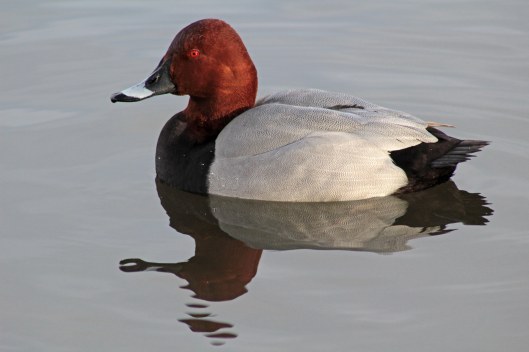
As soon as I spotted his bright chestnut-coloured head I knew this was a Pochard (Aythya ferina). Though this was a first-ever sighting for me today, on Roath Park lake in Cardiff, his colouring was unmistakable, and what a handsome chap he was. The origin of his name is, apparently, something of a mystery – and its pronunciation arguable! – though he’s attracted a very long list of common names, including doucker, dun bird, dun poker, poker, red-headed wigeon, smee duck, well plum, whinyard, and, my favourite, red-eyed poker.

160103 pochard (2)

The Pochard has only been a British resident for about 200 years and, even now, the majority of birds come here primarily during the winter months, to escape the bitterly cold conditions in Russia and eastern Europe.

160103 pochard (3)

My new friend was amusing me with diving demonstrations – he dives for food, which could include anything from submerged plant life and seeds to small fish, snails and insects. I didn’t spot any females around today but I’m a regular visitor to the lake so will certainly be looking out for Mrs Pochard and hoping to see this beautiful creature again.

160103 pochard (1)

Like Loading...

Nature’s nutcracker

30 Wednesday Dec 2015

Posted by sconzani in birds, nature, nature photography

≈ 2 Comments

Tags

birding, birds, birdwatching, British birds, nuthatch

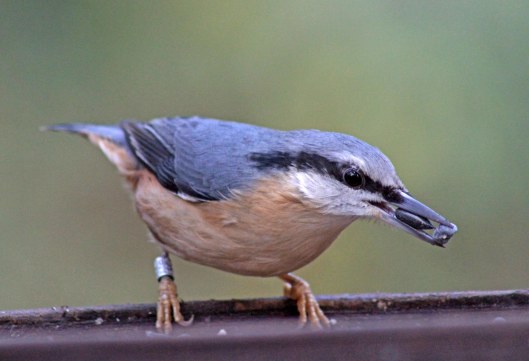
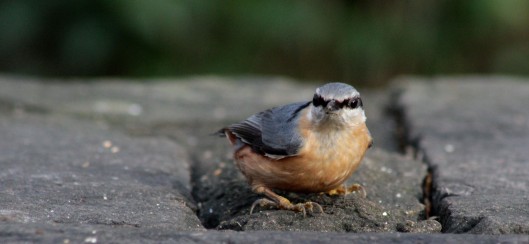
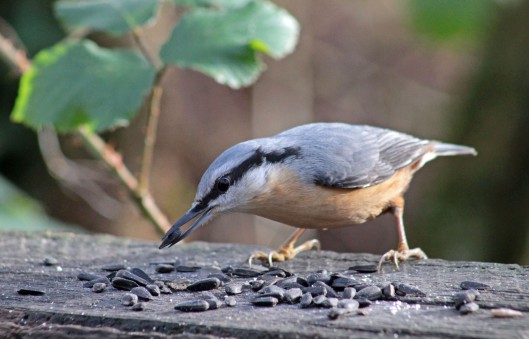
The nuthatch (Sitta europaea) can frequently be seen upside down, scrambling down a tree trunk or hanging from a bird feeder while pecking urgently to extract its favourite nuts and seeds. As its name implies, it loves nuts and, like squirrels and jays, frequently stashes nuts in chinks and crevices. This can cause problems for homeowners – I read one story of a nuthatch burying seeds in the cracks between patio pavers and in potted plants. If the bird didn’t return for all its buried food, the homeowners got its (unwanted) treasure of sprouting trees, shrubs and sunflowers.

nuthatch (3)

Many of the nuthatch’s vernacular names refer to its habit of wedging nuts in crevices and striking them with its ultra-sharp beak: ‘nut topper’ and ‘woodcracker’ in Surrey, ‘nutcracker’ in Shropshire, ‘nuthack’ and ‘nut jobber’ from Berkshire, and ‘jobbin’ in Northamptonshire (‘job’ is from an old English verb meaning to peck or jab). The nuthatch’s other common names refer to its mud-plastering nest-building habits: ‘mud dabber’ from Somerset, and ‘mud stopper’ in various parts of southern England.

nuthatch (2)

Cracking and eating nuts is a favourite human pastime at Christmas, and The Nutcracker a favourite Christmas-time ballet but I think, in terms of entertainment, Nature’s nutcracker has them both beat!

nuthatch (1)

Like Loading...

Communing with cormorants

27 Sunday Dec 2015

Posted by sconzani in birds, nature, nature photography

≈ 4 Comments

Tags

birding, birds, birdwatching, British birds, Cormorant

The cormorant (Phalacrocorax carbo) is common around the world – the Chinese have long been known to train domesticated birds for fishing and, in 17th-century England, it was a court fashion to tame cormorants for fishing, a trend so prevalent that the royal household included a Master of the Cormorants. Though they fish by diving underwater for up to two minutes at a time, their plumage is not waterproof, which is why cormorants can often be seen with wings outstretched, drying in the wind and sunshine.

cormorant (2)

Cormorants are large and very distinctive birds – to some, quite reptilian in appearance, and can be found throughout Britain, in their preferred habitats of rocky coastlines and coastal estuaries, though in recent years the European subspecies has increasingly been populating inland lakes and waterways. For this the cormorant suffers very bad press from fishermen, who have been demanding the right to cull these superior fishers. One place where the birds are particularly well regarded, however, is Liverpool, where the Liver Bird – actually a cormorant – has long been the city’s emblem.

cormorant

Like Loading...

Image

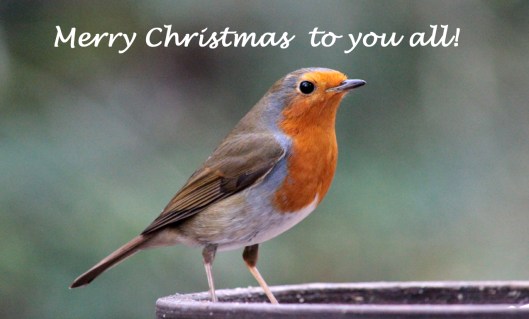
Christmas greetings

24 Thursday Dec 2015

Tags

birding, British birds, Christmas greeting, Merry Christmas, robin

Xmas robin tw

Like Loading...

Posted by sconzani | Filed under birds, nature, nature photography

≈ Leave a comment

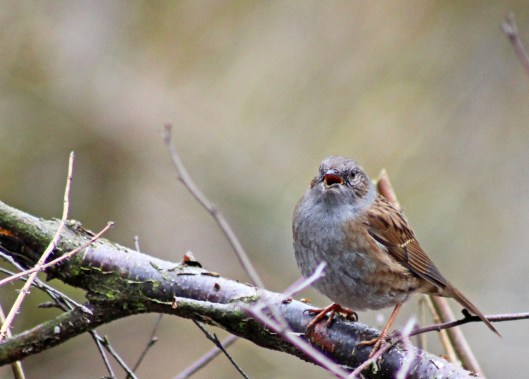
What’s small, brown and often polygamous?

22 Tuesday Dec 2015

Posted by sconzani in birds, nature, nature photography

≈ 3 Comments

Tags

birding, birds, birdwatching, British birds, dunnock

151222 dunnock (2)

I am a huge fan of this small sparrow-like bird. Its name, Dunnock (Prunella modularis), comes from the Old English word for ‘little brown’ and its brown and grey colouring is certainly nothing flashy but it does blend in perfectly with the hedges and shrubs, bracken and leaf litter through which it constantly shuffles to find its snacks of beetles, ants and spiders.

151222 dunnock (1)

The dunnock may look rather drab but its sex life is anything but. It may have an incredibly short copulation time, of a fraction of a second, but it more than makes up for that by being the most frequent fornicator of Britain’s small birds, recorded at once or twice an hour for a 10-day period! What’s more, it frequently dabbles in polygyny, polyandry and polygynandry. It seems that by mating with two or more males a female not only increases the diversity of the breed, she also helps to prevent rival males from destroying her eggs and encourages more than one male to feed her ravenous offspring. Smart female!

151222 dunnock (3)

Like Loading...

The little Great tit

19 Saturday Dec 2015

Posted by sconzani in birds, nature, nature photography

≈ 3 Comments

Tags

birding, birds, birdwatching, British birds, Forest Farm Nature Reserve, Great tit

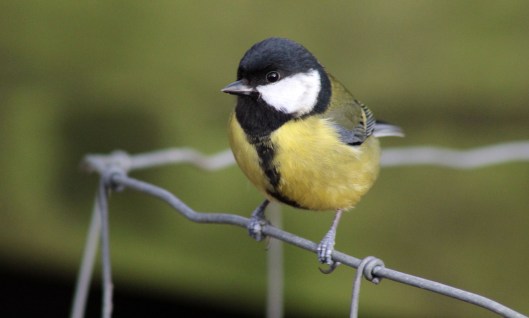
151219 great tit (2)

One of the three different Great tits in these photographs may well be ‘George’, a cheeky little chap who’s earned himself a nickname from the birders who regularly visit the hides at Forest Farm Nature Reserve near Cardiff because he is quite brazen in his visits inside the hide to demand food. His favourite, apparently, is nyjer seeds and, if these are offered in an outstretched hand, he will quite happily sit on the hand and feed. He is fussy though and turned his beak up pretty smartly at my suet pellets!

151219 great tit (3)

Though the Great tit (Parus major) is a popular visitor to many people’s bird feeders, it’s not normally quite as friendly as ‘George’, and its usual habitat is deciduous woodland though, as you see, this tit adapts well to different situations. It’s a melodious little bird, with a standard song that sounds a bit like ‘teach-er’ (which is how it came to be known in days past by the common name of ‘saw sharpener’), but it’s also rather skilled at jamming a variety of tunes and rhythms.

151219 great tit (1)

Like Loading...

Is it a mouse or is it a bird?

13 Sunday Dec 2015

Posted by sconzani in birds, nature, nature photography

≈ Leave a comment

Tags

birds, British birds, treecreeper

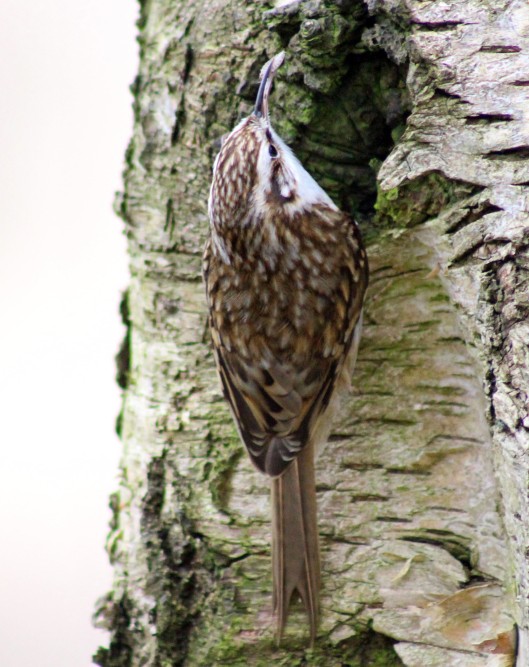
With its extremely effective mottled brown colouring, the little Eurasian treecreeper (Certhia familiaris) can look very like a mouse as it creeps up a tree trunk searching for food, hence one of its common names, tree mouse. That’s if you can see the treecreeper at all. It’s so well camouflaged that it’s almost impossible to see when stationary, and you need to focus really hard on a tree trunk to notice its scuttling creep upwards in search of the tiny beetles, earwigs and woodlice that inhabit the crevices in a tree’s bark.

151213 tree creeper (1)

The treecreeper has particularly large and sharp arched claws, which help it scale trees with ease, and its tail is stiff, which helps provide support when climbing. You will never see a treecreeper moving down a tree – it spirals its way to the top then flies down to the base of the next tree to start its climb all over again. And this feeding routine is almost constant – in fact, it’s so active that it’s been estimated treecreepers can climb as much as 2500 metres in a single day. That’s quite a feat for a bird that’s only 13cms in length. Its common name should really be mountain climber!

151213 tree creeper (2)


Like Loading...
← Older posts
Newer posts →

About me

sconzani

sconzani

I'm a writer and photographer; researcher and blogger; birder and nature lover; countryside rambler and city strider; volunteer and biodiversity recorder.

View Full Profile →

Follow earthstar on WordPress.com

Enter your email address to follow this blog and receive notifications of new posts by email.

Recent blog posts

  • Bloody-nosed beetle April 6, 2026
  • Gorse and its weevil April 5, 2026
  • Chiffchaffs chiffchaffing April 4, 2026
  • Bearded tit!!! April 3, 2026
  • A Portland Bill Kestrel April 2, 2026

From the archives

COPYRIGHT

Unless otherwise acknowledged, the text and photographs on this blog are my own and are subject to international copyright. Nothing may be downloaded or copied without my permission.

Fellow Earth Stars!

  • Unknown's avatar
  • Unknown's avatar
  • Unknown's avatar
  • Unknown's avatar
  • Unknown's avatar
  • Unknown's avatar
  • Unknown's avatar
  • Unknown's avatar
  • Unknown's avatar
  • Unknown's avatar
  • Unknown's avatar
  • Unknown's avatar
  • Unknown's avatar
  • Unknown's avatar
  • Unknown's avatar
  • Unknown's avatar
  • Unknown's avatar
  • Unknown's avatar
  • Unknown's avatar
  • Unknown's avatar
  • Unknown's avatar
  • Unknown's avatar
  • Unknown's avatar
  • Unknown's avatar
  • Unknown's avatar
  • Unknown's avatar
  • Unknown's avatar
  • Unknown's avatar
  • Unknown's avatar
  • Unknown's avatar
  • Unknown's avatar
  • Unknown's avatar
  • Unknown's avatar
  • Unknown's avatar
  • Unknown's avatar
  • Unknown's avatar
  • Unknown's avatar
  • Unknown's avatar
  • Unknown's avatar
  • Unknown's avatar
  • Unknown's avatar
  • Unknown's avatar
  • Unknown's avatar
  • Unknown's avatar
  • Unknown's avatar
  • Unknown's avatar
  • Unknown's avatar
  • Unknown's avatar
  • Unknown's avatar
  • Unknown's avatar

Blog at WordPress.com.

Privacy & Cookies: This site uses cookies. By continuing to use this website, you agree to their use.
To find out more, including how to control cookies, see here: Cookie Policy
  • Subscribe Subscribed
    • earthstar
    • Join 642 other subscribers
    • Already have a WordPress.com account? Log in now.
    • earthstar
    • Subscribe Subscribed
    • Sign up
    • Log in
    • Report this content
    • View site in Reader
    • Manage subscriptions
    • Collapse this bar
 

Loading Comments...
 

You must be logged in to post a comment.

    %d