• ABOUT
  • BIRDING 2018
  • Birding 2019
  • BLOG POSTS
  • Butterflies 2018
  • Resources

earthstar

~ a celebration of nature

earthstar

Tag Archives: British birds

Birding at RSPB Ham Wall

12 Monday Jun 2017

Posted by sconzani in birds, nature

≈ 6 Comments

Tags

birding, birdwatching, Bittern, Black-tailed godwits, Blackcap, British birds, Glossy ibis, Great Crested Grebe, Great white egret, Little egret, Marsh harrier, Mute swan, RSPB Ham Wall, Shapwick Heath

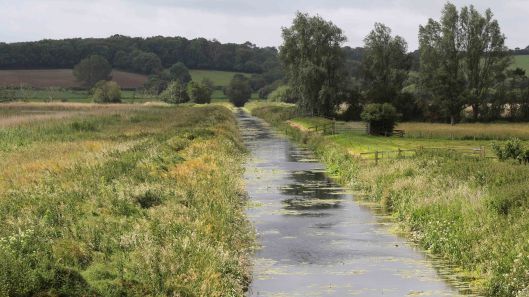
Yesterday was an absolutely fabulous birding day, an outing with my friends from the Glamorgan Bird Club to the RSPB’s Ham Wall Nature Reserve near Glastonbury in Somerset. We also ventured briefly into the neighbouring National Nature Reserve of Shapwick Heath but I reckon you’d need a week at least to explore both places thoroughly and at all times of the day.
170612 RSPB Ham Wall

Most of the birds were rather distant so you’ll have to excuse my poor photos but I was able to see the birds clearly as many of the bird club members have good ’scopes and were happy to share. Some birding highlights were:

170612 Great white egret
170612 Great white egret (2)

* three species of Egret: Cattle, Little and lots of Great whites.
170612 Little egret & Glossy ibis

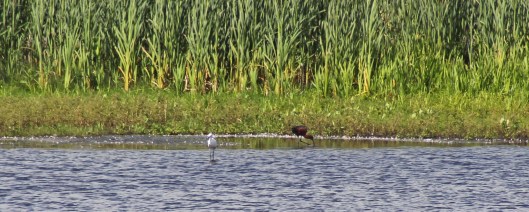
* my first sightings of a Glossy ibis (seen here with a Little egret) and a Red-footed falcon

170612 Marsh harrier (1)
170612 Marsh harrier (2)
170612 Marsh harrier vs Bittern

* more Bitterns than you could point a lens at and several beautiful Marsh harriers, gliding seemingly effortlessly over the reed beds. These two birds came into conflict at one point (fuzzy photo above right), with the Bittern presumably trying to defend its young against harrier predation.

170612 Baby Great crested grebe
170612 Baby Blackcap

170612 Baby Mute swans

* lots of babies, including those of Great crested and Little grebes, Mute swan, Tufted duck, Coot and Blackcap.
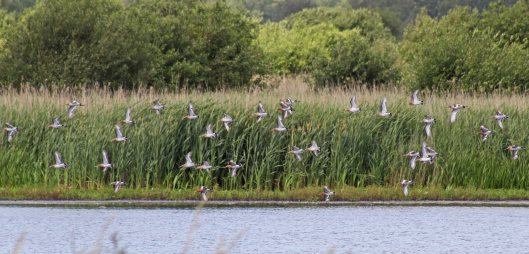
170612 Black-tailed godwits

* the Black-tailed godwits flying over the waters at Shapwick Heath.

On the way home, with the help of my car mates, I came up with an as-yet-unconfirmed list of 57 species seen on the day, and that was only the birds – more on the other creatures in tomorrow’s blog.

Like Loading...

The awesome avocet

16 Tuesday May 2017

Posted by sconzani in birds, coastal fauna, nature

≈ 3 Comments

Tags

Avocet, Avocet chicks, Avocet in flight, birding, birdwatching, British birds, Recurvirostra avosetta, RSPB logo, Rye Harbour Nature Reserve

Awesome is a much overused word but I feel my use of it here is justified – I truly was in awe of these most beautiful birds, seen at the Rye Harbour Nature Reserve in East Sussex last Saturday.

170516 avocets (1)

The Avocet (Recurvirostra avosetta) is one of Britain’s conservation success stories, hence its use as a logo by the Royal Society for the Protection of Birds. After years of being killed for food and taxidermy and having its eggs robbed by collectors, the Avocet disappeared from its British breeding sites around 1842, and it wasn’t until 1947 that just four pairs were rediscovered breeding in Suffolk. Incredibly, this was, in part, due to the Second World War: damage from an exploding bomb had inadvertently recreated their ideal habitat of shallow ponds and muddy islands near the seaside at Havergate and, at Minsmere, where the coastal marshes had been flooded to prevent enemy troops invading, shallow ponds also formed when the marshes began to dry up.

170516 avocets (3)
170516 avocets (4)
170516 avocets (5)
170516 avocets (6)

Further breeding sites have now been created and protected (at Rye Harbour, with electric fences to deter predators like foxes and badgers) in suitable areas around Britain’s coastline, and the number of breeding pairs is estimated to be around 500. Long may their success continue!

170516 avocets (2)

Like Loading...

The Sanderlings and the Dunlins

01 Monday May 2017

Posted by sconzani in birds, nature, spring

≈ 2 Comments

Tags

birding, birdwatching, British birds, Calidris alba, Calidris alpina, Dunlin, passage migrant, Sanderling

Yesterday I told you about my chilly but super exciting birdwatching morning on Saturday and showcased two of the highlights, the Whimbrel and the Bar-tailed Godwit. Today, we have the Sanderlings and the Dunlins, both so well camouflaged against the stones on the seashore that, if they hadn’t been almost constantly moving about in their search for insects, they would’ve been very hard to spot.

170501 sanderling (2)
170501 sanderling (3)
170501 sanderling (1)

Sanderlings to the left, Turnstones to the right

Like yesterday’s birds, the Sanderling (Calidris alba) is a passage migrant, seen in parts of coastal Britain during the spring as it heads to its breeding grounds in the Arctic and in the autumn as it heads south to tropical beaches around the world, a journey that can be as long as 6000 miles. During the breeding season, the birds’ grey plumage takes on a much redder hue on the head, neck and back, which you can clearly see on one of these birds (particularly in the photo top left).

170501 dunlin (1)

The Dunlin (Calidris alpina) – like the Sanderling, a member of the Sandpiper family – is a very common sight on Britain’s coast throughout the year, though breeding birds head to the upland areas of Wales, Scotland and England to nest between April and July. The Dunlin also becomes a more rufous colour during the breeding season and acquires the dark tummy feathers you can see on these birds. I’m guessing they’ll be heading for the hills shortly to find a mate.

170501 dunlin (2)
170501 dunlin (3)
Like Loading...

The Whimbrel and the Barwit

30 Sunday Apr 2017

Posted by sconzani in birds, nature, spring

≈ 2 Comments

Tags

Bar-tailed Godwit, birding, birdwatching, British birds, British seabirds, Limosa lapponica, Numenius phaeopus, passage migrants, Whimbrel

170430 whimbrel (1)

I was in my element yesterday morning, stealthily stalking along the stony coastal path at Sully in a shiver-inducing chilly wind, trying to observe and photograph a wonderful variety of seabirds. And I got lucky, really really lucky, as by the time I decided I needed to get walking to ward off hypothermia, I had seen noisy fly-pasts of Oystercatchers; Dunlins and Turnstones and, an unexpected bonus, two Sanderlings foraging along the tide-deposited seaweed; several rather skittish Whimbrels; and a fleeting glimpse of one also unexpected but rather beautiful Bar-tailed Godwit.

170430 Whimbrel and bar-tailed godwit (1)
170430 Whimbrel and bar-tailed godwit (2)

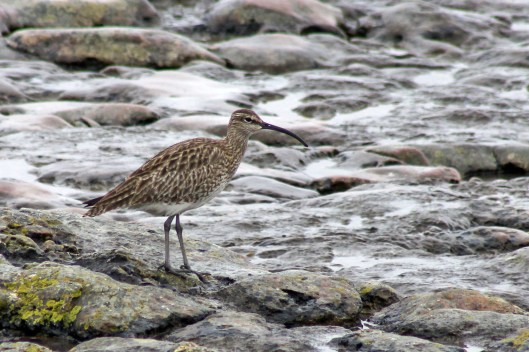
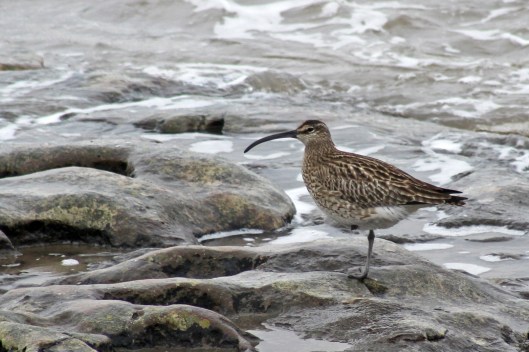
Both the Whimbrels and the Bar-tailed godwit are passage migrants. The Whimbrel (Numenius phaeopus) (the bird with the curved beak) can be seen around Britain’s coastline during spring as it flies north to Shetland and Orkney to breed and again in autumn when it heads back to South Africa to enjoy a warmer winter. The Bar-tailed Godwit (affectionately abbreviated amongst birders to Barwit) (Limosa lapponica) passes through Britain on its way to its breeding grounds in the Scandinavian and Siberian Arctic, though does sometimes over-winter in Britain.

p.s. See tomorrow’s post for the Sanderlings and the Dunlins.

170430 whimbrel (2)

Like Loading...

Happy as a (Sky)lark

20 Thursday Apr 2017

Posted by sconzani in birds, nature

≈ 2 Comments

Tags

Alauda arvensis, bird conservation, bird idiom, birding, birdwatching, British birds, happy as a lark, Red list, Skylark, The Blorenge

It’s easy to see where the ‘happy as a lark’ expression comes from when you hear a Skylark singing – they sound like they’re positively bursting with happiness. And, though they sing throughout the year, spring is the prime season for their singing, as the males perform their vertical flight displays, hovering and belting out their songs from high in the sky before plummeting back down to earth. How could a female Skylark not be impressed with such melodic rhapsodies!

170420 Skylark (1)

When it’s on the ground, the Skylark (Alauda arvensis) can be difficult to spot, as its streaky brown colours blend so well with its preferred habitat, of grassland and moorland, as you can see in these photos, taken on top of The Blorenge, a 561-metre mountain in the Brecon Beacons National Park.

170420 Skylark (2)
170420 Skylark (3)
170420 Skylark (4)

Sadly, the once numerous Skylark has declined greatly in numbers in recent years and it’s now on the British Red List of Birds of Conservation Concern. Its decline has been attributed to agricultural intensification and to changing farming practices – many farmers have switched from spring to autumn for the sowing of their cereal crops, which has a knock-on effect on farmland birds. Hopefully, something can be done to rescue these beautiful songsters; otherwise the Skylark will be happy no longer.

Like Loading...

Robin Redbreast

30 Thursday Mar 2017

Posted by sconzani in birds, nature

≈ 1 Comment

Tags

birding, birdwatching, British birds, robin, Robin Redbreast

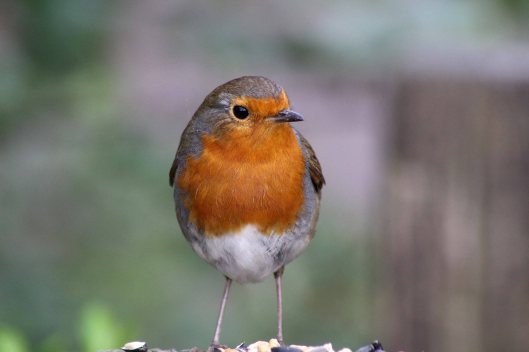
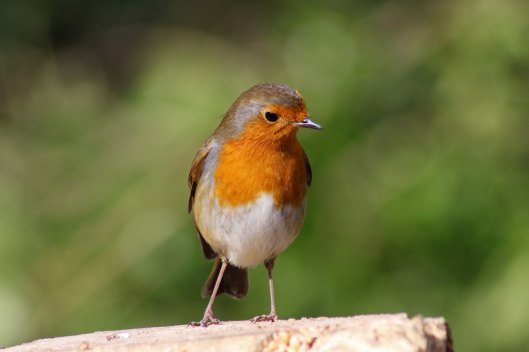
A robin a day makes me cheery and gay!
A robin a day drives the grey skies away.
A robin a day, hip hip hooray!

170330 robin redbreast

Like Loading...

Two life ticks!

27 Monday Mar 2017

Posted by sconzani in birds, nature, parks

≈ 2 Comments

Tags

Aythya collaris, birding, birdwatching, British birds, Cosmeston Lakes Country Park, Iceland gull, Larus glaucoides, Ring-necked duck

I had a different blog planned for today but then, this morning, I saw a post on Facebook that a rather special visitor had been spotted at my local country park, Cosmeston Lakes, so I headed along to check it out. And I was exceedingly lucky as there was also another unusual visitor on show. These are they.

170327 Ring-necked duck (2)

Ring-necked duck (Aythya collaris)
Though it’s not easy to see, this lovely little duck gets its name from its purple neck band. The Ring-necked duck looks a lot like the local Tufted duck, but without the tuft, with slightly greyer sides and a different-shaped head, and, most distinctive, those pale bands of colour on its beak. It’s native to North America but one or two birds turn up in Britain most years. I was just very lucky that this one chose my local lake for its holiday spot this year.

170327 Ring-necked duck (1)

170327 Iceland gull (2)
170327 Iceland gull (1)

Iceland gull (Larus glaucoides)
I’m hopeless at picking out different gulls from a large flock but the pale, almost buff plumage of this bird was quite distinctive once it was pointed out to me. Though it breeds in the Arctic, the Iceland gull spends its winters slightly further south, anywhere from the northern areas of Canada and the United States, to Britain and Ireland, as well as in Scandinavia and the northern parts of Germany. It is sometimes referred to as the white-winged gull and those white wings are one of the easiest ways to tell it apart from other gulls in flight.

Like Loading...

Tracking Mr Redshank

16 Thursday Mar 2017

Posted by sconzani in birds, nature

≈ 3 Comments

Tags

bird-ringing, birding, birdwatching, British birds, BTO, colour rings on Redshank, European Colour-ring birding, Redshank

I first spotted this ringed Redshank on 27 January, near Penarth Marina in Cardiff Bay, and I saw it again, in almost the exact same location, on 11 March. I reported my initial sighting through the European Colour-ring Birding website – it’s really easy to do this and excellent for long-term research into bird behaviour so please do report any ringed birds you see. As the website is totally run by volunteers, it’s taken a little while to get information back on my bird but, today I got this email report from Emily at BTO (British Trust for Ornithology):

170316 Redshank

This bird was ringed (DK10753) as an adult on 22/2/2016 at Peterstone Great Wharf, and has been re-sighted a number of times at/around Cardiff Bay (on 3/3/16, 3/1/17 and 22/1/17). It was also seen at St Thomas Head on 11/3/16. It was ringed as part of a study examining the winter movements of Redshank, Curlew, Dunlin, Wigeon, Teal and Shelduck in relation to the proposed tidal lagoon (see HERE for more details).

170316 Redshank map

So, my Redshank has spent his winter months – all the sightings were between January and March – in locations not very far from that initial ringing spot but I wonder where he goes in the summer to breed? Previous BTO research has shown that British-ringed Redshanks breed in Iceland and along the coastline of north-western Europe, so this little bird may soon be heading off on rather a long flight.

Like Loading...

Mr Grumpy Robin

13 Monday Mar 2017

Posted by sconzani in birds, nature

≈ 4 Comments

Tags

birding, birdwatching, British birds, conversations with robins, Mr Grumpy, robin

170313-mr-grumpy-robin-1

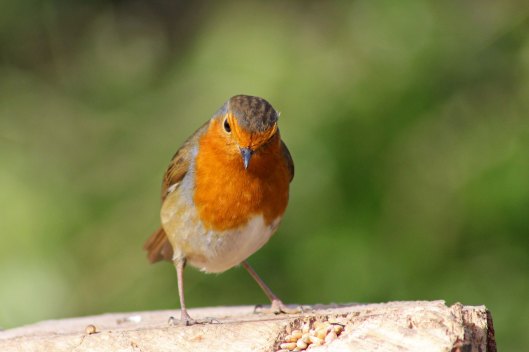
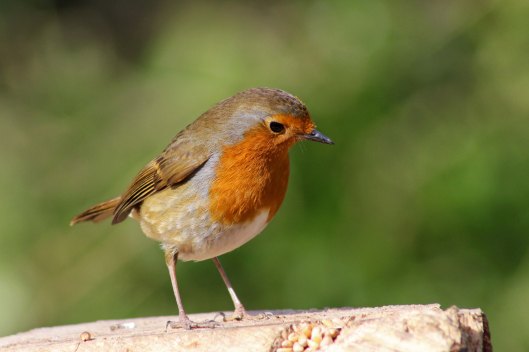
It looks like Mr Grumpy is not at all happy with the food he’s been given – maybe it doesn’t have the fruity flavoured suet pellets he likes best.

170313-mr-grumpy-robin-2

Perhaps Mr Grumpy doesn’t like the fact that the food has been tucked into a crack in the wooden post – maybe that makes it too hard to get at.

170313-mr-grumpy-robin-3

Or perhaps Mr Grumpy is really Mr Fusspot or even Mr Lazy in disguise.

170313-mr-grumpy-robin-4

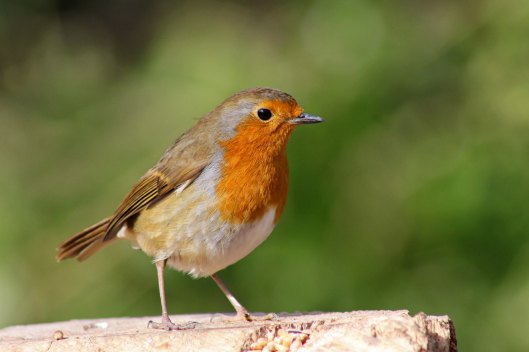
Mr Grumpy is certainly glaring very rudely at Ms Happy.

170313-mr-grumpy-robin-5

Unfortunately, Mr Tickler is nowhere to be found so there is no way to make Mr Grumpy less grouchy so I think Ms Happy will just leave him to wallow in his bad mood all by himself.

170313-mr-grumpy-robin-6

Like Loading...

Weeeeeeeeeeeeeee!

27 Monday Feb 2017

Posted by sconzani in birds, nature

≈ 4 Comments

Tags

Aegithalos caudatus, birding, birdwatching, British birds, long-tailed tit

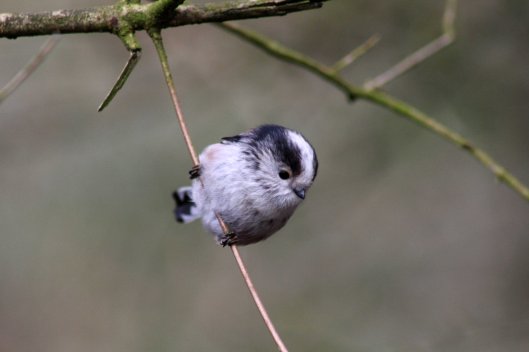
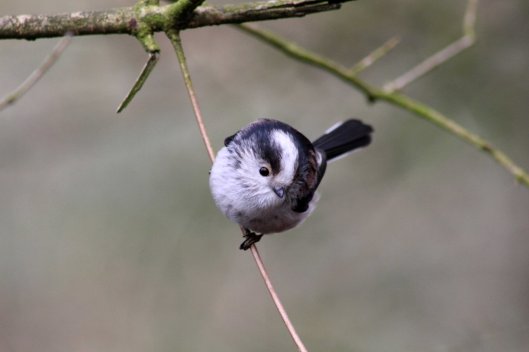
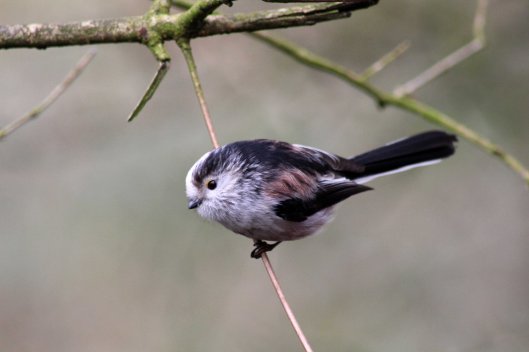
I tried to make this sequence of photos into a gif file, one of those ever-so-short movies that can either be fun or very annoying when you’re scrolling through your social media feeds. Sadly (or luckily, depending on how you look at it), I only have an old, poor-woman’s version of photoshop and, though I faithfully followed the tutorial, my gif-making efforts failed. So, you’ll just have to use your imagination to envisage how this tiny and ever-so-cute Long-tailed tit (Aegithalos caudatus) was rocking back and forth on its twig in order to get a better look at the seeds, its avian opposition and the human who was lurking nearby. It was gorgeous!

170227-long-tailed-tit-1170227-long-tailed-tit-2170227-long-tailed-tit-3

Like Loading...
← Older posts
Newer posts →

About me

sconzani

sconzani

I'm a writer and photographer; researcher and blogger; birder and nature lover; countryside rambler and city strider; volunteer and biodiversity recorder.

View Full Profile →

Follow earthstar on WordPress.com

Enter your email address to follow this blog and receive notifications of new posts by email.

Recent blog posts

  • A proliferation of Peacocks April 1, 2026
  • Little owl March 31, 2026
  • Distant seabirds March 30, 2026
  • Thrift March 29, 2026
  • The day of the Wheatears March 28, 2026

From the archives

COPYRIGHT

Unless otherwise acknowledged, the text and photographs on this blog are my own and are subject to international copyright. Nothing may be downloaded or copied without my permission.

Fellow Earth Stars!

  • Unknown's avatar
  • Unknown's avatar
  • Unknown's avatar
  • Unknown's avatar
  • Unknown's avatar
  • Unknown's avatar
  • Unknown's avatar
  • Unknown's avatar
  • Unknown's avatar
  • Unknown's avatar
  • Unknown's avatar
  • Unknown's avatar
  • Unknown's avatar
  • Unknown's avatar
  • Unknown's avatar
  • Unknown's avatar
  • Unknown's avatar
  • Unknown's avatar
  • Unknown's avatar
  • Unknown's avatar
  • Unknown's avatar
  • Unknown's avatar
  • Unknown's avatar
  • Unknown's avatar
  • Unknown's avatar
  • Unknown's avatar
  • Unknown's avatar
  • Unknown's avatar
  • Unknown's avatar
  • Unknown's avatar
  • Unknown's avatar
  • Unknown's avatar
  • Unknown's avatar
  • Unknown's avatar
  • Unknown's avatar
  • Unknown's avatar
  • Unknown's avatar
  • Unknown's avatar
  • Unknown's avatar
  • Unknown's avatar
  • Unknown's avatar
  • Unknown's avatar
  • Unknown's avatar
  • Unknown's avatar
  • Unknown's avatar
  • Unknown's avatar
  • Unknown's avatar
  • Unknown's avatar
  • Unknown's avatar
  • Unknown's avatar

Blog at WordPress.com.

Privacy & Cookies: This site uses cookies. By continuing to use this website, you agree to their use.
To find out more, including how to control cookies, see here: Cookie Policy
  • Subscribe Subscribed
    • earthstar
    • Join 642 other subscribers
    • Already have a WordPress.com account? Log in now.
    • earthstar
    • Subscribe Subscribed
    • Sign up
    • Log in
    • Report this content
    • View site in Reader
    • Manage subscriptions
    • Collapse this bar
 

Loading Comments...
 

You must be logged in to post a comment.

    %d