• ABOUT
  • BIRDING 2018
  • Birding 2019
  • BLOG POSTS
  • Butterflies 2018
  • Resources

earthstar

~ a celebration of nature

earthstar

Tag Archives: British bugs

B is for bugs and beetles

07 Sunday Dec 2025

Posted by sconzani in insects

≈ 2 Comments

Tags

British beetles, British bugs, Juniper shieldbug, Kleidocerys resedae, new beetle finds, new bug finds

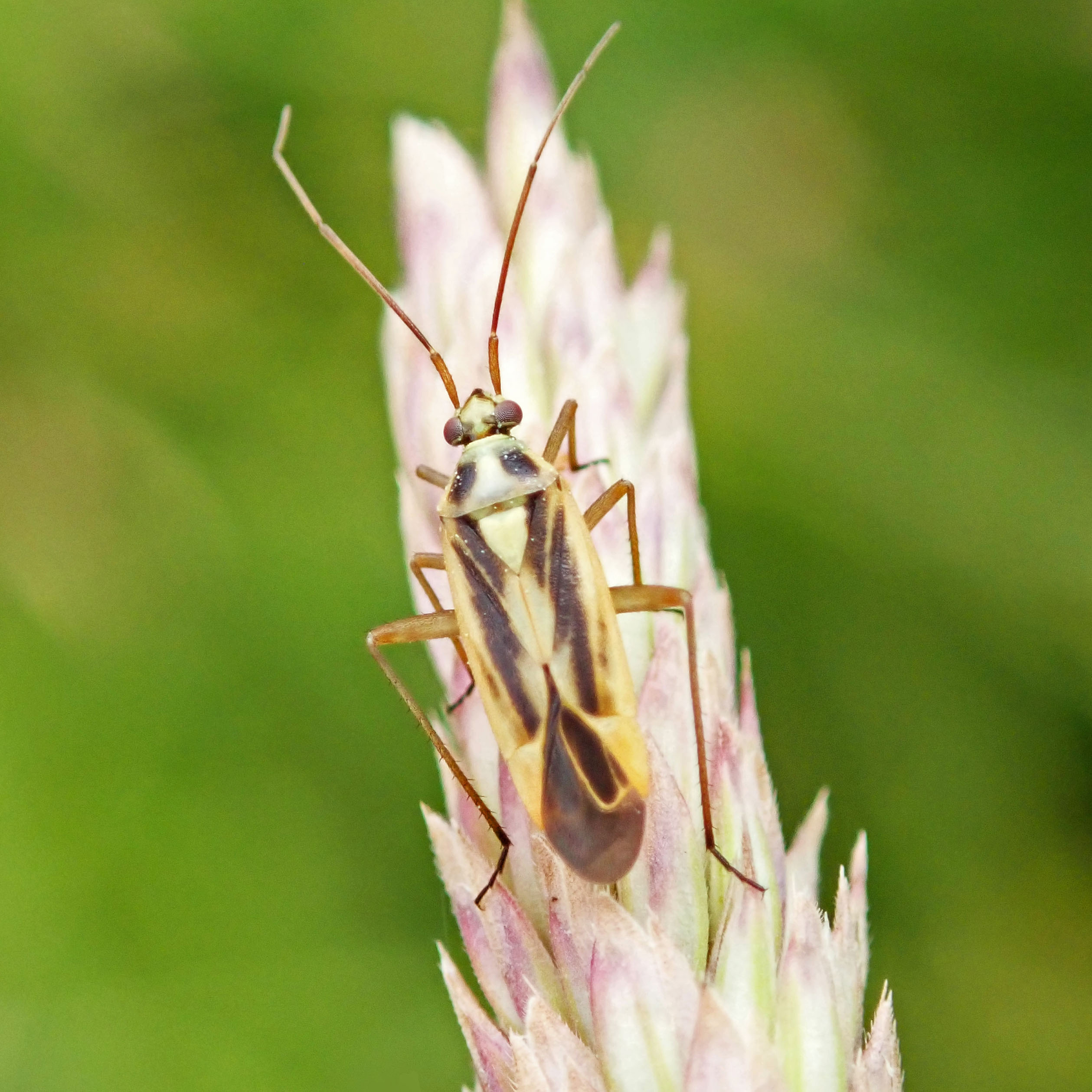
One of my wildlife aims this year has been to try to find as many new species, of all kinds, as possible, and I’ve been extremely lucky to have found many new-to-me bugs and beetles. These include Lesser thorn-tipped longhorn beetle, 4 January; My first Pine ladybird, 10 March; My first Eyed ladybird, 22 April; Fine streaked bugkins, 26 April; Cyllecoris histrionius, adult and nymph, 12 May; Cantharis decipiens, 13 May; Cacopsylla ambigua, 29 May; Rhopalus subrufus, 6 June; Rhabdomiris striatellus, 10 June; Bug: Deraeocoris flavilinea, 28 June; Beetle: Grammoptera ruficornis, 30 July; Beetle: Four-banded longhorn, 2 August; and Bug: Megacoelum infusum, 12 September.

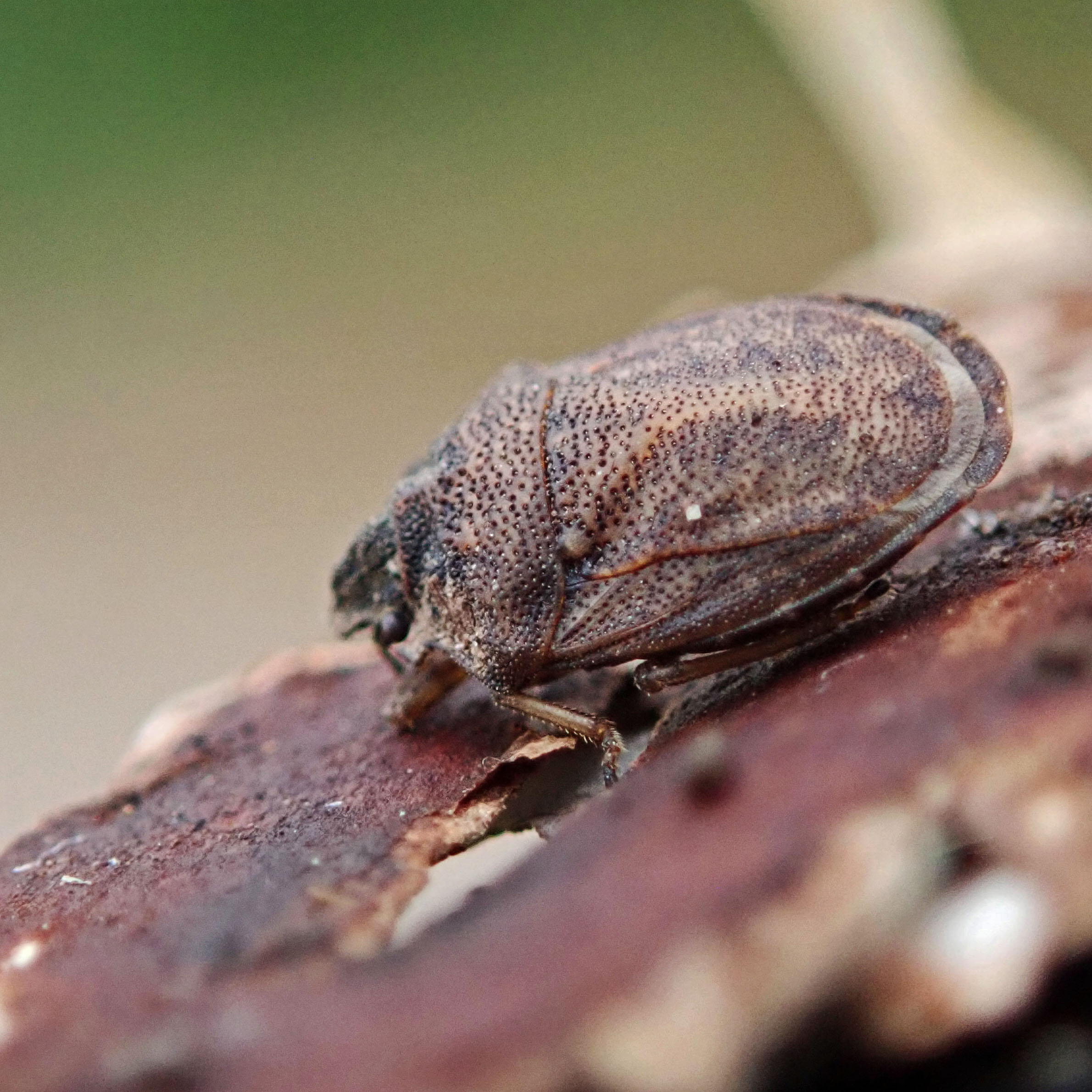
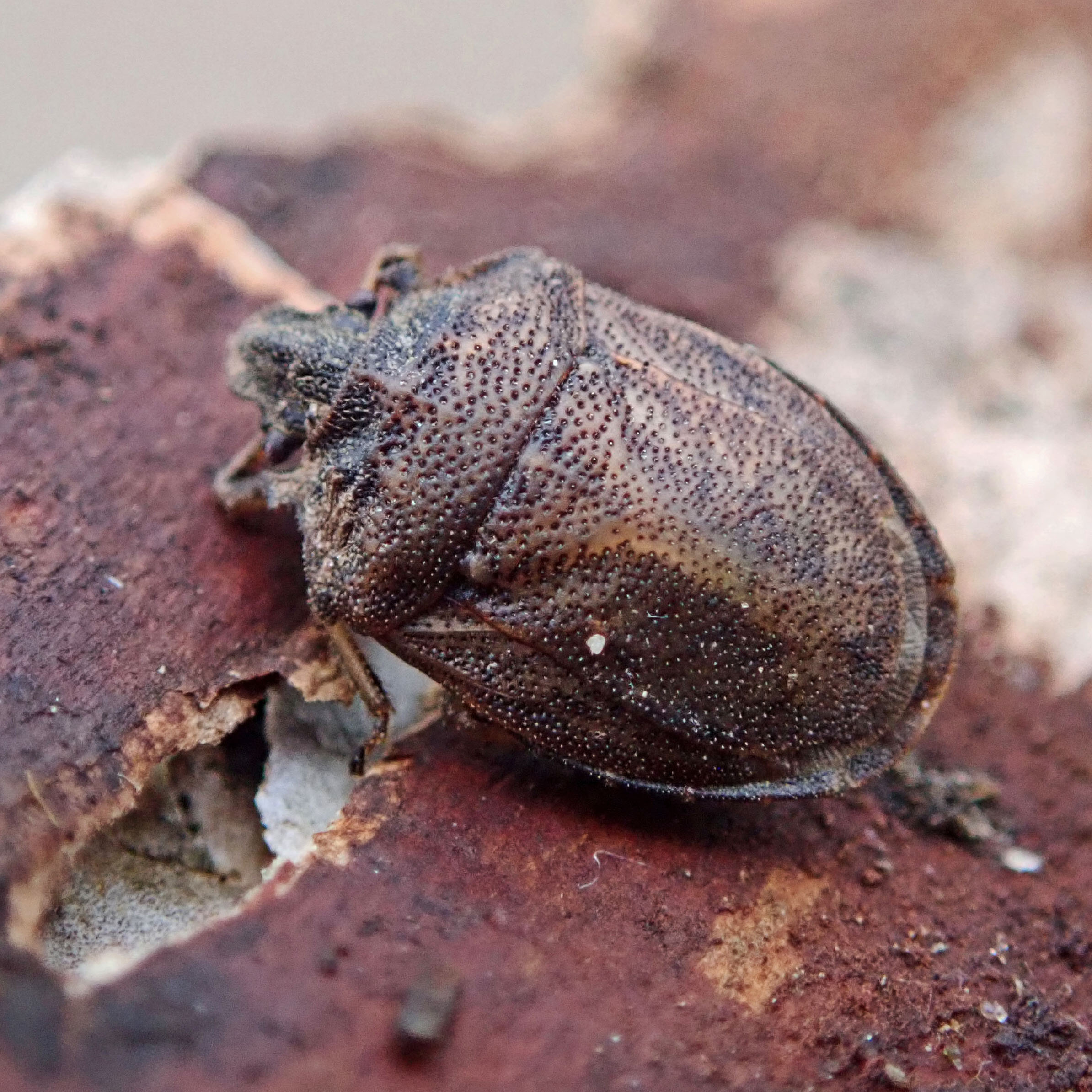
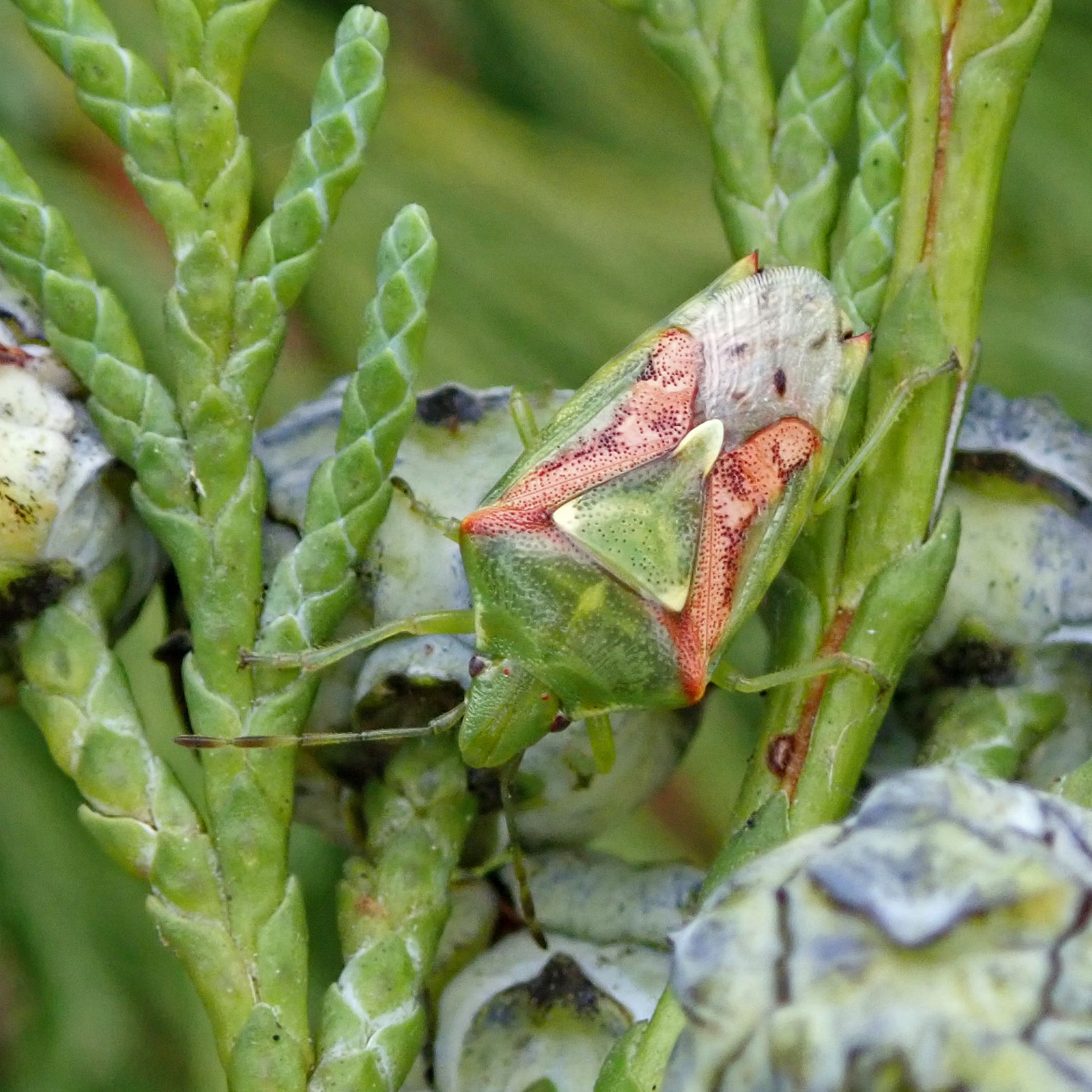
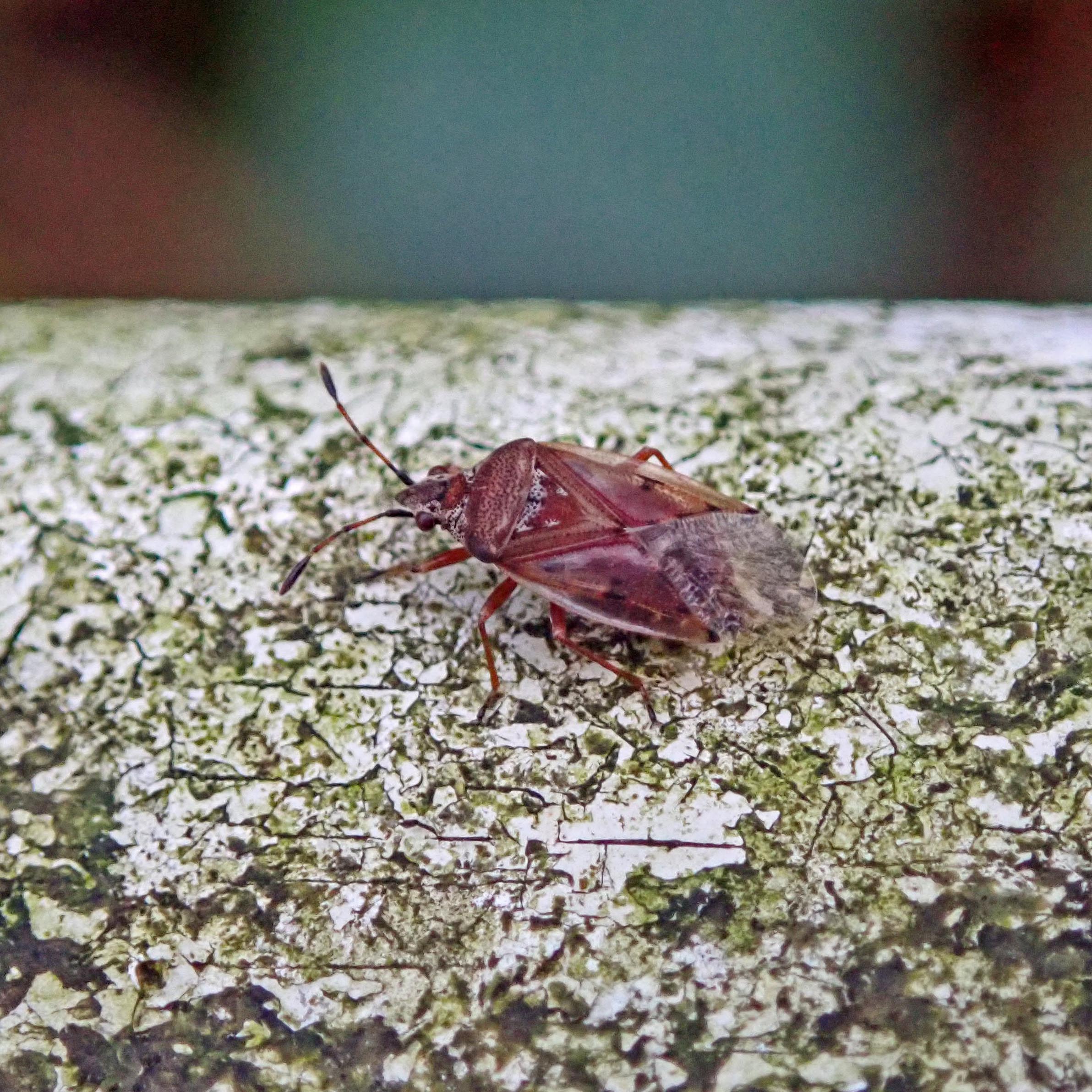
I was particularly chuffed to find my first Juniper shieldbugs (Juniper shieldbug, 3 June) and, now that I know to look for them on some other tree species, I’ve managed to find them on four separate occasions, three of those in the same location as my initial find, on a Cypress growing in a local park, and the other on a different Cypress species growing in one of Cardiff’s oldest cemeteries, alongside Llandaff Cathedral.

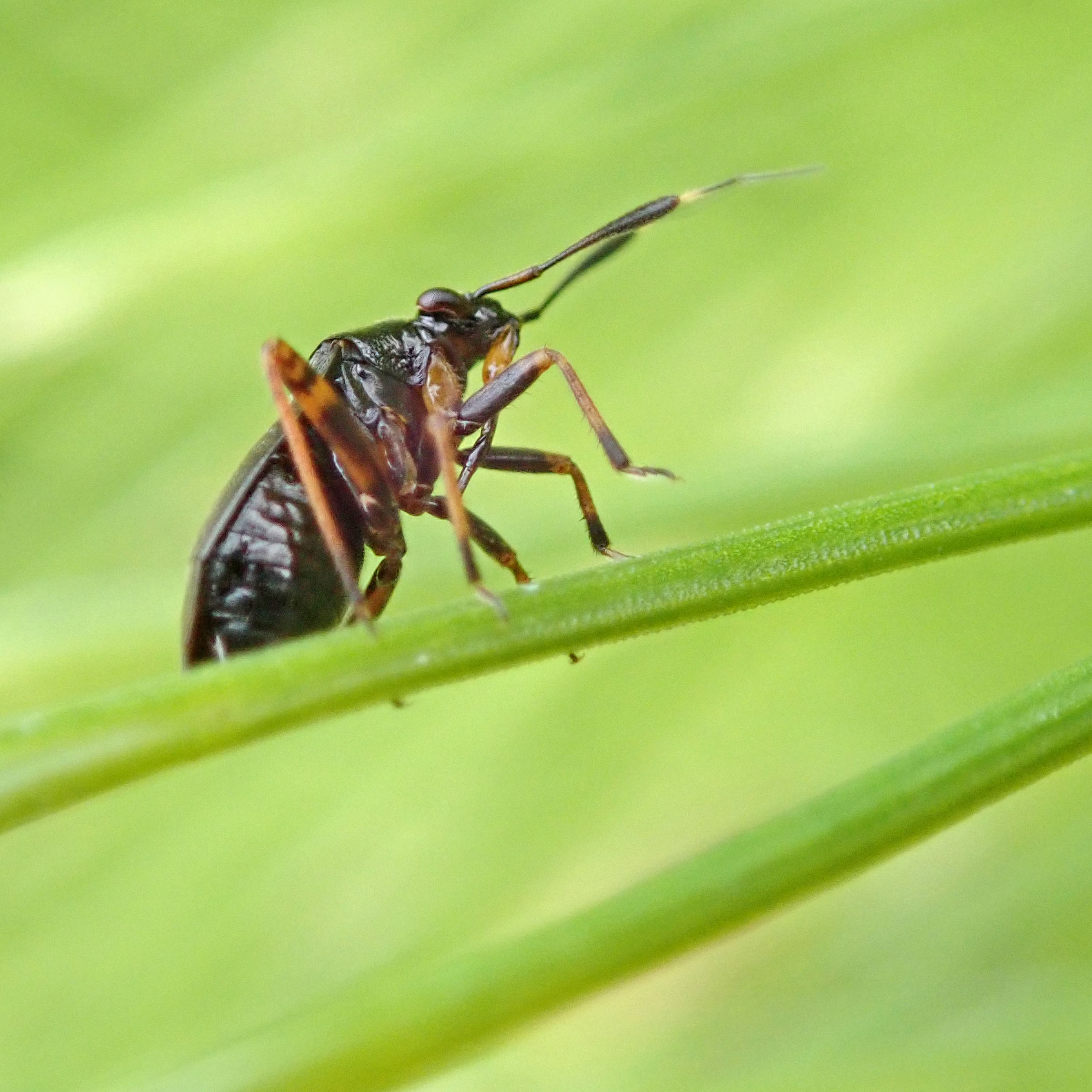
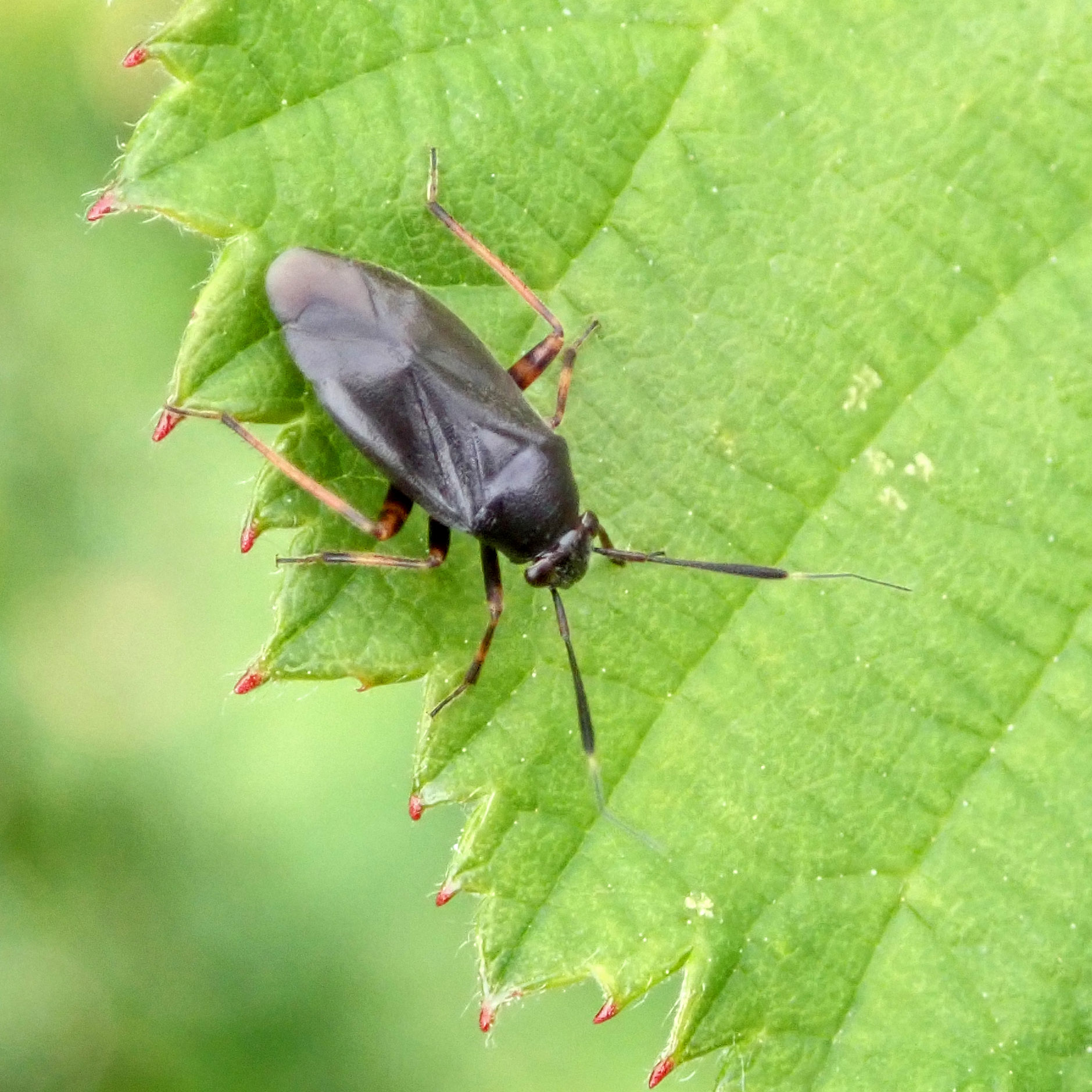
Another new bug that I think is particularly attractive is Bug: Kleidocerys resedae. I wrote about that on 27 June, and this is another species that I’ve managed to re-find, on 15 November, when I spotted three different adult bugs within a few metres of each other.

Like Loading...

A is for Arocatus roeselli

06 Saturday Dec 2025

Posted by sconzani in insects

≈ Leave a comment

Tags

Arocatus longiceps, Arocatus longiceps / roeselii, Arocatus roeselii, British bugs, bugs on Alder trees

Another year of wonderful flora and fauna sightings is drawing to a close and, as I’ve done for a few years now, I’m going to do an alphabetical countdown of some of my more memorable moments in Nature. I’m very proud to have added three more first-for-Wales sightings to my list in 2025, and this beautiful bug was one of them (as reported in Bug: Arocatus roeselii, 12 July).

Like Loading...

Closterotomus cousins

03 Wednesday Sep 2025

Posted by sconzani in insects

≈ Leave a comment

Tags

British bugs, Closterotomus fulvomaculatus, Closterotomus norwegicus, Closterotomus species, mirid bugs, Miridae, Potato capsid

This is a tale of two Closterotomuses – Closterotomi?

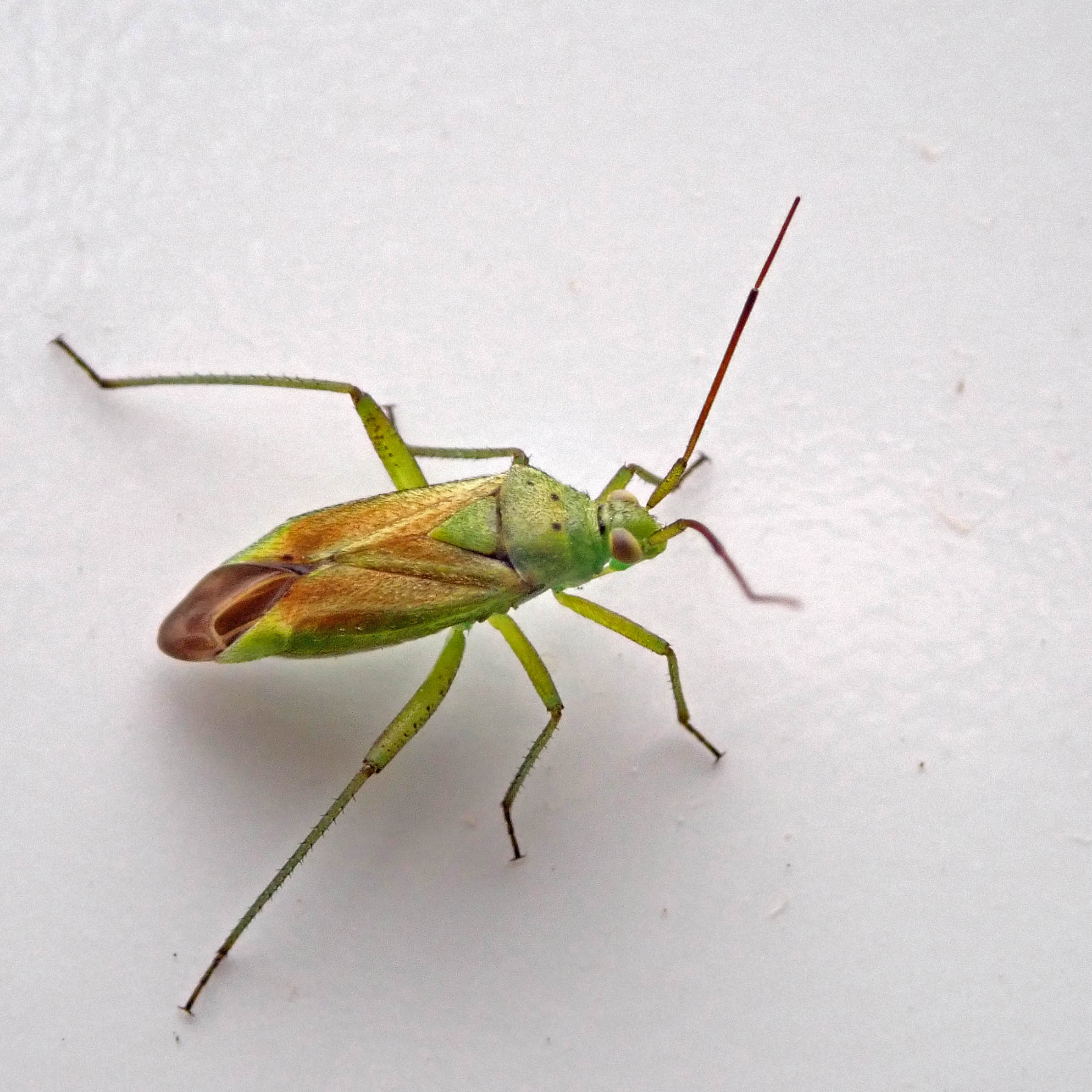
The first is Closterotomus norwegicus, also known as the Potato capsid, though I’m not sure why it has that common name. The British Bugs website says it ‘feeds on a wide range of plants, especially nettles, composites and clovers’, with no mention of potatoes. It’s a handsome little bug and quite common, though can be confused with other similar mirid bugs – the British Bugs page lists some of the distinguishing features to look out for.

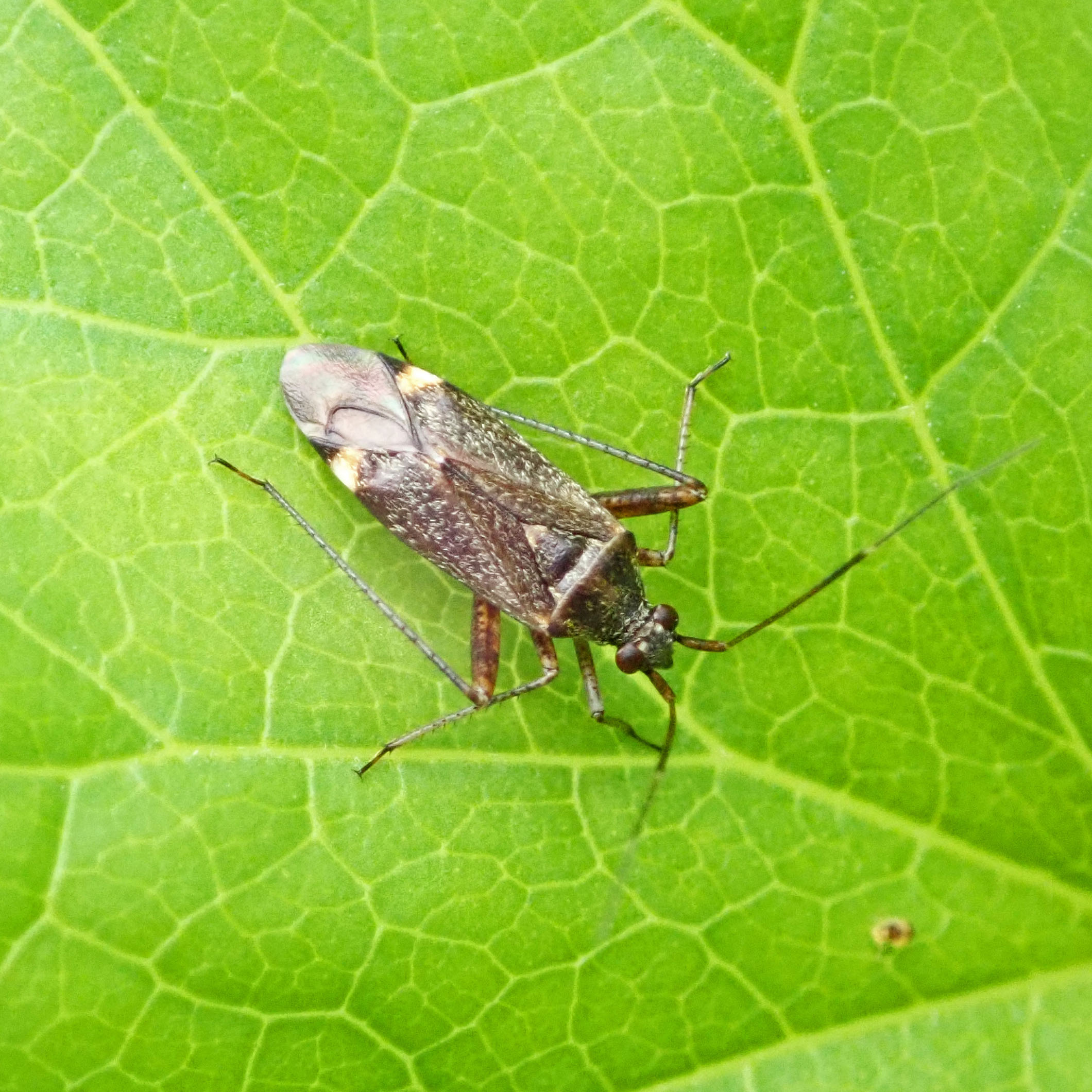
This second Closterotomus species is C. fulvomaculatus – no common name that I’m aware of. It can be seen between June and August, so we’re right at the end of its date range now but there may still be time to spot it on scrub and in hedgerows where it feeds on nettles and meadowsweet. Apparently, it’s also quite partial to hops, but we don’t have those in my local area. It looks like just another brown bug until you look more closely and notice the lovely golden hairs that cover its upper body.

Like Loading...

Bug: Arocatus roeselii

12 Saturday Jul 2025

Posted by sconzani in insects, trees

≈ Leave a comment

Tags

Arocatus longiceps, Arocatus longiceps / roeselii, Arocatus roeselii, British bugs, bugs on Alder trees

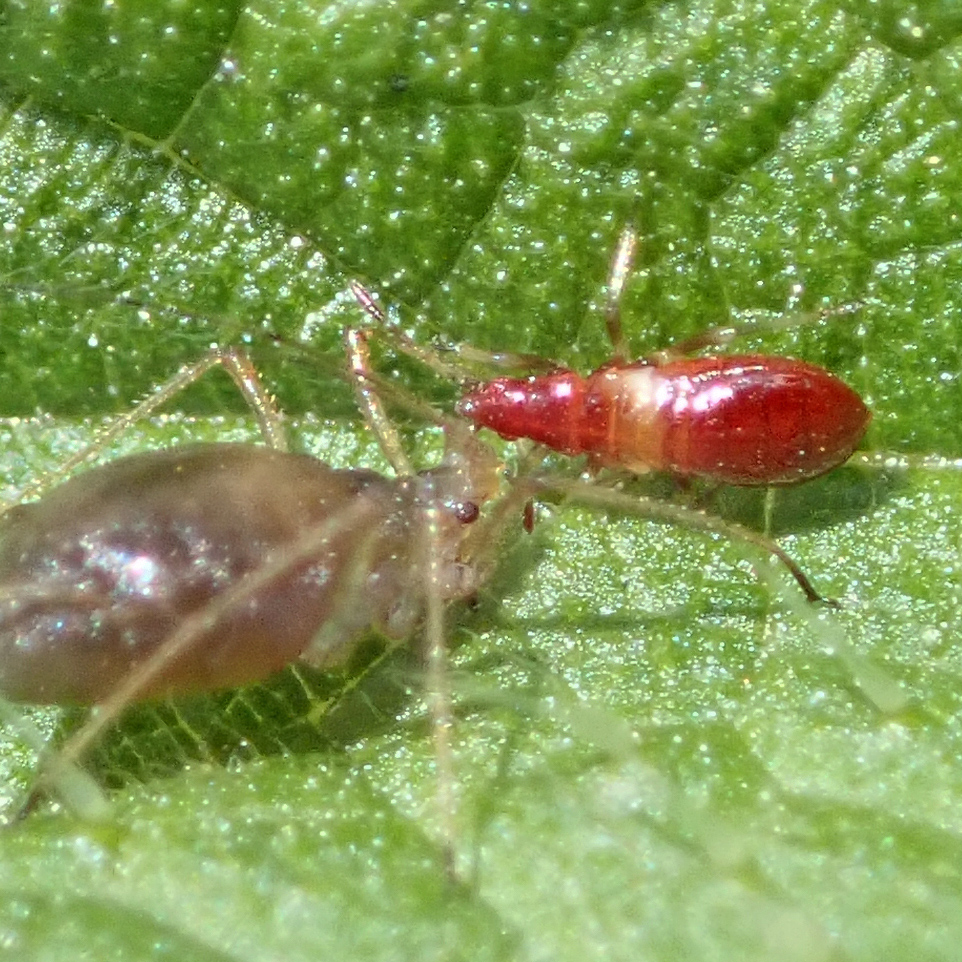
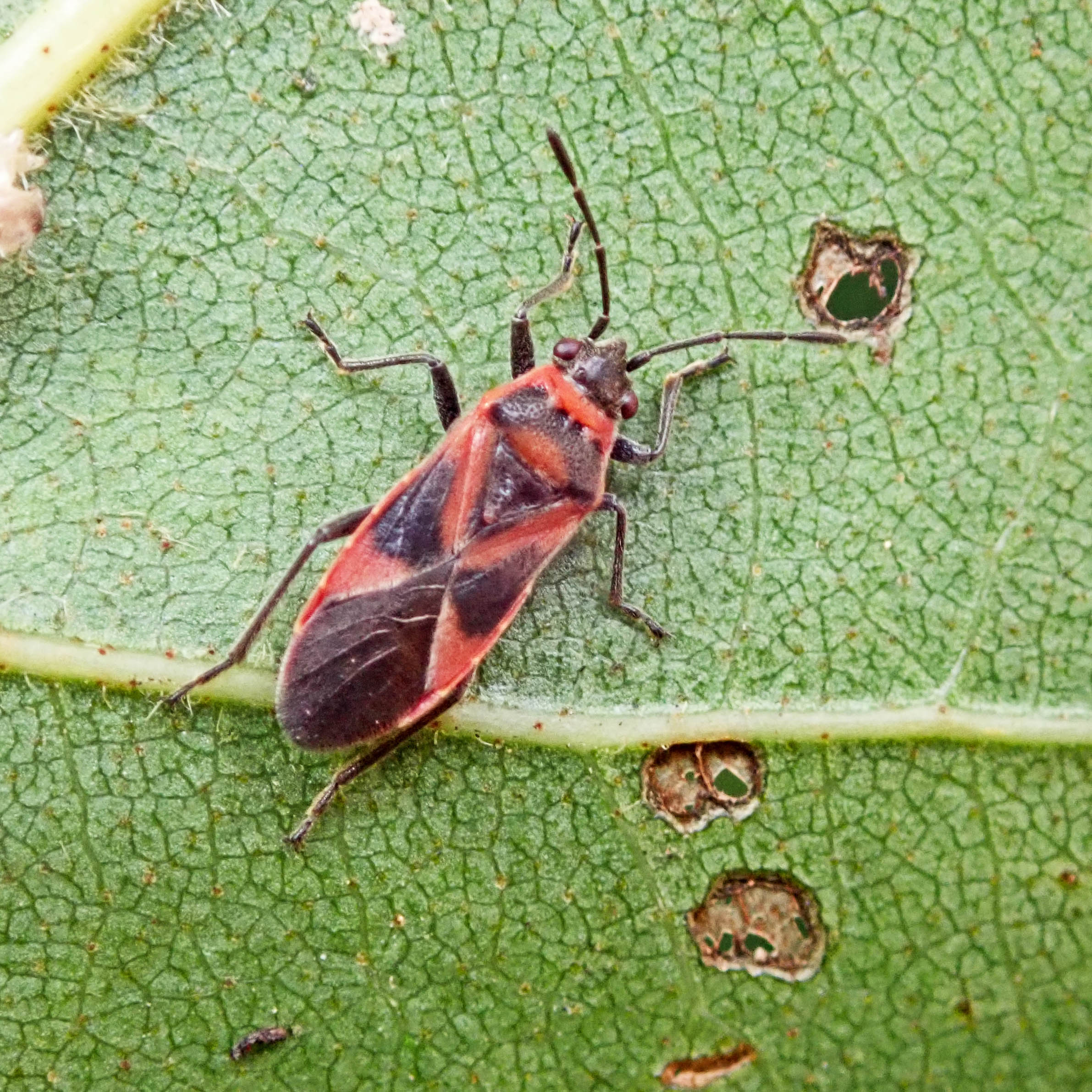
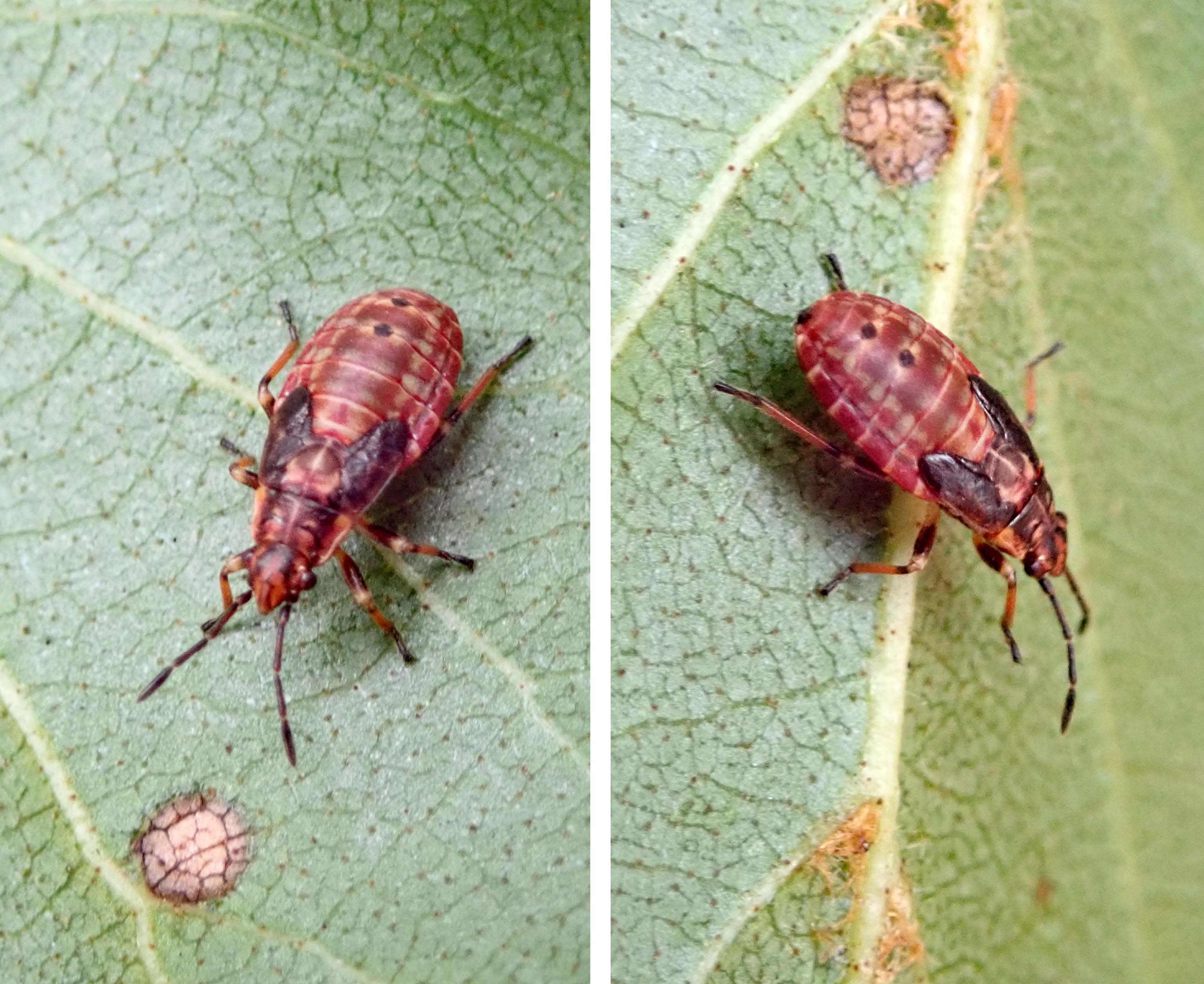
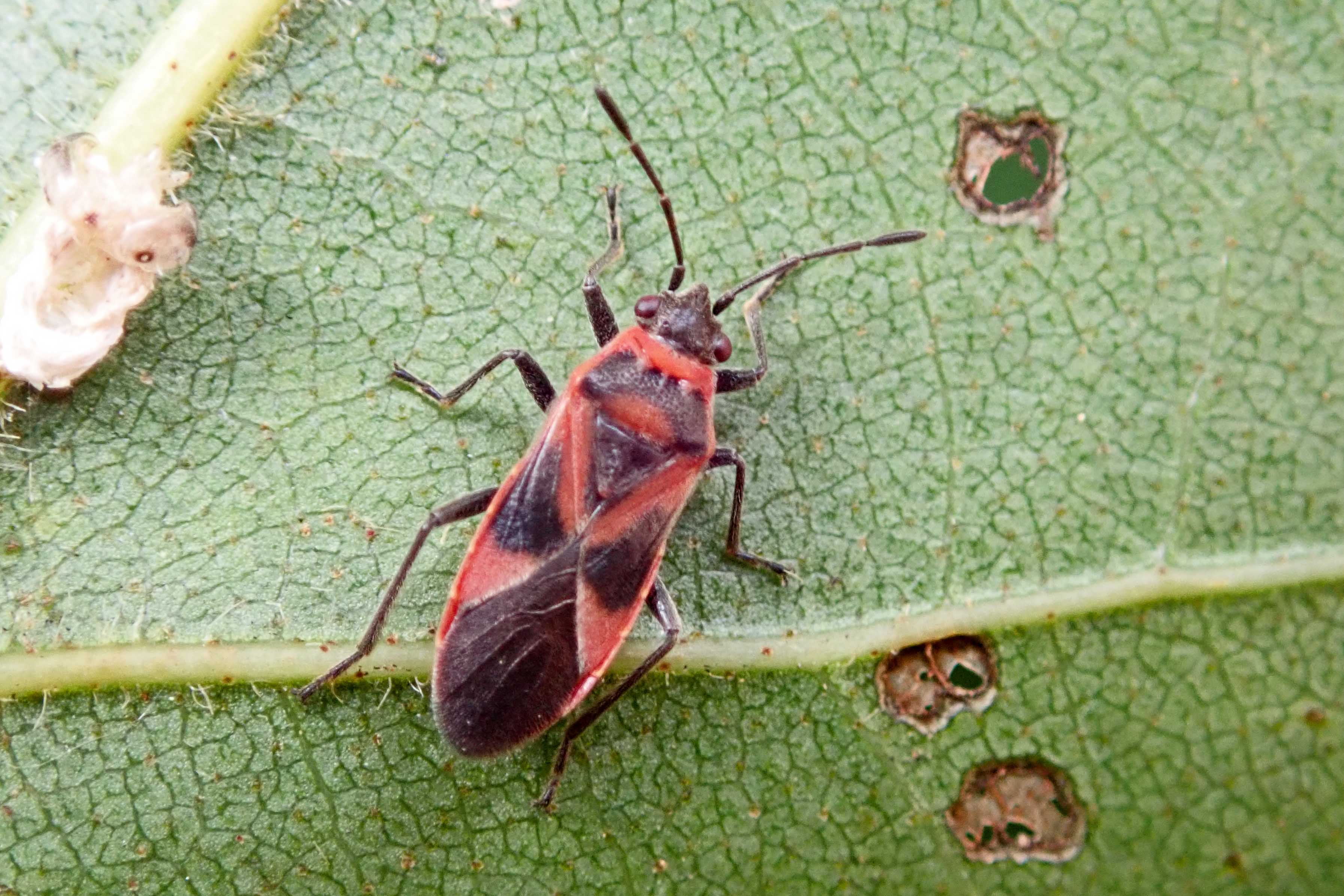
This new bug is intriguing. According to the British Bugs website, it was only found in England in 2007, and only on Plane trees in London and the southern counties. Due to that association with Plane trees, the experts decided that the bug they’d found was Arocatus longiceps, and, when an extremely similar-looking bug was found in the same locations several years later, but was found to be feeding only on the seeds of Alder trees, the consensus was that it must be Arocatus roeselii. Since that time, German scientists have checked the genes of the two species and found no difference between them; the red and black colours of the Alder seed-eaters are apparently more intense but this is likely to be due to their diet, rather than an indication that they are two separate species.

So, if you were to google or research these bugs, you might see them referred to as Arocatus longiceps / roeselii. I found my bugs, both the nymph in the photos above and the adult in the image below, on a roadside Alder tree last Sunday, so I’m going to stick with the name Arocatus roeselii until any possible species confusion is irrevocably settled. And aren’t they super looking little bugs, whatever you might want to call them?

** EDIT: I found out on 1 August that this find was the first for Wales! **

Like Loading...

Bug: Kleidocerys resedae 

27 Friday Jun 2025

Posted by sconzani in insects

≈ Leave a comment

Tags

British bugs, bugs on Birch, insects of Birch, Kleidocerys resedae, Lygaediae, seed bugs

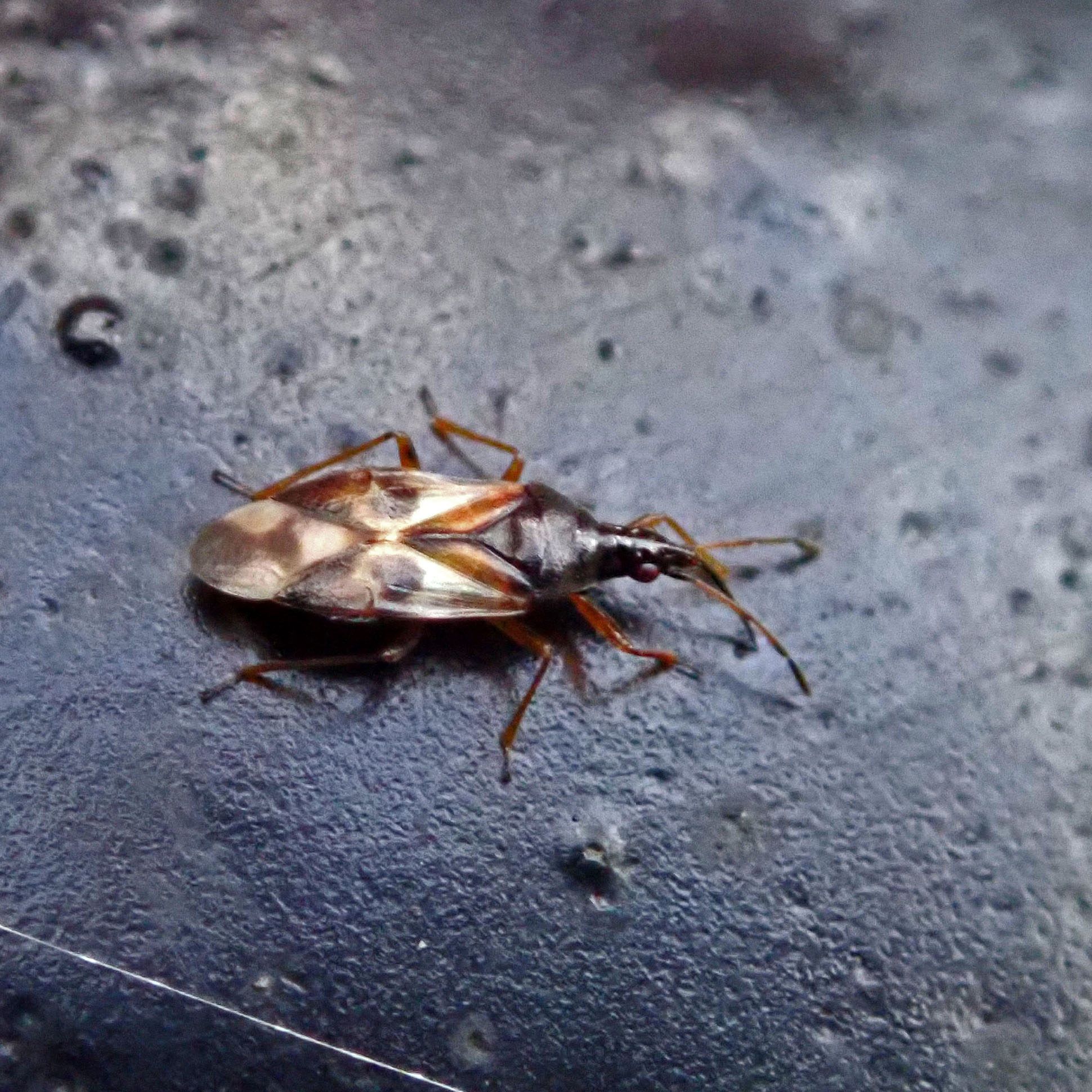
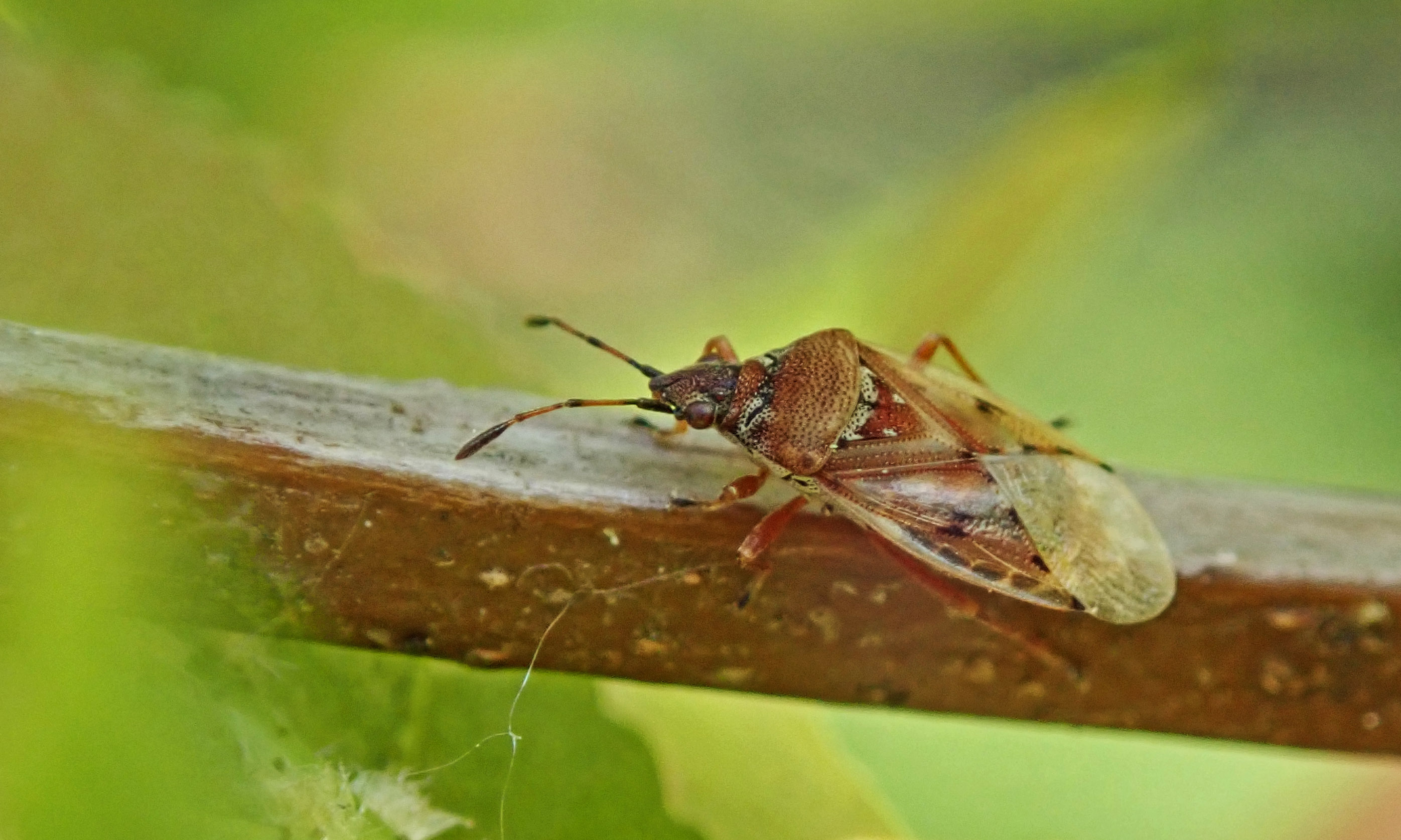
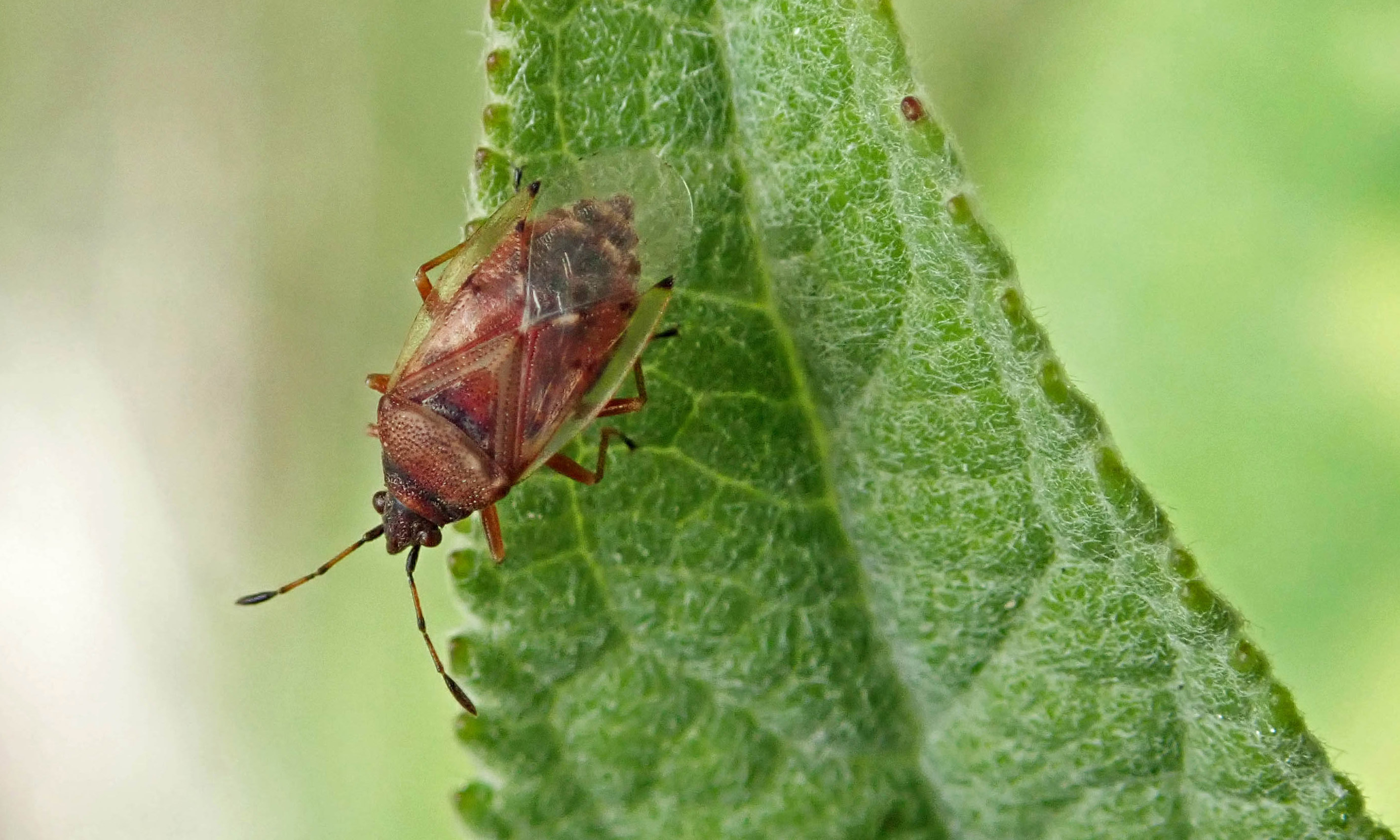
As I think I’ve mentioned previously, I’ve been fortunate to find several new bugs and beetles this year. This is one of those, now seen twice one month apart. Let me introduce you to the Birch catkin bug (Kleidocerys resedae), a member of the Lygaediae, the seed bugs that live in, on and around the seeds of various plants. In this case, as you can tell from the name, Kleidocerys resedae can be found on Birch trees (Betula species), the nymphs in particular munching on the catkins.

These are attractive little bugs, generally red-brown in colour, with some paler markings and transparent wings. There is a darker form Kleidocerys resedae f. privignus, which can be found around Alder trees, and I wonder if the bug shown below might be one of those. I actually spotted it on scrub underneath some trees, one of which was an Alder.

Birch catkin bugs can be found throughout Britain, as well as in North America and Europe, and you might be lucky enough to see them at any time of year, as they overwinter as adults (though they are thought to hibernate in colder climates).

Like Loading...

Rhopalus subrufus

06 Friday Jun 2025

Posted by sconzani in insects

≈ Leave a comment

Tags

British bugs, bugs, mating bugs, Rhopalus subrufus

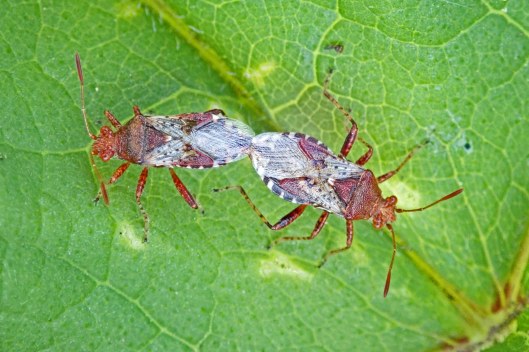
I felt a bit like a voyeur watching these handsome bugs doing their private business but I’d never seen their species before and, with them being preoccupied, it was the perfect opportunity to take a closer look and get some photographs. Rhopalus subrufus is one of four species in the genus Rhopalidae but, fortunately, R. subrufus is relatively easy to identify by the light and dark banding around the edge of its body (that flange is called the connexivum). The location where I found these two is typical of the habitat they favour: on low scrubby vegetation near trees or woodland.

Like Loading...

Second hopper of the year

22 Wednesday Jan 2025

Posted by sconzani in insects, winter

≈ Leave a comment

Tags

British bugs, British insects, Common leafhopper, overwintering bugs, overwintering insects, philaenus spumarius

Now you may be wondering ‘Did I miss the first hopper of the year?’ Well, the answer is no. I actually found my first two hoppers in fairly quick succession during last Sunday’s walk, simply by turning over Bramble leaves that were growing along a sunny sheltered lane. The first was a leafhopper, and I’m fairly sure of its identity but a valid query arose when I posted a photo on social media so I decided to wait until that was resolved before blogging about that hopper.

This second bug, a Common froghopper (Philaenus spumarius), was sitting on a Bramble stem, enjoying the sun’s warmth and, no doubt, hoping to be ignored. But a human came lumbering over, spotted it, and thrust a black object in its face. Fortunately, the human didn’t stay long, and the little froghopper returned to its basking.

Like Loading...

A is for Alder spittlebug

06 Friday Dec 2024

Posted by sconzani in insects

≈ Leave a comment

Tags

Alder spittlebug, Aphrophora alni, British bugs, bugs

Today, scary as it may be that another year has seemingly passed by so quickly, we begin the run-up to 2025! As I’ve done a couple of times before, I’m going to review this year’s finds and posts, based on an alphabetical countdown. And so we begin with the letter A and one of my favourites of this year’s bugs, the Alder spittlebug (Aphrophora alni), which I blogged about on 31 August.

241206 a is for Alder spittlebug (1)

I don’t think this one was very impressed that I was taking photos while they were mating.

241206 a is for Alder spittlebug (2)

Like Loading...

Spear thistle lacebug

10 Thursday Oct 2024

Posted by sconzani in insects, plants

≈ Leave a comment

Tags

British bugs, Creeping thistle, insects on Creeping thistle, lacebugs, Spear thistle lacebug, Tingis cardui

My eye was drawn to this particular Creeping thistle by the presence of four Urophora cardui galls on the plant’s stems (for information on what those are, see More galls, part 2, 4 October 2017) and, when I leant down for a closer look, I noticed this tiny creature, my first ever lacebug. (There were also lots of aphids lurking amongst the leaves, as you can see.)

241010 Spear thistle lacebug (1)

I’m fairly sure I’ve identified this correctly, as the black tips to its antennae are apparently diagnostic, but, for some reason, it’s living on the wrong species of thistle – this is the Spear thistle lacebug (Tingis cardui). I think you can see why it’s called a lacebug – the intricacy of the structure and patterning of its body is really quite exquisite. You can read more about this beautiful bug on the British Bugs website here.

241010 Spear thistle lacebug (2)

Like Loading...

Alder spittlebug

31 Saturday Aug 2024

Posted by sconzani in insects

≈ Leave a comment

Tags

Alder spittlebug, Aphrophora alni, British bugs, British insects

“High five!”

240831 Aphrophora alni Alder spittlebug (1)

The Alder spittlebug (Aphrophora alni) is very similar to the Common froghopper (Philaenus spumarius), and I have a feeling I may have mistaken them in the past, as this was the first time I was certain this was the spittlebug. The British Bugs website explains that ‘The genus can be recognised by the keel running down the midline of the head and pronotum, and the species by the colour pattern with distinct white patches near the margin of the wings’. To my eye, the spittlebug is a noticeably bigger – the froghopper is 5-7mm long, the spittlebug is 9-10mm – and wider in the beam.

240831 Aphrophora alni Alder spittlebug (2)

Like Loading...
← Older posts

About me

sconzani

sconzani

I'm a writer and photographer; researcher and blogger; birder and nature lover; countryside rambler and city strider; volunteer and biodiversity recorder.

View Full Profile →

Follow earthstar on WordPress.com

Enter your email address to follow this blog and receive notifications of new posts by email.

Recent blog posts

  • M is for mite December 18, 2025
  • L is for lepidopteran lifers December 17, 2025
  • K is for Keeled skimmers December 16, 2025
  • J is for Jersey tiger December 15, 2025
  • I is for Ichneumon December 14, 2025

From the archives

COPYRIGHT

Unless otherwise acknowledged, the text and photographs on this blog are my own and are subject to international copyright. Nothing may be downloaded or copied without my permission.

Fellow Earth Stars!

  • Unknown's avatar
  • Unknown's avatar
  • Unknown's avatar
  • Unknown's avatar
  • Unknown's avatar
  • Unknown's avatar
  • Unknown's avatar
  • Unknown's avatar
  • Unknown's avatar
  • Unknown's avatar
  • Unknown's avatar
  • Unknown's avatar
  • Unknown's avatar
  • Unknown's avatar
  • Unknown's avatar
  • Unknown's avatar
  • Unknown's avatar
  • Unknown's avatar
  • Unknown's avatar
  • Unknown's avatar
  • Unknown's avatar
  • Unknown's avatar
  • Unknown's avatar
  • Unknown's avatar
  • Unknown's avatar
  • Unknown's avatar
  • Unknown's avatar
  • Unknown's avatar
  • Unknown's avatar
  • Unknown's avatar
  • Unknown's avatar
  • Unknown's avatar
  • Unknown's avatar
  • Unknown's avatar
  • Unknown's avatar
  • Unknown's avatar
  • Unknown's avatar
  • Unknown's avatar
  • Unknown's avatar
  • Unknown's avatar
  • Unknown's avatar
  • Unknown's avatar
  • Unknown's avatar
  • Unknown's avatar
  • Unknown's avatar
  • Unknown's avatar
  • Unknown's avatar
  • Unknown's avatar
  • Unknown's avatar
  • Unknown's avatar

Blog at WordPress.com.

Privacy & Cookies: This site uses cookies. By continuing to use this website, you agree to their use.
To find out more, including how to control cookies, see here: Cookie Policy
  • Subscribe Subscribed
    • earthstar
    • Join 667 other subscribers
    • Already have a WordPress.com account? Log in now.
    • earthstar
    • Subscribe Subscribed
    • Sign up
    • Log in
    • Report this content
    • View site in Reader
    • Manage subscriptions
    • Collapse this bar
 

Loading Comments...
 

You must be logged in to post a comment.

    %d