• ABOUT
  • BIRDING 2018
  • Birding 2019
  • BLOG POSTS
  • Butterflies 2018
  • Resources

earthstar

~ a celebration of nature

earthstar

Tag Archives: British insects

Beetle: Four-banded longhorn

02 Saturday Aug 2025

Posted by sconzani in insects

≈ Leave a comment

Tags

British beetles, British insects, British longhorn beetles, Four-banded beetle, Leptura quadrifasciata, Longhorn beetle, yellow-and-black longhorn beetle

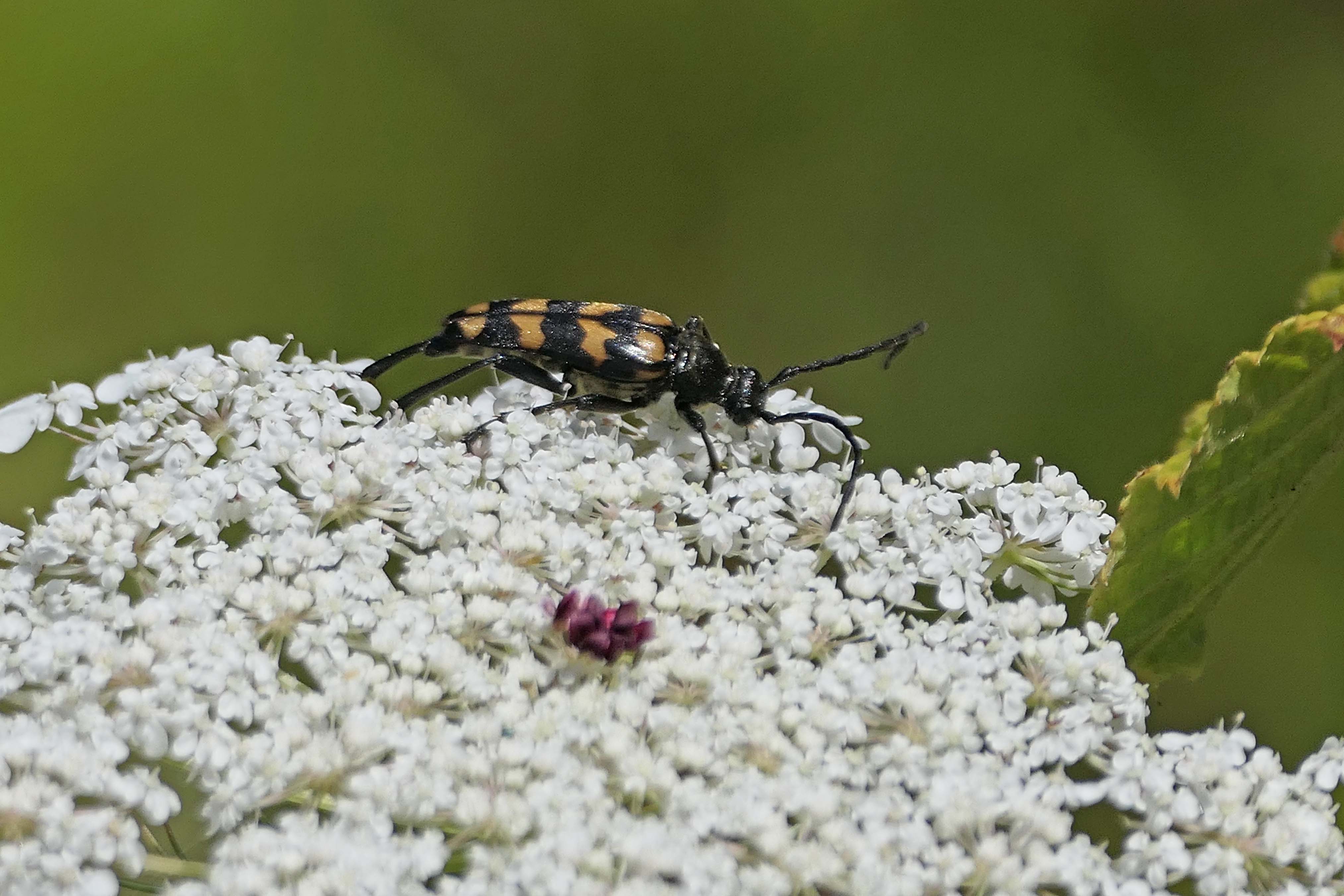
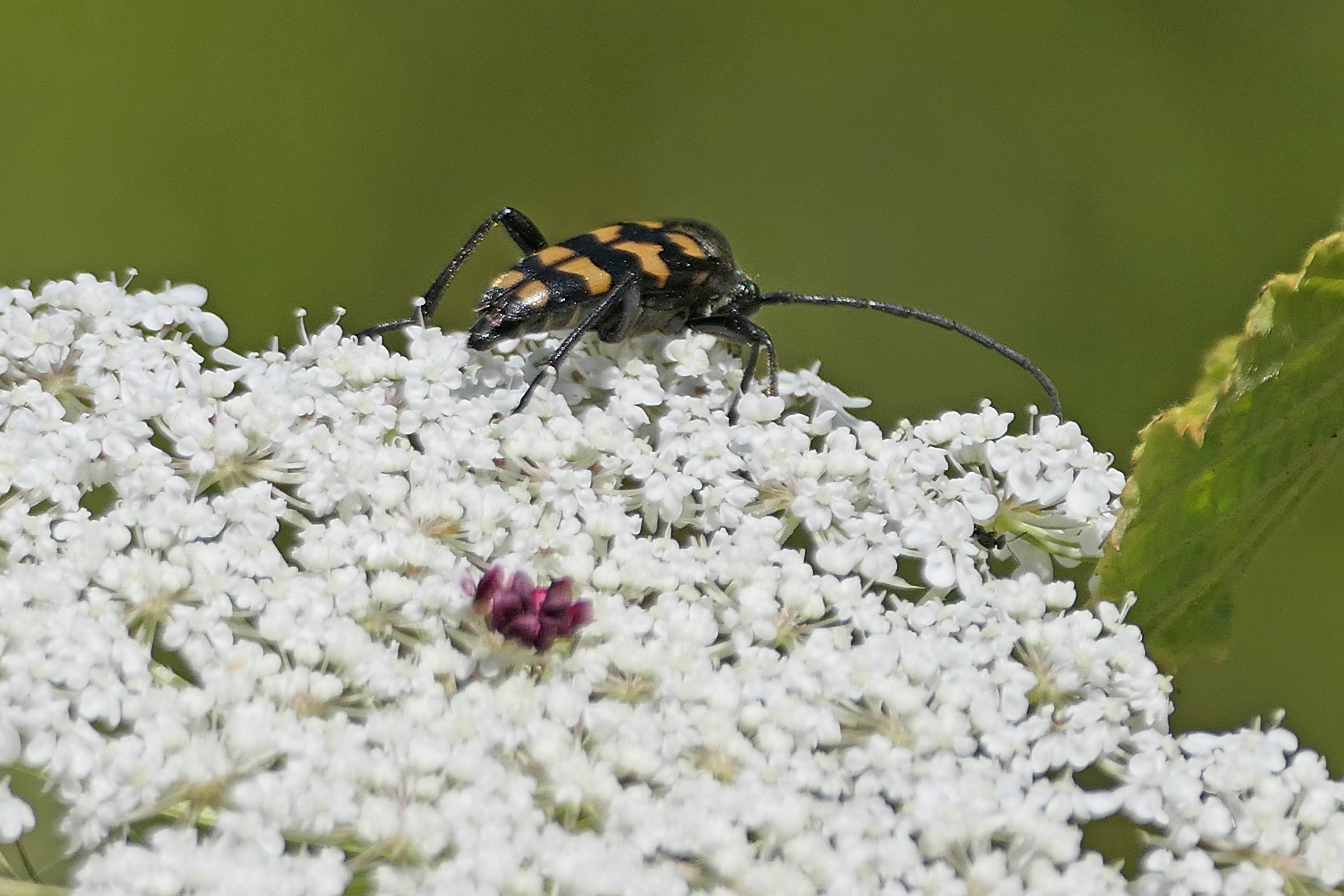
This is my second recent new longhorn beetle find, Leptura quadrifasciata, also known as the Four-banded longhorn – the reason for that name will be immediately obvious, I’m sure.

Interestingly, these beetles are associated with old woodland, though I found this one feeding on a Wild carrot flower (they feed on umbellifers) on the edge of Cardiff’s Grangemoor Park, a former landfill site. The nearest old woodland would probably be about a mile away in a direct line, quite a long flight for a beetle.

At first glance, Leptura quadrifasciata looks quite similar to the other yellow-and-black longhorn beetle, the Spotted longhorn Rutpela maculata, but the four bands on the former’s abdomen are quite regular and precise whereas the markings on the latter are more random and splotchy. My immediate impression of Leptura quadrifasciata was of a darker-looking beetle than Rutpela maculata, which always looks quite bright to my eye, and that’s actually what made me look closer; one of my ‘Oh, what are you?’ moments!

Like Loading...

Beetle: Grammoptera ruficornis

30 Wednesday Jul 2025

Posted by sconzani in insects

≈ Leave a comment

Tags

beetle, British beetles, British insects, British longhorn beetles, Grammoptera ruficornis, Longhorn beetle

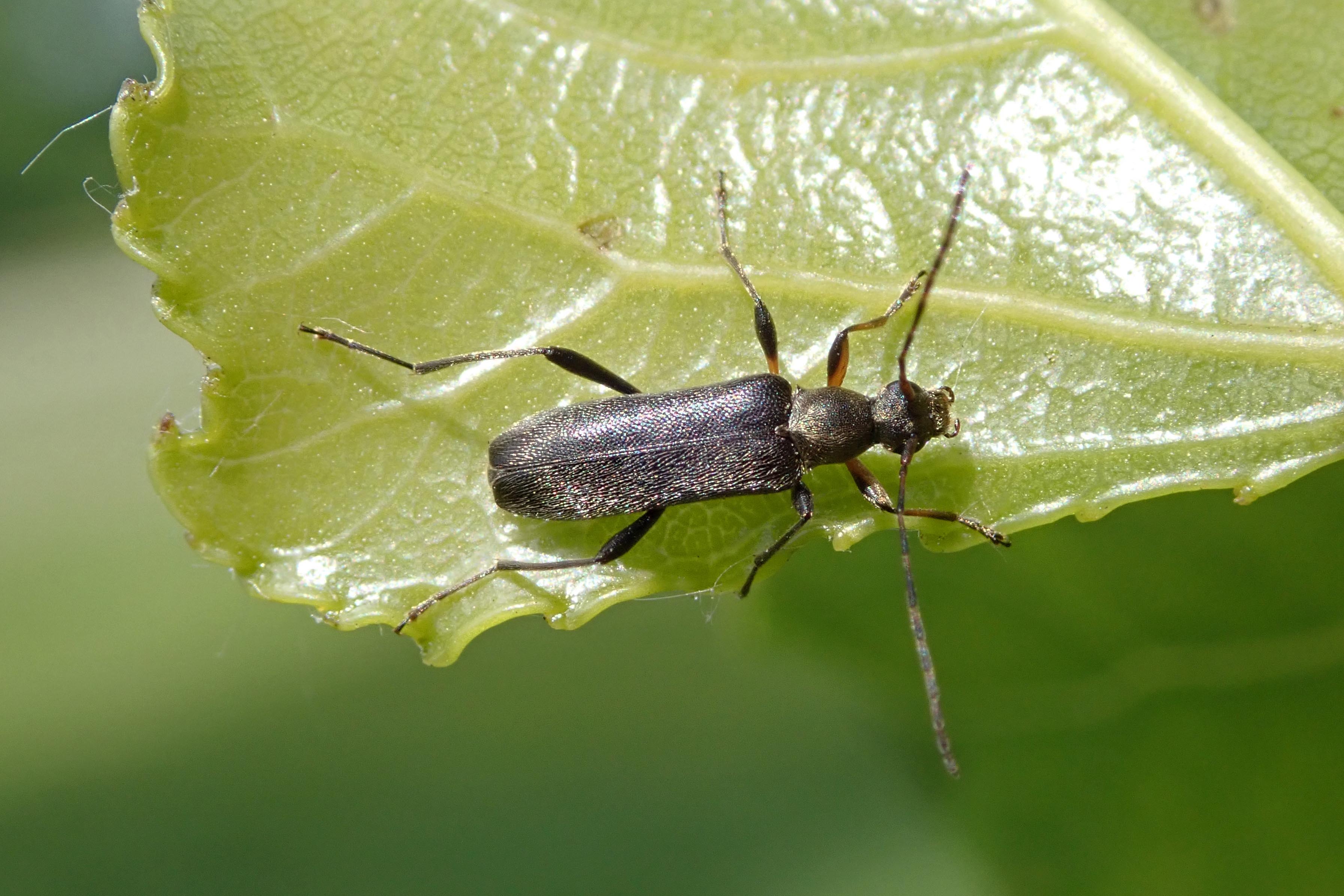
This is one of two new longhorn beetles I’ve found recently, not because I was specifically searching for them, just pure happenstance. (The second species will appear here on Saturday.)

This first is quite small for a longhorn beetle, is a dull brown and has wing cases covered in silken hairs, which, as you can see, make it look quite shiny. Adult longhorn beetles feed on the pollen and nectar of flowers, in the case of Grammoptera ruficornis, the flowers of Hogweed and Hawthorn in particular. The Naturespot website entry for this beetle warns that there are three similar-looking longhorns but, fortunately, the other two species are rarely seen and there are particular features of their antennae that can be used to separate the species.

Like Loading...

Fly: Eriothrix rufomaculata

25 Friday Jul 2025

Posted by sconzani in insects

≈ Leave a comment

Tags

bristly black and red fly, British flies, British insects, Eriothrix rufomaculata, fly, insect, parasitic fly larvae

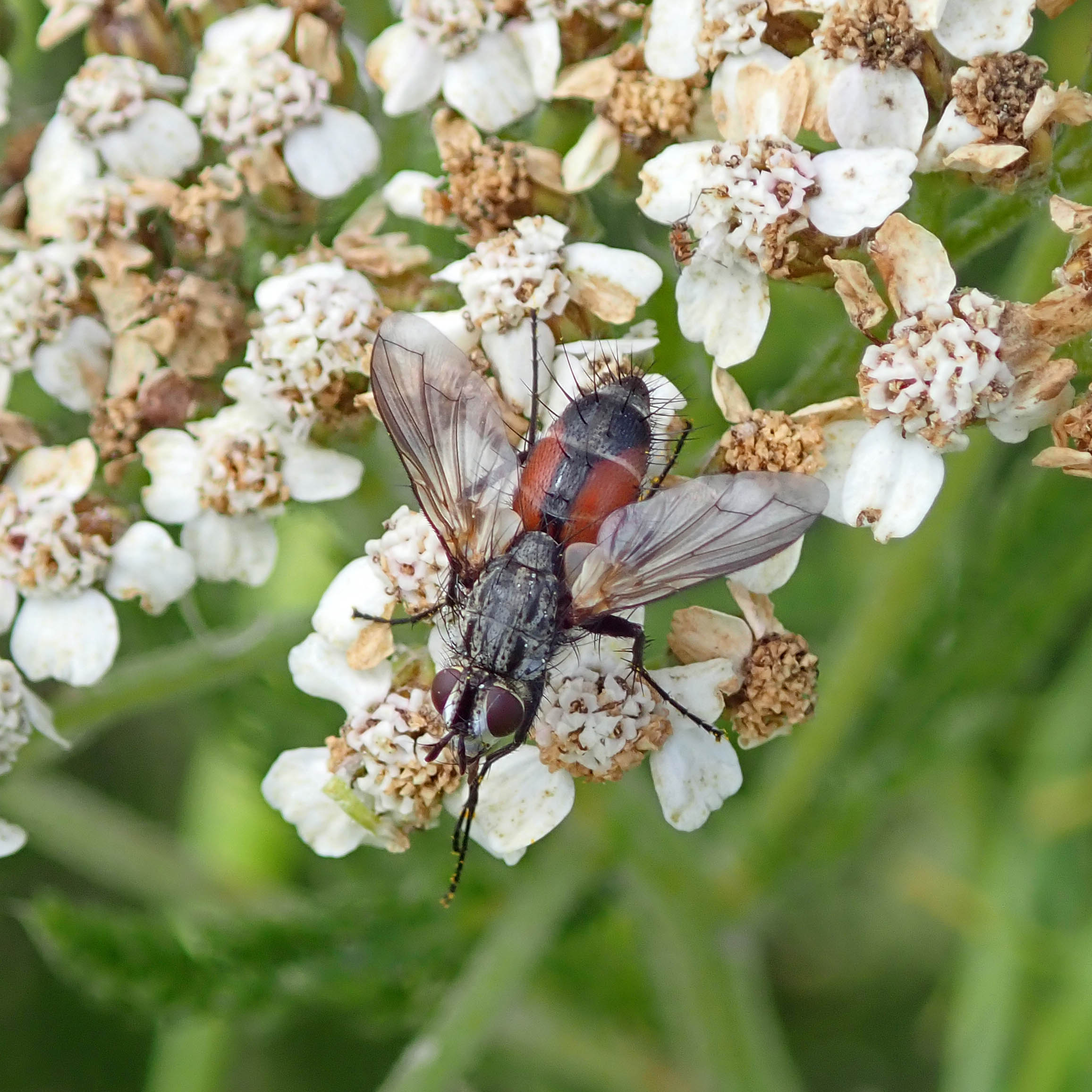
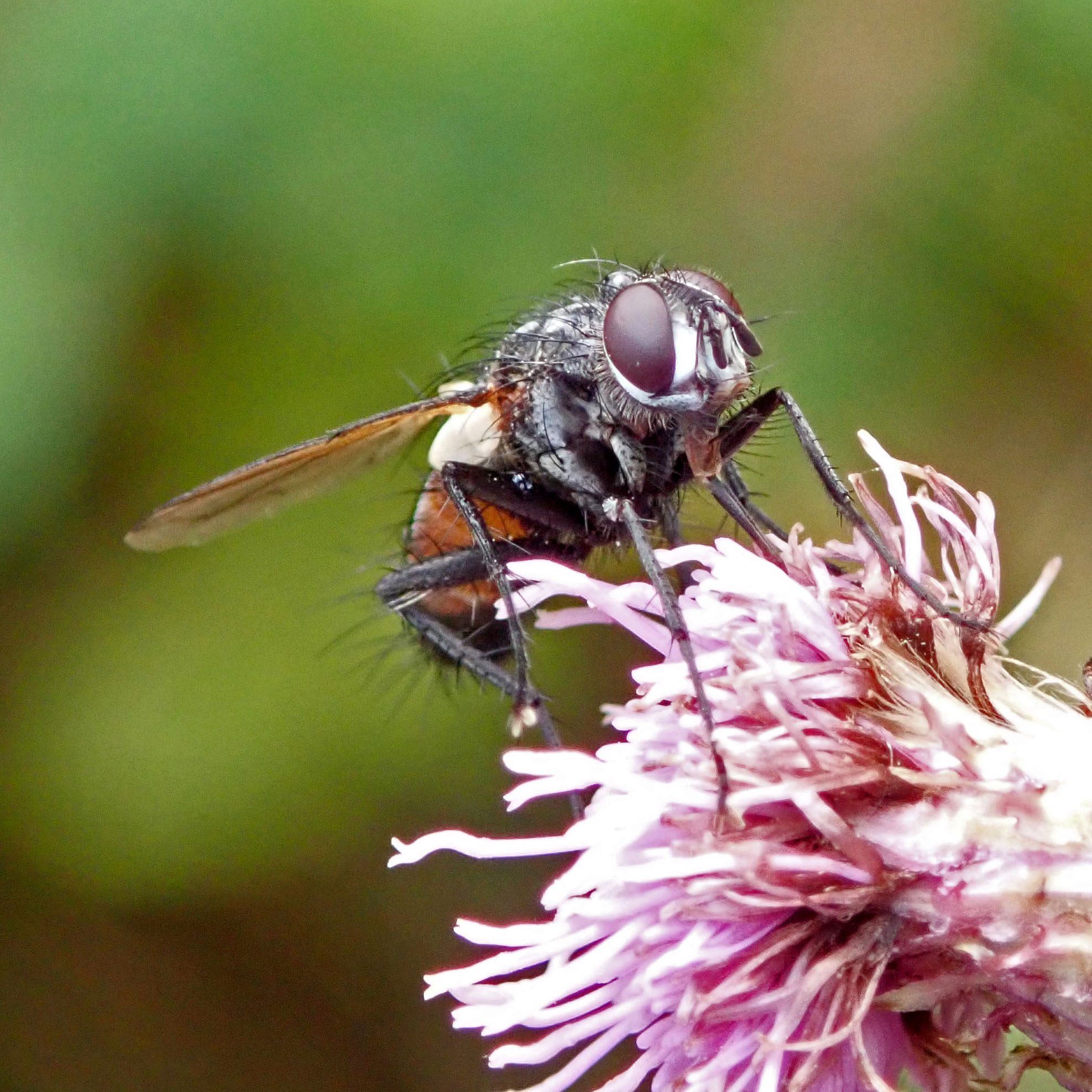
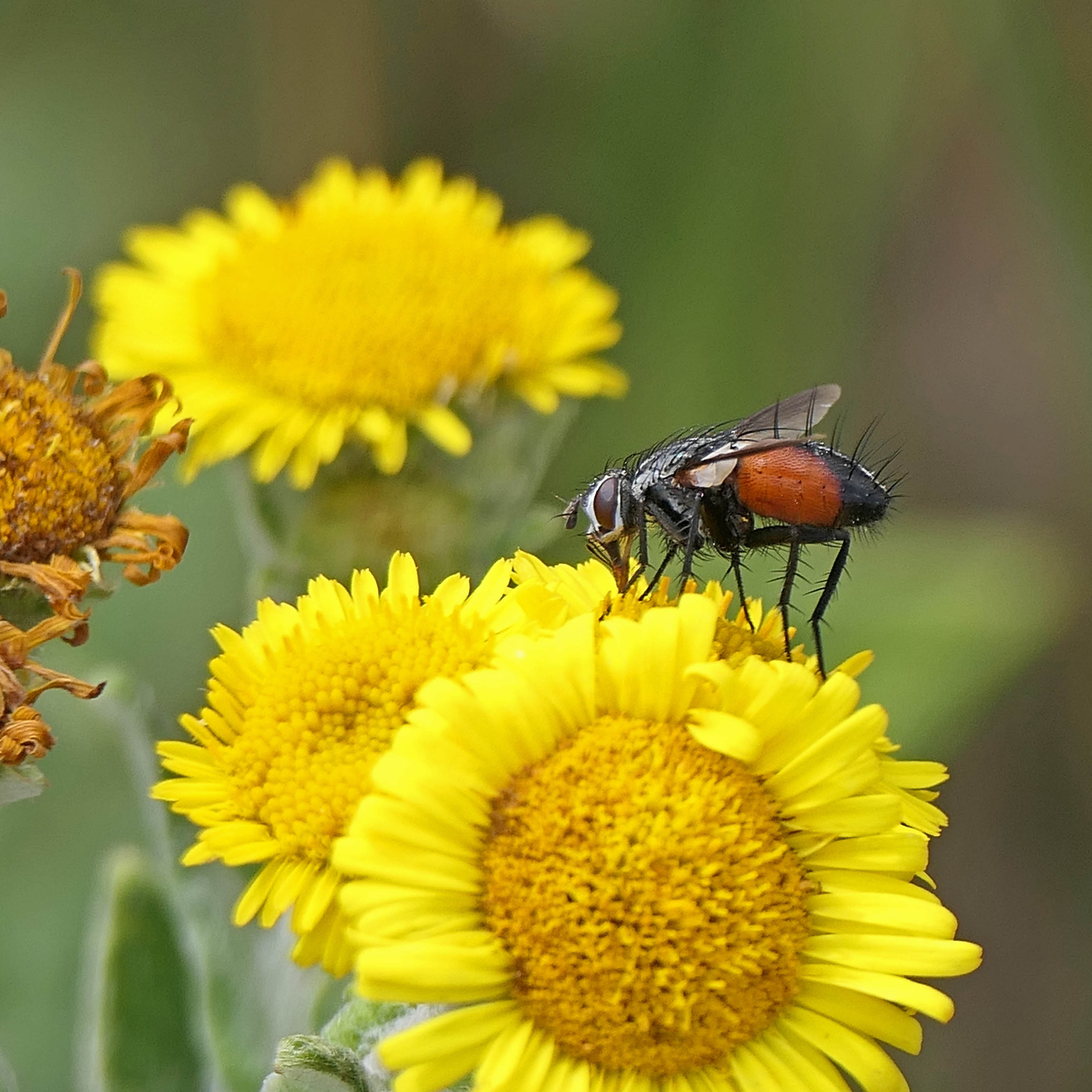
Over the past week I’ve had several sightings of this little fly, Eriothrix rufomaculata, and, though I usually shy away from trying to identify flies, this one is very distinctive. Amongst the checklist of features to look for that are listed on the Naturespot website entry for Eriothrix rufomaculata are the ‘red abdominal side patches’ ♥, ‘silvery face’ ♥, ‘projecting mouth edge’ ♥, and ‘slightly shaded wings’ ♥. It’s also very bristly.

Though the adults are supposedly active from June to October, I presume I’m seeing more of these flies now due to recent hatchings. Look for them feeding on flowers, particularly umbellifers and flowers from the Daisy family, which includes everything from Ragwort to Fleabane, Yarrow to Hemp-agrimony, thistles to Knapweeds, and many more.

Like many creatures, these flies have a dark side to their life cycle: their larvae are parasitic, feeding on the larvae of various moth species, including the little grass moths (the Crambidae) and the very beautiful tiger moth species (the Erebidae).

Like Loading...

Parent bug mother and eggs

23 Wednesday Jul 2025

Posted by sconzani in insects

≈ Leave a comment

Tags

British insects, British shieldbugs, Elasmucha grisea, Parent bug, Parent bug eggs, Parent bug female brooding eggs, shieldbug

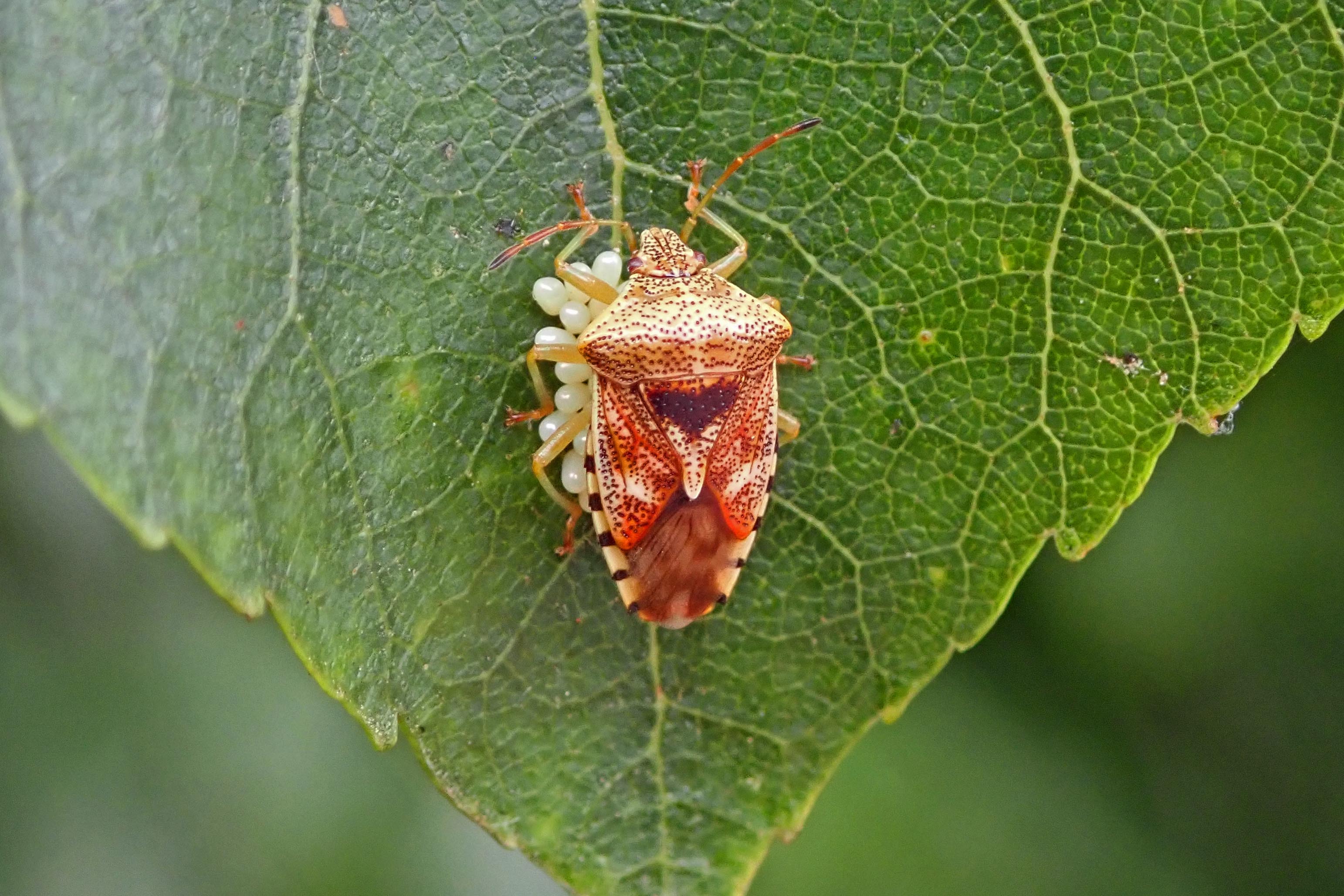
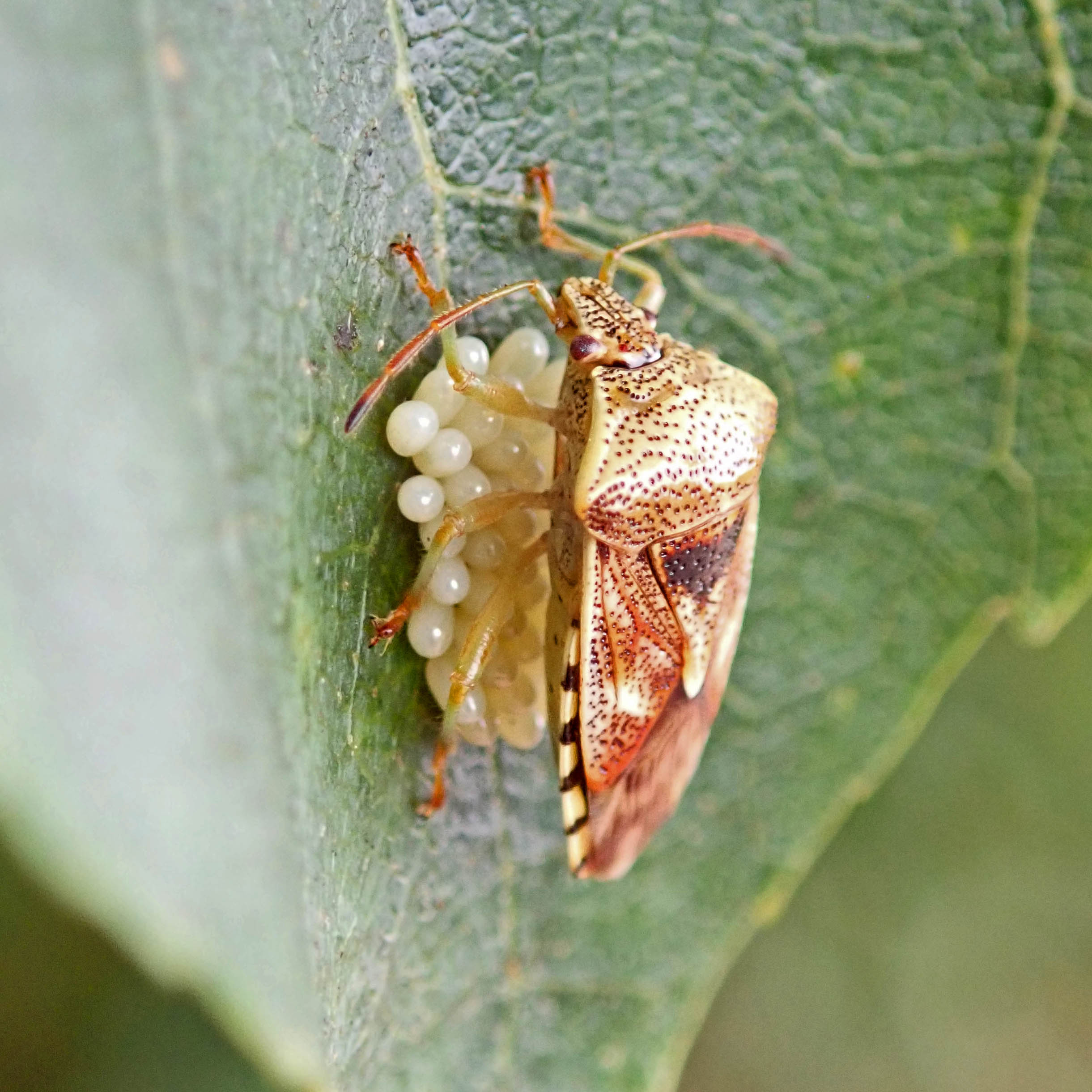
You might remember a very colourful and joyful blog from July last year (Parent bug mother and babies) when I shared a sighting of a Parent bug (Elasmucha grisea) female with her huge brood of young buglets (or, more correctly, nymphs, but I quite like buglet!). Well, just as I was heading home from a recent wander around Cardiff’s Grangemoor Park, I was fossicking through the leaves of an Italian alder tree and spotted this scene.

Though her colouring is quite pale, this is also a Parent bug mother, only this time she’s huddling over and protecting her eggs. Whether or not she was still in the process of laying the eggs or whether these eggs were a few days old I don’t know, and I didn’t want to disturb her by looking more closely. I grabbed a couple of quick photos and left her to her mothering duties.

Like Loading...

A new fly: Simulium species

06 Thursday Feb 2025

Posted by sconzani in insects

≈ Leave a comment

Tags

black flies, British flies, British insects, Dingle Park, Simulium, Simulium species

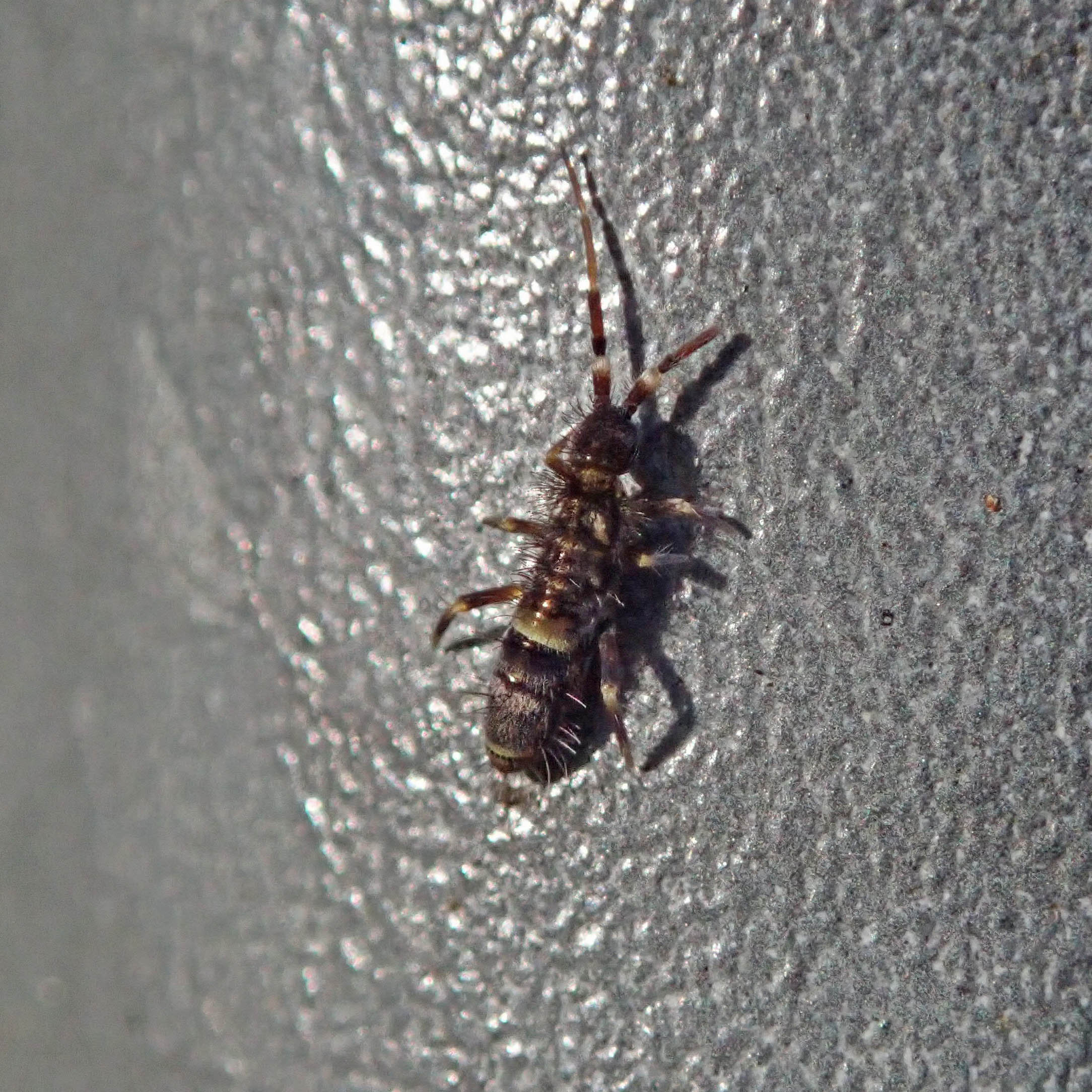
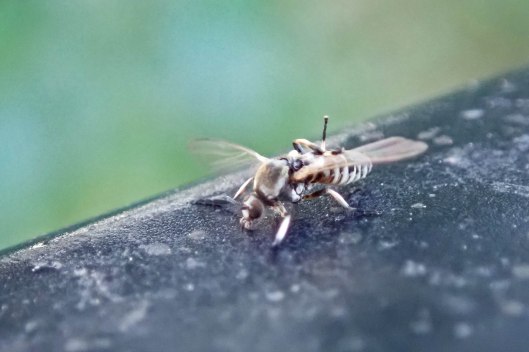
My local park railings have done it again! This time a fly I’d never seen before was sitting there, giving itself a good clean, wiping along its body with some of its many legs.

As I had no idea what this was, I threw it over to the entomologically minded people I follow on social media and within minutes had my answer: one of the Simulium species of black flies. You can read more about them on Wikipedia (not a place I would usually reference but their article is certainly interesting) and I also found a website called Blackfly (it’s flagged as not secure but is packed with information and probably okay for a quick read).

To be honest, rather than learning the name of the fly, I found the reactions to my post the most interesting. One person wrote ‘Itchiest bite ever!!!!!’, which horrified me slightly as I’d had the creature on my finger at one point, and I never react well to insect bites. Another told this story: ‘I was once in a boat nearly a mile out to sea when we spotted a black cloud on the horizon. A billion of these b*ggers landed on us and it was armageddon!’ That may read like a tall tale but people have compared the bites of these flies to those of the bloodthirsty Scottish midges and they are known to transmit diseases so should probably be avoided if at all possible.

Like Loading...

Second hopper of the year

22 Wednesday Jan 2025

Posted by sconzani in insects, winter

≈ Leave a comment

Tags

British bugs, British insects, Common leafhopper, overwintering bugs, overwintering insects, philaenus spumarius

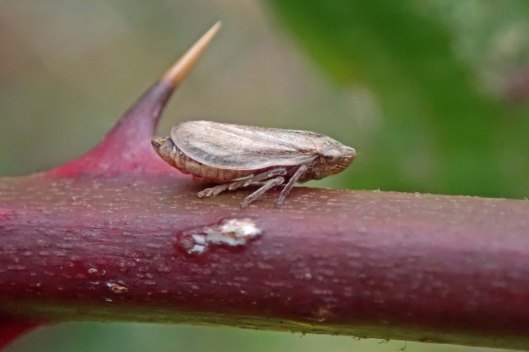
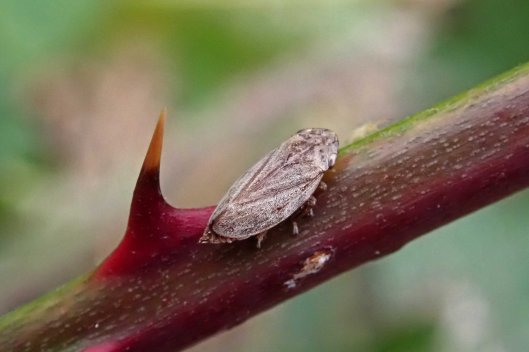
Now you may be wondering ‘Did I miss the first hopper of the year?’ Well, the answer is no. I actually found my first two hoppers in fairly quick succession during last Sunday’s walk, simply by turning over Bramble leaves that were growing along a sunny sheltered lane. The first was a leafhopper, and I’m fairly sure of its identity but a valid query arose when I posted a photo on social media so I decided to wait until that was resolved before blogging about that hopper.

This second bug, a Common froghopper (Philaenus spumarius), was sitting on a Bramble stem, enjoying the sun’s warmth and, no doubt, hoping to be ignored. But a human came lumbering over, spotted it, and thrust a black object in its face. Fortunately, the human didn’t stay long, and the little froghopper returned to its basking.

Like Loading...

Lesser thorn-tipped longhorn beetle

04 Saturday Jan 2025

Posted by sconzani in insects, winter

≈ Leave a comment

Tags

British beetles, British insects, Lesser thorn-tipped longhorn beetle, Pogonocherus hispidus

On 9 December, once again on the local park railings (I check them regularly now as I keep finding interesting creatures on them), I found my first ever Lesser thorn-tipped longhorn beetle (Pogonocherus hispidus). It’s thought to resemble a bird-dropping for camouflage, and named ‘thorn-tipped’ because of the thorn-like projections at the tips of its elytra (wing cases). I wondered, on social media, about its presence on the railings, and one of my followers provided the likely reason: ‘I think they get blown out of trees in windy weather. We get them on gravestones under trees in our local cemetery after high winds.’ The specimen I found has its ‘long horns’ tucked in at its sides so I recommend you take a look at the much clearer photos of this odd-looking beetle and read more about it in one of Steven Falk’s Flickr albums here.

250104 Lesser Thorn-tipped Longhorn Beetle

Like Loading...

Like a miniature Mexican wave

02 Saturday Nov 2024

Posted by sconzani in insects

≈ Leave a comment

Tags

British centipedes, British insects, centipede, insect

It was quite mesmerising watching each of this centipede’s tiny legs moving, rhythmically, one small step after another, like a miniature Mexican wave along each side of its body.

241101centipede

So, I thought I’d share a short video. I presume it is searching for food, a passing aphid, a stationary hoverfly larva, a slow slug perhaps.

Like Loading...

Alder spittlebug

31 Saturday Aug 2024

Posted by sconzani in insects

≈ Leave a comment

Tags

Alder spittlebug, Aphrophora alni, British bugs, British insects

“High five!”

240831 Aphrophora alni Alder spittlebug (1)

The Alder spittlebug (Aphrophora alni) is very similar to the Common froghopper (Philaenus spumarius), and I have a feeling I may have mistaken them in the past, as this was the first time I was certain this was the spittlebug. The British Bugs website explains that ‘The genus can be recognised by the keel running down the midline of the head and pronotum, and the species by the colour pattern with distinct white patches near the margin of the wings’. To my eye, the spittlebug is a noticeably bigger – the froghopper is 5-7mm long, the spittlebug is 9-10mm – and wider in the beam.

240831 Aphrophora alni Alder spittlebug (2)

Like Loading...

Fifty shades of brown

17 Saturday Aug 2024

Posted by sconzani in insects

≈ Leave a comment

Tags

British insects, Common froghopper, froghopper, philaenus spumarius

The adult Common froghopper (Philaenus spumarius), s/he that, when a tiny larva, blows bubbles out of its bottom to create the little blob of foam we call ‘Cuckoo spit’ to hide in, is brown, but not just one bland shade of brown. Its brown, which is also good for camouflage, ranges from light to dark: buff, mushroom, beige, ochre, cocoa, russet, sepia, chocolate – so many shades of brown.

240817 common froghoppers

Like Loading...
← Older posts

About me

sconzani

sconzani

I'm a writer and photographer; researcher and blogger; birder and nature lover; countryside rambler and city strider; volunteer and biodiversity recorder.

View Full Profile →

Follow earthstar on WordPress.com

Enter your email address to follow this blog and receive notifications of new posts by email.

Recent blog posts

  • A Vapourer update November 25, 2025
  • Meet Beaky November 24, 2025
  • Autumn trees: Ash November 23, 2025
  • The Black redstarts are back November 22, 2025
  • Oak mazegill November 21, 2025

From the archives

COPYRIGHT

Unless otherwise acknowledged, the text and photographs on this blog are my own and are subject to international copyright. Nothing may be downloaded or copied without my permission.

Fellow Earth Stars!

  • Unknown's avatar
  • Unknown's avatar
  • Unknown's avatar
  • Unknown's avatar
  • Unknown's avatar
  • Unknown's avatar
  • Unknown's avatar
  • Unknown's avatar
  • Unknown's avatar
  • Unknown's avatar
  • Unknown's avatar
  • Unknown's avatar
  • Unknown's avatar
  • Unknown's avatar
  • Unknown's avatar
  • Unknown's avatar
  • Unknown's avatar
  • Unknown's avatar
  • Unknown's avatar
  • Unknown's avatar
  • Unknown's avatar
  • Unknown's avatar
  • Unknown's avatar
  • Unknown's avatar
  • Unknown's avatar
  • Unknown's avatar
  • Unknown's avatar
  • Unknown's avatar
  • Unknown's avatar
  • Unknown's avatar
  • Unknown's avatar
  • Unknown's avatar
  • Unknown's avatar
  • Unknown's avatar
  • Unknown's avatar
  • Unknown's avatar
  • Unknown's avatar
  • Unknown's avatar
  • Unknown's avatar
  • Unknown's avatar
  • Unknown's avatar
  • Unknown's avatar
  • Unknown's avatar
  • Unknown's avatar
  • Unknown's avatar
  • Unknown's avatar
  • Unknown's avatar
  • Unknown's avatar
  • Unknown's avatar
  • Unknown's avatar

Blog at WordPress.com.

Privacy & Cookies: This site uses cookies. By continuing to use this website, you agree to their use.
To find out more, including how to control cookies, see here: Cookie Policy
  • Subscribe Subscribed
    • earthstar
    • Join 669 other subscribers
    • Already have a WordPress.com account? Log in now.
    • earthstar
    • Subscribe Subscribed
    • Sign up
    • Log in
    • Report this content
    • View site in Reader
    • Manage subscriptions
    • Collapse this bar
 

Loading Comments...
 

You must be logged in to post a comment.

    %d