• ABOUT
  • BIRDING 2018
  • Birding 2019
  • BLOG POSTS
  • Butterflies 2018
  • Resources

earthstar

~ a celebration of nature

earthstar

Tag Archives: British mammals

46/365 Barry Fox

15 Friday Feb 2019

Posted by sconzani in 365DaysWildin2019, animals, nature, spring

≈ Leave a comment

Tags

Barry, Barry Island, British mammals, fox, fox lying in the sun, Red fox

Under blue skies and glorious sunshine, I returned to Barry for another long exploratory meander today so I expected this blog post to contain one of the many photos I took of water lapping on sand, aerobatic gulls soaring overhead, seaweed floating in and out on the waves, birds feeding amongst the reeds and rivulets in the Old Harbour …. But then I happened to glance over a railing into someone’s allotment and saw this gorgeous creature basking in the warm afternoon sun. And all thoughts of a marine theme vanished in a blink of a sleepy fox’s eye.

190215 fox

Like Loading...

1/365 Urban foxes

01 Tuesday Jan 2019

Posted by sconzani in 365DaysWildin2019, animals, mammal, nature

≈ 2 Comments

Tags

#365DaysWild, British mammals, fox, male and female fox, pair of foxes, urban fox

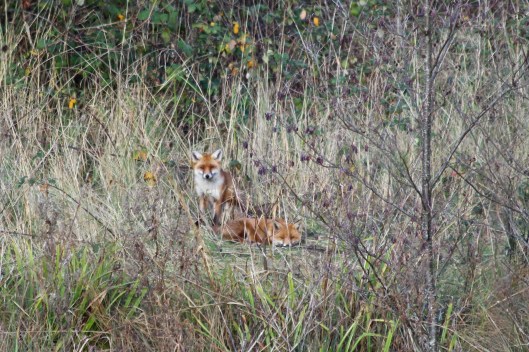
To kickstart my birding list for the new year, I walked 8+ miles around Cardiff Bay, logging all the different bird species I could find (they’ll appear on my Birding 2019 page as soon as I finish editing my photos). With mostly blue skies and an abundance of lovely birds, it was a super walk but the highlight wasn’t the birds – it was spotting and then watching these two beautiful foxes lolling about in the grass, enjoying the winter sunshine. Such magnificent creatures!

190101 urban foxes

Like Loading...

Ratty’s back

15 Sunday Jul 2018

Posted by sconzani in animals, mammal, nature

≈ Leave a comment

Tags

British mammals, Cosmeston, Cosmeston Lakes Country Park, Water vole

180715 water vole (1)

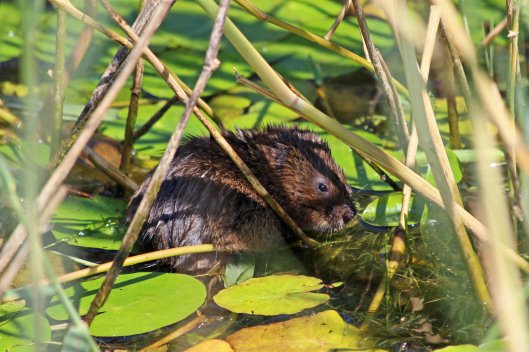
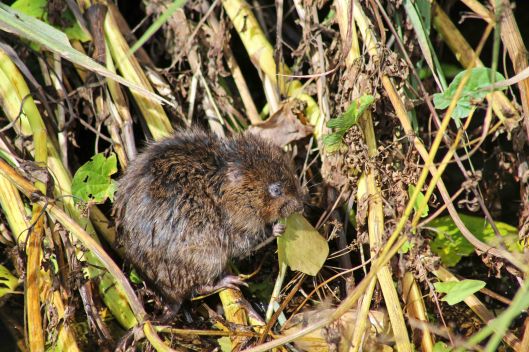
Well, the truth is Ratty probably never went away. Water voles might disappear from sight during the cold months of winter but they don’t actually hibernate – they simply burrow deeper underground to keep warm, and they spend a lot of time sleeping, which means they don’t need to snack too often from the larder they stock in autumn, full of bulbs, roots and tubers. They also bung up the entrance to their burrows with a mix of vegetation and mud, which helps keep the heat inside.

180715 water vole (2)

Come the Spring, they emerge and spend more time out and about, though it’s only in the past month or so that I’ve seen them again at Cosmeston. That may just be the timing of my visits, though the few I’ve seen have also seemed a bit less confident about being out and about than last year’s Water voles, possibly because some idiot people have let their dogs jump into the dipping pond, an area where they are obviously forbidden.

180715 water vole (3)

It’s probably impossible to tell how many of last year’s release of 100 Water voles have survived the winter but another 40-odd were released a few weeks back to supplement the local population.

180715 water vole (4)

People love to watch them, young and old alike, so let’s hope we can all enjoy them chewing away at the vegetation for the days, weeks, months to come.

180715 water vole (5)

Like Loading...

Hallo, Rabbit

19 Monday Feb 2018

Posted by sconzani in animals, mammal, nature

≈ 2 Comments

Tags

British fauna, British mammals, Cosmeston, Oryctolagus cuniculus, rabbit

180219 rabbit

“Hallo, Rabbit,” he said, “is that you?”
“Let’s pretend it isn’t,” said Rabbit, “and see what happens.”
~ A.A. Milne, Winnie the Pooh

Like Loading...

Smell a rat?

27 Wednesday Sep 2017

Posted by sconzani in animals, mammal, nature

≈ 10 Comments

Tags

British fauna, British mammals, brown rat, Cosmeston Lakes Country Park, rat, Rattus norvegicus

If you don’t like rats, look away now!
170927 Brown rat (4)

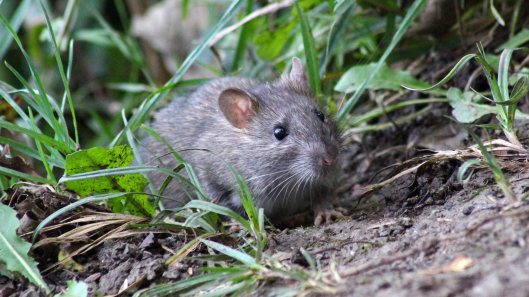
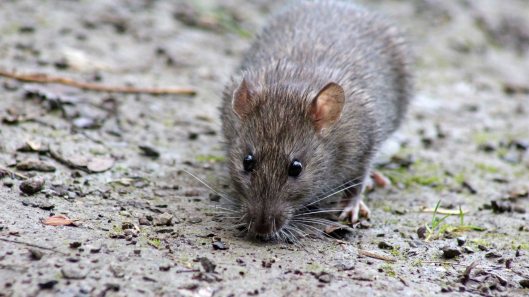
While I realise that a blog about rats might not appeal to everyone, I rarely get to see or write about mammals so, when these two rats came brazenly sniffing around for the seeds I was feeding to the birds at Cosmeston, I couldn’t resist taking photos. And once I have photos, a blog shall surely follow.

170927 Brown rat (1)
170927 Brown rat (2)
170927 Brown rat (3)

These are Brown rats (Rattus norvegicus), immigrants from central Asia that arrived in Britain around 1720. Of course, I don’t mean these two individuals arrived in 1720 – rats usually only live about a year in the wild – but their ancestors were sea-going rodents that just loved to sail the oceans wide and jumped ship wherever they docked. Nowadays, rats are more settled, and they’ll live almost anywhere – houses, gardens, parks, farmlands and farm buildings – you name it, there’s probably a rat in it somewhere.
170927 Brown rat (5)

They particularly like cereals – so, my bird seed would’ve gone down a treat – but they’ll eat pretty much anything, from small birds and their eggs to molluscs and food scraps. If you’re someone who hates these much-maligned creatures, remember that they too play an important part in the food chain, in particular as food for the owls and foxes that everyone loves.

Like Loading...

The taming of the shrew

23 Saturday Sep 2017

Posted by sconzani in animals, mammal, nature

≈ Leave a comment

Tags

British mammals, mammal, Pygmy shrew, rodent, shrew, Sorex minutus

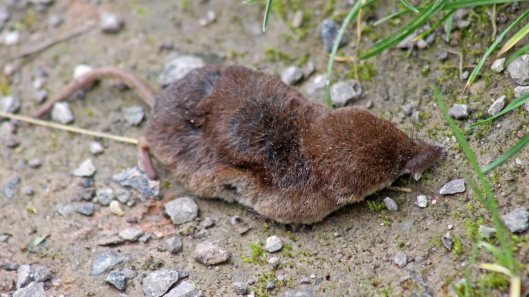
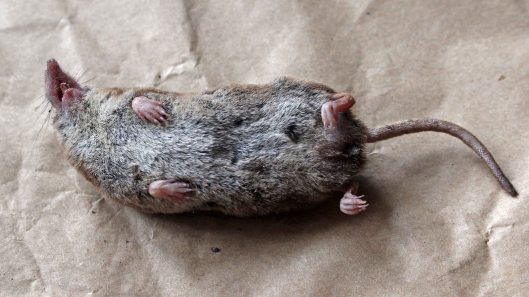
I have only ever seen two shrews, both sadly deceased. Britain has two species of shrew, the Common (Sorex araneus) and the Pygmy (Sorex minutus), but I believe the ones I have seen have been Pygmy shrews. Though both species have brown fur on their backs and silvery grey fur on their bellies, and they are of a similar size, the Pygmy shrew has a tail that is two-thirds the length of its body, whereas the Common shrew’s is half the length. It’s a small distinction and I’m sure experts could point to more scientific methods of distinguishing one from the other but, for me, the tail has to be the telling point.

170923 Pygmy shrew (1)

Pygmy shrews lead short but frantic lives. In their twelve to eighteen months of life the females can give birth to two, sometimes three litters of between 5 and 7 young. Though very few people ever see them, they are common in much of Britain, ferreting about frantically, in grasslands, woodlands, the fringes of arable fields and in the urban garden, for the small insects they like to eat. As you can see, they have tiny eyes but that relatively large snout gives them a keen sense of smell to help find their prey.

170923 Pygmy shrew (2)

In case you’re wondering how I managed to get such detailed photos of this little Pygmy shrew, I brought it home with me. This wasn’t just to get photos – through someone I know who is doing a PhD in biosciences at Cardiff University, this little creature has been donated to science. Its details will help in the study of these often elusive small mammals, and it will be preserved and used as a teaching aid. I was sad to find such a gorgeous wee beastie dead but at least its death has not been in vain.

170923 Pygmy shrew (3)
170923 Pygmy shrew (4)
170923 Pygmy shrew (5)
Like Loading...

Ratty!

05 Saturday Aug 2017

Posted by sconzani in animals, nature

≈ 6 Comments

Tags

Arvicola amphibius, British mammals, Ratty, Water vole, Wind in the Willows

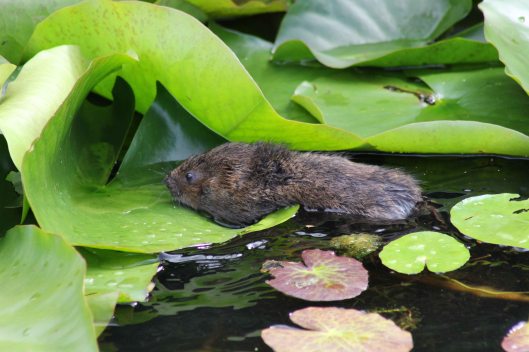
Of course, the ‘Ratty’ in Kenneth Grahame’s much-loved tale The Wind in the Willows is not, in fact, a rat, it’s a Water vole (Arvicola amphibius), as are the gorgeous little creatures in my photographs.

170805 Water vole (2)

Water vole numbers have declined hugely in recent years, partly, it seems, due to predation by American minks and partly due to loss of habitat. Luckily for me, one hundred Ratties were recently reintroduced at one of my local country parks, and a few of them have made themselves at home in a location where they are easily visible.

170805 Water vole (1)

You have only to be quiet and watchful to see them swim out from their hiding places amongst the reeds at the edge of a pond, nip off a leaf from the floating water lilies, swim back to the pond edge, and sit contentedly nibbling away. They are the cutest wee creatures!

170805 Water vole (3)

Like Loading...
Newer posts →

About me

sconzani

sconzani

I'm a writer and photographer; researcher and blogger; birder and nature lover; countryside rambler and city strider; volunteer and biodiversity recorder.

View Full Profile →

Follow earthstar on WordPress.com

Enter your email address to follow this blog and receive notifications of new posts by email.

Recent blog posts

  • Three Common sandpipers February 17, 2026
  • Beetle: Athous bicolor February 16, 2026
  • Crocus flower power February 15, 2026
  • Delightful doves February 14, 2026
  • Fan-like fungi February 13, 2026

From the archives

COPYRIGHT

Unless otherwise acknowledged, the text and photographs on this blog are my own and are subject to international copyright. Nothing may be downloaded or copied without my permission.

Fellow Earth Stars!

  • Unknown's avatar
  • Unknown's avatar
  • Unknown's avatar
  • Unknown's avatar
  • Unknown's avatar
  • Unknown's avatar
  • Unknown's avatar
  • Unknown's avatar
  • Unknown's avatar
  • Unknown's avatar
  • Unknown's avatar
  • Unknown's avatar
  • Unknown's avatar
  • Unknown's avatar
  • Unknown's avatar
  • Unknown's avatar
  • Unknown's avatar
  • Unknown's avatar
  • Unknown's avatar
  • Unknown's avatar
  • Unknown's avatar
  • Unknown's avatar
  • Unknown's avatar
  • Unknown's avatar
  • Unknown's avatar
  • Unknown's avatar
  • Unknown's avatar
  • Unknown's avatar
  • Unknown's avatar
  • Unknown's avatar
  • Unknown's avatar
  • Unknown's avatar
  • Unknown's avatar
  • Unknown's avatar
  • Unknown's avatar
  • Unknown's avatar
  • Unknown's avatar
  • Unknown's avatar
  • Unknown's avatar
  • Unknown's avatar
  • Unknown's avatar
  • Unknown's avatar
  • Unknown's avatar
  • Unknown's avatar
  • Unknown's avatar
  • Unknown's avatar
  • Unknown's avatar
  • Unknown's avatar
  • Unknown's avatar
  • Unknown's avatar

Blog at WordPress.com.

Privacy & Cookies: This site uses cookies. By continuing to use this website, you agree to their use.
To find out more, including how to control cookies, see here: Cookie Policy
  • Subscribe Subscribed
    • earthstar
    • Join 670 other subscribers
    • Already have a WordPress.com account? Log in now.
    • earthstar
    • Subscribe Subscribed
    • Sign up
    • Log in
    • Report this content
    • View site in Reader
    • Manage subscriptions
    • Collapse this bar
 

Loading Comments...
 

You must be logged in to post a comment.

    %d