• ABOUT
  • BIRDING 2018
  • Birding 2019
  • BLOG POSTS
  • Butterflies 2018
  • Resources

earthstar

~ a celebration of nature

earthstar

Tag Archives: Cardiff birding

Tuesday wash day

11 Tuesday Nov 2025

Posted by sconzani in birds

≈ Leave a comment

Tags

birding, birdwatching, British birds, Cardiff birding, Lisvane Reservoir, little grebe, Little grebe out of the water, Little grebe preening

Last week, we had Wednesday wash day; this week, it’s Tuesday but, heck, every day is wash day for birds, especially waterfowl that rely on their feathers being in peak condition to repel water and keep them warm. And, as I don’t recall ever having seen a Little grebe out of the water before, I was entranced to watch this sweet little bird working quite strenuously to sort out its feathers.

Little grebes are not normally very confiding but this one was so focused on its preening that it seemed totally oblivious to passers-by, and me, on the pavement just a few feet above it.

Like Loading...

An Egyptian goose comes to town

30 Thursday Oct 2025

Posted by sconzani in birds

≈ 6 Comments

Tags

Alopochen aegypticus, birding, birdwatching, British birds, Cardiff birding, Egyptian Goose, Lamby Lake, non-native birds

The BTO (British Trust for Ornithology) website reckons that the Egyptian goose (Alopochen aegyptiaca) was introduced to England in the 17th century, presumably to enhance the parks and gardens of the rich with an exotic species – not quite a Peacock, but you get the idea.

Like many other introduced species, these geese have since spread their wings and flown to pastures new or, in this case, more likely lakes, though that colonisation has been quite gradual. The BTO site states:

In 1991 the population was estimated at c.900 individuals, 91% of which were in Norfolk. Since then, the species has colonised the rest of East Anglia, much of London and parts of the Home Counties.

And, from further down the page, by 2013-2017 the UK breeding population size had grown to 1850 pairs.
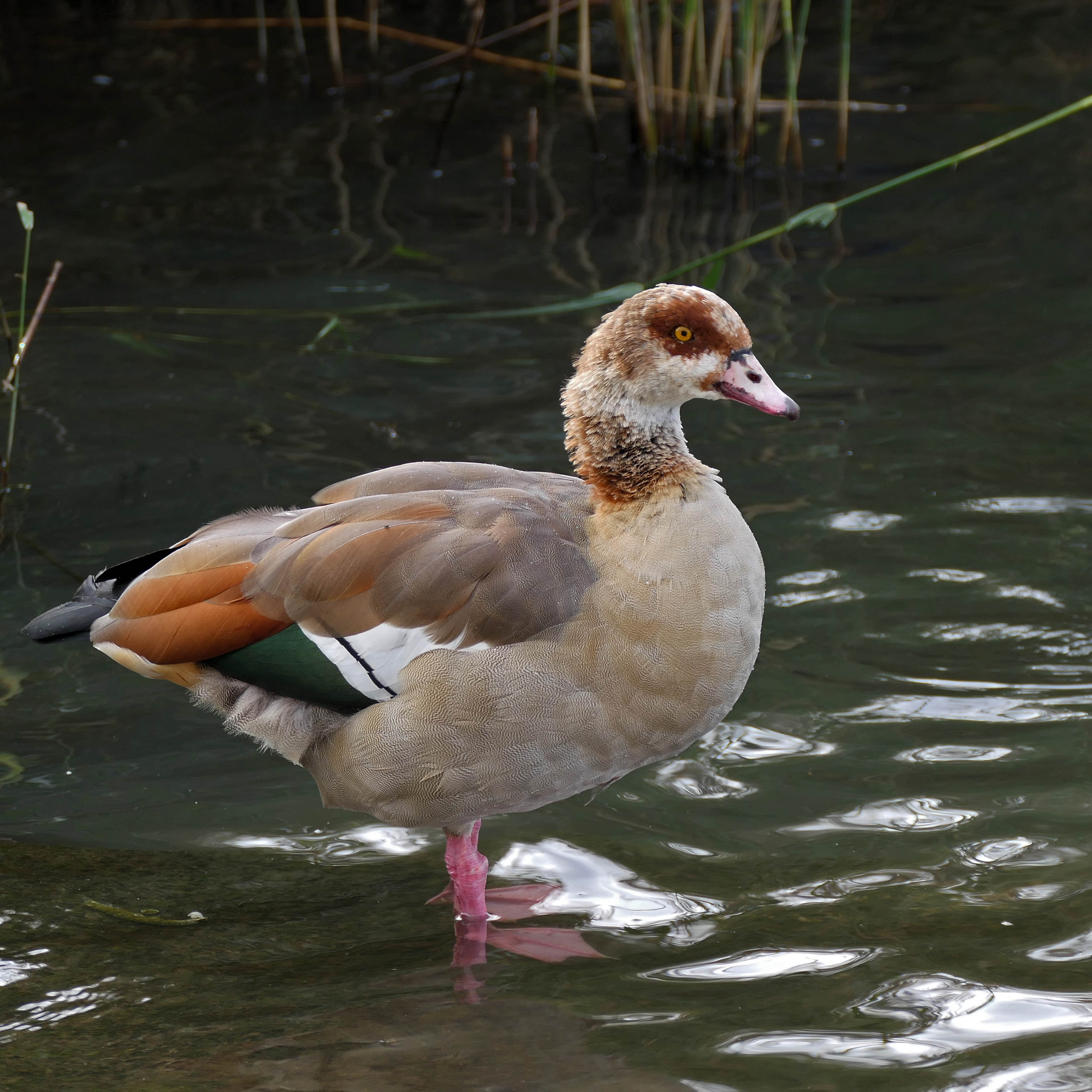
Sightings of these birds in south Wales have been relatively rare but do seem to have been increasing over the past couple of years. An Egyptian goose – possibly this same bird but there’s no way to be sure – spent several months on a local lake earlier in the year; it was first reported in the WhatsApp group on 23 March (though, of course, it may have been there before that, just not reported by any local birders) and then intermittently through April, May and June. Reports then stopped until ten days ago, when a birder posted that an ‘Egyptian goose set up residency a couple of weeks ago’, which would have been in early October.

As I’d not seen one of these geese since I was last in London six years ago, I decided to go take a look at this local bird. The lake it’s calling home is on the other side of Cardiff and I didn’t fancy the six mile walk through a very industrial area on busy roads so it was a bit of a trek by train and bus to get there … but definitely worth it.

With feathers in multiple shades of brown, with rich rust and bottle green highlights, Egyptian geese are very handsome birds, and this one’s no exception. It looked very settled amongst the other waterfowl, though the Coots were keeping a close eye on it. It was certainly not bothered by the presence of people and, though it turned its nose (beak?) up at my offering of suet pellets, which the other birds were happy to scoff, it happily grabbed the white bread thrown in the water by other visitors, so has presumably lived in a public park setting previously. I was very pleased I’d made the effort to go and see this exotic visitor.


Like Loading...

A juvenile Garganey

25 Thursday Sep 2025

Posted by sconzani in autumn, birds

≈ Leave a comment

Tags

Anas querquedula, autumn migration, birding, birdwatching, British birds, Cardiff birding, Garganey, juvenile Garganey, Llanishen Reservoir

It’s all about the birds at the moment, with autumn migration in full swing and with my local area fortunate to be enjoying visits by some stunning birds, like this one.

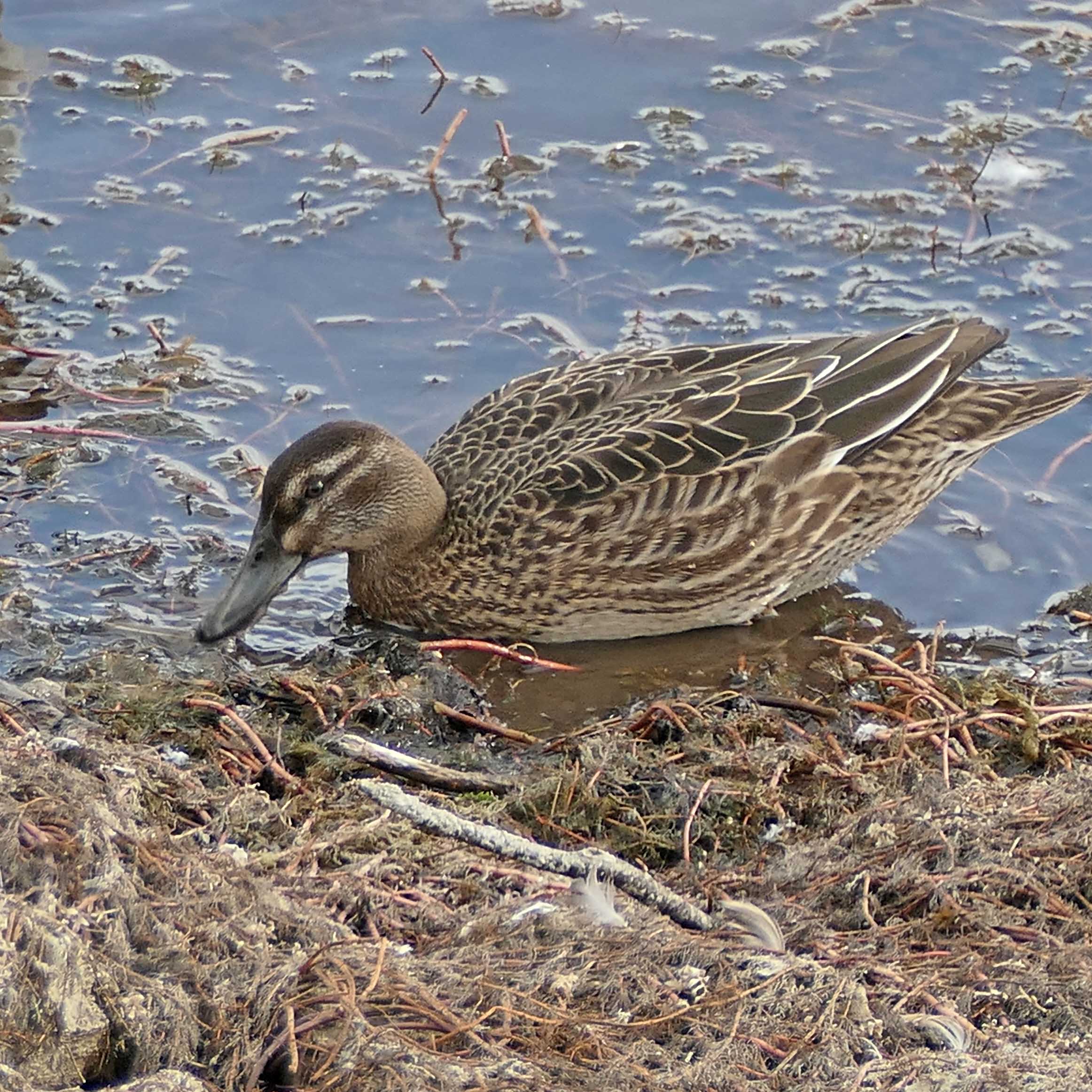
The day I saw the three phalaropes there was another cracking bird at Cardiff’s northern reservoirs but it was a bit overshadowed by the three rarities, and I doubt many birders bothered to walk to the far end of the adjacent Llanishen Reservoir to see this one, a beautiful juvenile Garganey (Anas querquedula).

An explanation is necessary here; I actually visited the reservoirs the day before I saw the Grey and Red-necked phalaropes, as one Grey phalarope had been reported that day. But it was literally blowing a gale so I had difficulty staying upright, let alone trying to scan the choppy waters with my binoculars to find a small grey bird. In fact, it was so windy that a marquee, which had been pegged close to the visitor centre, had come loose from its pegs and blown across the path to the reservoir where the phalarope had been reported, so the path had been closed off for safety reasons. Seeing that, I gave up looking but, enjoying the fresh air and wanting the exercise, I stomped briskly around Llanishen Reservoir. And, during that walk, I spotted the Garganey (the photo below was taken that first day) but, as I’m a bit hopeless with female/eclipse/juvenile ducks, I didn’t initially trust my identification skills. Amazingly, I’d got it right this time.

Like Loading...

Two Grey phalaropes

24 Wednesday Sep 2025

Posted by sconzani in autumn, birds

≈ 3 Comments

Tags

autumn migration, birding, birdwatching, British birds, Cardiff birding, Grey phalarope, Lisvane Reservoir

This is a follow up to yesterday’s blog about the amazing sighting of three phalaropes on Cardiff’s Lisvane Reservoir last Tuesday – in fact, the birds stayed at the site for several days, giving happy birders from miles around the chance to see them, though, incredibly, there has been a much larger number of Grey phalaropes than normal in the waters around south Wales over the past ten days, driven inland by stormy seas.

North Wales birder, journalist and author Julian Hughes reported on social media on Sunday: ‘With several sites in Wales hosting multiple Grey Phalaropes over the weekend, 2025 is now the best year this century, with 112.’ Surprisingly, this is not the highest number on record; it seems 1960 ‘will take some beating, however. 227 were seen from The Smalls lighthouse alone in just 12 days, during 18-29 September’.

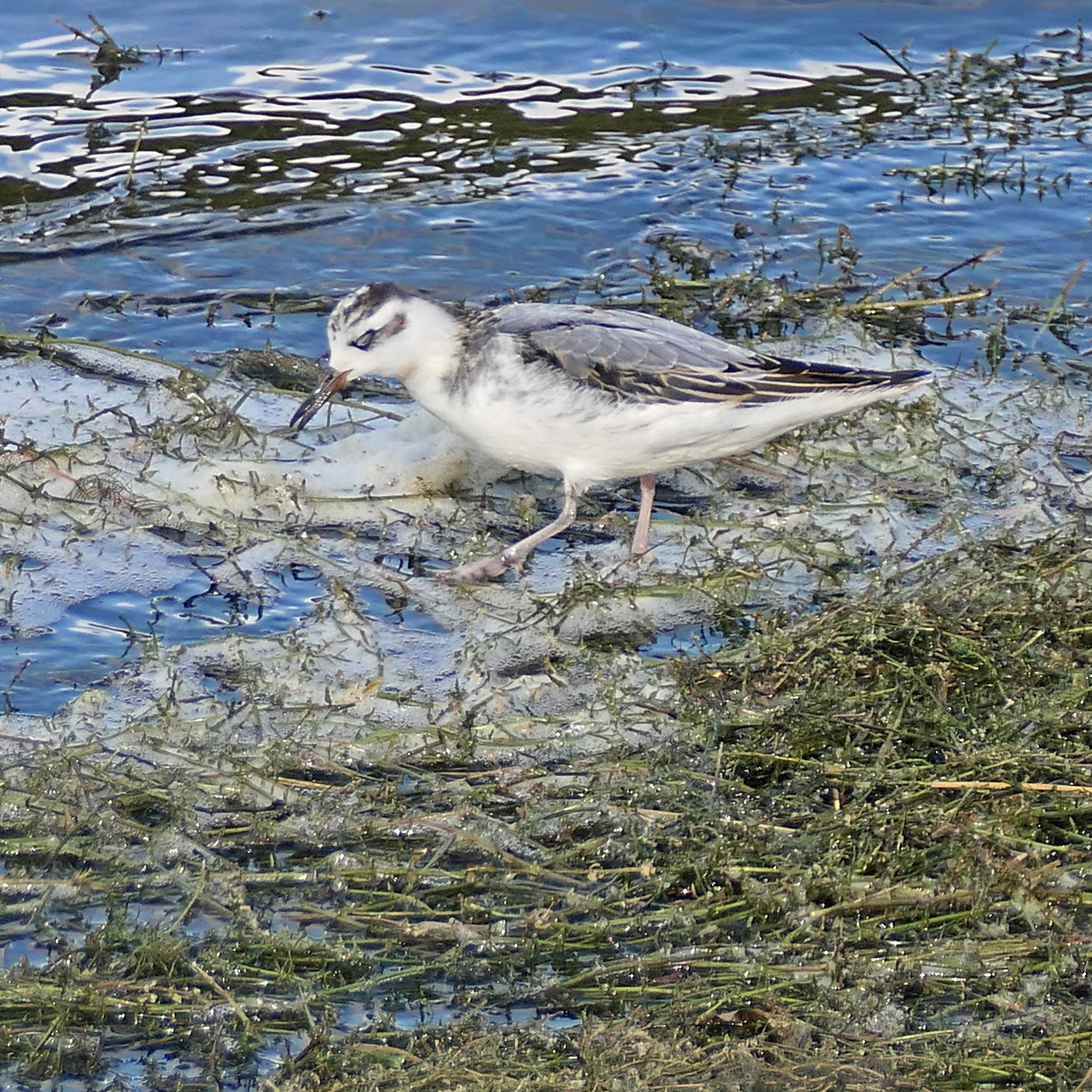
As I mentioned in yesterday’s blog about the Red-necked phalarope, the Grey phalarope is slightly larger than its cousin, and its bill is slightly thicker. The photo below shows all three phalaropes together, the Red-necked is the bird in between the two Greys.

Although these three birds were mostly foraging along the edge of the reservoir, phalaropes usually feed while sitting on the water and their feeding style is quite unique for wading birds: they often swim round in circles, which disturbs the water, stirring up insects, midges or other water-loving invertebrates. Amazingly, since seeing the three phalaropes on Lisvane Reservoir last week, we’ve had another local sighting, a single Grey phalarope on the River Taff near central Cardiff. This bird was a little more distant but I took a few short video clips of it feeding – not spinning right round due to the force of the water, but actively, constantly weaving from side to side as it picked at tasty titbits.

Like Loading...

Lifer: Red-necked phalarope

23 Tuesday Sep 2025

Posted by sconzani in autumn, birds

≈ Leave a comment

Tags

autumn migration, birding, birdwatching, British birds, Cardiff birding, Grey phalarope, Lisvane Reservoir, phalarope species, Phalaropus lobatus, Red-necked phalarope

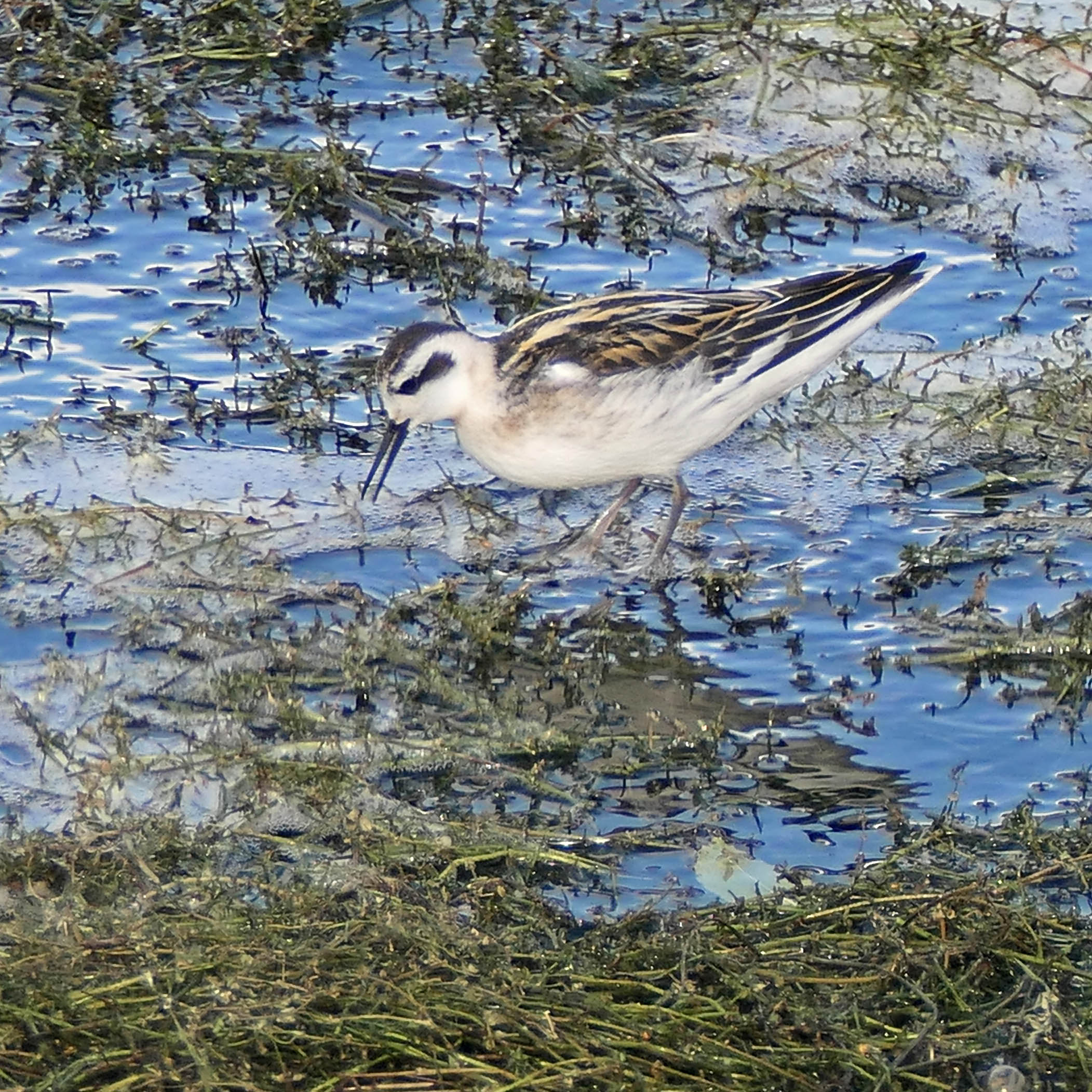
Last week was a red-letter week for Glamorgan birds. I didn’t get to see all the rare birds on offer but I did spend several wonderful hours at the Lisvane and Llanishen reservoirs in north Cardiff last Tuesday, in the company of smiling birders and interested locals, as we feasted our eyes on the three visiting phalaropes, two Grey (more on them tomorrow) and my first ever Red-necked.

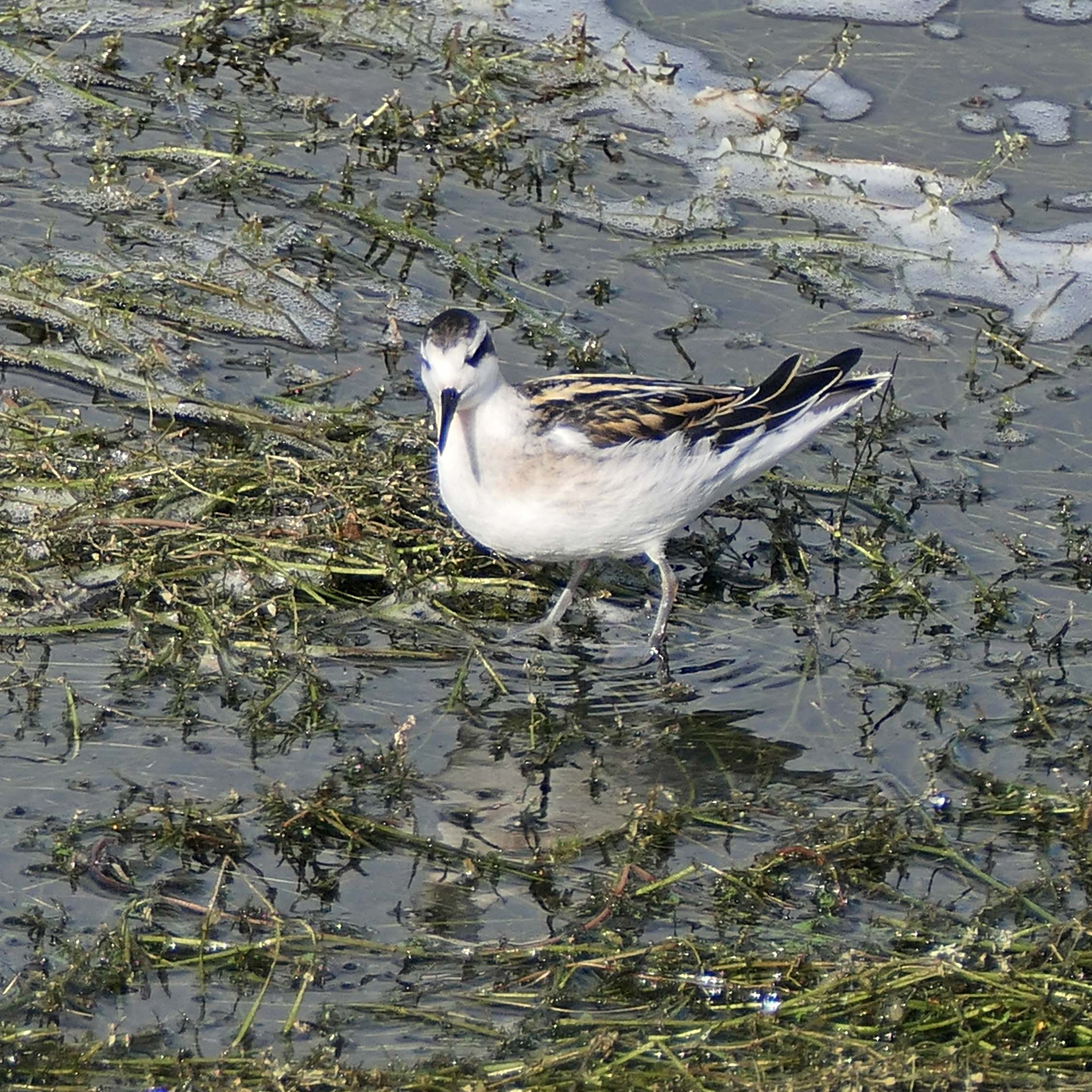
The Red-necked phalarope (Phalaropus lobatus) is a bird of contradictions: it’s a wader that prefers to swim; the female is the more brightly coloured gender; she fights other females for the most desirable males to mate with; she lays her eggs then leaves the male to raise their young, sometimes even finding another male to breed with.

You may notice that this bird has no sign of the red neck it is named for; the characteristic rusty coloured neck band can only be seen on female birds during the breeding season. The presence of yellow stripes on this bird’s back marked it as a juvenile; in fact, looking at the illustrations in my guide book, this looks like a juvenile bird moulting to first winter colouring.

It can be difficult to tell Red-necked and Grey phalaropes apart so it was particularly informative, especially for folks like me who had not seen both species before, to see both species together. The Red-necked phalarope was noticeably smaller than the Grey, and it had a thinner, sharper bill. (There will be a photo of the two species side by side in tomorrow’s blog.)

Due to a significant decline in its breeding population in Britain, where it nests in very small numbers in northern Scotland and on the western isles, the Red-necked phalarope is red-listed. The bird also breeds in Siberia, Scandinavia, Iceland and North America, and the very rare sightings we’re lucky enough to see in southern Britain are birds on migration; apparently, European breeding birds winter in the Arabian Sea. What a wonderful treat it was to enjoy very close views of this rare bird!

Like Loading...

About me

sconzani

sconzani

I'm a writer and photographer; researcher and blogger; birder and nature lover; countryside rambler and city strider; volunteer and biodiversity recorder.

View Full Profile →

Follow earthstar on WordPress.com

Enter your email address to follow this blog and receive notifications of new posts by email.

Recent blog posts

  • O is for Odonata December 20, 2025
  • N is for nest December 19, 2025
  • M is for mite December 18, 2025
  • L is for lepidopteran lifers December 17, 2025
  • K is for Keeled skimmers December 16, 2025

From the archives

COPYRIGHT

Unless otherwise acknowledged, the text and photographs on this blog are my own and are subject to international copyright. Nothing may be downloaded or copied without my permission.

Fellow Earth Stars!

  • Unknown's avatar
  • Unknown's avatar
  • Unknown's avatar
  • Unknown's avatar
  • Unknown's avatar
  • Unknown's avatar
  • Unknown's avatar
  • Unknown's avatar
  • Unknown's avatar
  • Unknown's avatar
  • Unknown's avatar
  • Unknown's avatar
  • Unknown's avatar
  • Unknown's avatar
  • Unknown's avatar
  • Unknown's avatar
  • Unknown's avatar
  • Unknown's avatar
  • Unknown's avatar
  • Unknown's avatar
  • Unknown's avatar
  • Unknown's avatar
  • Unknown's avatar
  • Unknown's avatar
  • Unknown's avatar
  • Unknown's avatar
  • Unknown's avatar
  • Unknown's avatar
  • Unknown's avatar
  • Unknown's avatar
  • Unknown's avatar
  • Unknown's avatar
  • Unknown's avatar
  • Unknown's avatar
  • Unknown's avatar
  • Unknown's avatar
  • Unknown's avatar
  • Unknown's avatar
  • Unknown's avatar
  • Unknown's avatar
  • Unknown's avatar
  • Unknown's avatar
  • Unknown's avatar
  • Unknown's avatar
  • Unknown's avatar
  • Unknown's avatar
  • Unknown's avatar
  • Unknown's avatar
  • Unknown's avatar
  • Unknown's avatar

Blog at WordPress.com.

Privacy & Cookies: This site uses cookies. By continuing to use this website, you agree to their use.
To find out more, including how to control cookies, see here: Cookie Policy
  • Subscribe Subscribed
    • earthstar
    • Join 667 other subscribers
    • Already have a WordPress.com account? Log in now.
    • earthstar
    • Subscribe Subscribed
    • Sign up
    • Log in
    • Report this content
    • View site in Reader
    • Manage subscriptions
    • Collapse this bar
 

Loading Comments...
 

You must be logged in to post a comment.

    %d