
Tags
birding, birdwatching, British birds, colour-ringed birds, colour-ringed Black-headed gull, colour-ringed gulls, colour-ringed Lesser black-backed gull, Roath Park Lake
Though I do sometimes see colour-ringed gulls in my local area, they’re often too distant for me to get photographs that are clear enough to read the details on their rings. So, during a recent walk around Roath Park Lake when I saw three ringed gulls, I made sure to get clear images so I could report my sightings. Not only does this provide valuable information on the movements of gull species, several of which are now endangered, but it’s also fascinating to find out where these gulls have been.

This male Lesser black-backed gull, with the orange ring inscribed R=U, was ringed at 5 weeks old on 5 July 2021 in Cardiff. Most of the subsequent reported sightings of this bird have been at Roath Park Lake, from September 2021 through to my sighting in September this year, but it has ventured much further afield; on 26 October 2022 it was seen in Matosinhos, a coastal city in northern Portugal. From Cardiff, that’s a straight-line distance of approximately 1,445 kilometers or 898 miles though, of course, the bird is unlikely to have flown straight there; it’s more likely that it followed the coasts of England and France to reach Portugal. And it’s also possible that it has been to Portugal or, indeed, other European destinations but hasn’t been sighted there, or hasn’t been reported when sighted.

This second Lesser black-backed gull, V&Z, a female, was also ringed in Cardiff but much more recently, on 17 July this year when it was just one week old. So far, it has only been reported from Roath Park Lake, on three occasions in September.
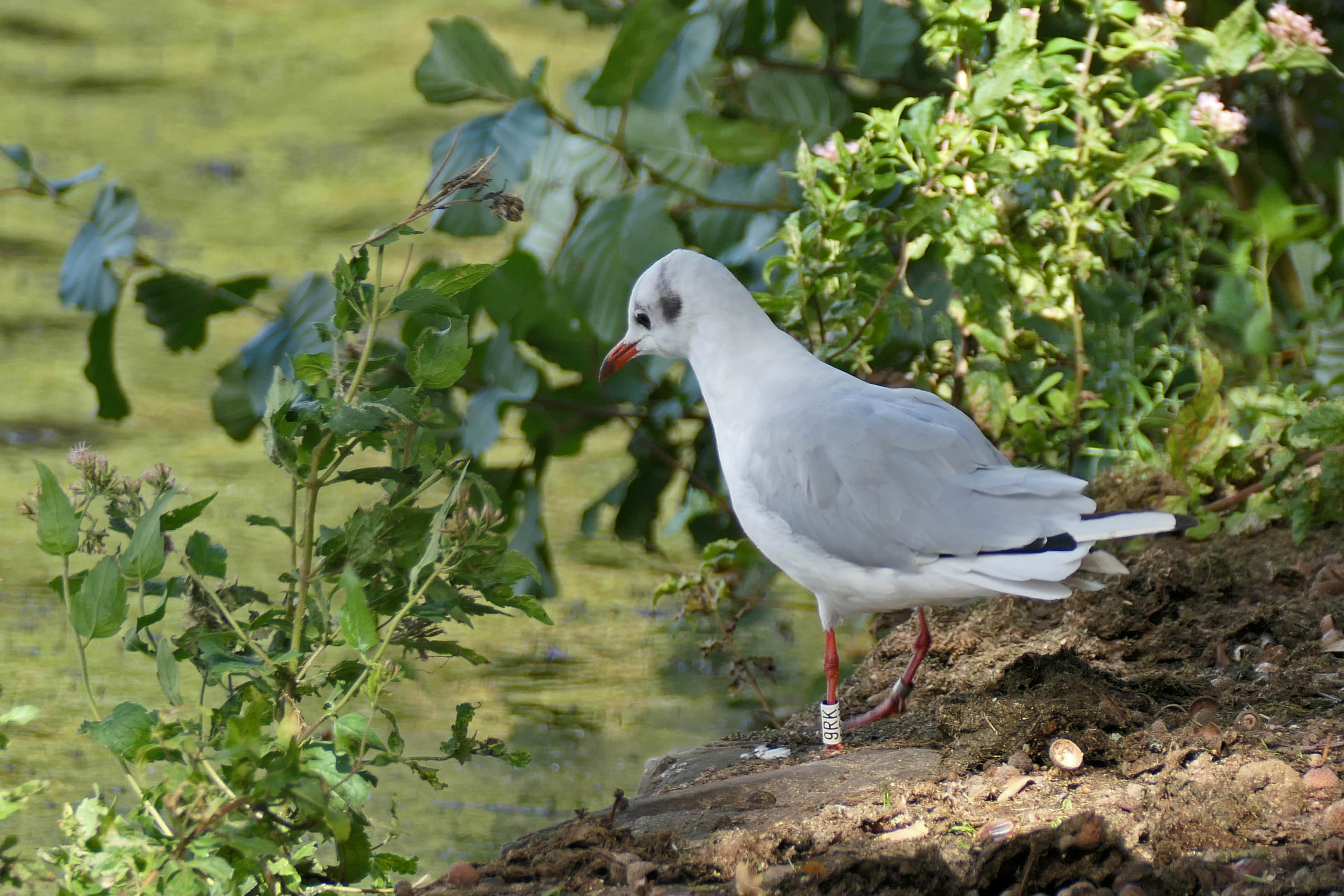
Today’s final colour-ringed gull has a very interesting story to tell. This Black-headed gull was initially ringed with a simple metal ring at Roath Park Lake in March 2019. That summer, the bird returned to its breeding grounds in Denmark, where it was recaptured by local bird ringers, who gave it the colour ring 9RK. It’s been reported wintering at Roath Park Lake annually ever since so it’s very likely that it makes the return trip to Denmark to breed every spring/summer.

 earthstar
You must be logged in to post a comment.