
Tags
Cathays Cemetery, Cinnabar moth, Common blue damselfly, Common crab spider, Leptopterna species, micro moth, Xysticus cristatus, Xysticus species
The association of death with a cemetery is not exactly unexpected but, in this case, I’m documenting the death of wildlife rather than humans because, just as I see the beginnings of life happening in the cemetery (those Common red soldier beetles were just one example!), so I also see its ending.

Here a beautiful Cinnabar moth (Tyria jacobaeae) has met its end in the fangs of a spider, probably a Common crab spider (Xysticus cristatus) but please correct me if I’m wrong. I’m not good at identifying spiders. It seems the spider pounced while the moth was concentrating on laying her eggs on the undersides of these leaves.
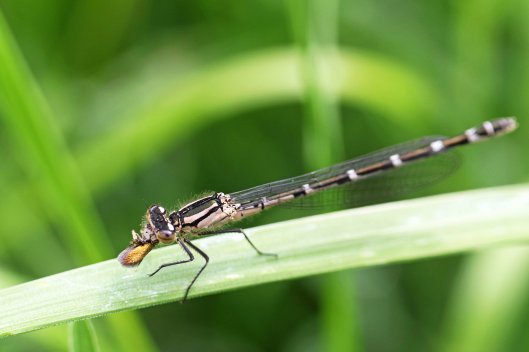
Common blue damselflies (Enallagma cyathigerum) are quite small but this female’s lunch is even smaller and is probably a micro moth, but, as there are 1627 species of micro moths in the British Isles, I’m not even going to hazard a guess as to which one this is.
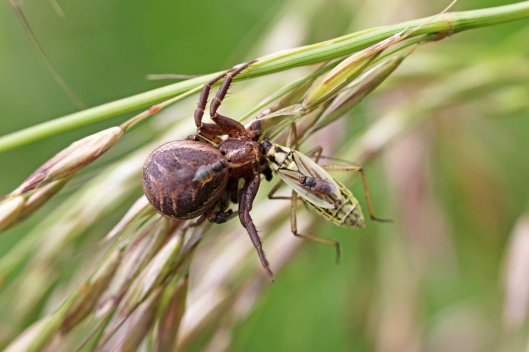
Once again, a lurking spider has successfully captured its next meal. I’m reliably informed this is also one of the Xysticus species of crab spiders, and its victim is a nymph of the Leptopterna species of grass bugs. The tiny flies are an intriguing mystery – they appeared to be travelling around with the spider like the pilot fish that live as ectoparasites in the company of sharks.
 earthstar
You must be logged in to post a comment.